

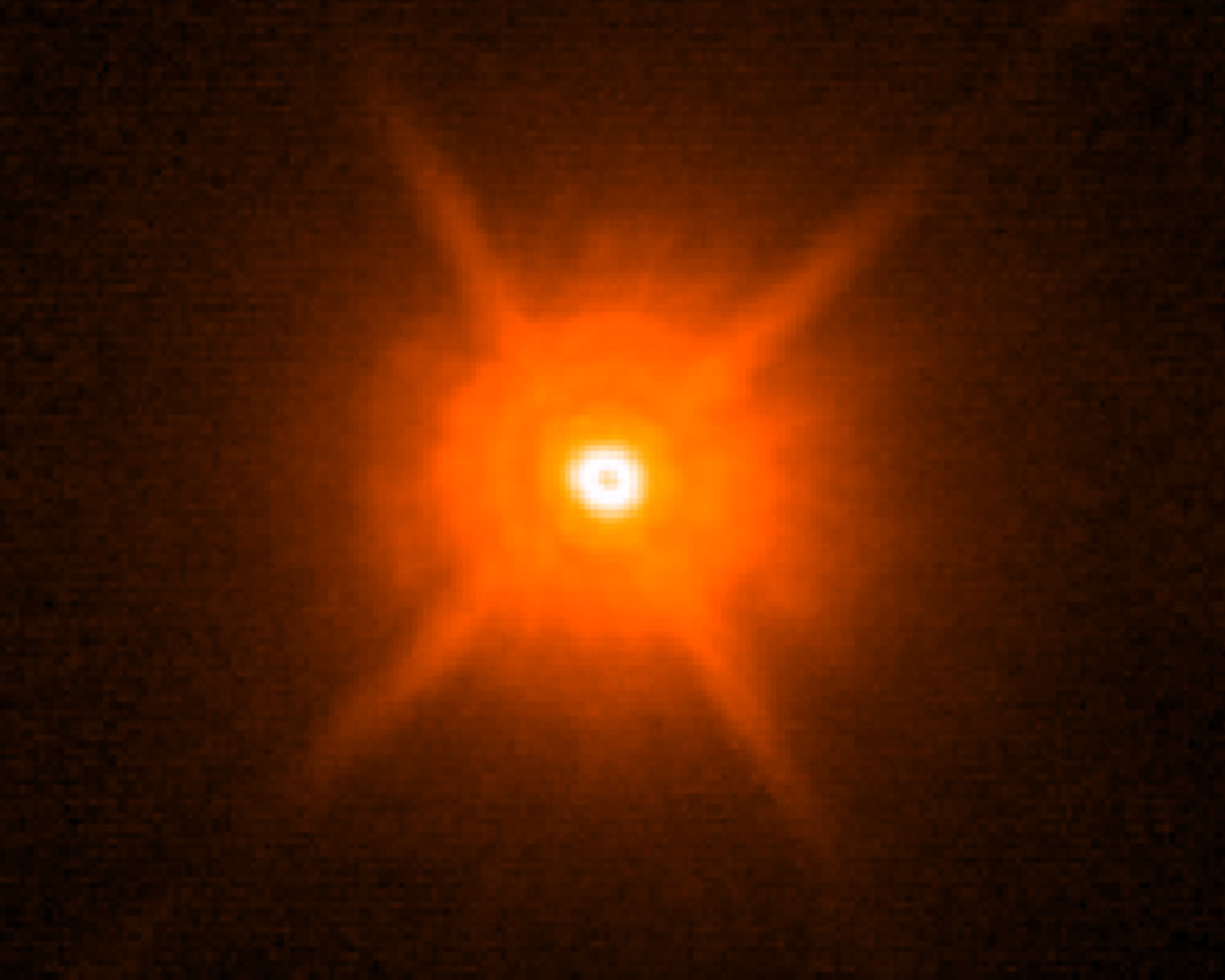
Astronomers have discovered the star GDR3 526285. It is extremely poor in metals, i.e., elements heavier than hydrogen and helium, and is a representative of the first generation of stars that existed long ago, when the Universe was still very young.
Discovery using the Gaia satellite
Analyzing data from ESA’s Gaia satellite, astronomers from the University of Chicago (Illinois) and elsewhere have discovered a new ultra-metal-poor star, designated GDR3_526285. It turned out to be one of the poorest stars in terms of metals discovered to date. This discovery was reported in a research article published on August 8 in The Astrophysical Journal Letters.
Ultra-metal-poor (UMP) stars (with iron content [Fe/H] below -4) are extremely rare, as only a few dozen such objects have been discovered to date. They are believed to be direct descendants of the first stars (Population III), and therefore can offer important insights into conditions in the early Universe. Now, a group of astronomers led by Guilherme Limberg of the University of Chicago reports the discovery of a new UMP star, GDR3_526285, in the Gaia-Gaia BP/RP (XP) blue photometer (BP) and red photometer (RP) spectrophotometry catalog. The star’s status was confirmed using multi-band photometry and high-resolution analysis with the 6.5-meter Magellan Clay telescope at the Las Campanas Observatory in Chile.
Parameters of star GDR3_526285
GDR3_526285 was discovered approximately 78,600 light-years from Earth, in the Milky Way’s halo. Its metallicity is -4.82 dex, one of the lowest iron contents ever recorded, and it also has one of the lowest masses of metallic fractions among known metal-poor stars.
According to the study, the mass of GDR3_526285 is 0.78 solar masses. The effective temperature of this star was estimated to be approximately 4600 K, and its radial velocity was measured at 428.7 km/s.
The study revealed that GDR3_526285 has a relatively low upper limit of the nominal carbon-to-iron ratio — at 1.18. This means that it does not have the strong carbon excess observed in other ultra-metal-poor stars with similar metallicities.
Connection with the Magellanic Clouds
Based on the results obtained, the authors of the study believe that GDR3_526285 was probably formed from gas cooled by dust, rather than by cooling through thin structures via carbon or oxygen present in the primary gas. They suggest that the star was somehow connected with the Milky Way’s companion galaxies, the Magellanic Clouds.
“The kinematics of GDR3 526285 make it tentatively linked to the Magellanic system, either by being dynamically perturbed by its recent infall or as a former LMC [Large Magellanic Cloud] star that has been tidally stripped by the Milky Way,” the scientists report.
According to phys.org

