

The scientific world shook its head in disbelief: could there be a pyramid (tetrahedron) that, no matter which side it is thrown from, always lands on the same face? For decades, this was considered almost impossible. But now a team of scientists has created “Bille” — the world’s first real monostable tetrahedron, confirming the bold theory and opening the door to interesting applications.

A long way to “Bille”
The idea belongs to the legendary British mathematician John Conway. He suggested that a tetrahedron with unevenly distributed weight should always fall on a specific face. However, Conway subsequently abandoned this idea. But mathematician Robert Dawson (St. Mary’s University, Canada) did not lose faith. Back in the 1980s, he almost proved Conway right using lead foil and bamboo sticks.
“But it only worked because of the angular momentum,” Dawson says. A real monostable tetrahedron should balance without a push.
The most complex task
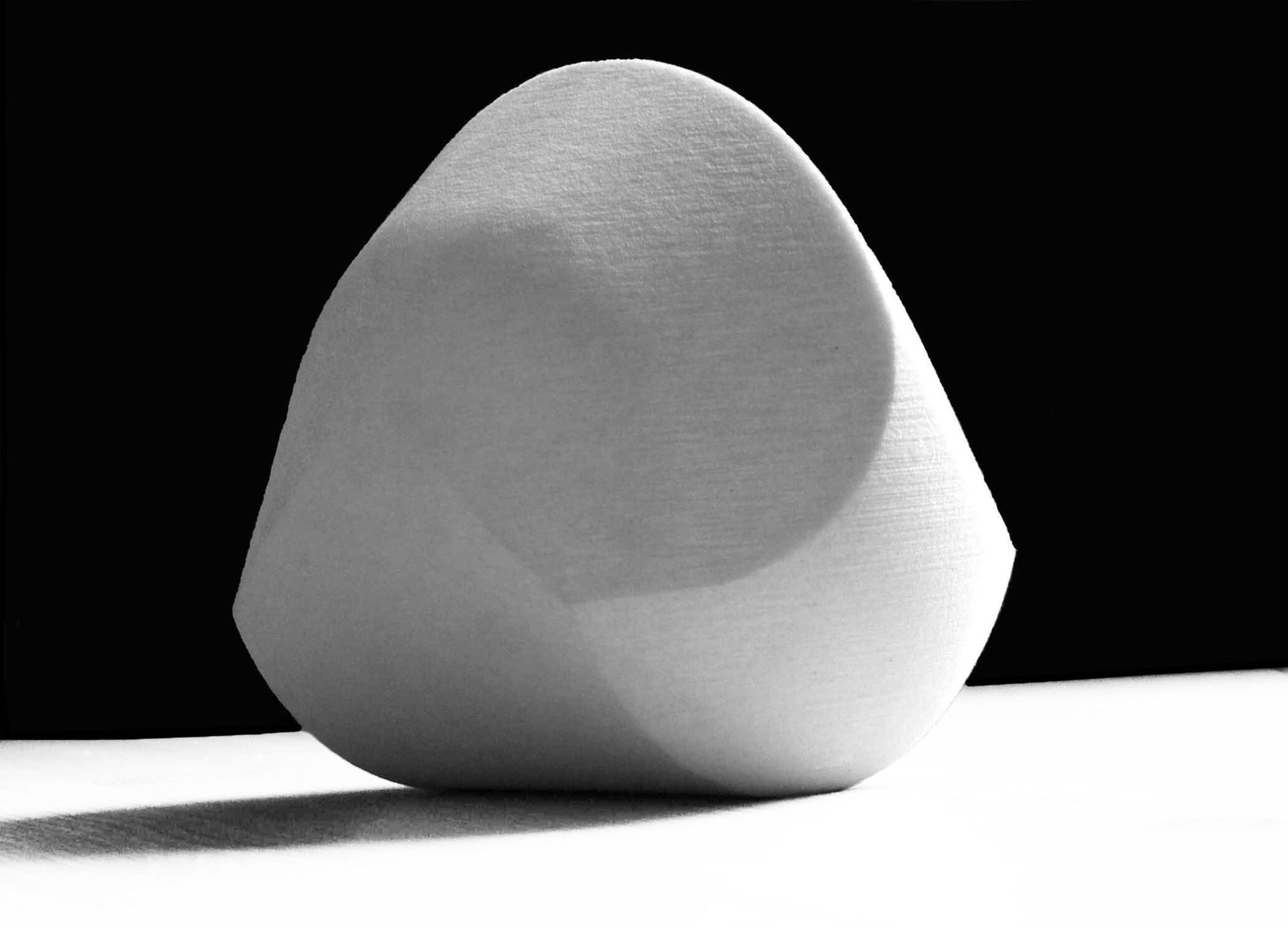
Progress became possible only when mathematician Gábor Domokos and his student Gergő Almádi (University of Budapest) approached Dawson. Domokos previously discovered the gömböc, a shape that balances on only two points. However, creating a monostable tetrahedron with four sharp edges is the highest category of complexity. Unlike a cube, which can stand on any edge, even a shifted weight does not guarantee monostability for a tetrahedron. This required an engineering marvel.
Secret formula
The theoretical model showed that a tetrahedron was needed, where one face was incredibly heavy and the rest of the structure was almost weightless. Almádi, an architecture student, led the search for materials. The frame was made from ultra-light carbon fiber. And for a stable edge, they chose tungsten carbide, an alloy twice as dense as steel. This created the necessary shift in the center of gravity.
The first tests were disappointing: “Bille” fell on two different edges instead of the intended one. The decision was unexpected. “We saw a very small drop of glue stuck to one end!” Domokos said.
Despite the engineers’ protests that it was a minor issue, Domokos insisted on its removal. The density and shape of this microscopic drop were also important. After that, Bille steadily returned to the designated edge. It was a victory of mathematical precision and meticulous production. The team has already created a second copy, confirming the result.
This mathematical phenomenon has attracted the interest not only of artists but also of Novo Nordisk, which is researching it with a view to creating insulin capsules that self-level in the stomach.
Will the tetrahedron save the lunar vehicles?
One of the most interesting potential applications for Bille is in the space industry, especially after the unsuccessful landings of lunar modules, which overturned as soon as they touched the surface. The principle of self-leveling could be the key to stable landing. However, Domokos notes: “Mathematics is always slightly ahead of technology.”
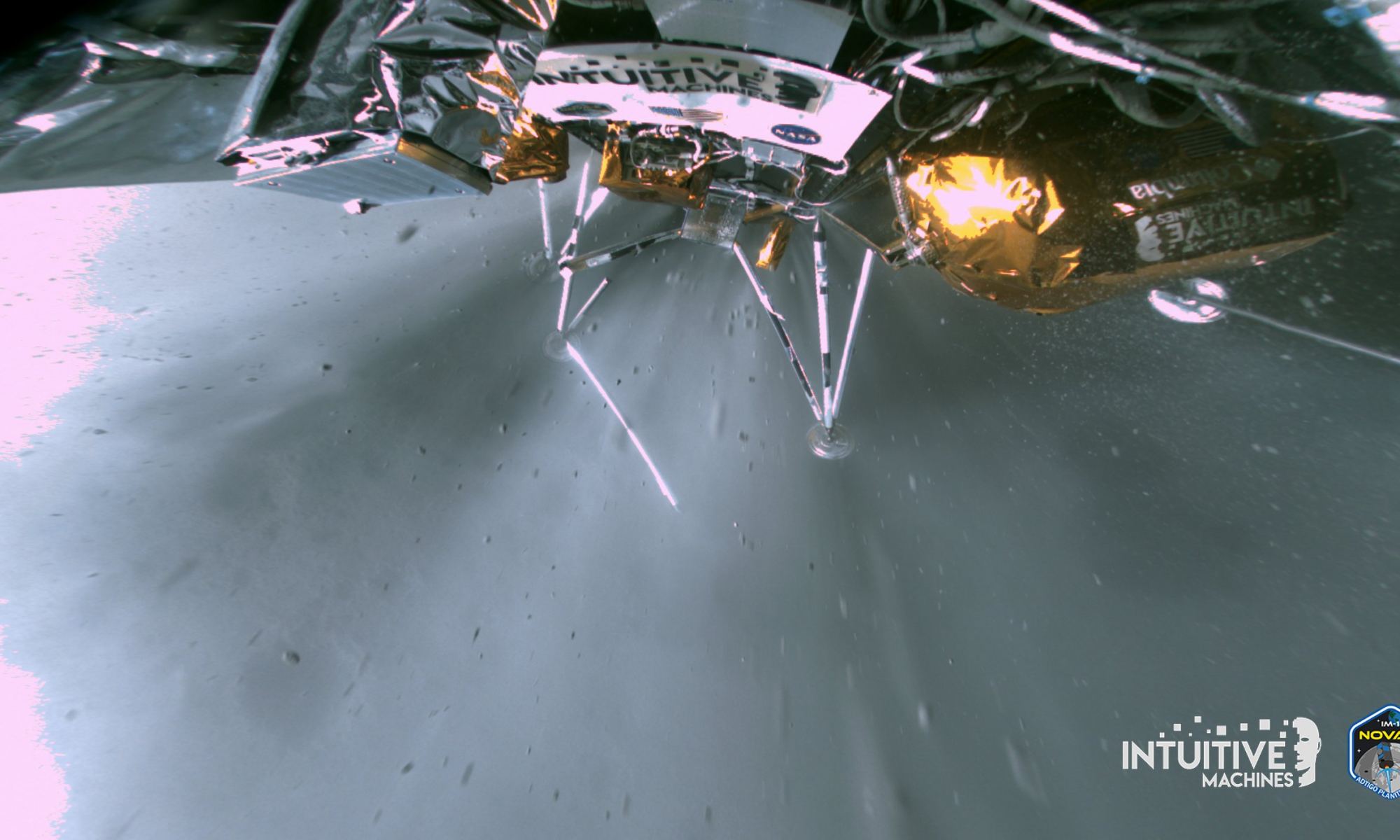
It is still unclear whether and when Bille will land in real space projects, but its creation is compelling evidence of the power of mathematical thinking and engineering prowess.
Earlier, we reported on the five main tasks of humans in space.
According to phys.org

