

Scientists used the method of space archaeology to study the history of the spiral galaxy NGC 1365. An analysis of the composition of the molecular clouds within it allowed them to understand its development over the last 12 billion years.
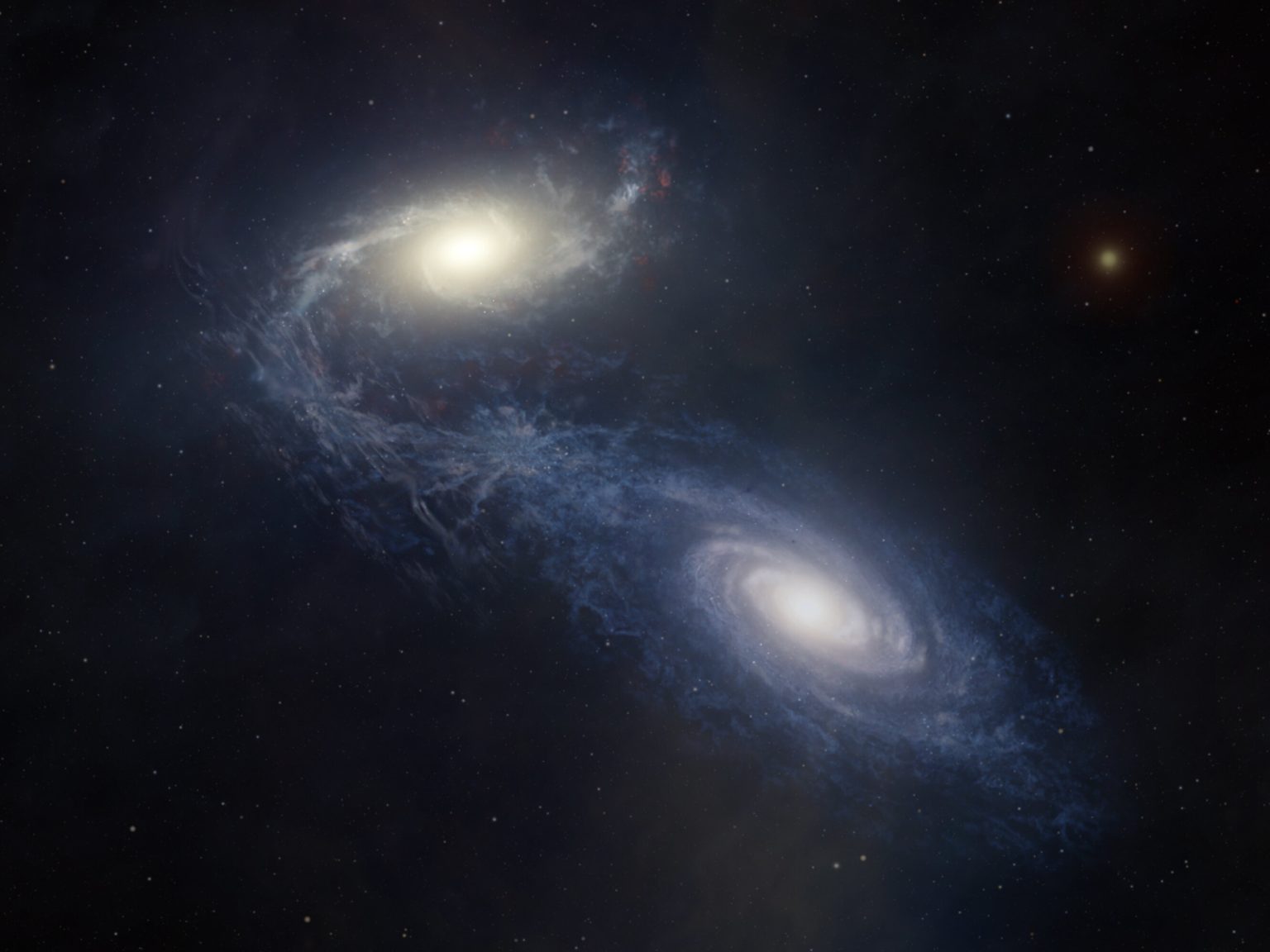
What is space archaeology?
A group of researchers from the Harvard-Smithsonian Center for Astrophysics recently published an article in the journal Nature Astronomy describing their study of the history of a galaxy outside the Milky Way using a method they call “cosmic archaeology.”
Of course, in reality, no one flies into space to dig up artifacts from the past. But the method actually has a lot in common with the earth sciences, which seek to uncover physical traces of the past. Its purpose is to analyze the composition of interstellar clouds in a given galaxy and, based on that analysis, determine where and when they formed.
Oxygen is particularly significant here. It is primarily formed in the central regions of galaxies, so if a nebula on the outskirts of a galaxy contains large amounts of it, it means that the nebula once moved significantly through space.
Galaxy NGC 1365
Of course, the researchers not only developed a new method for determining the history of star systems, but also tested it. The target was the galaxy NGC 1365. It is a spiral galaxy, like the Milky Way, and is notable for having its plane oriented toward us.
NGC 1365 also contains many hot, young stars that heat and illuminate the interstellar dust and gas. They used data from the TYPHOON survey, conducted with the Irénée du Pont Telescope at the Las Campanas Observatory, to understand the history of this galaxy.
The main conclusion is that the central regions of NGC 1365 formed first. On the contrary, gas has accumulated very slowly in its spiral arms over the past 12 billion years. Most of it actually formed over the last few billion years.
In addition, research paints a picture of the complex interplay between supernova explosions, black holes, and the formation of solar systems. But the most massive events discovered by space archaeology are mergers with smaller satellite galaxies.
Apparently, NGC 1365 formed as a relatively small system and then grew over a long period of time by absorbing dwarf galaxies. This is particularly important given its similarity to the Milky Way. Our galaxy has also followed a similar path, and it appears that this is typical throughout the Universe.
According to phys.org

