

Low Earth orbit is turning into a veritable space junkyard. Tech giants such as SpaceX are actively deploying thousands of satellites. But there is a downside to this race—the creation of a huge amount of space debris. SpaceX alone has more than 10,000 Starlink satellites in orbit, which require constant updating. Spent spacecraft either burn up in the atmosphere or add to the 25,000 large pieces of debris already flying at incredible speeds and threatening to collide with other spacecraft.

However, the real picture is even bleaker. Researchers believe that, in addition to large objects, there are up to 170 million tiny but no less dangerous pieces of debris in space that are impossible to track. In this crowded space, the risk of collisions is rapidly increasing. In 2025, operators responded to approximately 1,000 warnings of potential collisions. Each such incident threatens to damage or destroy expensive equipment, jeopardizing future space missions.
Armor for satellites and astronauts
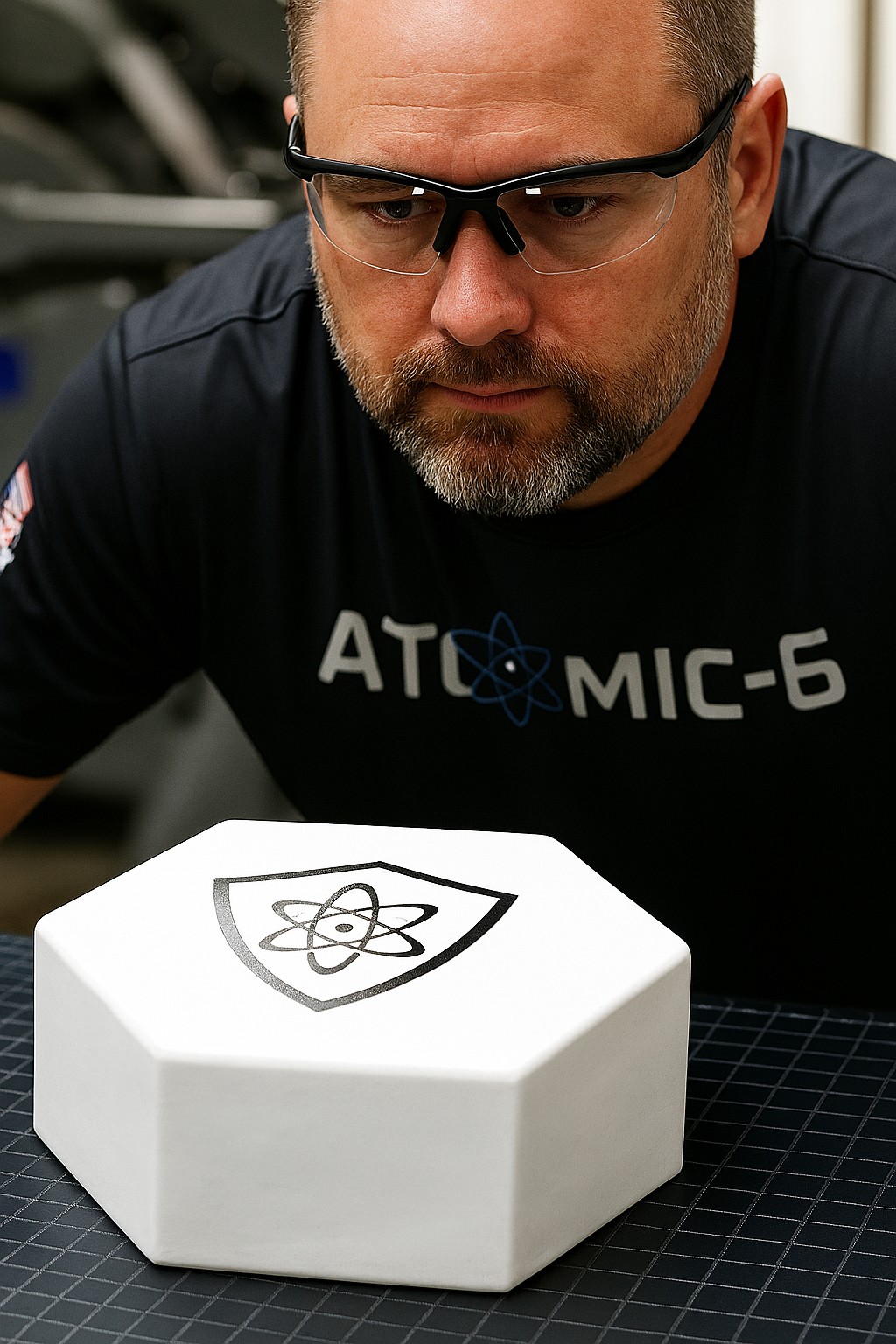
Fortunately, solutions to this problem are currently being developed. The American aerospace company Atomic-6 has created an innovative material called “space armor.” It is not a traditional shield, but a series of lightweight hexagonal tiles manufactured using a special technology.
The main advantage of the new armor is its ability to protect spacecraft and astronauts from small but fast and dangerous debris. According to the developers, the material effectively counteracts all untrackable particles smaller than 3 mm and 90% of debris in low Earth orbit. Developers compare the impact of such debris to a stone hitting a car windshield at high speed—the consequences can be catastrophic.
In addition, the new armor solves another problem with old protective screens. Those absorbed impacts and broke into secondary fragments, only increasing the total mass of space debris. Atomic-6 space armor does not have this drawback, making it a safer and more durable solution.
When can we expect orbital protection?
The material took about 18 months to develop, during which time it underwent extensive ground testing. Atomic-6 CEO Trevor Smith said the company was ready to manufacture armor in virtually any shape.
The first satellites equipped with this protective cover are scheduled to be launched into orbit as early as 2026. This technology opens up new opportunities not only for combating litter, but also for protecting against potential threats. Thus, space armor could be the key to a safe future in space, which today resembles an increasingly dangerous testing ground.
Earlier, we reported on how space debris was blamed for a plane crash.
According to Space News

