

Scientists have discovered a hidden stream consisting of more than 3,000 stars. In the past, they were all part of the famous Pleiades cluster.
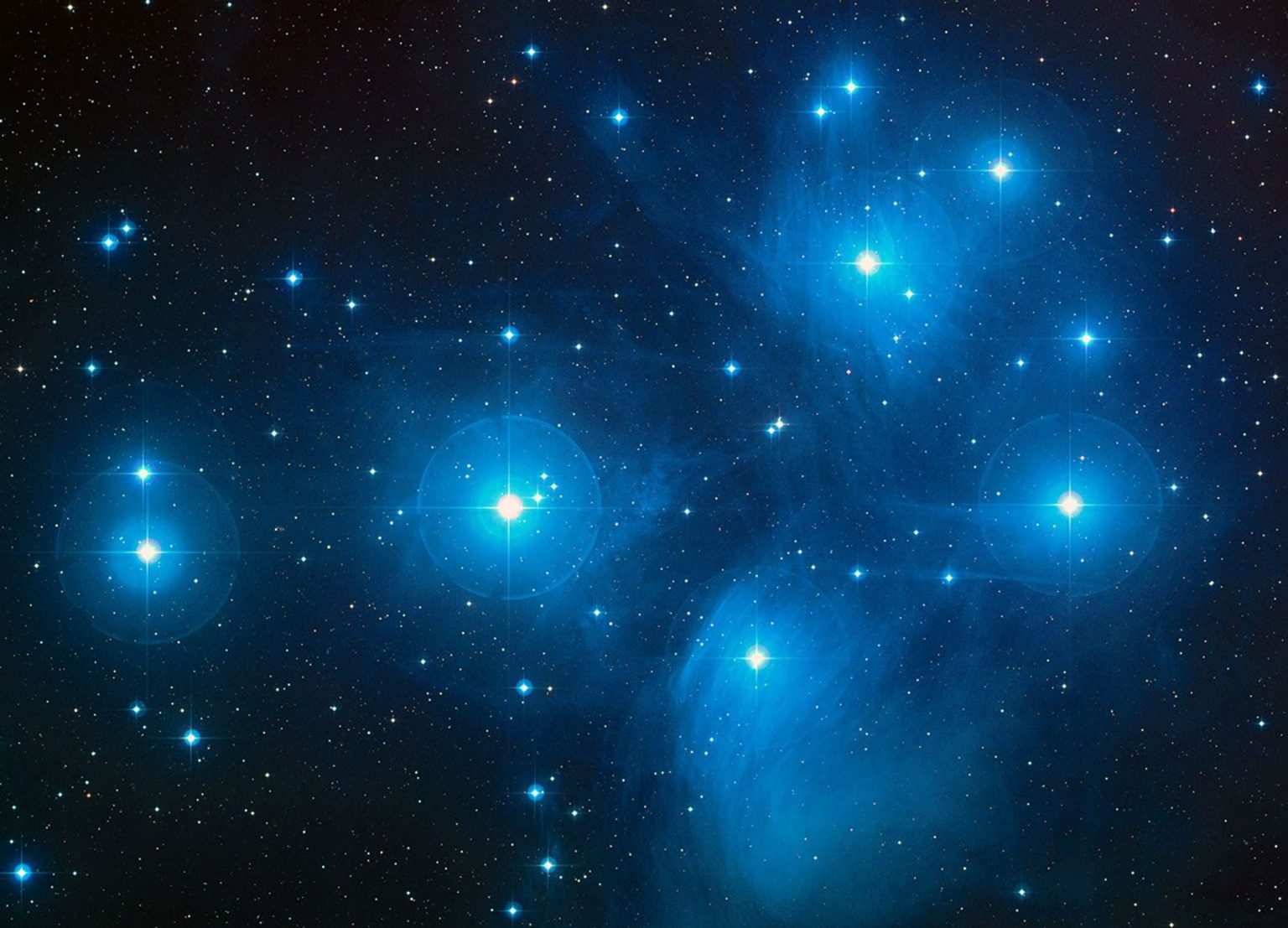
The Pleiades are one of the closest and brightest star clusters to Earth, known to mankind since ancient times. In many cultures, it was called the Seven Sisters. Today, the seventh star is no longer visible, but the remaining six are clearly visible to the naked eye in the sky. In reality, the Pleiades are much larger. They consist of approximately 1,000 stars that formed about 100 million years ago from the same molecular cloud.
The Pleiades are a scattered cluster. This means that its members are bound by relatively weak gravitational forces and are gradually “getting lost.” In turn, this means that in the past, the cluster was much larger. The results of a recent study conducted by researchers at the University of North Carolina suggest that in the past, the Pleiades consisted of at least three times as many stars.
Scientists began by analyzing data collected by the Gaia mission. They managed to identify more than 10,000 stars that could be associated with the Pleiades. What they have in common is that they move at the same speed around the center of the Milky Way.
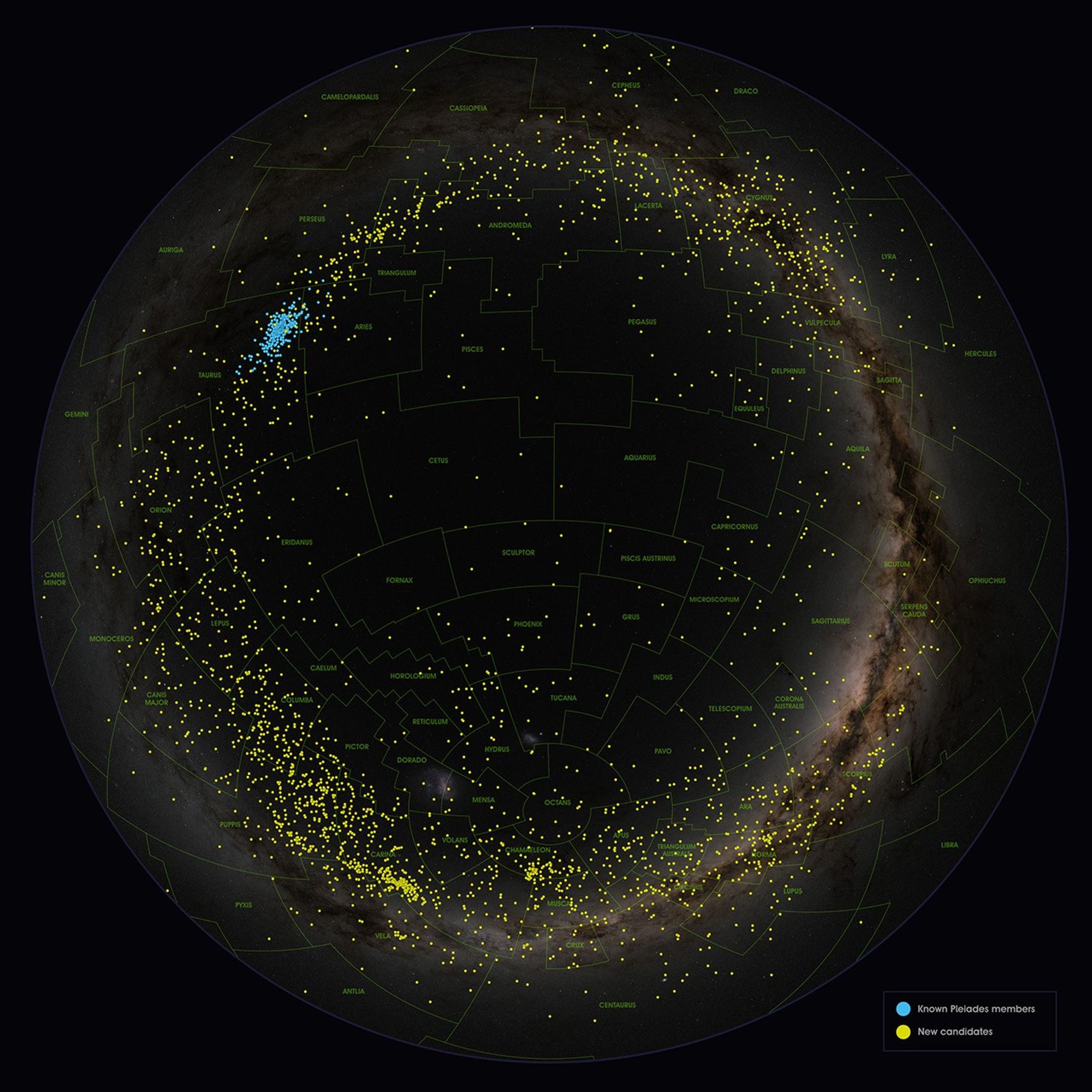
The researchers then narrowed down this list using data on the rotation of stars obtained by the TESS space telescope. Its main task is to search for exoplanets using the transit method. However, the data collected by TESS can also be used to determine the rotation speed of stars. Since stars slow down as they age, the researchers were able to select stars that were approximately the same age as the Pleiades. The team also studied the chemical composition of potential Pleiades members using data from ground-based missions.
As a result, astronomers have discovered a huge star stream called the Greater Pleiades Complex. It spans 1,900 light-years and consists of more than 3,000 stars. It is possible that this is not the final figure and that the Pleiades were even larger in the past. Researchers are currently working on what they call the “TESS All-Sky Rotation Survey.” This database will give researchers access to information about the rotation of more than 8 million stars, which will make it possible to discover even more hidden members of the Pleiades and other star clusters.
According to NASA

