

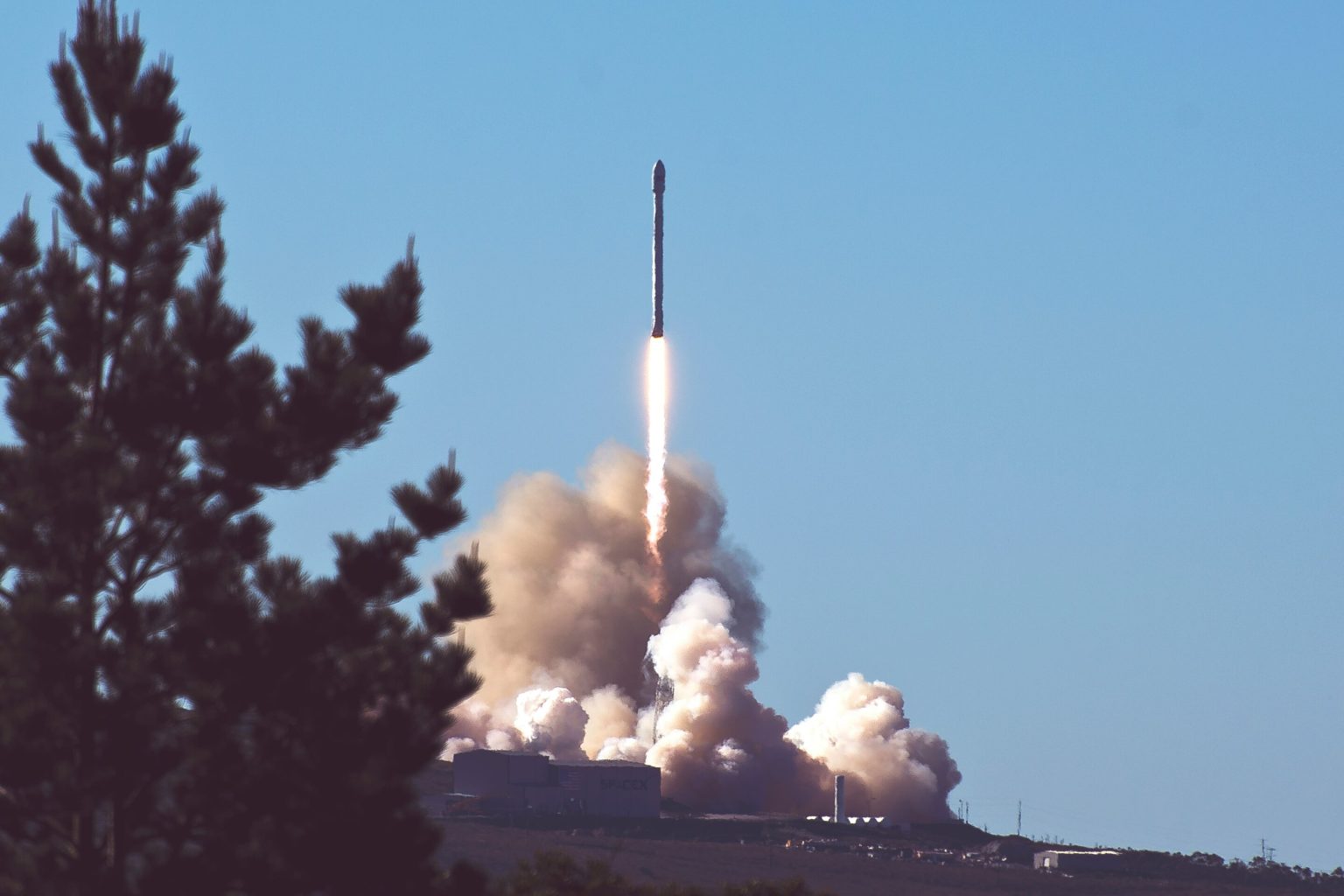
SpaceX has been granted permission to conduct up to 120 launches per year from Cape Canaveral. True, technically it is impossible to achieve such a number, but they are preparing to build new infrastructure.
Permission from the Federal Aviation Administration
The Federal Aviation Administration (FAA) announced Wednesday that SpaceX’s plan to expand Falcon 9 rocket launch and landing capabilities at Cape Canaveral did not require an environmental impact report.
In March, the FAA published a draft environmental assessment of SpaceX’s plans to increase the number of launches from Space Launch Complex 40 in Cape Canaveral from the current limit of 50 per year to a maximum of 120, as well as to create a new landing platform that could accommodate up to 34 Falcon rocket first-stage returns.
The FAA announced that the proposed increase in launch frequency and construction of a new landing complex were acceptable under the requirements outlined in the National Environmental Policy Act, revising the existing “Finding of No Significant Impact,” known as FONSI. If a more rigorous environmental impact assessment were required, this could potentially add another two years before any changes in construction or operation could begin.
New landing sites at Cape Canaveral
A similar environmental assessment is still pending for SpaceX’s operations at Launch Complex 39-A at Kennedy Space Center for Falcon 9 and Falcon Heavy launches, where SpaceX also wants to build a new landing pad. This plan involves increasing the number of launches from 20 to 36 per year and up to 20 stage landings.
Previously, first-stage landings took place in landing zones 1 and 2 (LZ-1 and LZ-2) in Canaveral, located at complex 13, but SpaceX has already been forced to stop using the first landing zone because the lease has expired, and recently it has had to rely on the second one.
The Space Force wants to move all launch and landing operations so that commercial companies use the same complex for launching and returning stages. LC-13 was designated as the future launch site for two more commercial providers — Phantom Space and Vaya Space — although neither of them has yet been able to launch a rocket into space. For Canaveral, SpaceX proposed building a 400-foot-diameter platform, a gravel pad, a new nitrogen gas line, a 30-foot pedestal for post-landing processing, and a crane storage area, adding about 10 acres for development on the site.
Increase in the launch capacity of space centers
Together, the KSC and Cape Canaveral sites could mark up to 56 rocket booster landings per year, leading to increased sonic boom warnings for Central Florida. Technically, SpaceX has already received permission for this number of landings with LZ-1 and LZ-2, but its use hasn’t ever come close to this limit. SpaceX made 12 rocket booster landings at Cape Canaveral in 2024 and only six in 2023.
SpaceX will still continue to perform most of its stage upgrades on offshore platforms in the Atlantic.
SpaceX’s plans for Starship on the Space Coast include building a launch tower at Launch Complex 39A at Kennedy Space Center, alongside the Falcon 9 launch pad, as well as at Launch Complex 37 at Cape Canaveral, where United Launch Alliance launched its flights until last year.
As with all reviews, the FAA will only issue licenses if other factors such as safety, risks, and financial responsibility are met.
According to phys.org

