

One of SpaceX’s Starlink global internet coverage satellites suddenly malfunctioned and began falling uncontrollably toward Earth. Elon Musk’s company itself reported this. SpaceX noted a strange anomaly that led to a complete loss of communication with the device. According to their data, the satellite suddenly “fell” 4 km, and a small field of debris formed around it.
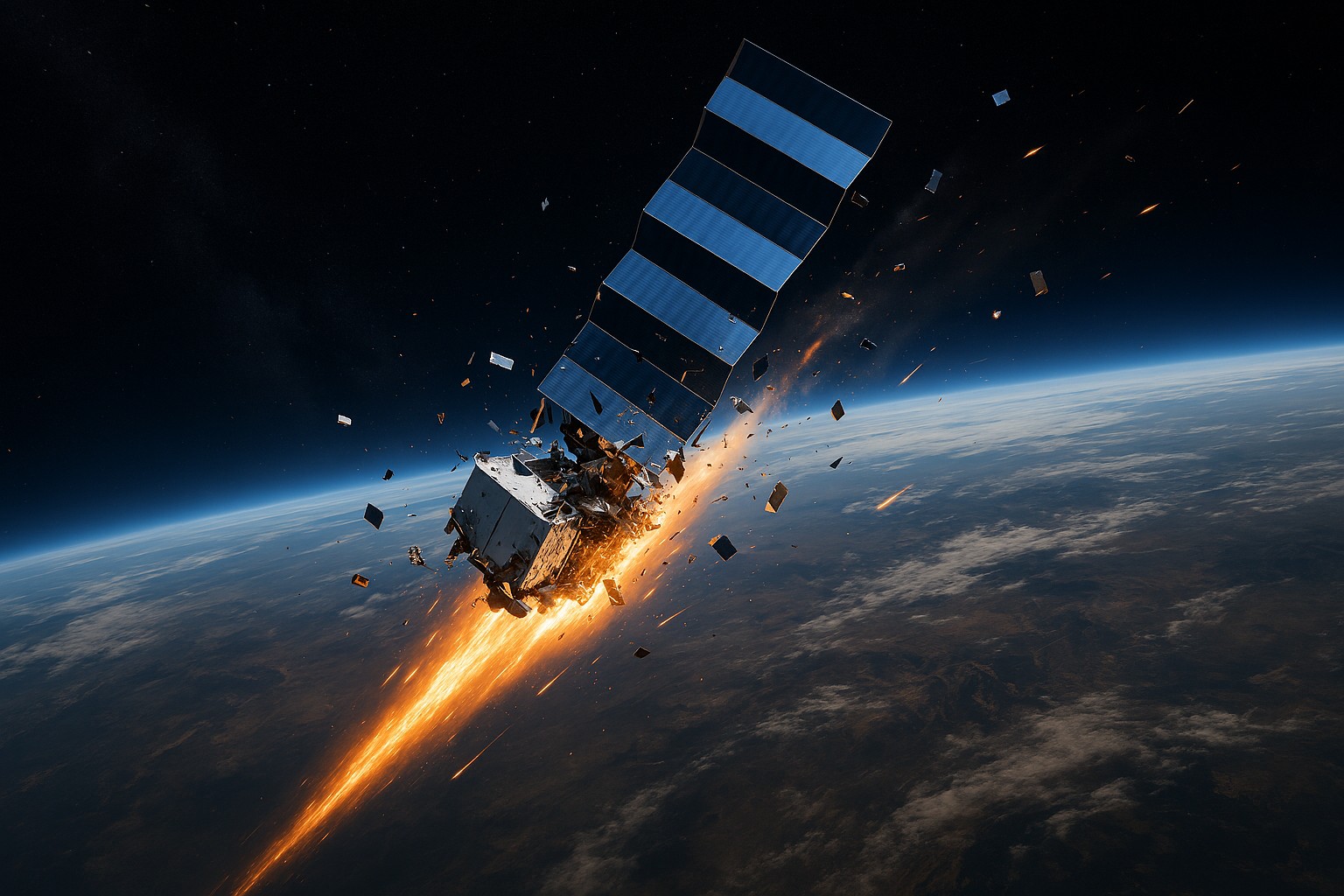
What exactly happened remains a mystery. LeoLabs, a company that tracks space debris, has detected dozens of fragments near the satellite. Experts suggest that the cause could have been an internal energy source explosion, rather than a collision with another object. On the other hand, astrophysicist Jonathan McDowell does not rule out the possibility of data error.
On December 17, Starlink experienced an anomaly on satellite 35956, resulting in loss of communications with the vehicle at 418 km. The anomaly led to venting of the propulsion tank, a rapid decay in semi-major axis by about 4 km, and the release of a small number of trackable…
— Starlink (@Starlink) December 18, 2025
Currently, the satellite, most of which remains intact, continues to fall and is expected to burn up completely in the Earth’s atmosphere in a few weeks.
Overcrowded orbit
This incident is not part of the planned deorbiting of the satellites. Currently, over 9,000 Starlink satellites are operating around Earth, and SpaceX performs hundreds of collision avoidance maneuvers every day.
The recent incident involving a near-collision with a Chinese satellite only highlights how crowded low orbit is becoming. The company said it is working to determine the cause of the anomaly and is implementing software updates to prevent similar incidents in the future.
The mysterious Starlink incident raises new questions about the safety of large-scale satellite networks.
We previously reported that satellite collisions in orbit had been reduced to 2.8 days.
Provided by Space

