

On October 13, SpaceX plans to conduct the eleventh launch of Starship. It will be the final launch for the current version of the super-heavy rocket. We discuss the main objectives of the upcoming flight and where you can watch it live.
Starship problem modification
The current version of Starship (Starship V2) made its first flight in early 2025. Compared to the previous version, the rocket is almost 2 meters taller, which has increased the capacity of its fuel tanks and its payload. The total height of Starship V2 is 123 meters, which is currently a new record in global rocket construction.

In addition to increasing in size, Starship V2 also received several other upgrades that, in theory, should have increased its reliability. However, in reality, everything turned out to be much more complicated. The first two flights followed the same scenario, with the ship exploding in the sky over the Caribbean Sea shortly after separating from Super Heavy.
The third mission was slightly more successful – Starship managed to reach the stage of engine shutdown. However, the ship was unable to deploy its cargo of eight Starlink satellite simulators and encountered a fuel leak, which led to loss of control and subsequent destruction. Another Starship of this modification exploded during burnout, damaging the launch pad. Because of this, SpaceX had to seriously revise its plans and make a number of changes to the ship’s design.
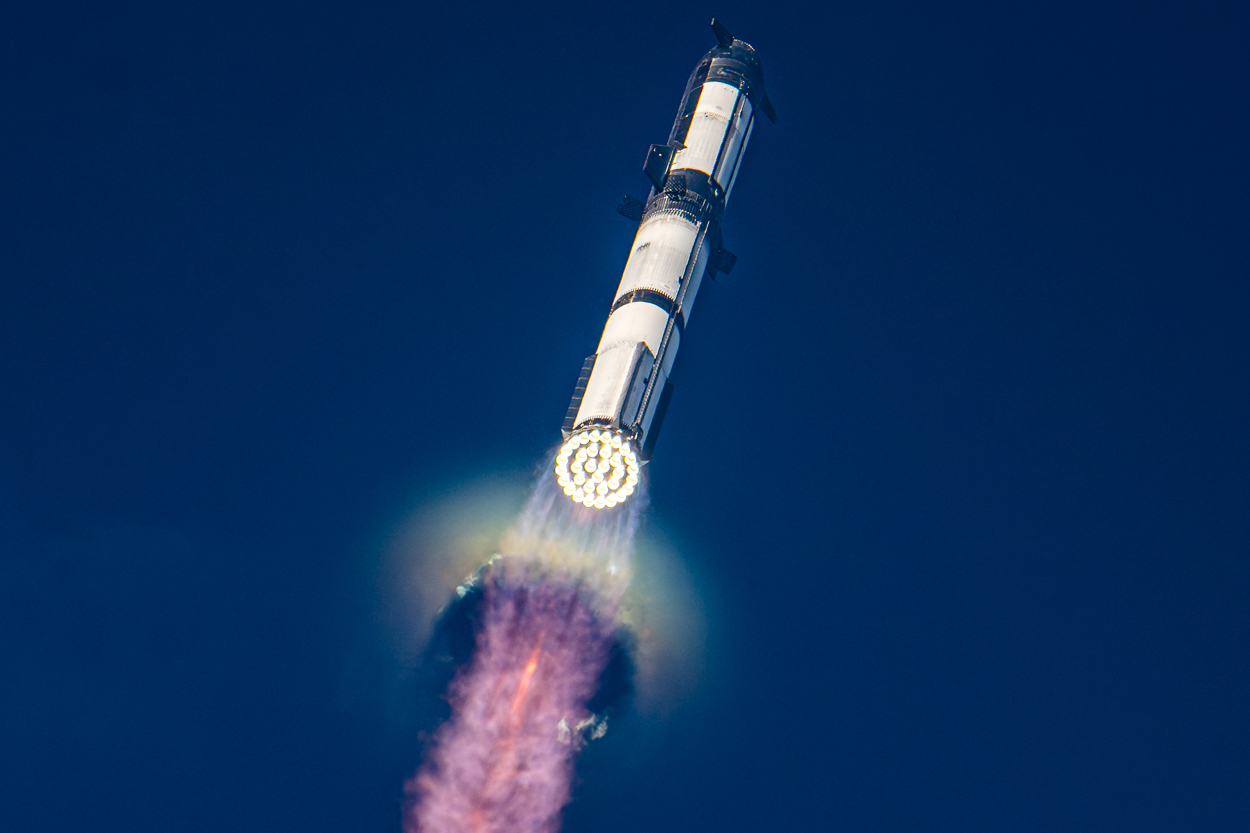
These measures bore fruit. During the August flight, SpaceX managed to achieve almost all of its objectives, and Starship itself, despite damage sustained during re-entry into the atmosphere, managed to splash down successfully in the Indian Ocean.
The main objectives of the eleventh Starship flight
The program for the new Starship flight is based on the results of the previous mission. Its main objectives will be to collect experimental data and test the limits of the spacecraft’s capabilities.

The Super Heavy booster, which was returned during the eighth Starship mission in March 2025, will be used for the launch. Twenty-four of the 33 Raptor engines installed on it have already flown into space. Its main purpose will be to demonstrate a new engine ignition configuration, which is planned to be used on the next generation of Super Heavy.
Starship’s tenth flight test took a significant step forward in developing the world’s first fully reusable launch vehicle.
Next up: Flight 11 of Starship is targeted to launch as early as Monday, October 13 → https://t.co/YmvmGZUsXW pic.twitter.com/bspqrP9aRj
— SpaceX (@SpaceX) September 29, 2025
At the beginning of its landing impulse, Super Heavy will activate 13 of its engines and then switch to a five-engine mode. Previously, three engines were used for this, but the next-generation accelerator will use five engines, which will provide additional reserve in case of power unit failure. SpaceX wants to test how Super Heavy will behave in this mode.
At the end of the landing maneuver, Super Heavy will switch to its three central engines and hover over the ocean, then shut them down and fall into the Gulf of Mexico / Gulf of America. There are no plans to recover it.

As for Starship, it will be launched into a suborbital trajectory and, as in the previous mission, will deploy eight mock-ups of next-generation Starlink satellites. There are also plans to relaunch one Raptor engine in space.
The flight tests also included a series of experiments and verification of changes made to the spacecraft’s design to ensure its return to the launch pad in future flights. Some tiles were deliberately removed from Starship to stress test vulnerable areas, several of which are located in areas where there is no backup ablation protection.

To simulate the trajectory that the spacecraft will follow when returning to Starbase in future flights, the final stage of landing includes an aerodynamic maneuver and testing of subsonic guidance algorithms before the landing engines are activated. If all goes well, Starship will splash down in the Indian Ocean. There are no plans to recover the ship.
Live broadcast of the Starship launch
SpaceX will broadcast the Starship launch live on the social media platform X. The launch window for Starship will open on October 13 at 11:15 p.m. GMT. The broadcast will begin 30 minutes before launch.
Watch Starship’s eleventh flight test → https://t.co/YmvmGZTV8o
https://t.co/zIRMX5mh9K— SpaceX (@SpaceX) September 29, 2025
In addition to the official broadcast, various bloggers and space-themed communities will be streaming their own coverage of the Starship flight on YouTube.
The upcoming flight will be the final one for Starship V2. Engineers are already busy preparing the next, even more powerful modification, Starship V3. It is expected that SpaceX will use it to test Starship’s landing on land and orbital refueling of the spacecraft, which is a key element necessary for both the Artemis III mission and Elon Musk’s ambitious plans to conquer Mars.

