

At the end of July, Spanish company Eos X Space announced the acquisition of American startup Space Perspective, a pioneer in stratospheric tourism known for its Spaceship Neptune capsule. The deal is intended to revive the project after financial problems and preserve jobs in the US.
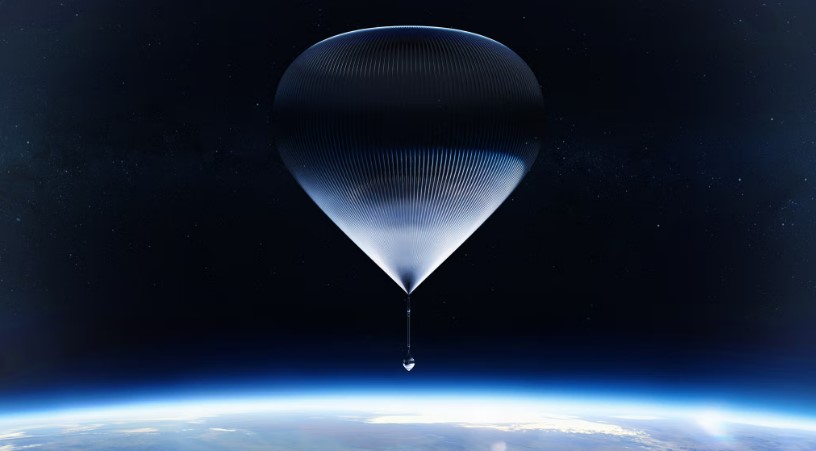
Space Perspective, founded by Jane Poynter and Taber MacCallum in 2018, launched the Excelsior demonstrator to an altitude of approximately 30 km in September 2024 and sold tickets for $125,000. However, in January 2025, the company sent most of its staff on indefinite leave, and in April it lost its base in Florida due to debts.
In a press release, Eos X Space stated that Space Perspective would operate with complete autonomy under American leadership, and that the merger would enable the two former competitors to make manned tourism in the stratosphere a reality. The Spanish plan to open a spaceport at the Kennedy Space Center (Florida) and an R&D center in Silicon Valley, and subsequently move their global headquarters to the US.
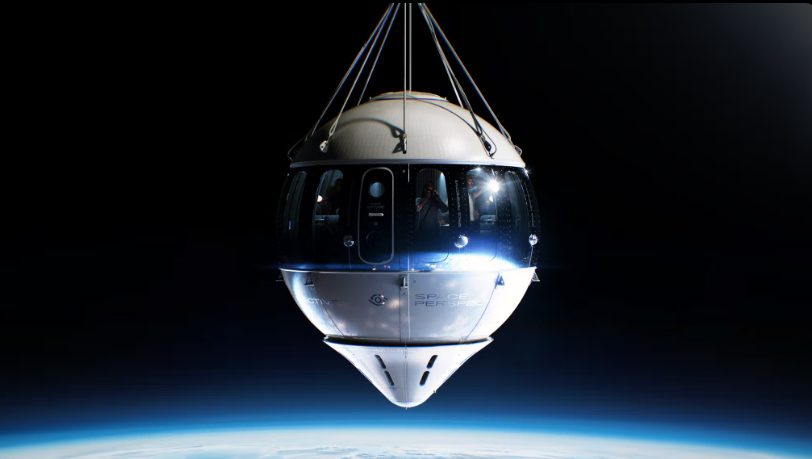
Stratospheric balloons are positioned as a more environmentally friendly and potentially cheaper alternative to suborbital flights by Blue Origin and Virgin Galactic: a smooth six-hour ascent without overload allows passengers to observe the curvature of the Earth and the darkness of space, while scaling up production can gradually reduce ticket prices.
Stratospheric flights at an altitude of 30–35 km create conditions similar to those in space: 99% of water vapor remains below this boundary, so atmospheric disturbance is minimal. The capsules can carry telescopes, spectrometers, and experimental equipment for astronomy and Earth observation, and the return of the payload allows for quick maintenance of the instruments and reduces the cost of missions. Such platforms will serve as testing grounds for detectors, cubesats, and technologies that are being prepared for operation in orbit.
Want to see what tomorrow’s orbital station will look like and how ambitious China’s plans are to expand its capabilities? Read the article “China’s Heavenly Palace: Tiangong Space Station” and learn how the station’s three modules are already supporting protein crystallization in zero gravity, dark matter research, and testing of new robotic arms.

