

Young stars with masses close to that of the Sun fade much more rapidly in the X-ray spectrum than current models had predicted. This was reported by a team led by Konstantin Getman of Penn State University. The bulk of the observations were provided by NASA’s Chandra X-ray Observatory; the article was published in The Astrophysical Journal on April 14, 2026.
Faster than expected
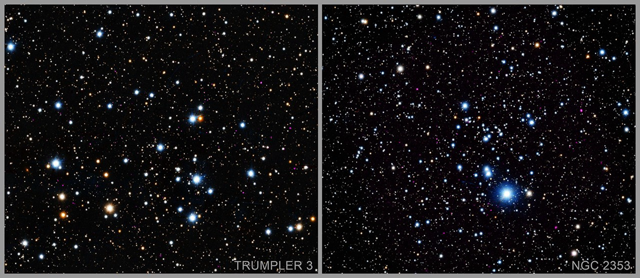
The researchers analyzed eight star clusters ranging in age from 45 to 750 million years. It turned out that stars with a mass close to that of the Sun emit only one-quarter to one-third of the expected amount of X-ray radiation. The decline turned out to be about 15 times steeper than previous calculations used by astronomers. Stars with lower masses, on the other hand, remain highly active for longer. Scientists suggest that the mechanism for generating magnetic fields in solar-mass stars becomes less efficient sooner than previously thought—but the reason is still being investigated.
Good news for the search for life
This is good news for the search for extraterrestrial life. Intense radiation can destroy planetary atmospheres and prevent the formation of molecules necessary for organic life. Stars with the mass of the Sun that are only three million years old produce about a thousand times more X-ray radiation than the current Sun, while stars that are about 100 million years old produce about 40 times more.
If the active phase ends earlier, then the window of opportunity for the formation of an atmosphere and the conditions necessary for life opens sooner. “It’s possible that we owe our existence to our Sun doing the same thing, several billion years ago, that we see these young stars doing now,” said co-author Vladimir Airapetian of NASA’s Goddard Space Flight Center.
In addition to Chandra, the team utilized archival data from the ROSAT satellite and the ESA Gaia telescope. “By studying the X-ray emissions from stars that are hundreds of millions of years old, we have filled a major gap in our understanding of their evolution,” concluded co-author Eric Feigelson, also from Penn State. The research is ongoing.
According to science.nasa.gov

