

Astronomers have discovered a super-Earth orbiting the red dwarf star Ross 318, which is close to Earth. This massive rocky planet is tidally locked, but it orbits within the star’s “habitable zone” and may have a thick atmosphere that effectively redistributes heat across its hemispheres.
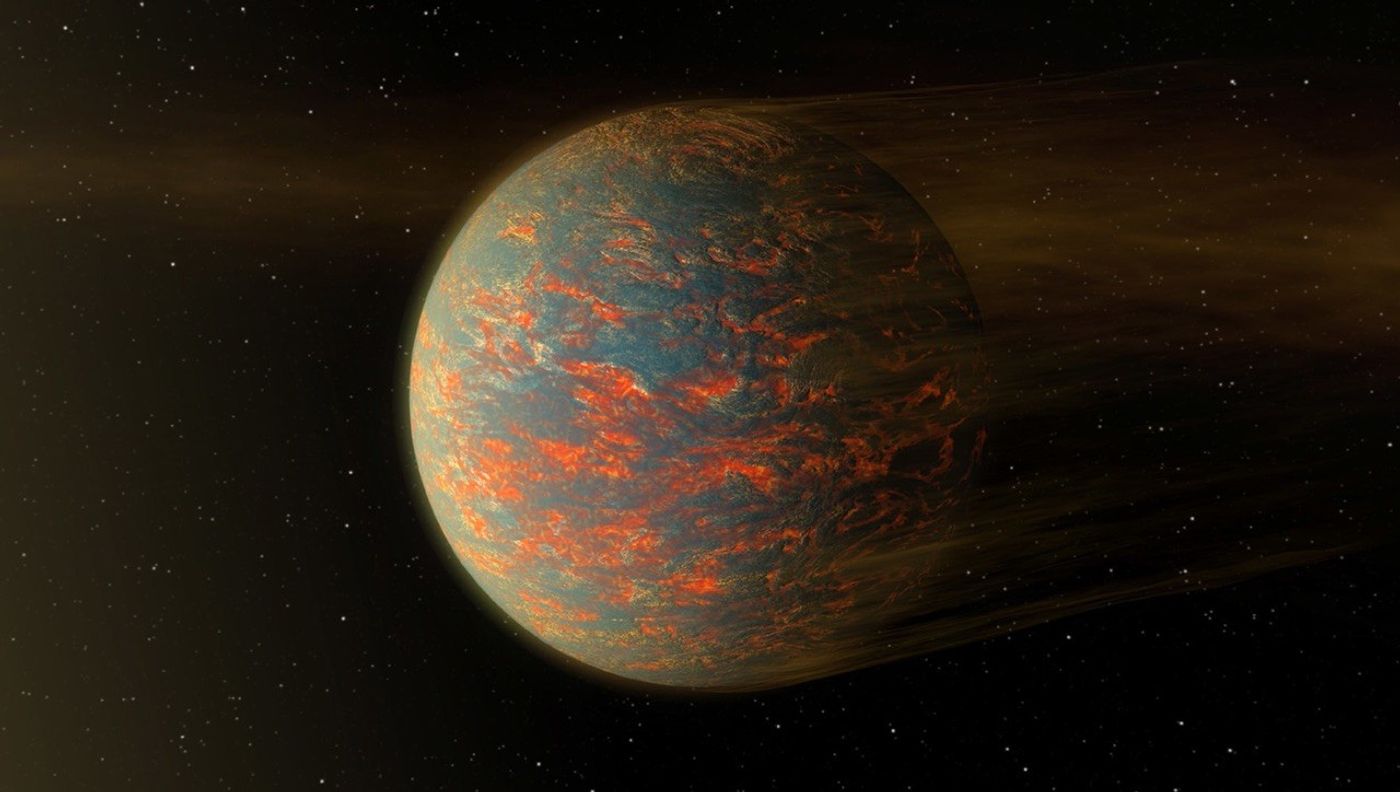
A new super-Earth
Astronomers have reported the discovery of a new super-Earth named Ross 318 b, orbiting within the “habitable zone” of a red dwarf star near Earth. An article on the subject was posted on the arXiv preprint server on May 11.
The red dwarf Ross 318, also known as Gliese 48, is well known to researchers. It is located just 28 light-years from Earth, which is very close by cosmic standards. It has a spectral class of M3.5V and a surface temperature of 3,450 K.
The planet discovered in its orbit is a super-Earth. With a mass 6.21 times that of Earth, its radius is 74% larger than that of our planet. The average distance between this planet and its star is just 0.16 AU, and it completes one orbit around it in 39 days.
Is life possible there?
The most interesting thing about this new discovery is that its method was quite unconventional by today’s standards. Nowadays, planets are most often discovered by the TESS space telescope, and it is indeed mentioned in the new study—but only as a supporting tool.
The bulk of the work, however, was carried out by the powerful ground-based spectrographs CARMENES and HIRES. They observed Ross 318 for 15 years, and it was the analysis of this data that led to the discovery of the planet. According to the study’s authors, this demonstrates the value of observations conducted using multiple instruments simultaneously.
The planet itself is also very interesting. Despite its proximity to the star, it has a surface temperature of 237 K. This means that it lies within the “habitable zone.” However, it is most likely tidally locked, meaning that it always faces the star with the same side.
However, there is one “but” here as well. The planet is a massive super-Earth, which means it must have a dense atmosphere. As it heats up unevenly, air currents will form within it, redistributing the heat across the entire planet.
According to phys.org

