

The Italian Space Agency (ASI) has signed a contract with Thales Alenia Space for the preliminary design of a multifunctional habitation module that will serve as a base for astronauts on the surface of the Moon. Its expected launch date is 2033.
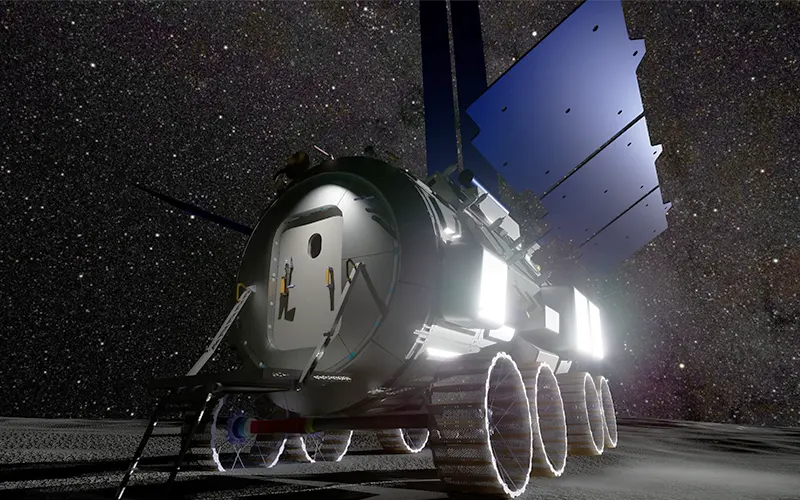
At the end of 2020, ASI and NASA signed a joint statement of intent to collaborate on developing opportunities for human habitation on the lunar surface as part of the Artemis program. This was followed by the signing of a bilateral cooperation agreement in June 2022, which tasked ASI with conducting preliminary design work on the Multi-Purpose Habitation (MPH) module.
The MPH module will be three meters wide and six meters long, and will weigh approximately 15 tons. It will be equipped with wheels for precise positioning, enabling it to support manned missions in various locations on the lunar surface. The module will be designed for one mission involving two astronauts over the course of a year, each lasting between 7 and 30 days. In emergency situations, it will also be able to support larger crews for shorter periods of time. Once deployed on the Moon, MPH is expected to have a service life of approximately ten years.
In July 2024, MPH’s main contractor, Thales Alenia Space, announced that the project had passed the initial design stage. On September 18, NASA’s Mission Concept Review Board concluded that the module’s design met the necessary criteria for the Artemis program and approved the next stage of its development.
On July 25, ASI announced the signing of a new contract with Thales Alenia Space Italia for the preliminary design phase of the MPH module. This stage of the project will include the development of critical technologies that will enable the module to withstand the harsh conditions of the lunar environment, protecting its inhabitants from radiation and micrometeorite impacts.
“The future lunar module, the result of the historic relationship between NASA and ASI, is part of Italy’s long-term investment strategy, which allows us to play an increasingly leading role in the new space race and, moreover, to be a fundamental part of the ‘Moon to Mars Strategy’ strategy of the Artemis program,” said ASI President Teodoro Valente.
The preliminary design phase is expected to last approximately two years. Thales Alenia Space Italia will lead this phase in collaboration with Altec, a joint venture between Thales Alenia Space and ASI, as well as other Italian industrial partners.
Earlier, we reported that NASA had selected instruments for the lunar rover.
According to europeanspaceflight.com

