

The Artemis II mission crew has begun several days of training on the Orion spacecraft. Next year, they will travel to the Moon aboard it.
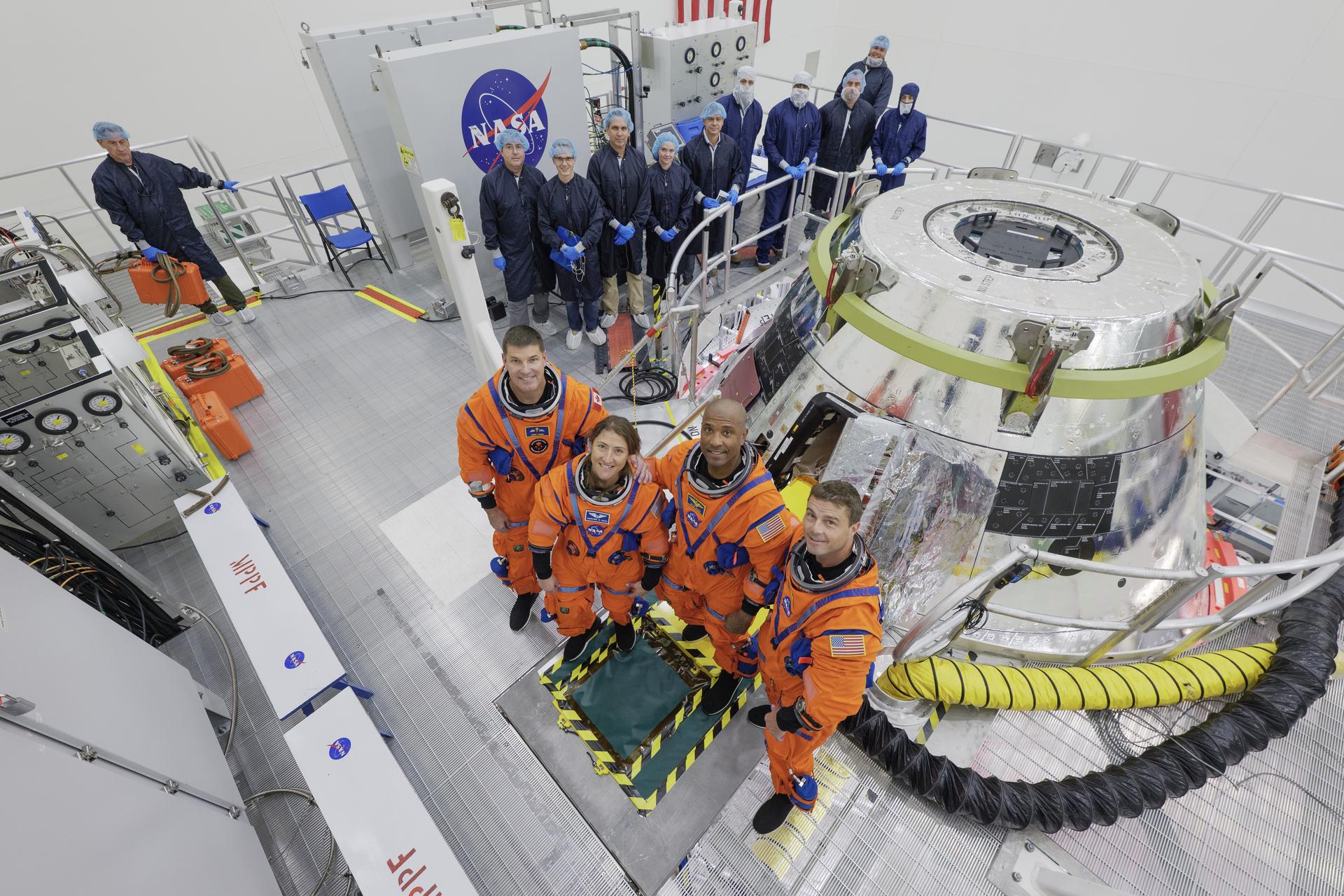
The Artemis II mission is scheduled to fly in April 2026. As part of this mission, launched using an SLS rocket, the Orion spacecraft will fly around the Moon on a free return trajectory and then return to Earth. Its crew consists of four people: NASA astronauts Reid Wiseman, Victor Glover, and Christina Koch, as well as Canadian Space Agency astronaut Jeremy Hansen.
As part of preparations for the upcoming flight, on July 31, crew members put on their spacesuits and boarded Orion to practice and test some of the conditions they may encounter during the mission.
Once in Orion, accomplished several actions that will be performed on launch day, including checking communications and the airtightness of the spacesuits. For the first time, astronauts were connected to the spacecraft and its communication and life support systems.
During the tests, several possible scenarios that could arise during flight were simulated. In some of them, the crew had to deal with potential problems such as leaks and failure of the air regeneration system fan, which is necessary for supplying oxygen and removing carbon dioxide from the cabin.
The tests have given astronauts the opportunity to train on the actual equipment they will use during the mission, enabling them and their support teams to familiarize themselves with it in configurations very close to those they will encounter in flight. This also allowed for verification of the compatibility of equipment and systems with flight dispatch procedures, enabling them to make final adjustments prior to launch.
The crew also practiced performing actions they would likely perform during the flight. In particular, the astronauts practiced removing and stowing the foot pans from the pilot and commander seats, which will give them more space in the cabin after launch. They also gained access to storage lockers and familiarized themselves with cameras, related cables and mounts, environmental control and life support equipment.
Earlier, we reported on NASA’s plans to build a nuclear reactor on the Moon.
According to NASA

