

The US House Appropriations Committee has taken a significant step toward the scientific community by expressing support for a number of landmark NASA space missions. These projects, which include research on Pluto, Jupiter, and Mars, were seriously threatened by radical budget cuts proposed by the administration for the fiscal year 2026. Although the committee did not directly allocate additional funds, its decision gives new hope for the continuation of these unique scientific programs.

The committee approved a bill to fund federal agencies, including NASA, with more than $24.8 billion. This figure is almost identical to the agency’s budget for the previous two years and significantly exceeds the $18.8 billion previously proposed by the White House. The decision, passed by a vote of 34 to 28, must now be voted on by the entire House of Representatives.
New opportunities for legendary missions
The most important outcome of the meeting was the approval of amendments to the report accompanying the budget bill. These amendments explicitly recommend continuing funding for several iconic missions. Among them are New Horizons, the spacecraft that was the first in history to explore Pluto and is now operating in the Kuiper Belt, and the Juno mission, which is uncovering the secrets of Jupiter and its moons.
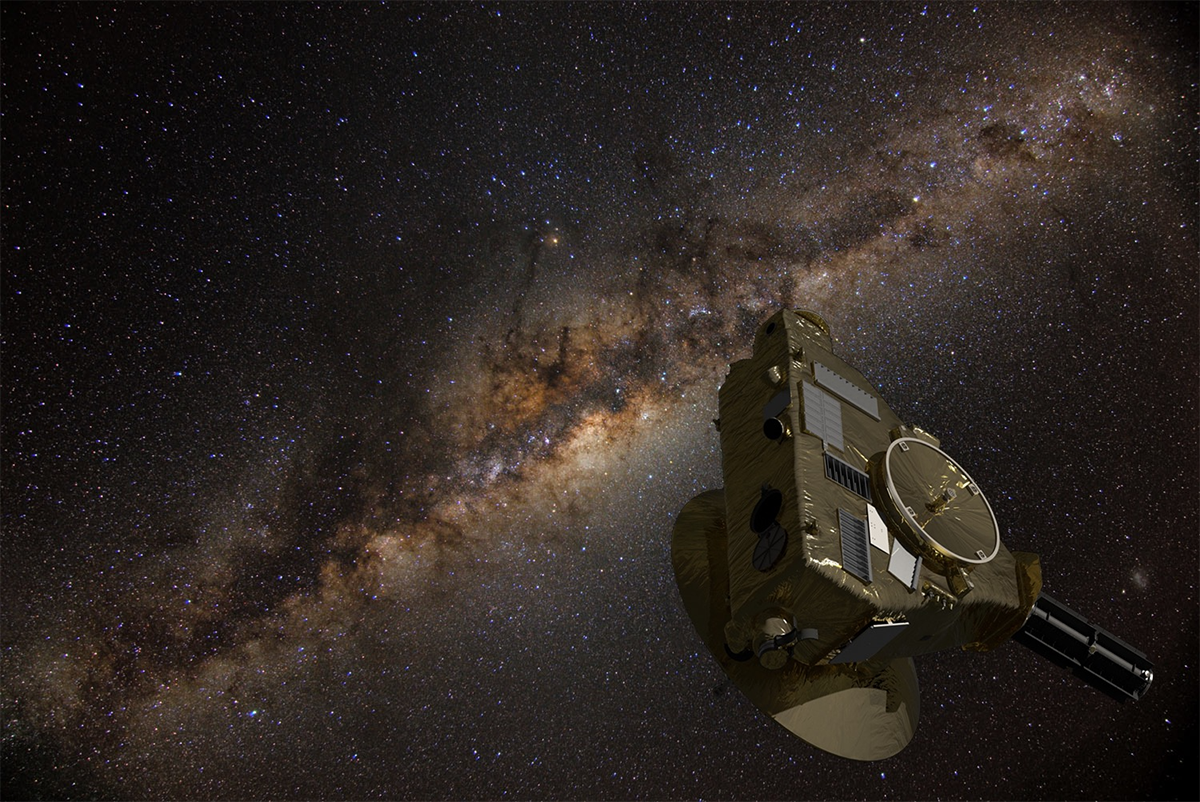
Source: NASA/Johns Hopkins APL/Southwest Research Institute/Serge Brunier/Marc Postman/Dan Durda

The report specifically highlights support for NASA’s initiative to establish a steady stream of scientific missions to the Red Planet using commercial partners. This paves the way for more flexible and economical exploration of Mars in the future.
The Future of the Chandra Observatory
A separate victory for astronomers was that the committee included a special section in the report dedicated to the Chandra X-ray Observatory. Launched in 1999, this unique telescope continues to provide scientists with invaluable data on black holes, star explosions, and galaxy clusters. The administration had proposed its complete closure due to funding cuts. Now Chandra has a real chance to continue its work.
Why are these missions so important?
The White House’s proposed $6 billion cut to NASA’s budget would have disastrous consequences for planetary research. Funding for this area would be reduced from $2.7 billion to $1.9 billion, which would lead to the suspension of dozens of active and future projects.
The crucial mission of New Horizons is a vivid example of what humanity could have lost. The spacecraft, which traveled billions of kilometers, radically changed our understanding of Pluto, revealing it not as a soulless ice ball but as a complex and dynamic world. Now the scientific community’s attention is focused on the upcoming vote in Congress, which will ultimately decide the fate of science.
Earlier, we reported on NASA’s actual budget.
Provided by spacenews.com

