

The travel film Antarctica, by Anton Ptushkin, beloved by all adventure lovers, has hit the big screens. It has set a new Ukrainian box office record for documentaries, grossing over 7 million hryvnia in its first weekend!
This is Anton’s first film about traveling outside of YouTube, which can currently only be viewed in theaters. However, the second one is on the big screen. You remember the triumphant “Us, Our Pets, and the War”, which came out last year and broke all records, right?
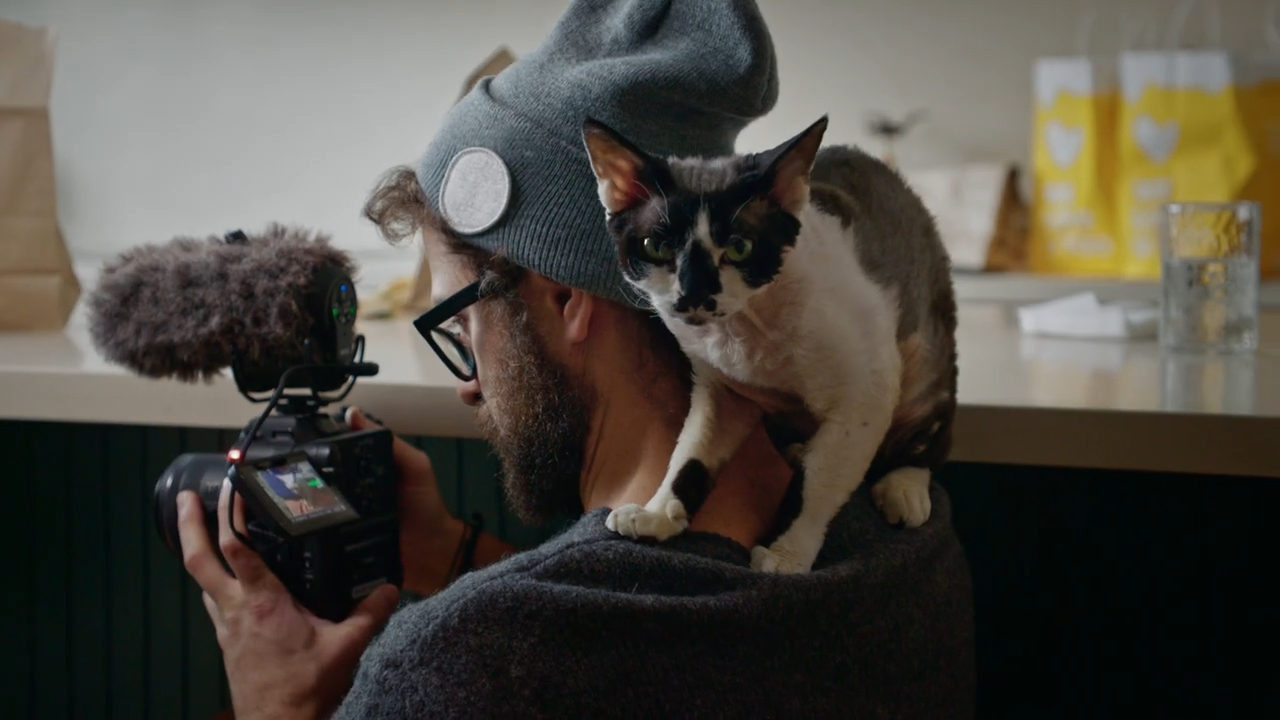
Image Credit & Copyright: YouTube / Anton Ptushkin
This new, surprisingly aesthetic film, written in popular science language, peppered with jokes and completely devoid of boredom, documents the author’s journey to the Ukrainian Antarctic station “Academician Vernadsky” during the changeover between the 29th and 30th Antarctic missions. The trip took place in March 2025, where Anton, who became the director, cameraman, and actor of this film, spent a week and recorded all stages of the expedition. When watching it, you forget and cannot believe that this work was created by just one person!
At a special screening attended by the author at the Planeta Kino cinema in Kyiv, Ptushkin admits that the film we can see on the big screen was not intended for cinemas at all: the original idea was “for friends”. But this informality gives rise to sincerity. This is not a grandiose epic, but a vivid diary of a week spent at the Ukrainian Antarctic station Akademik Vernadsky. The film gives you incredible peace and the opportunity to forget, at least for 86 minutes, the reality in which we live 24/7.
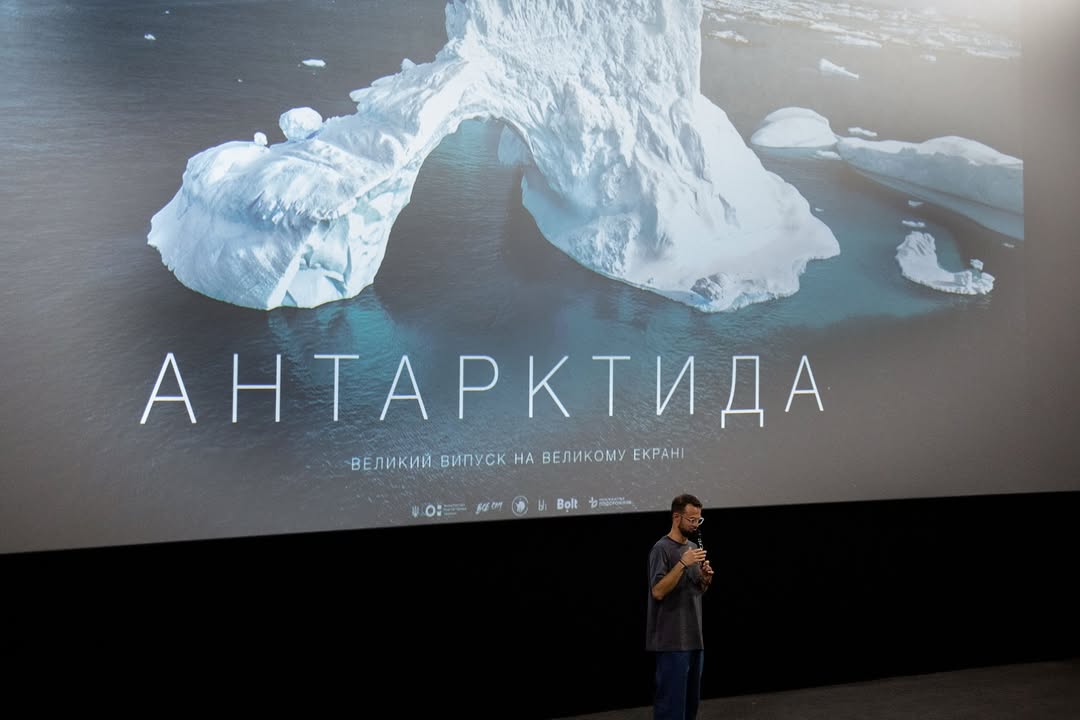
Image Credit & Copyright: Instagram / ptuxerman
Did you know that the Ukrainian station is located on an island and technically, it is not Antarctica, but Antarctica? You can learn about these and other interesting facts from Anton’s film, which can be watched in one sitting and reveals the secrets of the icy world in a simple and accessible way.
Journey through the “Noosfera”
The author travels from Chile through the Strait of Magellan, then the Drake Passage and the Southern Ocean to a station located at Cape Marina on Galindez Island, 7 km from the western coast of the Antarctic Peninsula.
The film begins with Anton’s encounter with the “Noosfera” – a Ukrainian icebreaker owned by the National Antarctic Scientific Center (NASC) and purchased by Ukraine in 2021. Formerly the British James Clark Ross, launched in 1990, it now flies the Ukrainian flag.
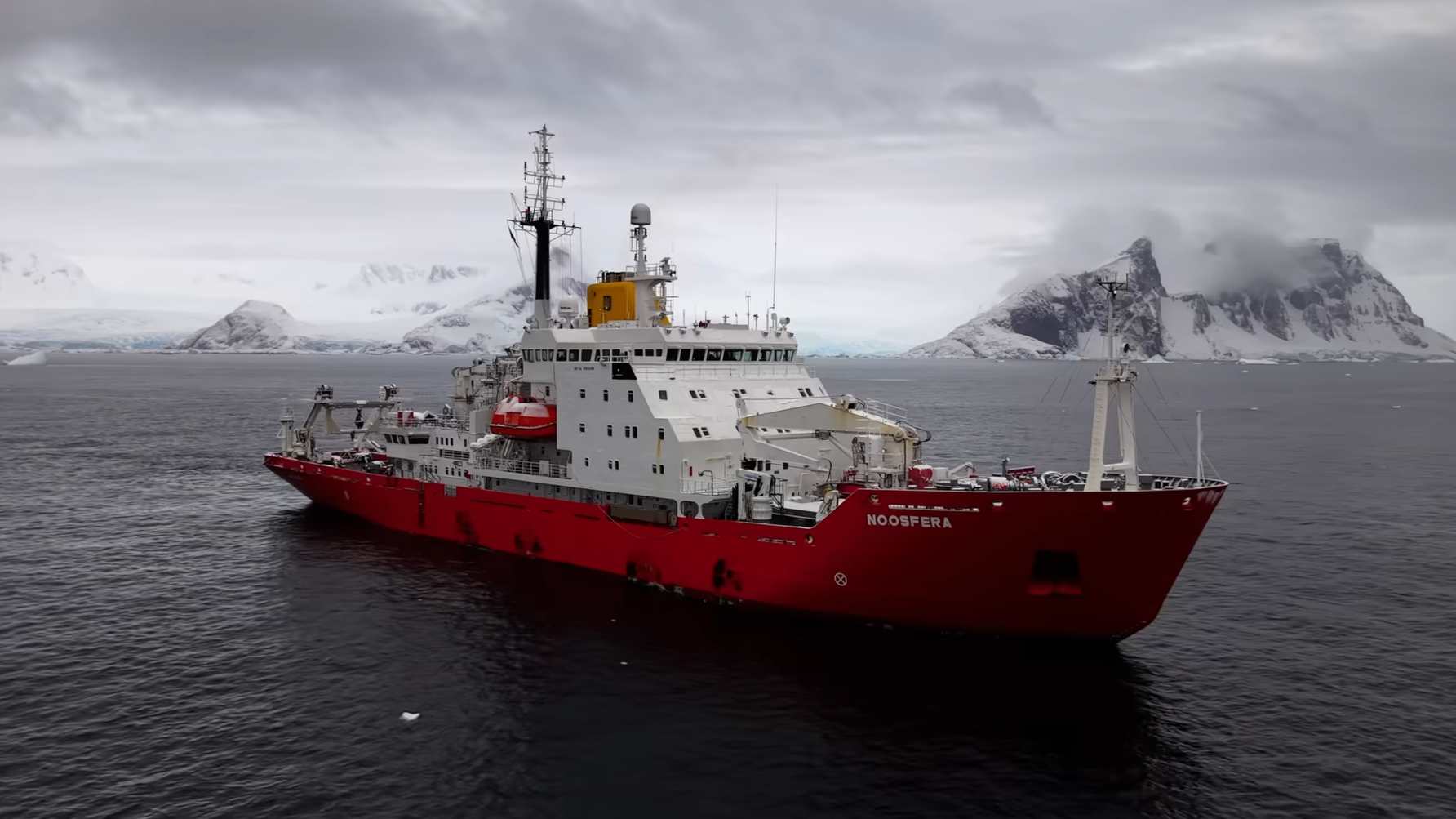
Image Credit & Copyright: B&H Film Distribution Company
Ptushkin conducts a detailed inspection of the ship and recounts its history. The author presents it both as a technical object and as a symbol. Purchased in Britain for five million dollars instead of twelve, it became our navy’s “surviving Mriya”.
Next, the narrator meets Ukrainian polar explorers from the 30th Ukrainian Antarctic Expedition, who were just heading to Vernadsky to spend the winter – and the journey begins…
Anton talks about the seasickness that struck him, the peculiarities of his journey, and life on an icebreaker. From the Strait of Magellan to the Drake Passage, the viewer experiences a real roller coaster ride. The author honestly shares his own adventures and weaknesses. But this is what makes the journey real and creates a wonderful immersive effect: Antarctica does not grant victories without a price.
The magic of waves and icebergs
In the film, Anton talks a lot about icebergs, of which he collected a whole collection of photographs during his travels. In fact, the whole story is permeated with iceberg mania – and this is the incredible highlight of the entire film. Anton considers a rather rare striped iceberg to be the highlight of his own collection.
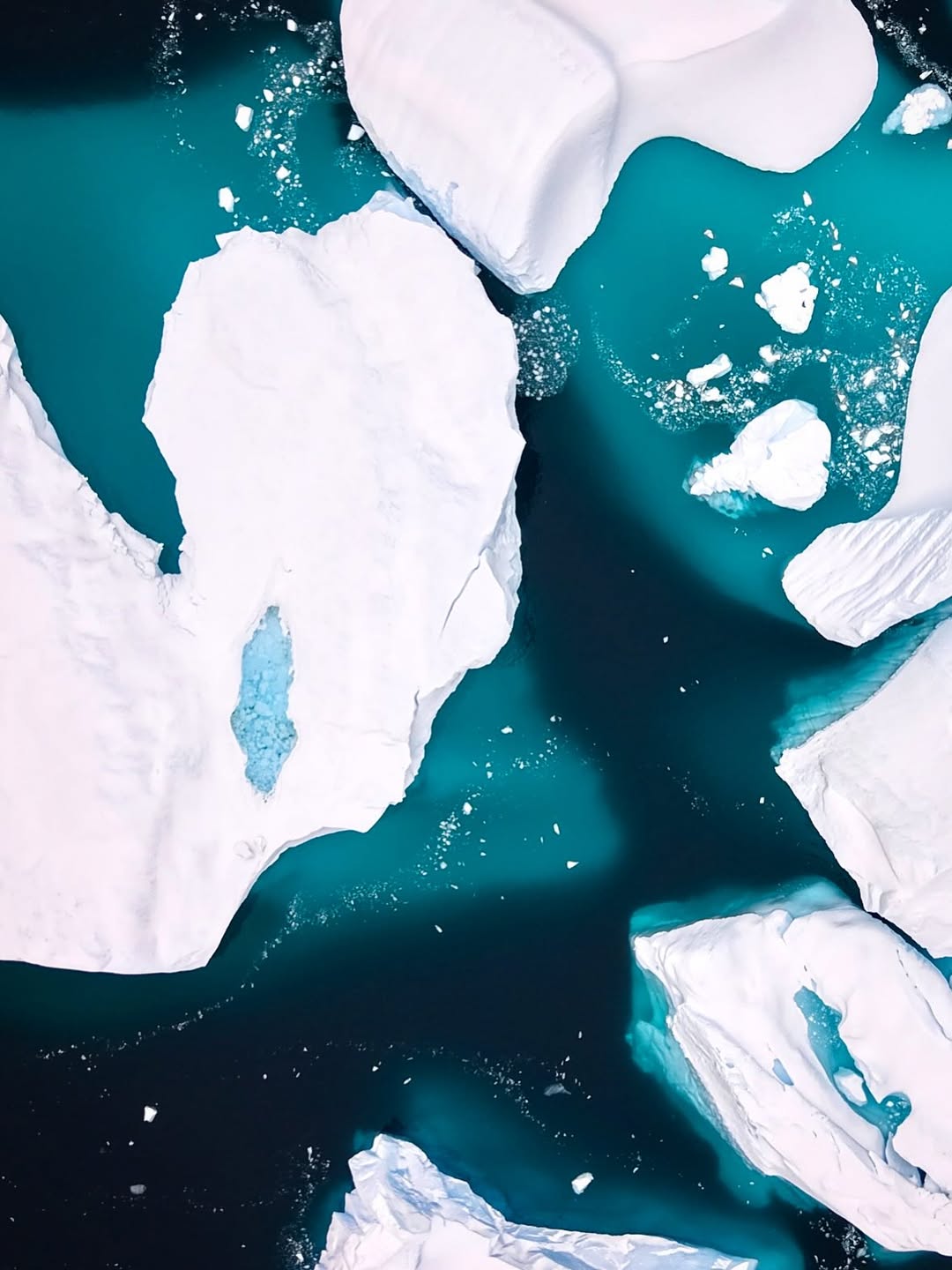
Image Credit & Copyright: Instagram / AntarcticTheMovie
However, it is not just about aesthetics; it also describes the process of tracking icebergs in sufficient detail. Spoiler alert: even though we are well into the 21st century, it is not all that simple, as icebergs remain very treacherous and pose a real threat to polar explorers!
And the waves and boundless expanses of the ocean! Their diversity and pristine beauty in surprisingly successful shots – viewers are overwhelmed by a veritable ocean of aesthetic pleasure.
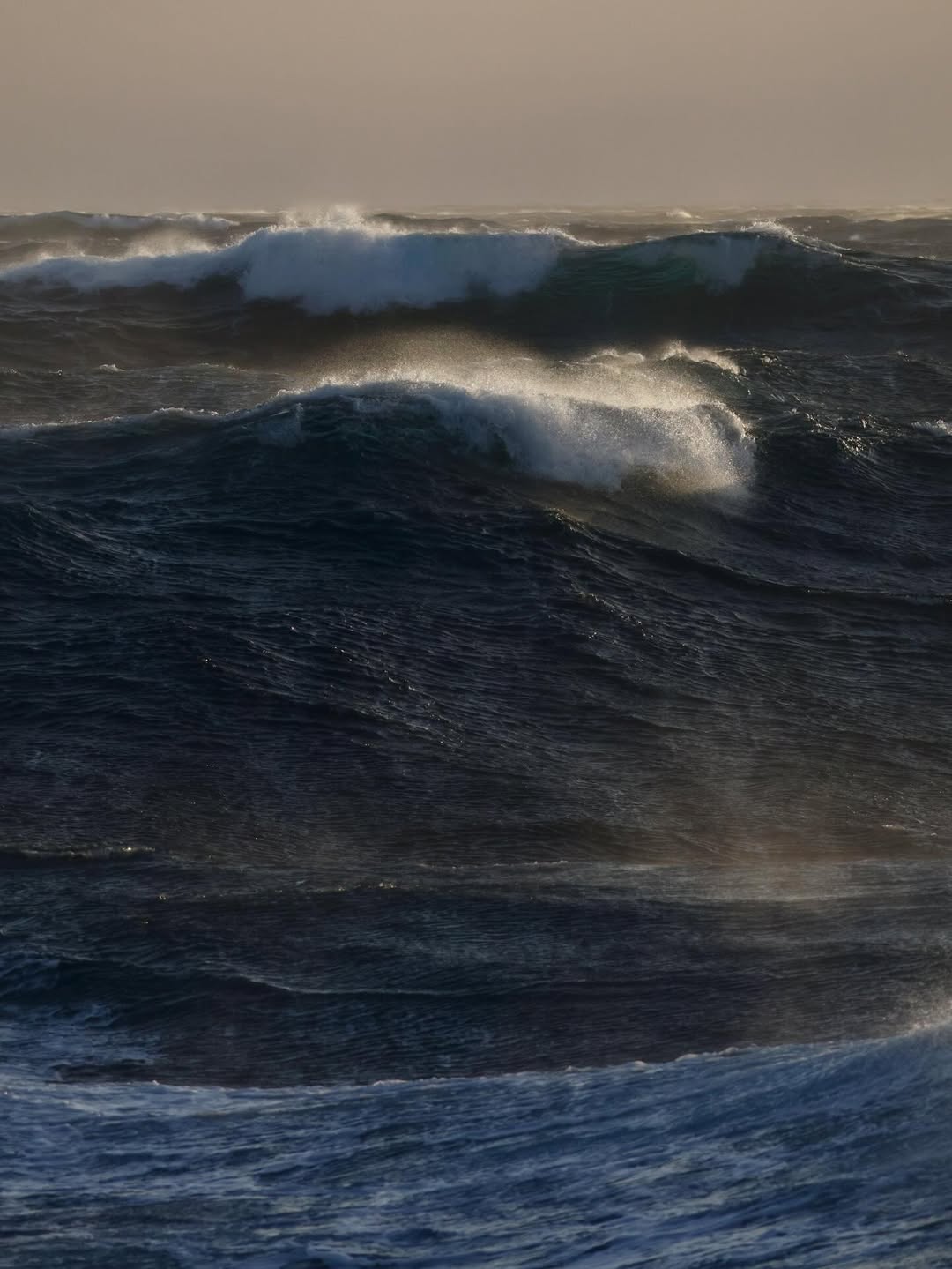
Image Credit & Copyright: Instagram / ptuxerman
Life among penguins
While at the station, Anton shares impressive and incredibly fascinating details about the life of penguins. You remember that polar bears live on the other side of our planet, right?
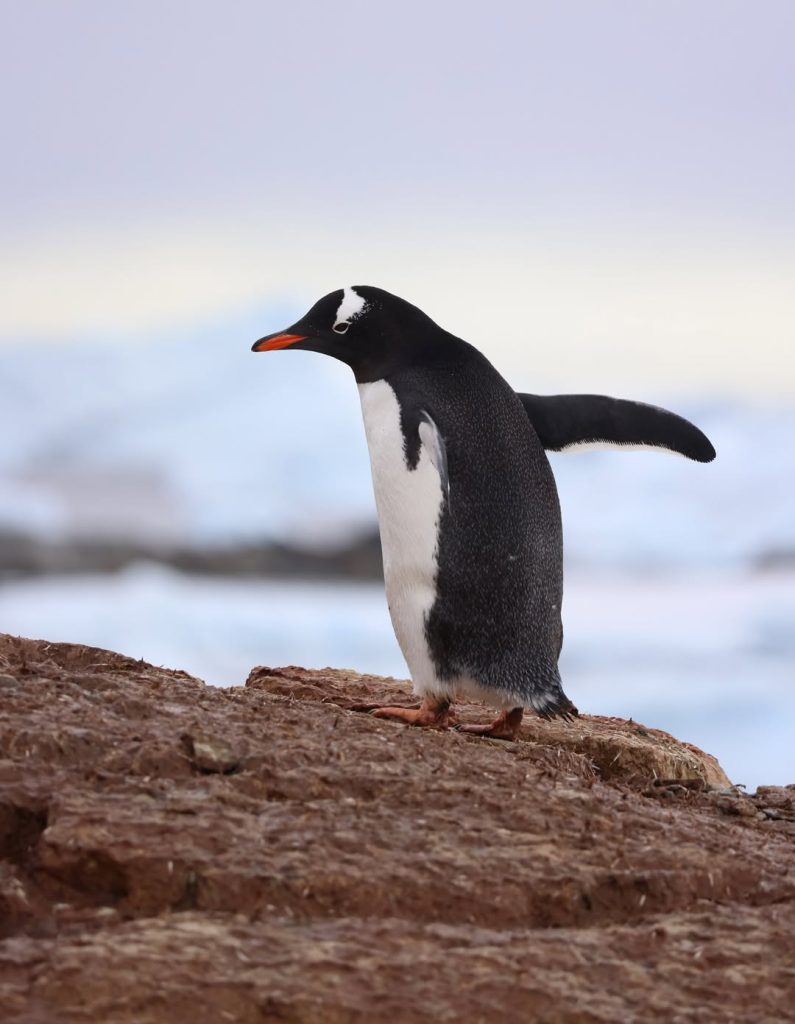
Image Credit & Copyright: Instagram / AntarcticTheMovie
The gentoo penguin colony is the star of the film. The author highlights the lives of these adorable creatures and the amusing rules of coexistence with polar explorers. For example, are you familiar with the traffic rules on Vernadsky Station? What about Italian passions in penguin families? Then you should definitely watch this film!
The author does not shy away from disturbing moments. One terrifying story about a sea leopard is worth the price of admission! The balance between fear and fascination is maintained.
Vernadsky Research Base
This is where the other part of the story begins – about autonomy and endurance. Three generators “just in case”, distilled and mineralized water from the ocean, double walls of fuel tanks…
The film provides a detailed look at the lives of polar explorers at the station, what they do, their daily routines, safety issues, and behind-the-scenes work.
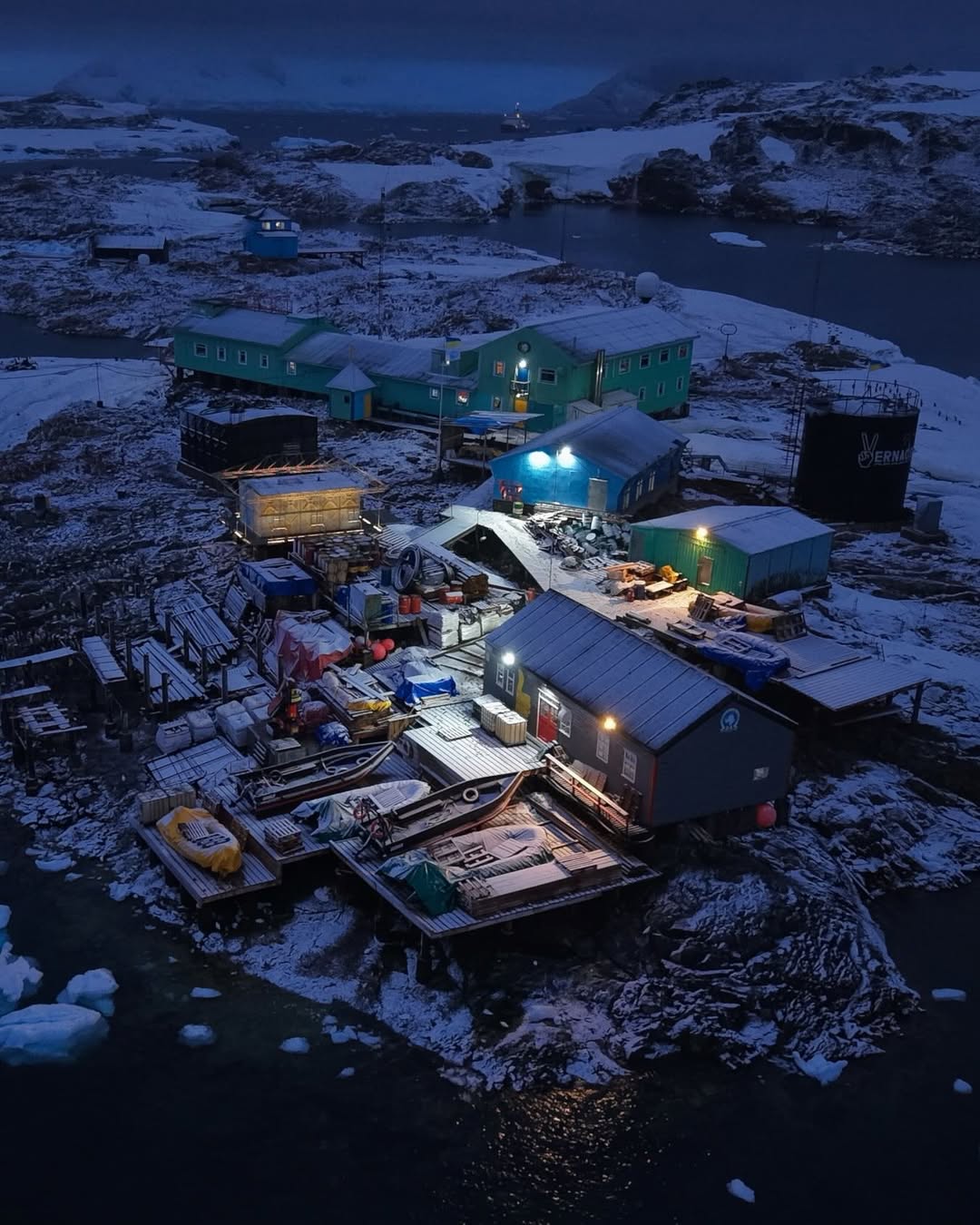
Image Credit & Copyright: Instagram / ptuxerman
An important detail is the world’s southernmost bar named after Faraday, which was built by accident instead of a conference room back when the British were still there. It houses a collection of vinyl records and National Geographic magazines. Ukrainian polar explorers spend their cozy evenings here and even allow themselves to relax a little sometimes.
The Antarctic Treaty, Ukraine’s veto power, Russia and China’s blockade of the reserve, and a moratorium on mining until 2048. The film does not lecture on geopolitics, but it does provide a coherent explanation of why Ukraine’s presence here is important. Antarctica is not “no man’s land”, but a field of diplomacy.
Antarctica is sustained not only by steel and diesel, but also by people. And their little rituals: Saturday borscht with meat, embroidered shirts instead of suits, a chapel (perhaps the only place where one can be alone). All this creates a psychological framework for a year in isolation…
A warm report from the edge of the world
If there were such a thing as Instagram cinema, this film would definitely top the charts! An incredible number of the most aesthetic shots (even when they depict the imperfect and overly mundane) immerse you in the atmosphere of the sixth continent and the unknown world somewhere beyond the horizon.
This is not a documentary full of boring facts, nor is it a heroic epic; the film does not dramatize survival. It is a warm report about the road, the station, and the people. It shows Antarctica as human, with its beauty, risks, and everyday life.
This film is worth watching for anyone who wants to see that Ukraine’s presence on the sixth continent is not exotic, but another reason to be proud.
If you want to get a huge dose of pristine beauty, genuine inspiration, and pure tranquility, don’t walk, run to the cinema to see Anton Ptushkin’s film Antarctica! Universe Space Tech highly recommends it.
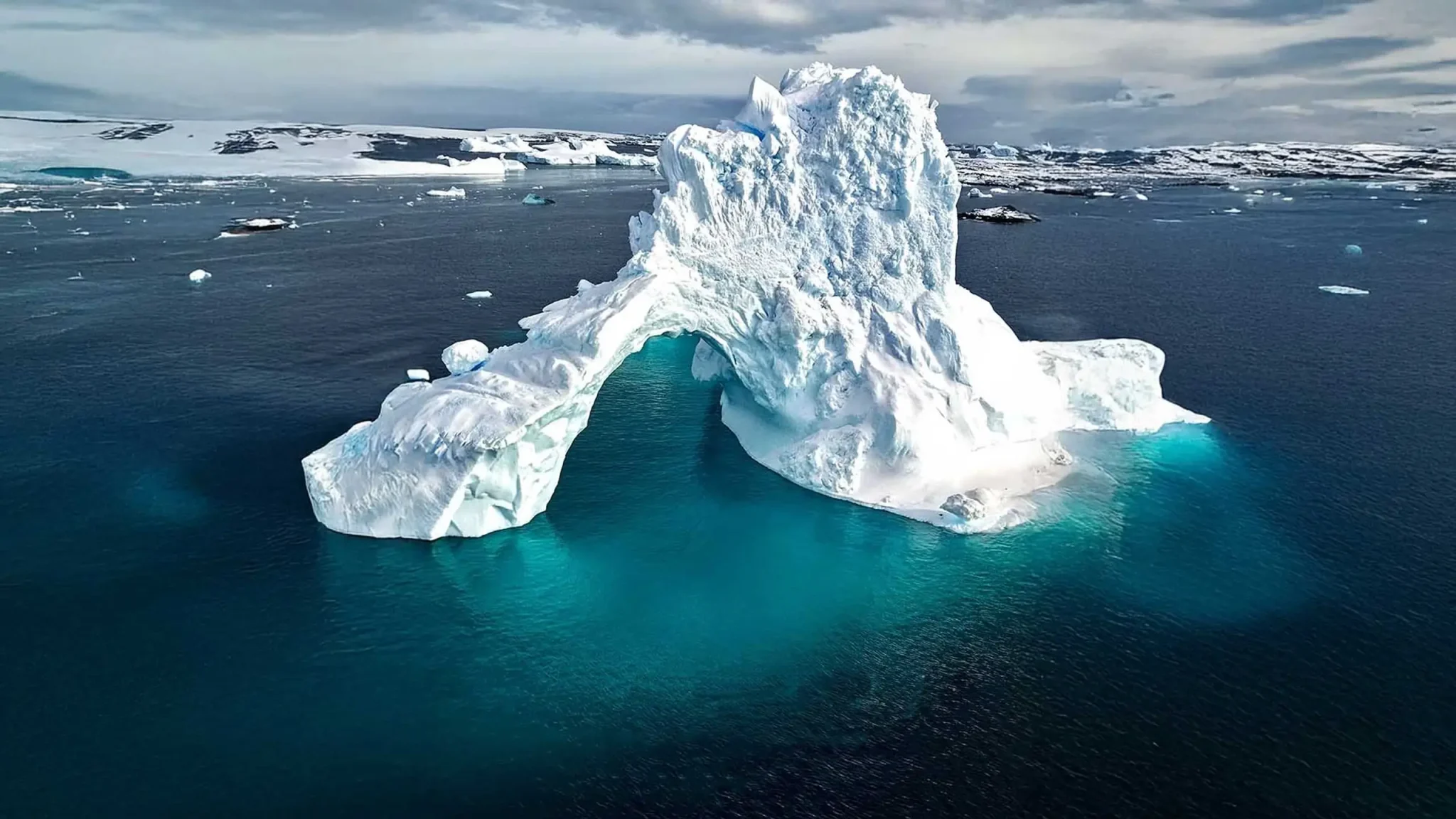
Image Credit & Copyright: B&H Film Distribution Company
P.S. At a special screening attended by the author at the Planeta Kino cinema, we asked Anton about the starry sky over Antarctica. He admitted that during his stay there, it was very cloudy, so he couldn’t say what it was like. At the same time, he emphasized that it is a different hemisphere, so there is definitely no Ursa Major or Ursa Minor, but you can see the Crux. For comparison, he added that two weeks ago he saw a magnificent sky in the Carpathians – and this is his personal verified experience.
Of course, we were expecting more juicy details, but the reality turned out to be what it is. At the same time, it leaves room for ideas for future films. Who knows, maybe Anton’s next work will be dedicated to space. In any case, we will definitely be looking forward to it!

