

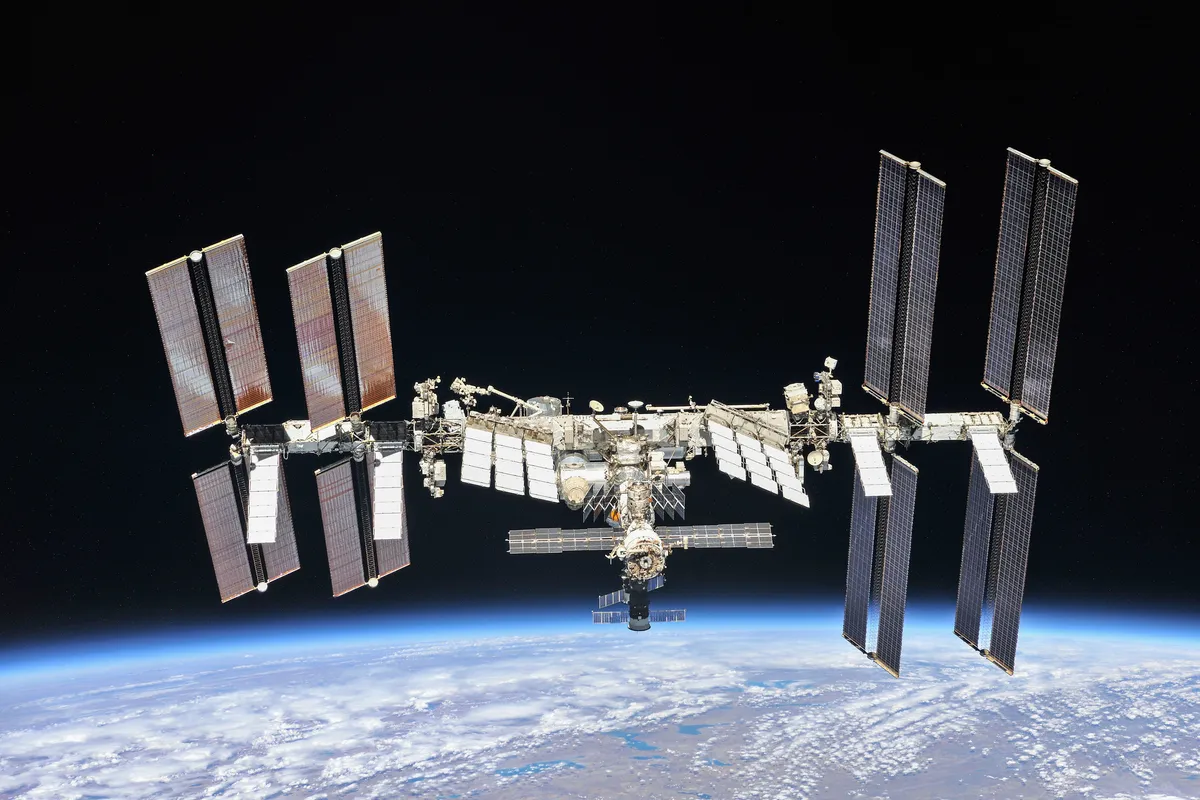
From July 3 to 8, residents of North America and parts of Europe will be able to see two of the largest space objects in orbit: the International Space Station (ISS) and the Chinese space station Tiangong — almost simultaneously in the predawn sky.
They will fly across the sky within minutes of each other, and on July 5, they will even be visible simultaneously in some areas of eastern Canada and the northeastern United States.
The space tandem can be observed now thanks to seasonal lighting conditions. In July, satellites in low orbit are illuminated by the sun throughout the night. Since both stations orbit the Earth approximately every 90 minutes, there are several opportunities to see them each night.
The ISS orbits at an altitude of approximately 416 km, while Tiangong orbits slightly lower, at an altitude of 393 km. Although their orbits are different, they can appear in the same part of the sky, forming a rare “double flyby.”
The ISS is the largest artificial object in orbit, measuring over 100 meters in length. It is so bright that it can outshine Venus and look like a star “floating” across the sky. Tiangong, on the other hand, is a smaller, three-module Chinese station that is also quite bright. Under favorable conditions, its brightness reaches the level of Jupiter. Currently, there are 14 astronauts aboard both stations.
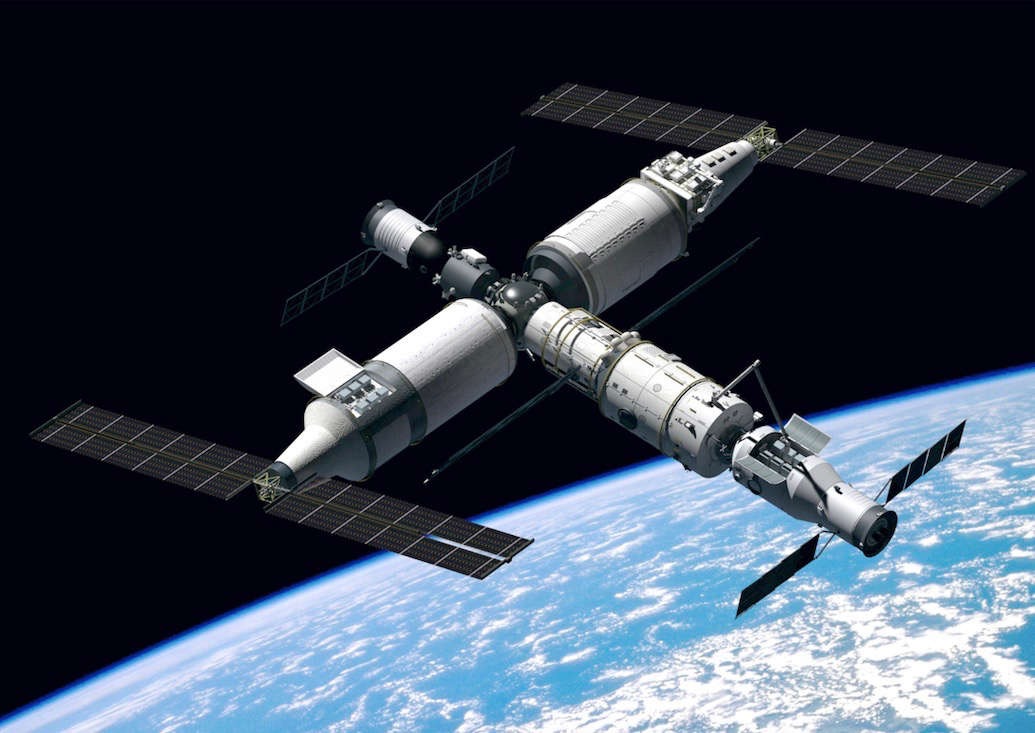
The simultaneous passage of two space stations over Earth is a rare event that occurs only a few times a year. With a bit of luck and favorable weather conditions, they can be observed in the morning with binoculars or even with the naked eye.
To find out exactly when to expect the stations to fly over, you can use online services. For example, Heavens Above. Simply enter your coordinates or select a city to find out the exact time of the ISS and Tiangong flights. You can also use NASA’s Spot the Station website, which shows online when and where to search for the ISS in a specific region. Both services provide information on the direction of movement, maximum altitude, and visibility duration of stations.

