

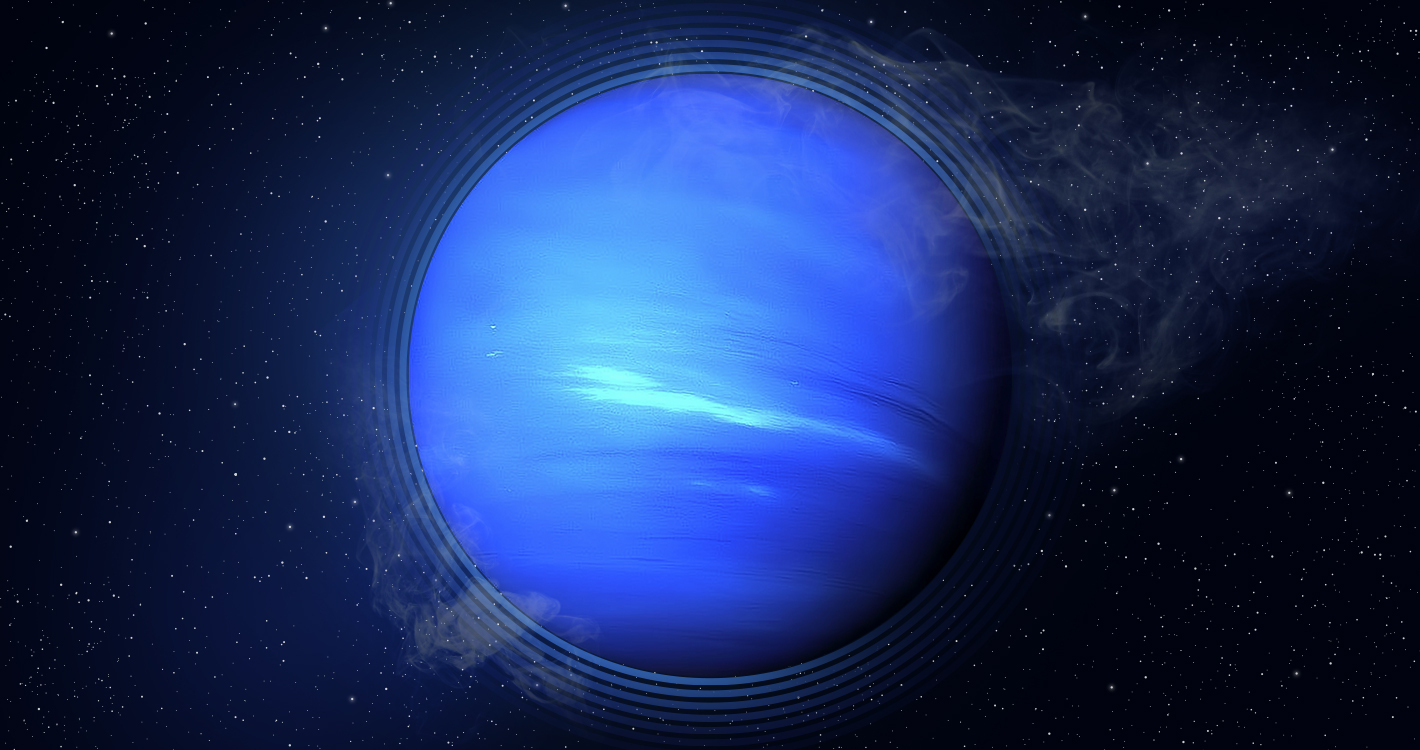
Uranus and Neptune are often called ice giants, contrasting them with both terrestrial planets and gas giants. In reality, there is little or no ice on them. However, even this is not their greatest paradox and mystery.
Ice giants
A study of Uranus and Neptune recently appeared online, attracting considerable interest from the general public. It discussed research into the composition of the depths of these planets, which is likely to be quite different. Therefore, our understanding of these objects as a separate class of ice giants can be called into question.
However, in reality, this statement cannot be considered surprising. But to understand why, we need to look at the very origin of this term.
As people explored the Solar System, they learned that planets can be very different from Earth. While Mercury, Venus, and Mars are rocky spheres like our world, Jupiter and Saturn do not have solid surfaces and are more similar in chemical composition to stars that never ignited.
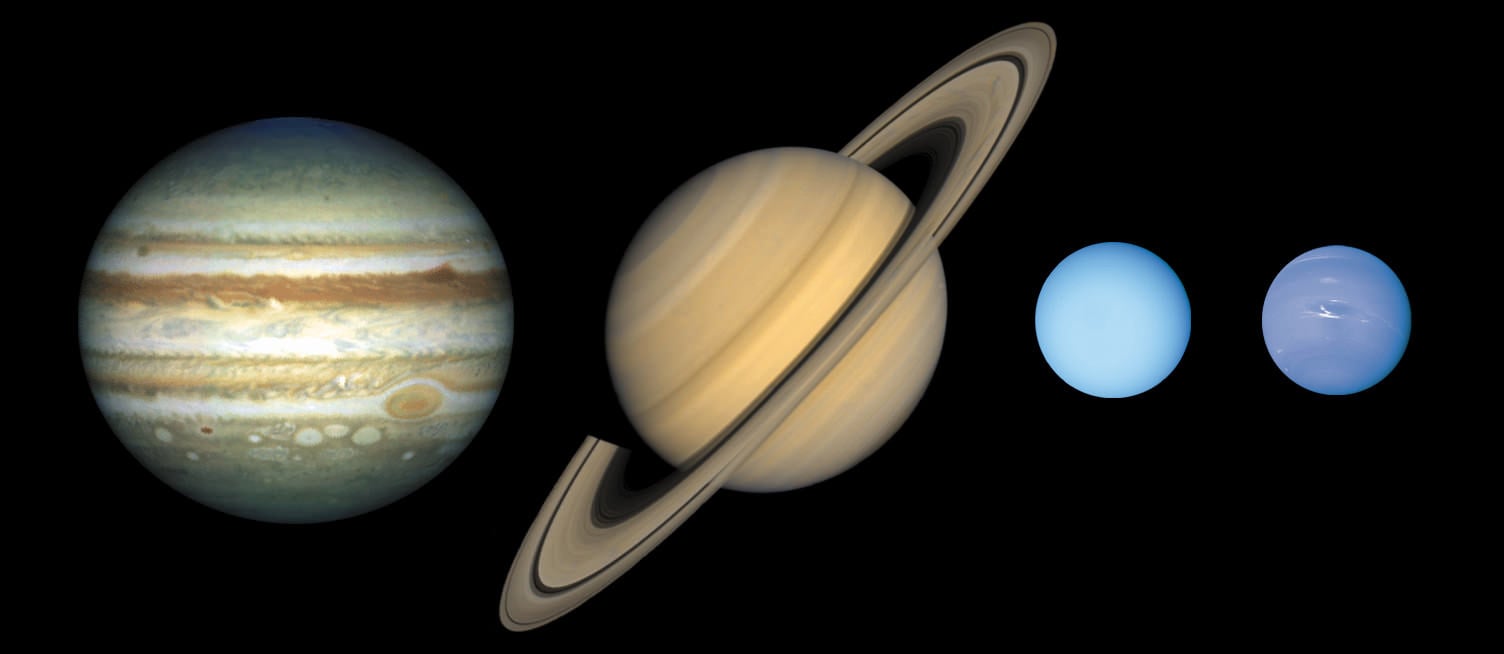
The existence of two types of planets already seems mysterious. However, if you move further away from the Sun, you will encounter Uranus and Neptune, which, at first glance, resemble smaller copies of Jupiter and Saturn. However, hydrogen and helium, which make up most of the mass of stars, brown dwarfs, and Jupiter- and Saturn-type planets, account for only 20% of their mass. The rest is rock, water, methane, ammonia, and other substances heavier than helium.
At the same time, water, methane, and ammonia make up most of the mass of Uranus and Neptune, while everything else (silicate rocks and metals) is concentrated mainly in the cores of these planets. It is also important that these worlds are so far from the Sun that these three substances, which are in liquid and gaseous states on Earth, would be ice there. It is this assumption that gave the name to this type of world, which are like gas giants, but not quite.
Ice, liquid, gas
However, in reality, everything is much more complicated. It is important to remember that the enormous mass of Uranus and Neptune generates powerful gravitational forces that compress matter. Therefore, although the upper layers of the atmospheres of Uranus and Neptune have a temperature of about -220°C, at greater depths the temperature can reach several thousand degrees under high pressure.
Under such conditions, ammonia, water, and methane are not in a state of ice, but are supercritical fluids. This is a special state of matter in which there is no longer any difference between liquid and gas. At the same time, substances inside this supercritical fluid can partially transition to a solid state. For example, methane can turn into diamonds, which quickly fall into areas closer to the planet’s core. The formation of exotic forms of water ice is also possible in this layer.
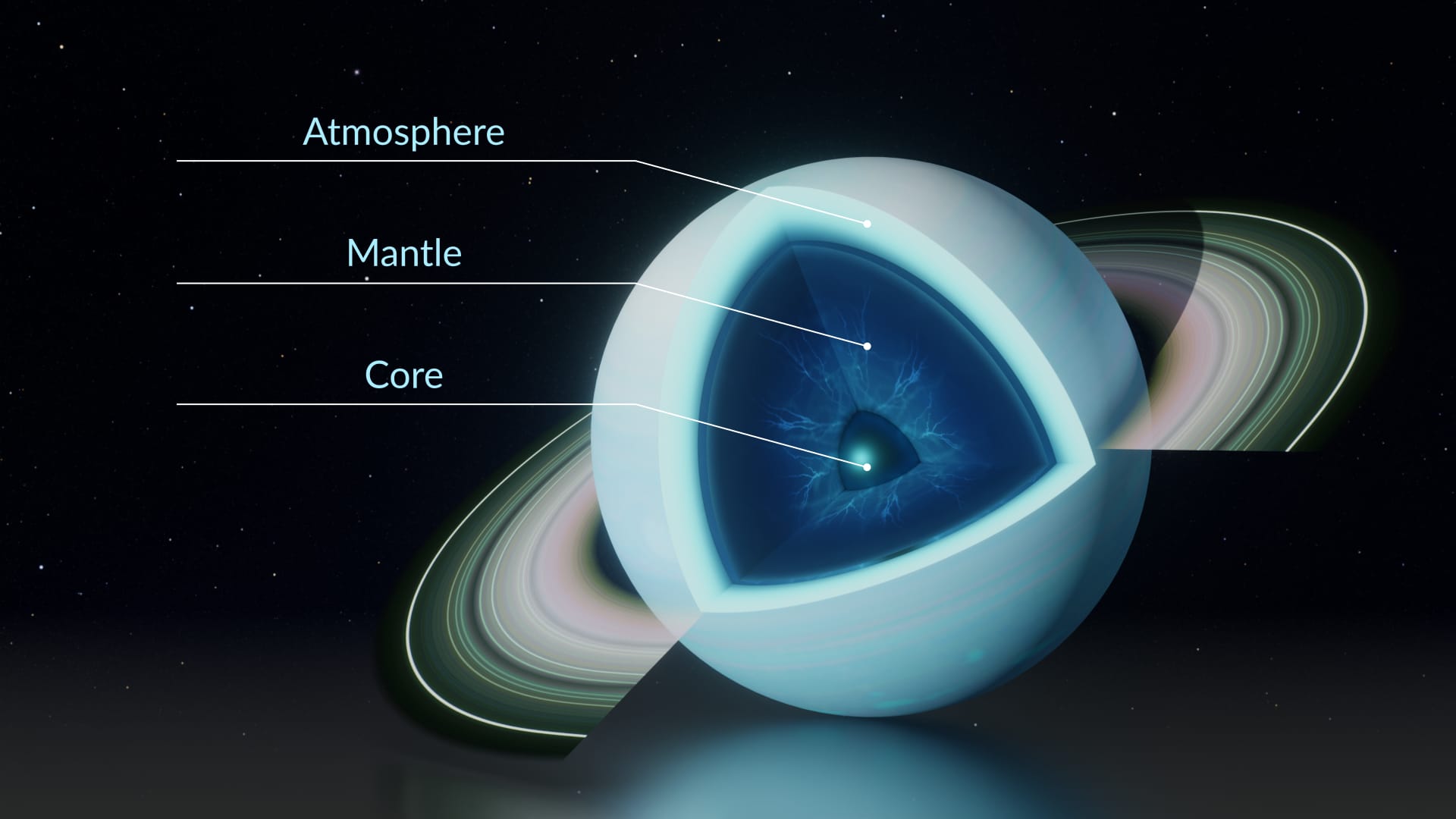
At this stage, one might get the wrong impression that the difference between gas giants is actually minimal, because on Jupiter and Saturn, as you go deeper, hydrogen and helium also start to act like liquids and then metals, but really, the stuff there stays a gas, just a really dense one.
In any case, Uranus and Neptune cannot be called stars that did not ignite. In terms of their chemical composition, they are as far from the Sun as they are from Earth. One could assume that these are separate types of planets and leave it at that, if we did not end up with three completely different types of celestial bodies instead of two, all of which would have to have formed from the same accretion disk.
The formation of planets
In fact, for modern astrophysics, all these questions are not as unsolvable as they may seem. Scientists have observed accretion disks around young stars many times. The theory that small particles begin to stick together, forming larger and larger objects, is well developed. According to this theory, in the final stage, they stick together, forming young planets, inside which heating and gravitational differentiation of depths begin. They melt, heavy elements end up in the core, lighter ones – near the crust.
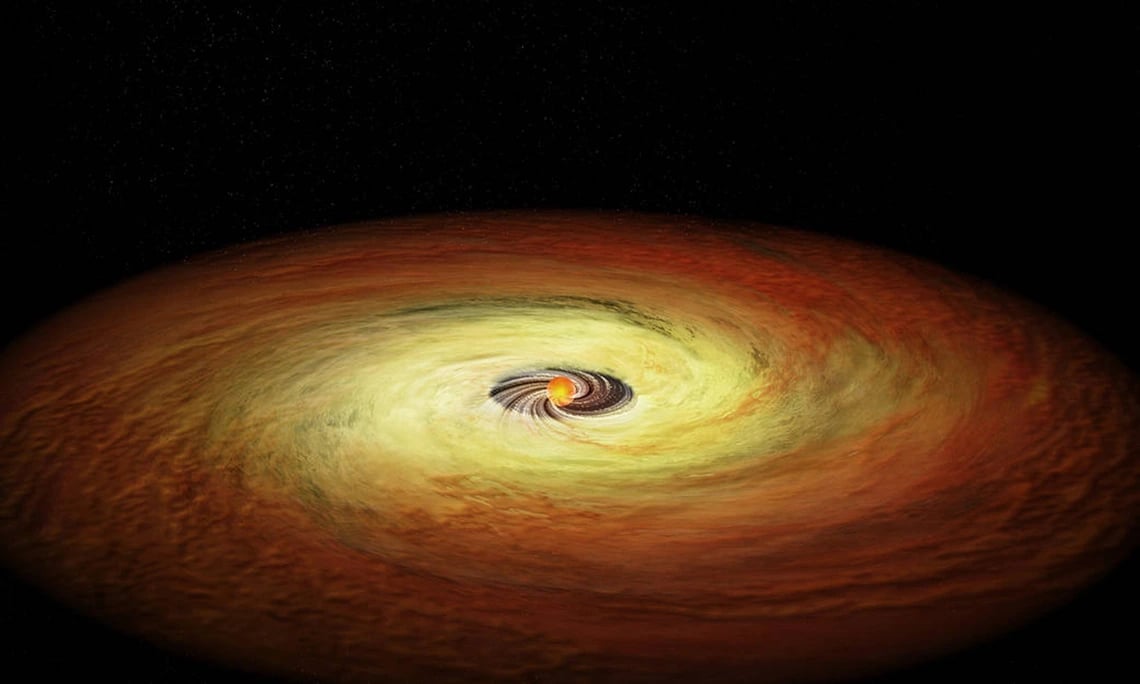
Next, Earth-like planets begin to collect volatile substances and gases around themselves. Whether the same thing happens with giant planet embryos, or whether the process of gas collection begins much earlier in them, is a highly debatable question. Only one thing is clear: there is no hydrogen or helium left in the inner parts of the star system, and the amount of water and other similar substances is very insignificant.
Most of them are located farther from the star, and it is there that gas and ice giants are formed. Incidentally, quite a few of the latter have already been discovered near other stars. However, at least some of them are much closer to their stars than in the Solar System. This is a bit mysterious, but it can be explained by the migration of planets at the dawn of their existence.
Those Neptunes that are located in the habitable zone of their stars or even beyond their inner boundary can no longer be called ice giants, so the term “water giants” has been proposed for them, which is only further misleading, because in reality these are the same planets, and there is often no more water on them than methane and ammonia.
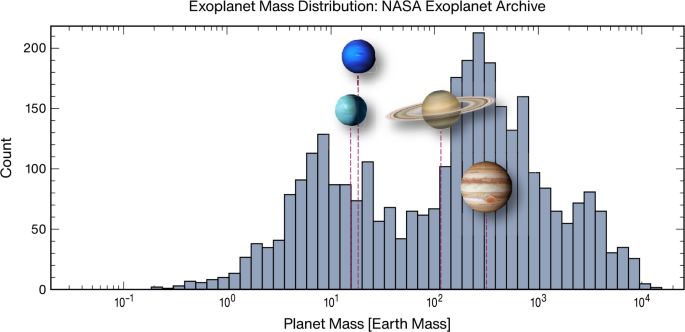
However, there is something else interesting about star systems outside our own. Many large gas giants (Jupiters) have been discovered in them, as well as Neptunes. But there are very few planets of intermediate size, such as Saturn, or slightly smaller. This is one of the many mysteries of ice giants.
This fact can be interpreted in different ways. Perhaps it is evidence that Jupiters and Neptunes are not formed in the same way. Possibly, upon reaching a certain size, a planet with a mass of 12-18 Earths begins to attract matter rapidly and evolves into a large gas giant.
In addition, the distribution of Neptunes in other star systems seems very strange. In their inner regions, planets of this type are very rare, which is why these areas are called Neptune deserts. In the outer regions, called the Neptun savannah, there are more of them, but still not many.
The bulk of ice and water giants is concentrated in a narrow zone between the “savannah” and the “desert,” known as the Neptune ridge. The distance at which it is located from the star depends on the latter’s luminosity, but this pattern holds for stars of different types.
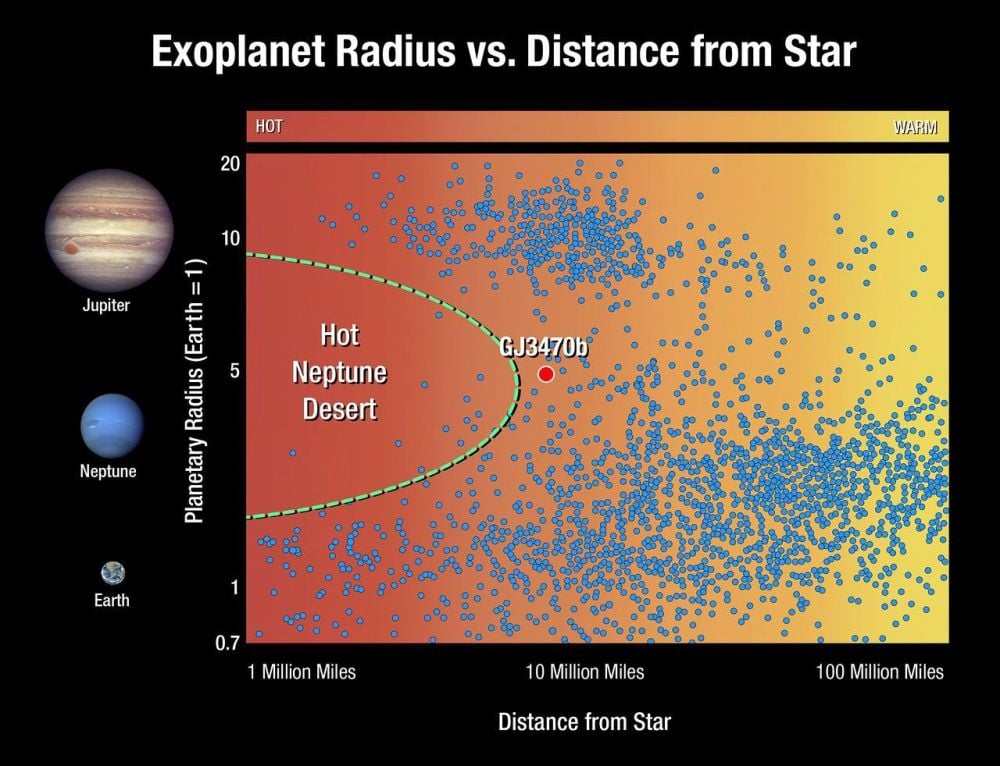
There are many ideas about what processes could lead to such a distribution and whether it is somehow related to the small number of Saturns in the universe, but scientists have not yet come up with any solid evidence.
Sub-Neptunes and super-Earths
However, the main mystery of ice giants is not whether they evolve into Jupiters, but how they are related to Earth-like planets. Because while there are few planets similar to Saturn in space, there are an enormous number of objects larger than Earth and smaller than Neptune.
The problem is that we do not know what they actually look like, because there is nothing similar in the Solar System. They are usually referred to as super-Earths, but models of planet formation show that they must be surrounded by thick atmospheres and possibly completely covered with water. A thick gas envelope that transitions into an ocean many kilometers deep, and somewhere there, at the very bottom, a silicate ball – does that remind you of anything?
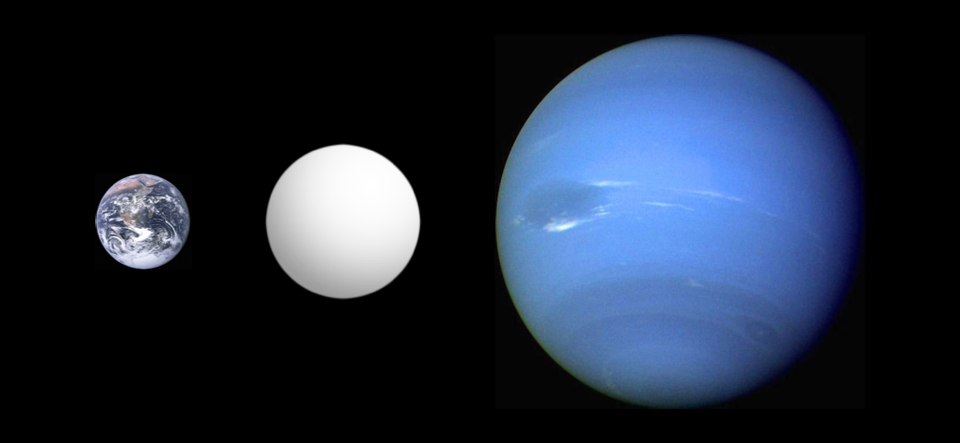
There is also a theory about the existence of so-called Hyceans – planets completely covered with water and with a powerful hydrogen atmosphere. In fact, these are mini-Neptunes. And then the question arises: how many more unknown types of worlds exist in space? Is it possible that ice giants and Earth-like planets are actually one type, only formed under different conditions?
If the latter is true, then, on the one hand, this is good because it allows us to create a theory that explains the formation of all the diversity of worlds that we observe.
On the other hand, there are many questions about what factors influence the final shape of the world after it is formed from planetesimals. The cores of Jupiter and Neptune are not very different in size from Earth. They are the same silicate spheres, possibly with metals inside.
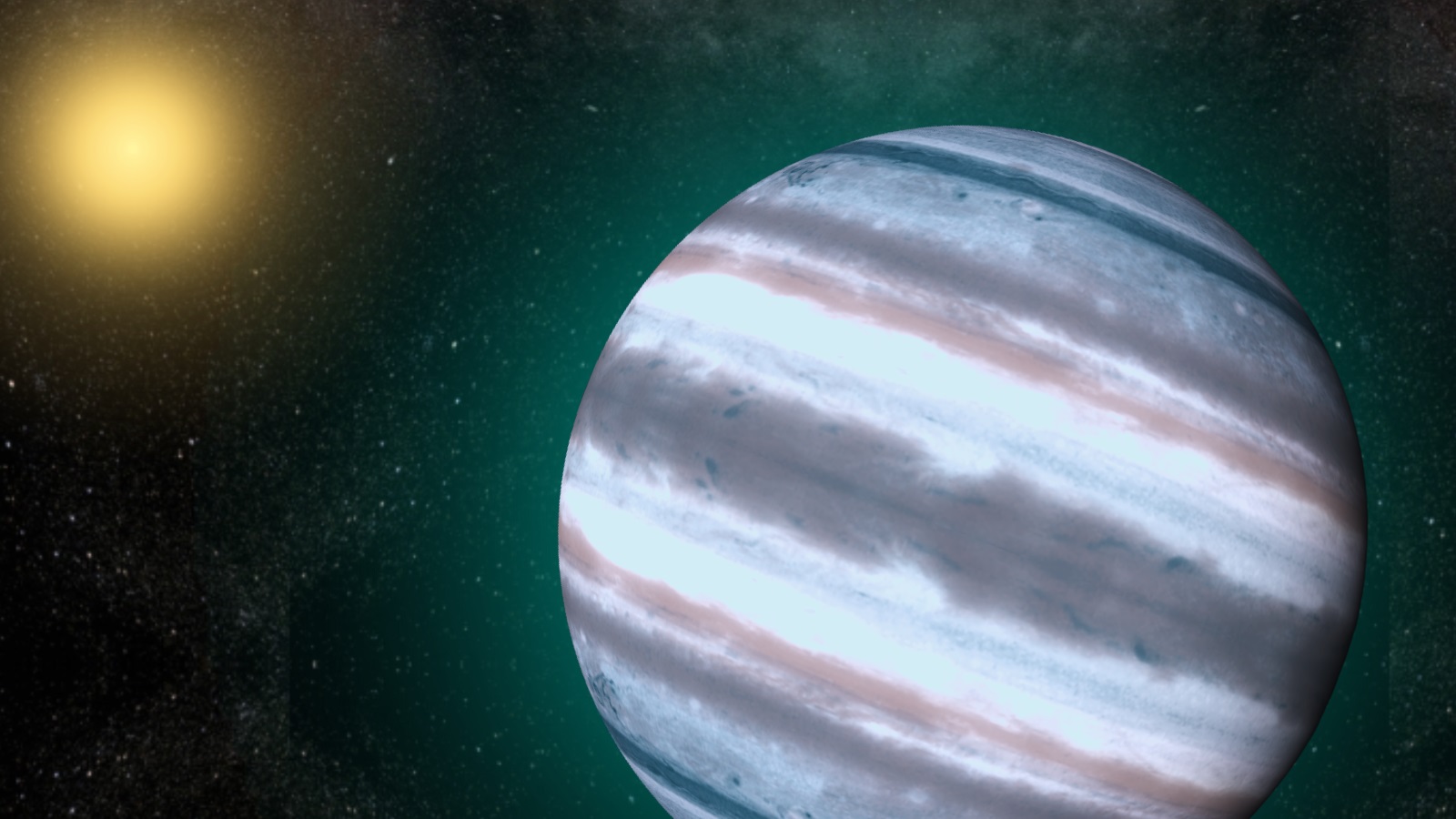
Of course, the formation of ocean planets and Neptunes is influenced by the amount of volatile substances around them. That is, ice giants are most likely to form where there is plenty of water, ammonia, and methane, i.e., further away from the star. But what role does the size of the rocky core play in their evolution?
In light of this question, one of the latest studies seems particularly interesting. The fact that Uranus’ core is significantly smaller than Neptune’s may mean that their evolutionary paths could have been completely different. This may be why the seventh planet, rather than the eighth, is the coldest in the Solar System.
All of this is the result of certain patterns that we still do not understand. Uranus is much lighter than Neptune, so perhaps it is indeed closer to Saturn. Or maybe the entire class of “ice giants” is just a false grouping. Their mystery is, in essence, the mystery of the birth and evolution of planetary systems in general.

