

Scientists have proposed using the Vera Rubin Observatory or the Subaru telescope to search for additional targets for the Lucy mission. If successful, the mission will gain a completely new object for study and will be able to more accurately determine the differences between the two groups of Trojan asteroids.
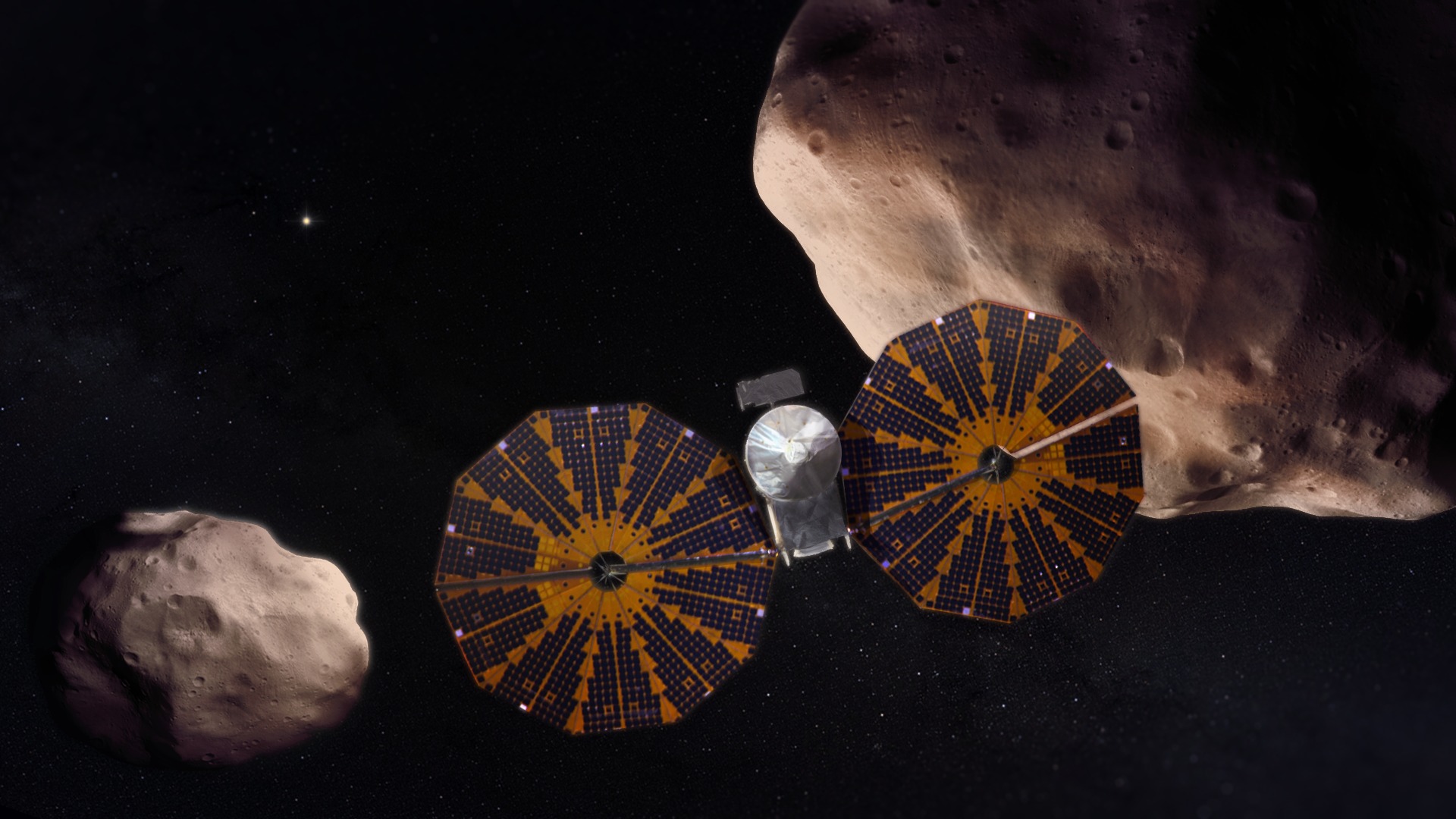
The Lucy spacecraft was launched in 2021. Its main mission is to study Jupiter’s Trojan asteroids. This is the name given to two populations of objects located at the Lagrange points L4 and L5 of the Jupiter-Sun system. Point L4 is located in the plane of the gas giant’s orbit 60° “ahead” of it in the direction of orbital motion, while point L5 is located 60° “behind” it.
The cloud at point L4 is the main objective of the Lucy mission: four of the five planned visits to the Trojan asteroids are set to take place between 2027 and 2028. After that, Lucy will return to Earth and use its gravity to head to the point L5. The mission plan includes a visit to the double asteroid Patroclus located there in 2033.
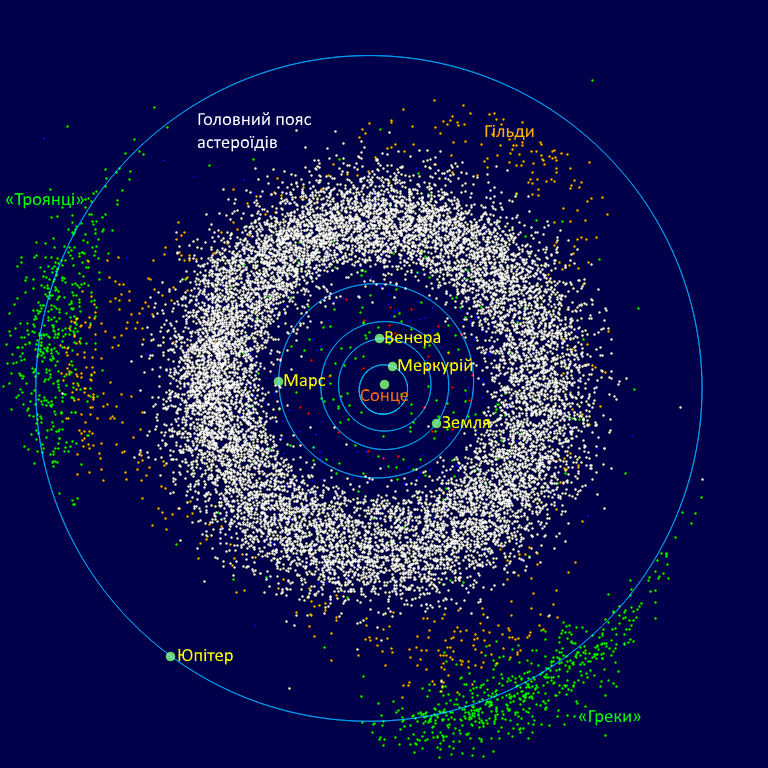
The asteroids that Lucy is scheduled to visit are only a small fraction of the total number of objects located in these regions. A team of American researchers, including scientists from NASA, wondered whether it would be possible to increase the mission’s value and find additional targets for Lucy. In an article published on the arXiv preprint website, they claim that this is entirely feasible. At the end of 2026, Jupiter’s Trojan asteroids will be in opposition to Earth. According to scientists’ estimates, in just one night of observation, powerful telescopes such as Subaru or Vera Rubin will be able to find several potential candidates for Lucy’s visit at the L5 point, with a diameter of about 700 meters. If they conduct observations over several nights, they will be able to find smaller asteroids with diameters of around 500 meters.
Next, the scientists assessed the possibility of performing a maneuver that would direct the spacecraft toward a new target. According to their estimates, this is entirely feasible, and Lucy should have sufficient fuel reserves.
To implement this plan, the mission team will need to secure observation time on a sufficiently large telescope at the end of 2026. If this does not happen, it is unlikely that an additional asteroid will be found for Lucy to visit. Due to the heavy workload of large observatories, it is currently unclear whether this plan will be feasible.
According to Phys.org

