

Imagine a spinning top. As long as it spins quickly, its axis remains straight. But as soon as it slows down a little, the tip begins to trace a circle in the air. The axis tilts first to one side, then to the other, and the tip of the spinning top draws an invisible circle above the floor.
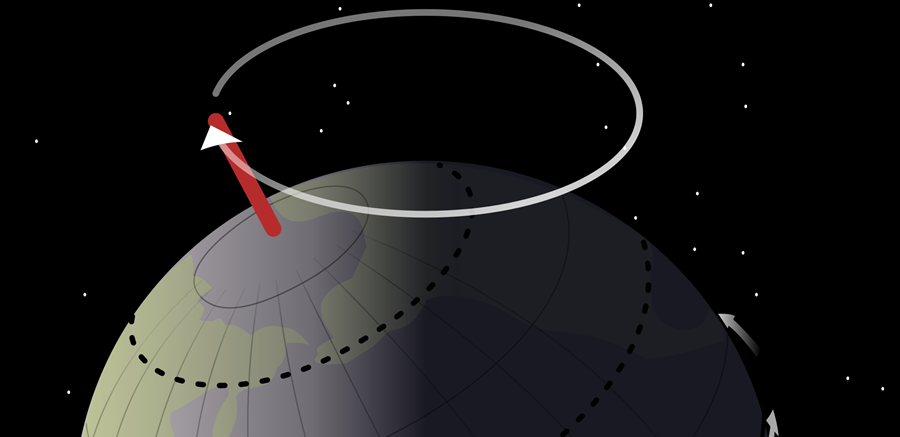
Now, let’s imagine that the spinning top is our planet Earth. It also rotates around its axis, and this axis is not perfectly stationary either – it slowly, very slowly “sways,” tracing a cone in space. This phenomenon is called the precession of the Earth’s axis. It is so slow that it is practically impossible to notice it within a single human lifetime. But over thousands of years, the consequences become enormous, and they affect, among other things, the zodiacal constellations.
What exactly is happening to the Earth’s axis?
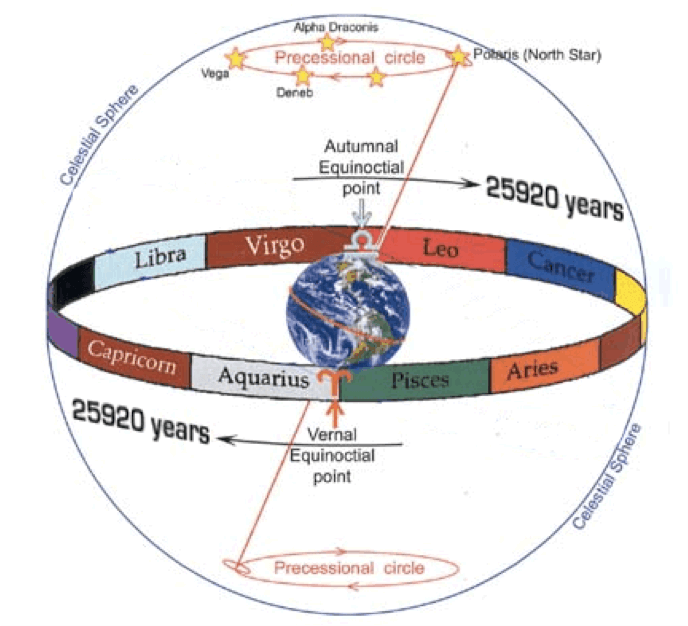
The Earth’s axis is an imaginary line around which our planet rotates. It passes through the Earth’s North and South geographic poles. This axis is tilted by approximately 23.5 degrees relative to the perpendicular to the plane of Earth’s orbit. It is precisely because of this tilt that the seasons change on Earth: when one of the hemispheres is tilted toward the Sun, it is summer there, and when it is tilted away from the Sun, it is winter. But this tilt is not fixed in space forever. The Earth’s axis slowly traces out a cone, keeping the angle of tilt roughly the same (the same ~23.5°), but changing the direction in which its apex “faces.” One full rotation of this cone takes about 25,770 years. This is the complete precession cycle.
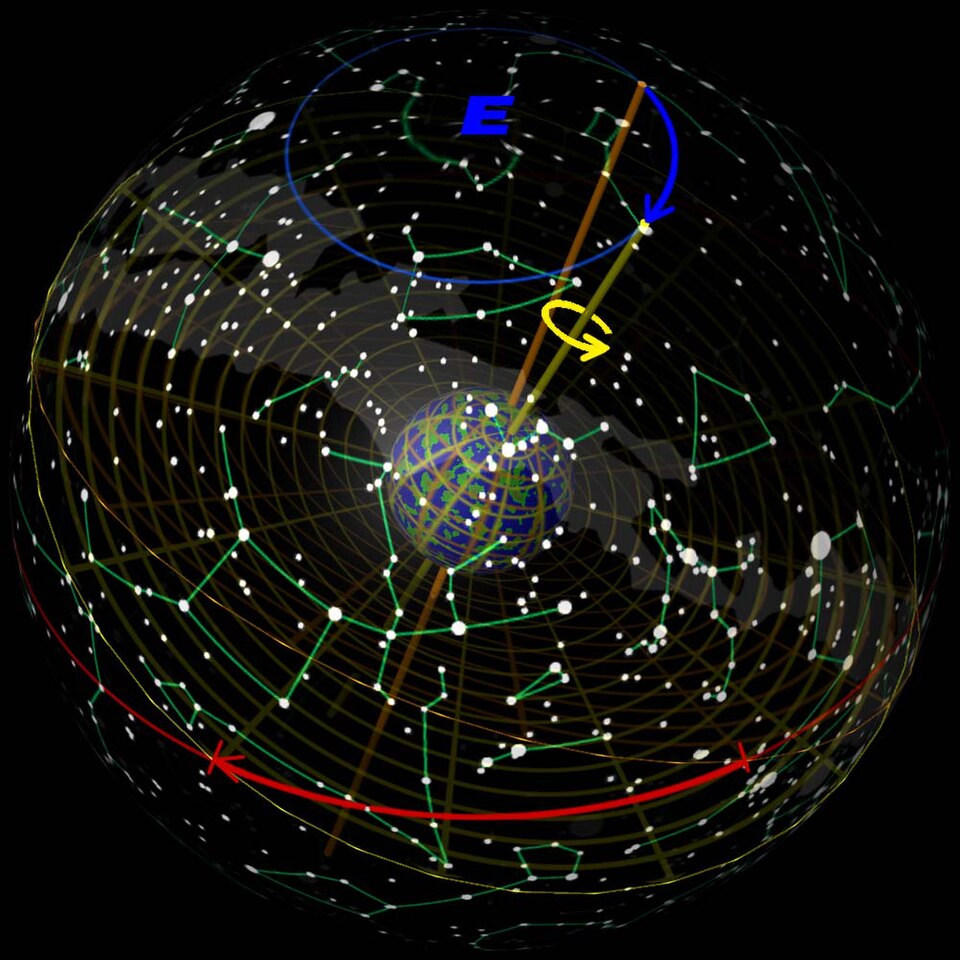
In other words, over the course of a century, the axis shifts by about 1.4 degrees. That’s less than the diameter of a full moon in the night sky. So, over the course of a single generation, no one will notice a thing. But over 2,000 years, the shift amounts to nearly 28 degrees, which is a significant amount for an observer on Earth.
Why the Earth’s axis “wobbles”: gravity and the shape of the Earth
The Earth is not a perfect sphere: it is slightly flattened at the poles and “bulges” at the equator. This equatorial bulge is a result of rotation: centrifugal force stretches the planet along the equator. The difference, by the way, is small: the Earth’s equatorial radius is only about 21 km greater than the polar radius, but that is enough to have a gravitational effect.
The Sun and the Moon pull this “bulge” toward them. Because the Earth’s axis is tilted, the equatorial bulge does not lie in the plane of the orbit but protrudes at an angle. The gravity of the Sun and the Moon “tries” to align the axis, that is, to bring the equator into the plane of the orbit. But because the Earth rotates, an effect similar to that of a spinning top occurs: instead of aligning itself, the axis begins to trace out a cone slowly. Gravity pulls the spinning top downward, but because of its rotation, it does not fall; instead, it traces circles with its tip. A similar principle applies to Earth, except that instead of the gravitational force acting on the top, precession here is caused by the gravitational influence of the Sun and Moon on Earth’s equatorial bulge, and instead of a small top, an entire planet with a mass of about 6 × 10²⁴ kg.
The North Star is not always the North Star
One of the most interesting consequences of precession is the shift in the “polar” star. Now, if you look at the night sky in the Northern Hemisphere, the North Pole lies very close to Polaris (α Ursae Minoris). That is why it barely moves across the sky throughout the night, and why travelers have used it for navigation for centuries.
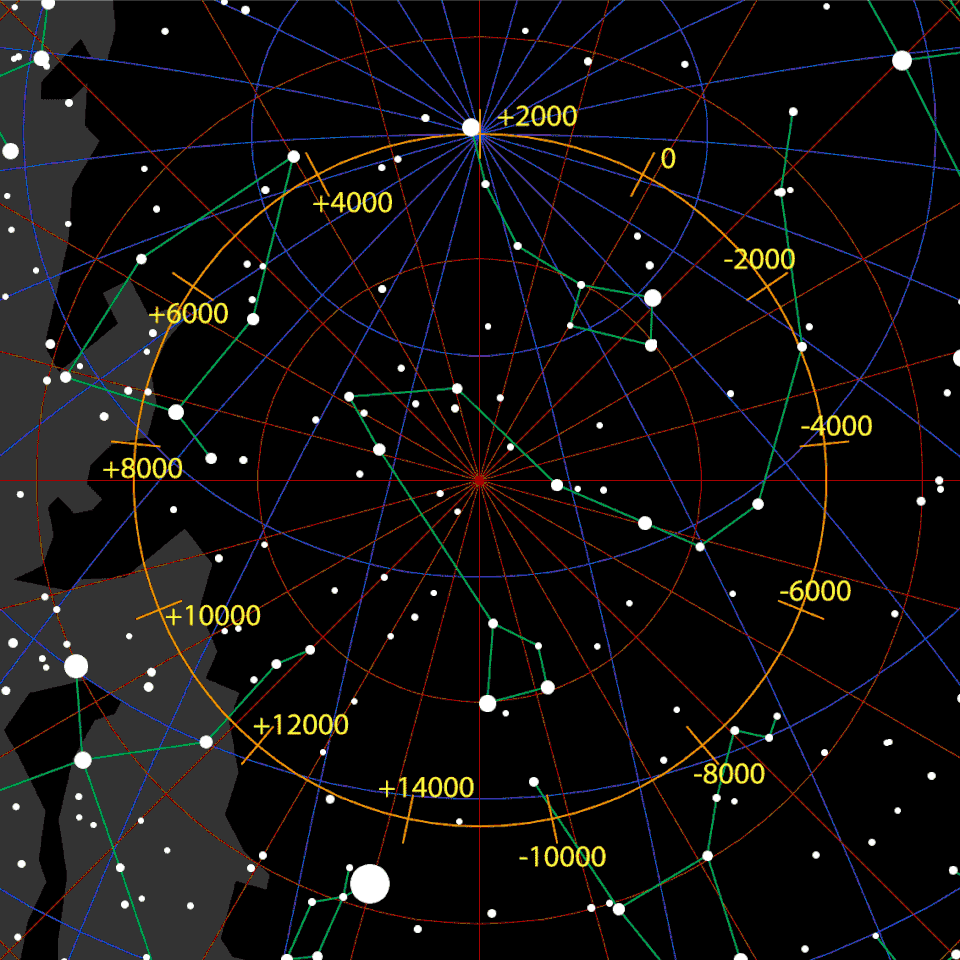
But this has not always been the case, nor will it always be. About 4,500 years ago, when the Egyptians were building the pyramids, the “Polar Star” was Thuban, in the constellation Draco. And in about 12,000 years, the North Celestial Pole will be near Vega – a bright star in the constellation Lyra, one of the most prominent in the night sky.
It can be imagined this way: we look up and see that the Earth’s axis “traces” a huge circle in the sky among the stars. A full circle will take about 25,770 years to complete, and during that time, various stars will take turns passing near the celestial pole.
And now, more about the zodiac
The Earth revolves around the Sun, but from Earth it appears as though the Sun moves across the sky among the stars, completing a full circle over the course of a year. This apparent path of the Sun across the celestial sphere is called the ecliptic. Certain constellations are located along the ecliptic – these are the ones referred to as zodiacal constellations.
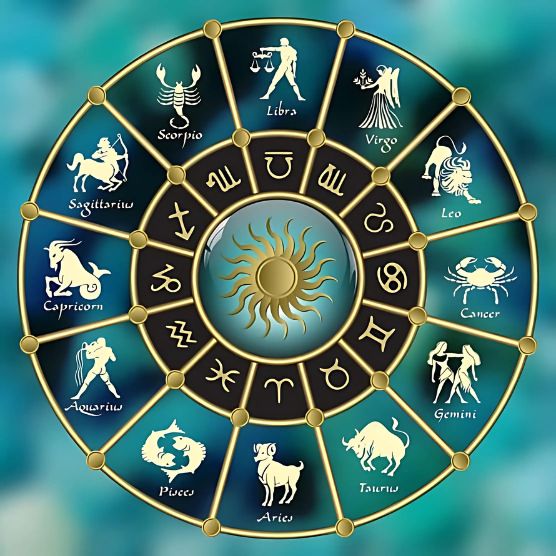
About 2,500 years ago, the ancient Babylonians divided the ecliptic into 12 equal sectors of 30 degrees each and named them after the nearest constellations: Aries, Taurus, Gemini, Cancer, Leo, Virgo, Libra, Scorpio, Sagittarius, Capricorn, Aquarius, and Pisces. At that time, the vernal equinox was associated with Aries, so Aries became the first astrological sign.
But today it is clear that this is a very imprecise distinction. This is precisely because of precession.
The difference between astrological signs and constellations
It is precisely precession that has created a discrepancy between the astrological signs and the astronomical constellations. These are two entirely different concepts, even though their names are the same.
The astrological signs are 12 equal sectors of 30° each, “anchored” to the vernal equinox. They have long since ceased to correspond to actual constellations in the sky. Yes, this is yet another argument against astrology.
The zodiacal constellations are actual sections of the sky with defined boundaries. They vary in size: for example, the constellation Virgo spans as much as 44 degrees along the ecliptic, while Scorpio spans only about 7 degrees. Moreover, there are not 12 but 13 constellations along the ecliptic: between Scorpio and Sagittarius lies the constellation Ophiuchus, which is simply not present in the classical zodiac.
So when someone says, “I’m a Leo by astrological sign,” It is an astrological tradition that dates back to ancient times. Astronomically speaking, however, the Sun could have already been in a different constellation on the day of their birth.
Who discovered precession and when?
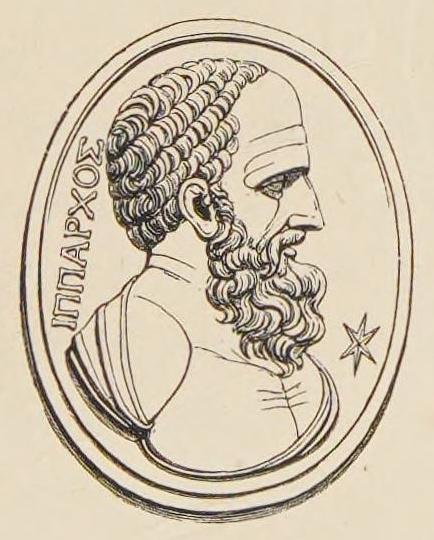
Precession was discovered by the ancient Greek astronomer Hipparchus in the 2nd century BC, around 130 BC. By comparing his own observations of the stars with earlier data, he noticed that the points of the equinoxes were slowly shifting along the ecliptic relative to the starry sky. This was an astonishing discovery for that era. Hipparchus did not yet know the physical cause of the phenomenon, but he recorded the effect itself with great precision. His estimate of the rate of precession, about 1 degree per 100 years, was quite close to the modern value: approximately 1 degree per 72 years.
Isaac Newton provided a physical explanation for precession in the 17th century, demonstrating that it results from the gravitational pull of the Sun and the Moon on the Earth’s equatorial bulge.
Precession by the numbers
- A full precession cycle lasts approximately 25,770 years.
- The rate of movement is approximately 50.3 arcseconds per year, or about 1 degree every 71.6 years.
- Over the past 2,000 years, the vernal equinox has shifted by approximately 28 degrees – that is, nearly one full astrological sign (30°).
- The angle of the Earth’s axial tilt itself also changes slowly: from 22.1° to 24.5° over a cycle of about 41,000 years. But this is a different phenomenon – the long-period variation in the Earth’s axial tilt.
Why is precession important to us?
Precession is not just an interesting astronomical phenomenon. It has real-world consequences.
Precession affects the climate. Along with other long-term changes in the Earth’s orbital parameters – orbital eccentricity and axial tilt – precession is part of the Milankovitch cycles (long-term climate fluctuations that cause shifts between glacial and interglacial periods). Currently, precession determines which hemisphere receives more solar heat in the summer: in about 13,000 years, the Northern Hemisphere will experience summer at the point in its orbit where it currently experiences winter, and vice versa.
Precession is important for both navigation and astronomy. The coordinates of stars in the sky gradually change, so astronomers use coordinate systems tied to a specific epoch. For example, J2000.0 is a standard epoch tied to the equator and the equinox at the beginning of the year 2000.
And finally, precession reminds us that the universe is not a static backdrop. Even things like the orientation of the Earth’s axis or the Sun’s position among the stars slowly change over time.

