

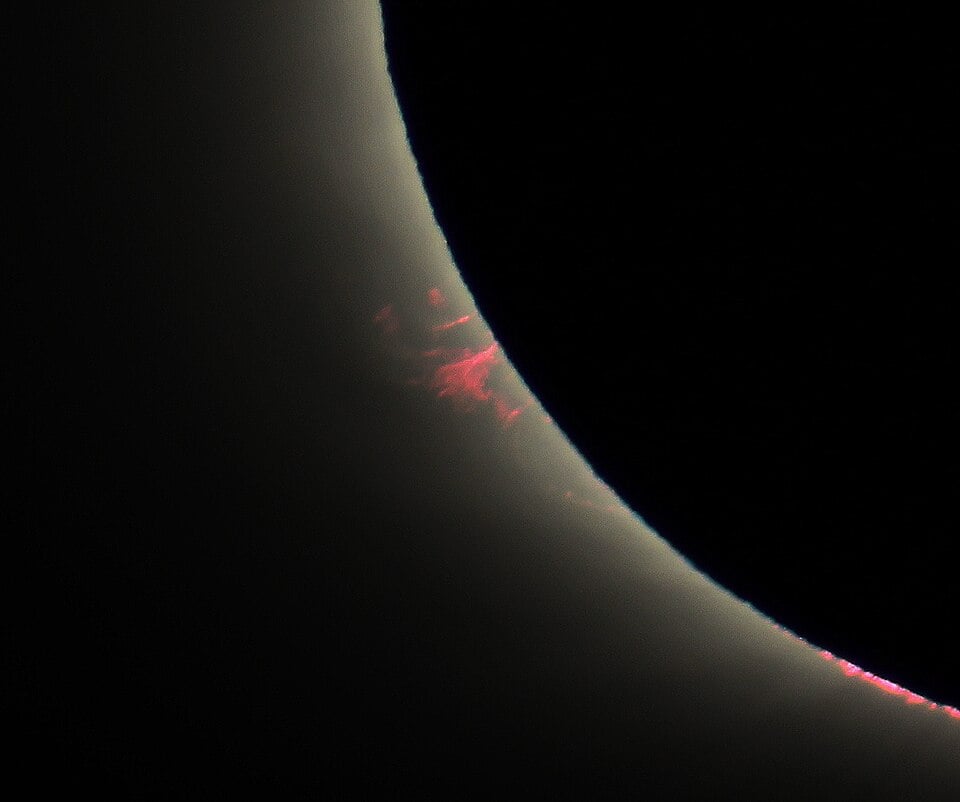
Clouds of superheated gas hang above the Sun, each of which is many times larger than our planet. They are held in the outer atmosphere by magnetic arcs and can persist for weeks, even though the surrounding environment is hundreds of times hotter than they are. Scientists at the Max Planck Institute for Solar System Research (Germany) have succeeded for the first time in modeling exactly how these structures form and feed.
The temperature paradox
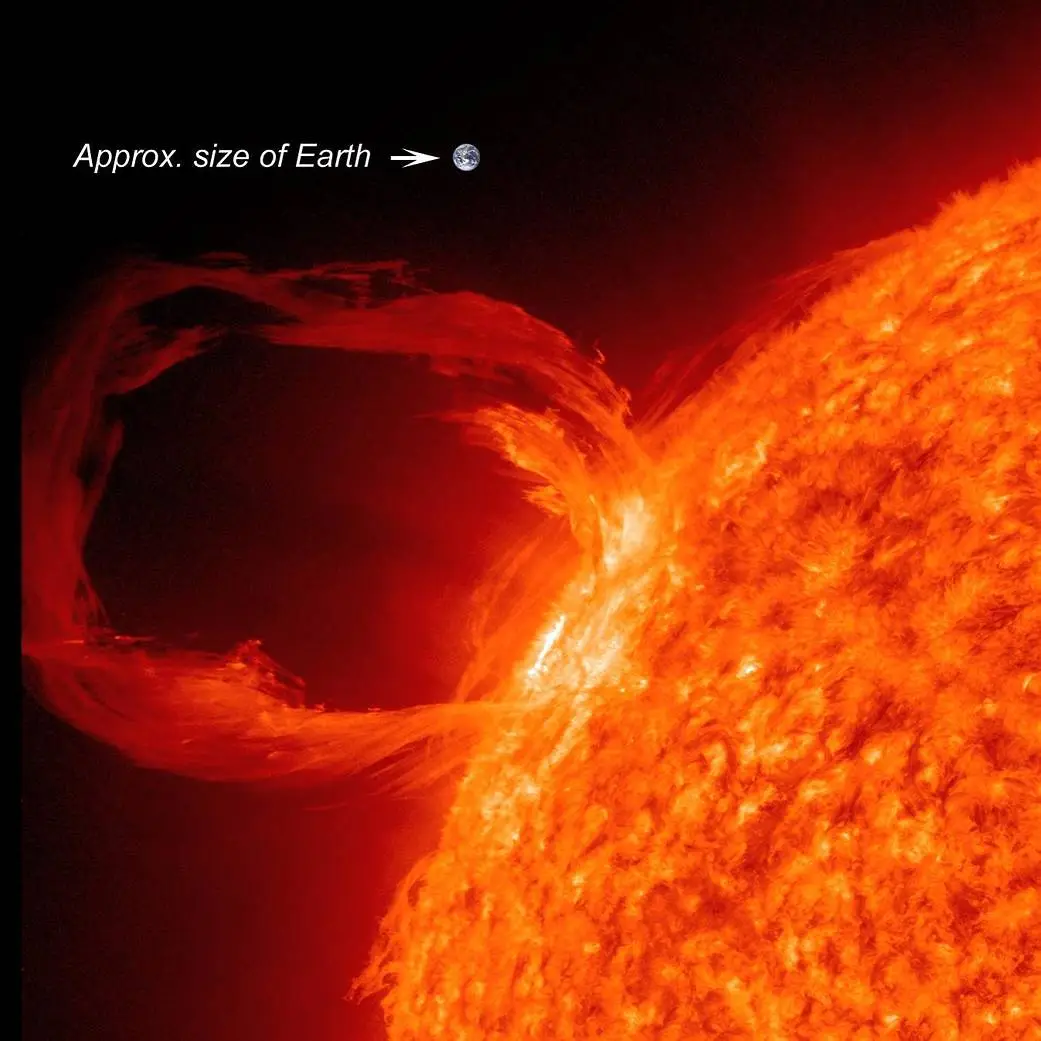
Solar prominences are giant arcs of relatively cool plasma that extend from the Sun’s surface into the corona, the Sun’s outer atmosphere, which is heated to over a million degrees. They exist at a temperature of about ten thousand degrees—by solar standards, that’s practically cold. The scene resembles an iceberg that refuses to melt inside a blazing furnace.
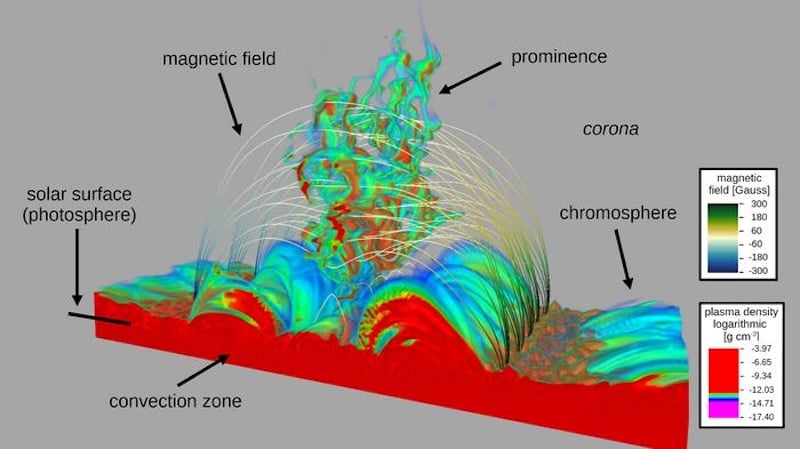
The Sun’s magnetic field forms these loops, which extend from the surface and create arcs in the corona. It is within these arcs that cooled plasma accumulates and is held. But for solar prominence to last for weeks or even months—and many of them do—it needs a constant supply of new material.
What the model showed
For the first time, the new simulations took into account not only the outer atmosphere but also the layers beneath the star’s visible surface. It turns out that the process occurs simultaneously through two channels. From the lower layers of the atmosphere, magnetic turbulent outbursts eject jets of cooler plasma upward—directly into the magnetic troughs.
At the same time, the hotter plasma moving along the arcs cools and condenses, adding material from above. Some of the material constantly falls back, but it is continuously replaced by new portions.
Why is this important for Earth?
If a solar prominence does not fade away gradually, it explodes and ejects billions of tons of charged particles into space. When such a cloud reaches Earth, the consequences can vary widely: from brilliant auroras to serious disruptions in power grids and satellite operations.
Understanding the mechanism that powers solar prominences is the first step toward predicting such eruptions. Researchers are not yet claiming that the new model can already predict solar flares, but for the first time they have gained a complete understanding of how the Sun forms and maintains these structures.
According to space.com

