
For decades, scientists have had evidence that our Universe is not only expanding, but doing so at an ever-increasing rate. This mysterious effect was explained by unknown “dark energy” — a concept that won the Nobel Prize in 2011. However, revolutionary new research is challenging this fundamental theory, proposing a different, more dramatic scenario for the future of the cosmos.
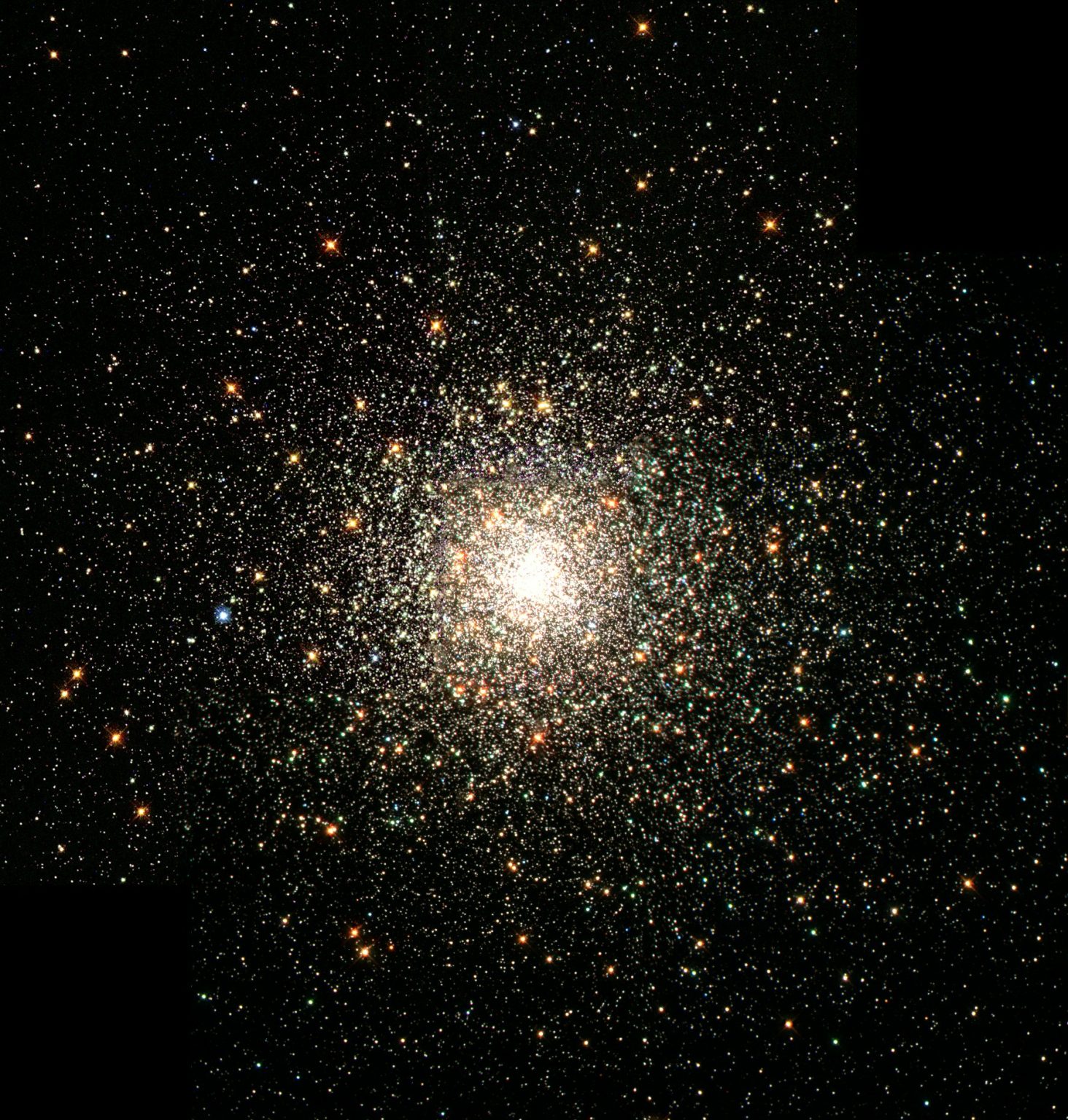
After analyzing data on 300 galaxies, a team of astrophysicists concluded that the expansion of the Universe may not be accelerating, but rather beginning to slow down. This discovery, published in the journal Monthly Notices of the Royal Astronomical Society, contradicts the established view of dark energy as a constant force pushing galaxies away from each other.
“If our results are confirmed, it will be a significant shift in cosmology since the discovery of dark energy 27 years ago,” said Young-Wook Lee of Yonsei University, co-author of the study.
Dark energy and new allies
Type Ia supernovae have always been key evidence for the existence of dark energy. Their constant brightness allows cosmic distances to be measured accurately. Observations of supernovae that were dimmer than expected led scientists to conclude that the expansion of the Universe is accelerating.
However, a new study has revealed a link between the brightness of these stars and the age of their parent galaxies. It turns out that dimness may not be a sign of acceleration, but a consequence of the evolution of the stars themselves. This means that our “standard candles” may not be so standard after all, calling into question all previous calculations.
Unlike previous studies, Lee’s team does not deny the existence of dark energy entirely. Instead, they suggest that this force may evolve and weaken over time. This idea is supported by another large-scale study, the Dark Energy Spectroscopic Instrument (DESI), whose preliminary findings also point to the impermanence of dark energy.
New Destiny of the Universe
If dark energy is indeed weakening, this radically changes our predictions about the end of the world.
According to the old theory:
- Big Rip: Constant acceleration tears the Universe apart into tiny pieces.
- Big Freeze: Space expands infinitely, cooling to absolute zero.
According to the new theory:
- Big Crunch: Gravity takes over, and the Universe begins to contract, eventually collapsing into a singularity.
“Instead of ending with a ‘Big Rip,’ we now face the possibility of a ‘Big Collapse,’” Lee explains.
Scientists are now awaiting new data from the Vira Rubin Observatory, which will enable them to analyze 20,000 galaxies. This research could finally confirm or disprove one of the deepest mysteries of the cosmos—the true nature of dark energy and the ultimate fate of our Universe.
According to Gizmodo

