

The West Antarctic Ice Sheet is a giant mass of ice that has long concerned scientists due to its instability. In the past, it has completely broken up during periods of global warming, and the same situation may await it in the future.
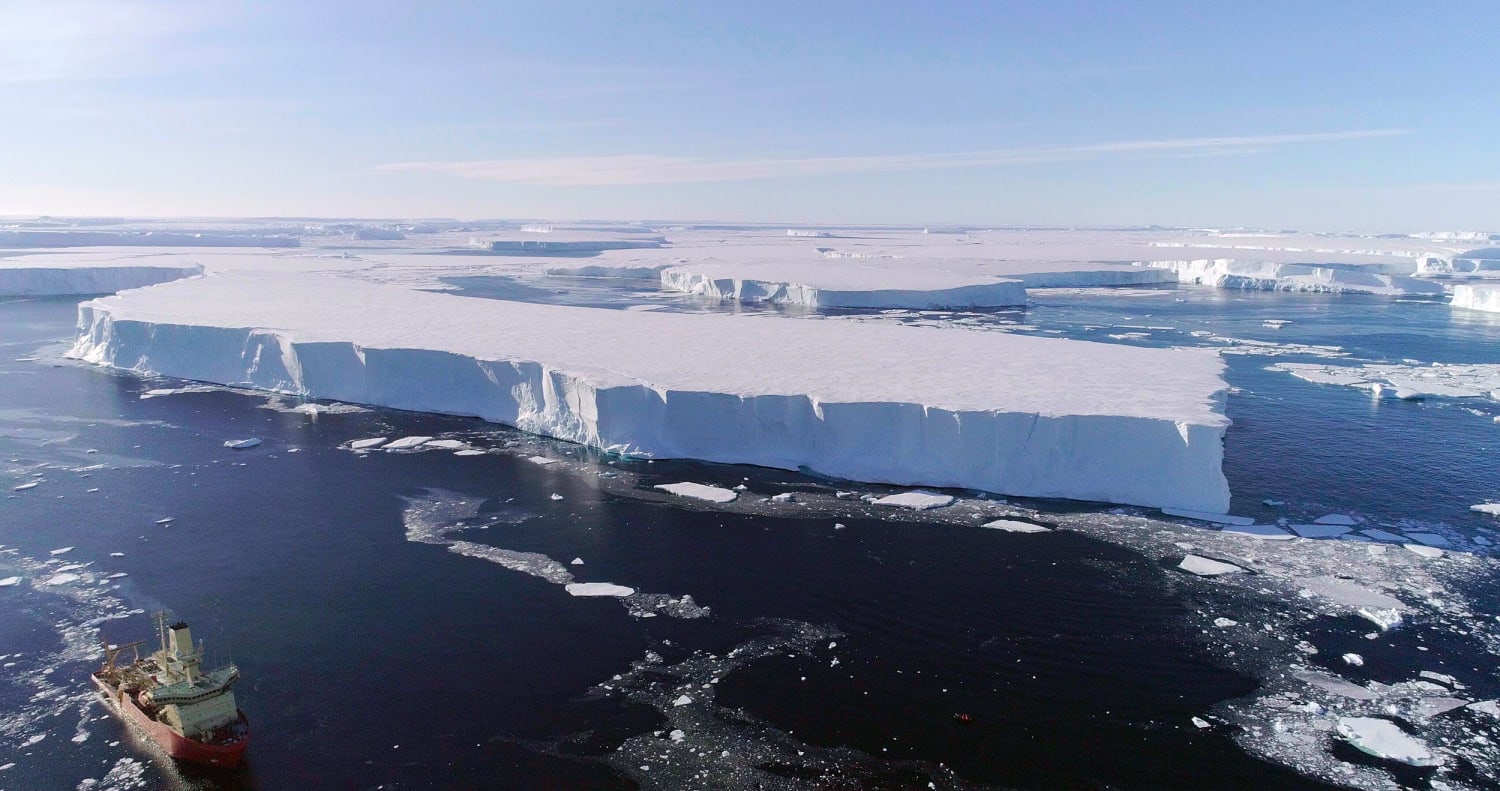
Exploring the past of Antarctic glaciers
The Thwaites and Pine Island glaciers, located in the Amundsen Sea sector of the West Antarctic Ice Sheet (WAIS), are among the fastest melting glaciers on Earth. Together, they are losing ice faster than any other part of Antarctica, raising serious concerns about the long-term stability of the ice sheet and its contribution to future sea level rise.
To better understand the risks that warmer conditions pose to the West Antarctic Ice Sheet (WAIS), researchers are looking back to the Pliocene Epoch (5.3–2.58 million years ago), when global temperatures were about 3–4°C higher than today and sea levels were more than 15 m higher, with ice melt from Antarctica contributing significantly to this rise.
Now, by studying deep-sea sediments from this region, researchers from the IODP Exp379 team have discovered that the edge of the WAIS retreated far inland at least five times during the Pliocene Epoch.
Sedimentary rocks of the continental shelf reveal the story
Scientists wanted to investigate whether the West Antarctic ice sheet completely collapsed during the Pliocene, how often such events occurred, and what caused them.
The team analyzed marine sediments collected during the IODP 379 expedition. Sediments sampled at site U1532 on the Amundsen Sea continental rise serve as a historical archive recording changes in ice sheets and ocean conditions over millions of years.
They identified two distinct layers of sediment reflecting alternating cold and warm climatic phases: thick, gray, finely laminated clays from cold glacial periods when ice covered much of the continental shelf; and thinner, greenish layers formed during warmer interglacial periods.
The green color is due to the presence of microscopic algae, which indicates open ocean waters free of ice. Importantly, these warm-period layers also contain ice-rafted debris (IRD) — small rock fragments that broke off from the Antarctic continent. Drifting across the Amundsen Sea and gradually melting, the icebergs released this debris onto the ocean floor.
The team identified 14 notable IRD-rich intervals between 4.65 and 3.33 million years ago, each interpreted as a significant melting event when the West Antarctic Ice Sheet partially retreated.
Tracking the origin of sedimentary rocks
To determine how far inland the ice had retreated, researchers analyzed the chemical fingerprints of sedimentary rocks. They measured isotopes of strontium, neodymium, and lead, which vary depending on the age and type of the source rock.
By comparing these imprints with modern seafloor sediments and bedrock samples from West Antarctica, the team traced most of the debris to the mainland, particularly the Ellsworth-Whitmore Mountains.
Sedimentary rock records show a consistent four-stage cycle of warming and cooling. During cold glacial periods, the ice cap was substantial and stable, covering the continent. When the climate warmed, early interglacial melting began at the base of the glacier, causing the ice cap to retreat inland.
Vulnerability of the West Antarctic Ice Sheet to warming
During the peak warm period of the interglacial stage, large icebergs broke off from the retreating ice edge and carried sediment from the interior of Antarctica across the Amundsen Sea. When temperatures dropped again during the early stage of the ice age, the glacier rapidly rebuilt, pushing previously deposited sediments toward the edge of the shelf and moving them down into deeper waters.
“Our data and model results suggest that the Amundsen Sea sector of the WAIS persisted on the shelf throughout the Pliocene, punctuated by episodic but rapid retreat into the Byrd Subglacial Basin or farther inland, rather than undergoing permanent collapse.”
The results indicate that WAIS has experienced significant retreats beyond its current extent, highlighting its extreme vulnerability to future warming and potential for significant sea level rise.
According to phys.org

