

NASA and the National Snow and Ice Data Centre (NSIDC) have published the results of their observations of sea ice in Antarctica. Its area has reached the third-lowest level in the history of satellite measurements.
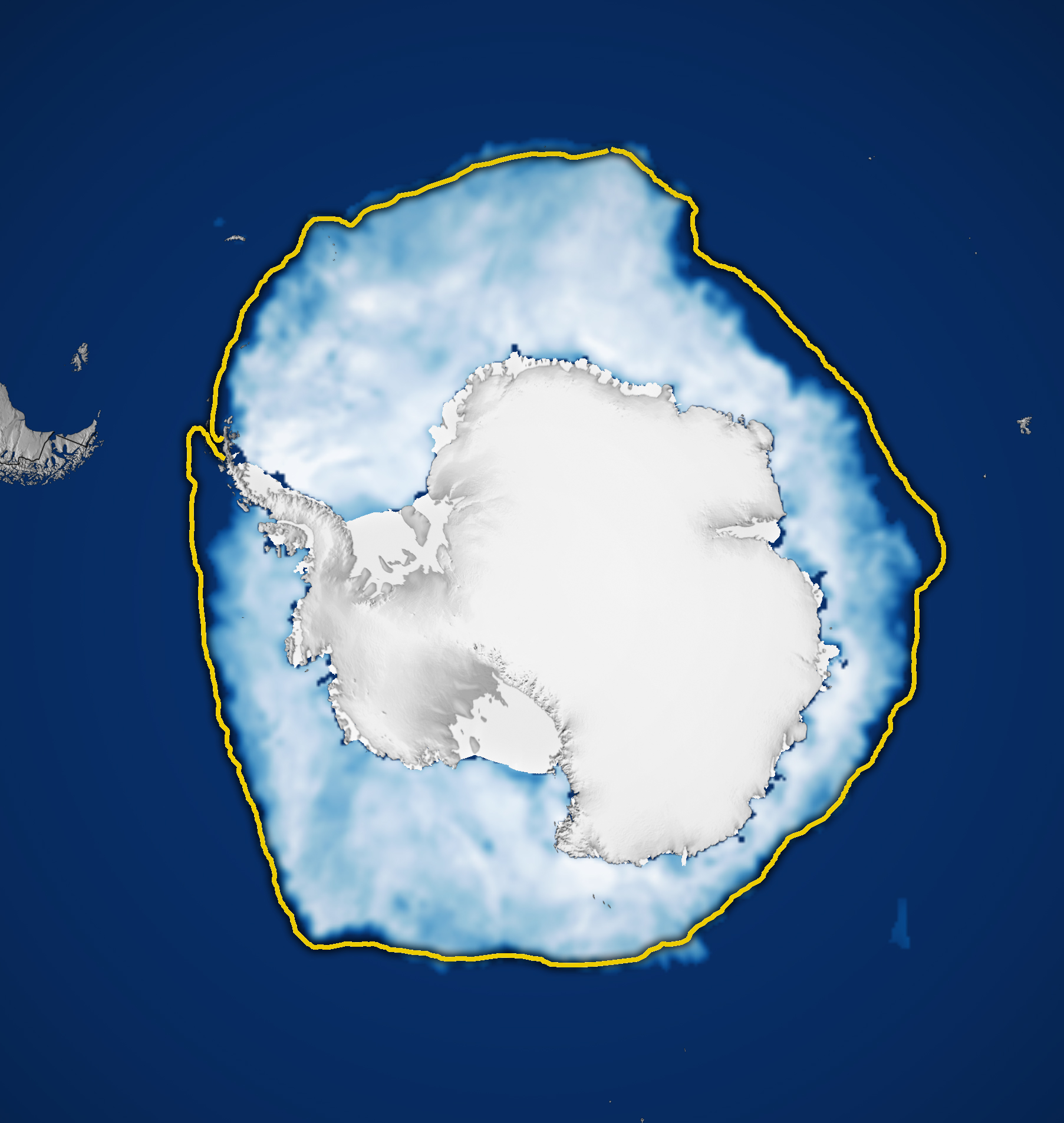
A map created by NASA shows the extent of sea ice in Antarctica as of September 17, 2025, marking the end of winter in the Southern Hemisphere. On that day, the sea ice covered 17.81 million km2. This is the third-lowest minimum in 47 years of satellite data, approximately 900,000 km2 less than the 1981-2010 average. The loss of sea ice is comparable to the size of Venezuela.
Scientists calculate the area of sea ice by dividing the ocean into a grid and summing the area of squares that meet a certain concentration threshold – those that are covered with ice by at least 15%. White indicates areas covered by ice in 2025. The yellow line indicates the average ice area for September between 1981 and 2010.
Although sea ice extent in the region remains low compared to observations before 2016, the complexity of the Antarctic system makes it challenging to predict and understand these trends. This was stated by Nathan Kurtz, head of the Cryosphere Science Laboratory at NASA’s Goddard Space Flight Centre.
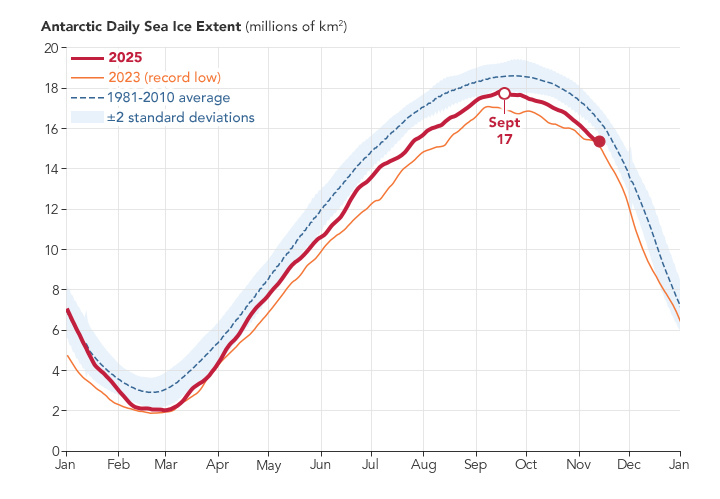
‘It is not yet clear whether the smaller ice cover in Antarctica will persist,’ added Walt Meier, a scientist at NSIDC. ‘We are currently monitoring the situation,’ he said, to understand whether the lower sea ice levels around the South Pole will persist or whether this is only a temporary phenomenon.
We previously reported that the ocean around Antarctica is becoming saltier.
Provided by Earthobservatory

