

A team of astronomers from the Teide Observatory in Spain has discovered a third exoplanet in the HD 176986 star system. Like its neighbors, it is also a super-Earth.
Super-Earth system
Located about 91 light-years from Earth, HD 176986 is an orange dwarf star. It is about 21% smaller and less massive than the Sun, and its age is estimated at 4.3 billion years.
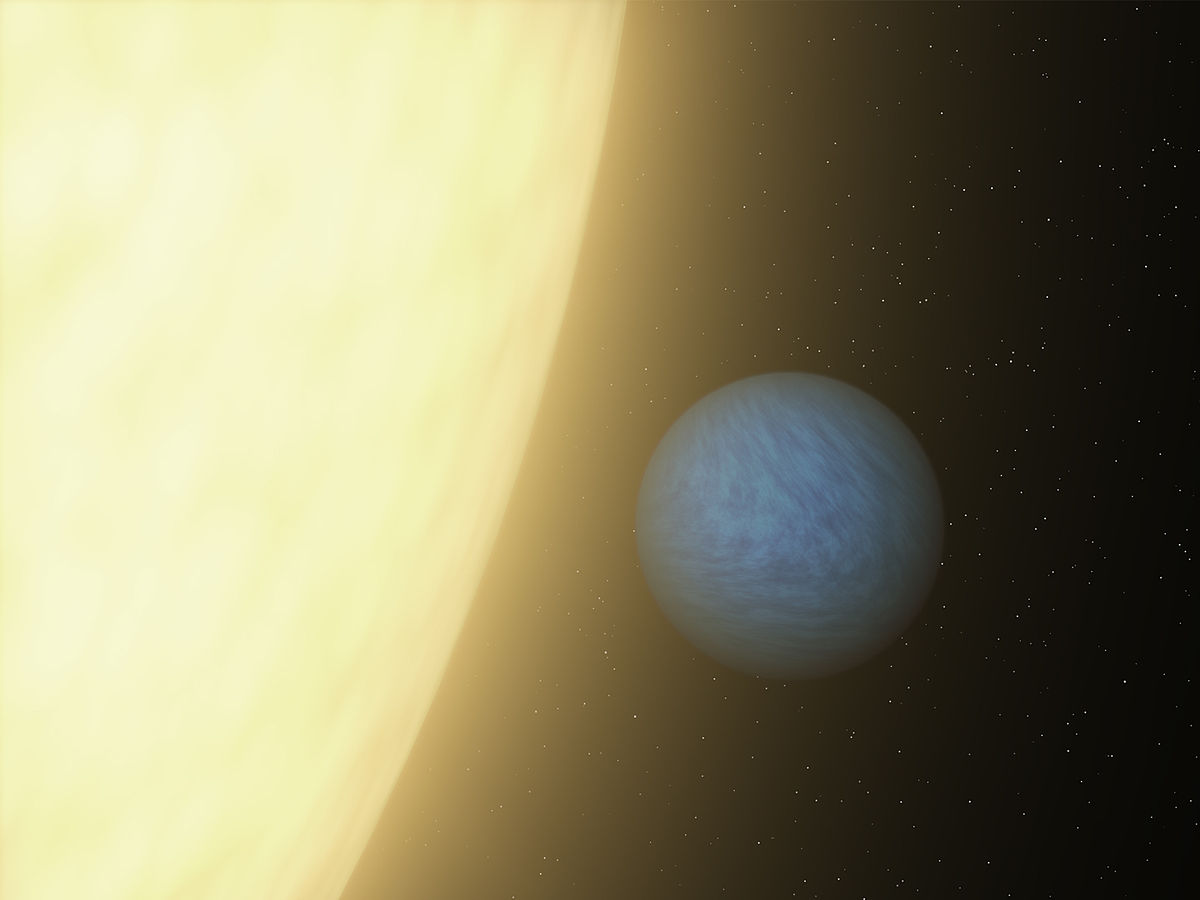
In 2018, two exoplanets were discovered in this system: HD 176986 b and HD 176986 c. Both are super-Earths. The minimum mass of HD 176986 b is 5.74 Earth masses, and that of HD 176986 c is 9.18 Earth masses. They orbit their host star with periods of 6.5 and 16.82 days, respectively.
Third super-Earth
A team of Spanish astronomers conducted a re-examination of the HD 176986 system using the radial velocity method. They were aided in this by the high-precision HARPS spectrograph, installed on ESO’s 3.6-meter telescope at La Silla Observatory in Chile, and its counterpart for the Northern Hemisphere, HARPS-N, installed on the Galileo National Telescope at Roque de los Muchachos Observatory in Spain. The observations were conducted as part of the Rocky Planets in Equatorial Stars (RoPES) program.
Observations have revealed a third exoplanet in the HD 176986 system. Its orbit passes at a distance of 0.28 AU from the star, with an orbital period of 61.38 days. The newly discovered alien world has been designated HD 176986 d. Its equilibrium temperature is estimated at 90 °C, and its minimum mass at 6.76 times that of Earth.
According to astronomers, the discovery of HD 176986 d shows the potential of using the radial velocity method to detect super-Earths or mini-Neptunes with orbital periods longer than 50 days. Moreover, this discovery proves that long-term radial velocity studies are necessary for a better understanding of the habitable zones of yellow and orange dwarfs.
New observations have also made it possible to refine the parameters of previously known planets in the HD 176986 system. It turns out that HD 176986 b has an orbital period of 6.49 days, a minimum mass of 5.36 Earth masses, and an equilibrium temperature of 694 °C. As for HD 176986 c, it orbits its star every 16.81 days, has an equilibrium temperature of 285 °C, and a mass of at least 9.75 Earth masses.
Earlier, we reported on a super-Earth that may be the best place to search for life.
According to Phys.org

