

Engineers have completed preparations for two of the three INCUS satellites. They will operate in low Earth orbit and study how warm air rises over tropical regions, forming storms. This will allow for a better understanding of their dynamics.
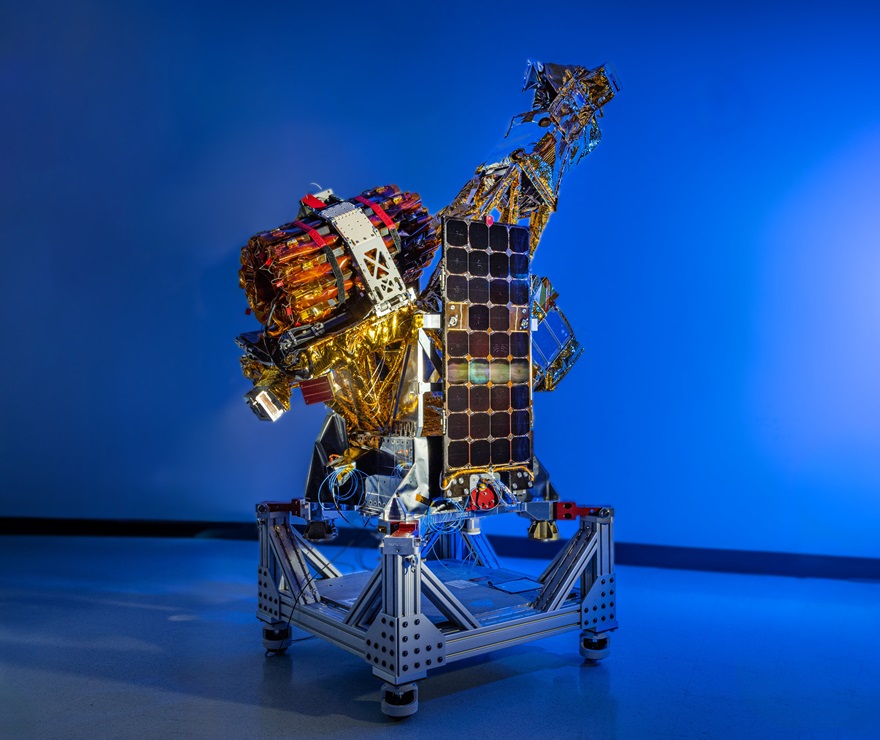
INCUS devices
NASA officials report that they have completed the assembly and testing of two spacecraft for the INCUS (Investigation of Convective Updrafts) project. They plan to finish the third one by the end of this summer, and the spacecraft are scheduled to be launched into orbit next year.
Researchers from the University of Colorado participated in the project. They will work with the Jet Propulsion Laboratory to process data from the satellites. After launch, all three are expected to enter the same orbit and travel in a tight formation.
The second will follow the first at intervals of just 30 seconds, and the third will follow the second at intervals of 90 seconds. All of this will enable them to carry out their primary mission: to study in detail the process of storm formation in the tropical zone of our planet. For this purpose, they rely on a sophisticated system of radars and microwave detectors.
Tropical storms
Scientists have been observing tropical storms from orbit for decades. These natural phenomena not only pose a significant danger but also play a vital role in the redistribution of fresh water on our planet. And scientists even know how they form. Water plays a key role in this process, evaporating from the ocean’s surface in intense heat and carrying energy up into the sky.
However, scientists do not yet fully understand how this process works, and this is precisely what the INCUS project’s instruments are designed to study in detail. The instruments on board are capable of measuring not only the temperature and humidity of the air above the area they are flying over, but also the nature of its movement.
The three satellites of the INCUS project are part of NASA’s much larger FALCON (Fleet for the Atmosphere Linking Commercial Observations with NASA) program, a comprehensive study of our planet’s atmosphere and the weather phenomena occurring within it.
According to phys.org

