

The year 2025 is coming to an end. During this time, astronomers have made many scientific discoveries that have enriched our knowledge of the Solar System, the Milky Way, and the universe as a whole. We have selected the 10 most important ones.
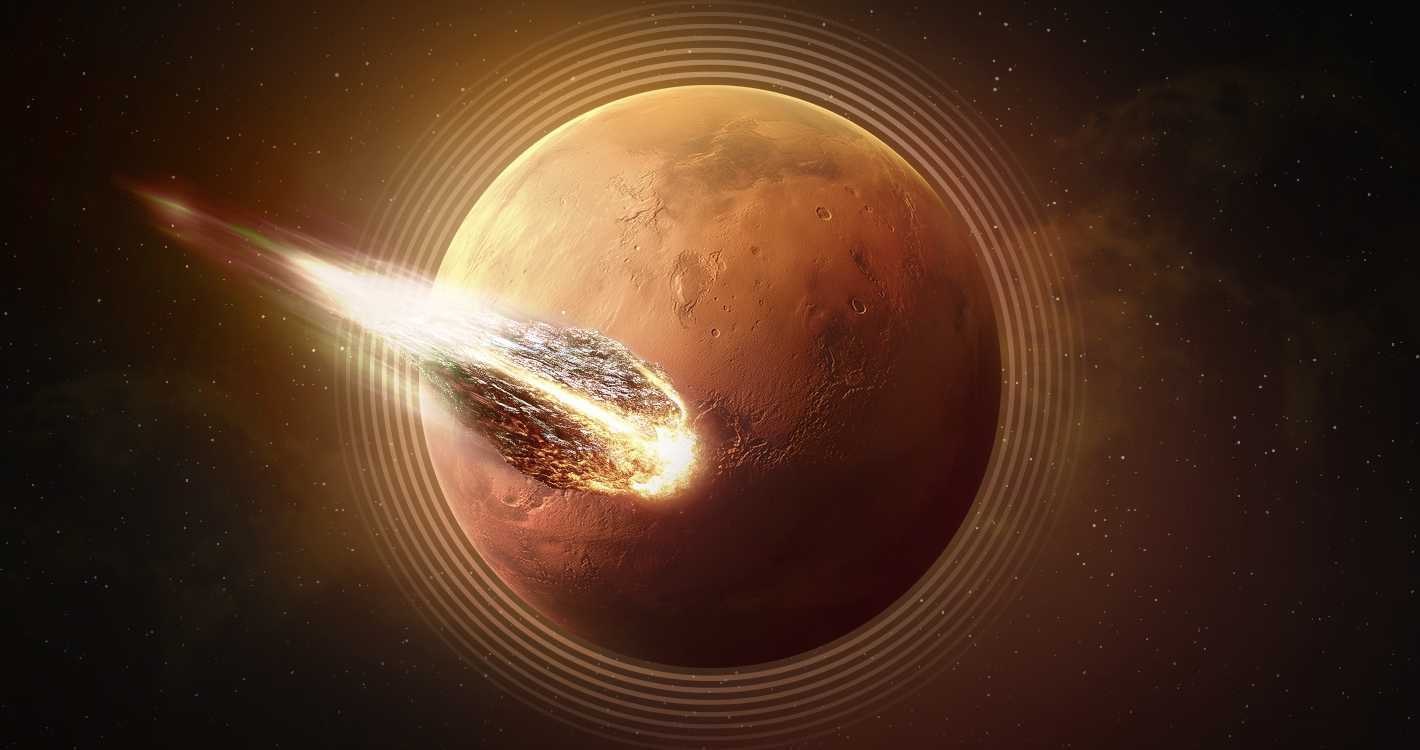
The most important scientific discoveries
Science is something that cannot be rushed and does not focus on studying just one thing. Scientists explore everything that seems interesting to them, and the results of their work can sometimes only be assessed decades later. This is especially true for a science such as astronomy, which studies processes that can last hundreds of millions of years.
Nevertheless, we have attempted to highlight ten of the most significant scientific discoveries that are worth mentioning when discussing the direction in which astronomical science has been moving this year.
1. Interstellar comet 3I/ATLAS
When scientists realized in July this year that the speck in the images from the ATLAS automated observation system was a comet, and that it had come to us from interstellar space, they already knew it would be a sensation. But no one expected it to be so unhealthy, because for several months, people were in hysterics: “An alien ship is flying towards us, there will be a landing.”
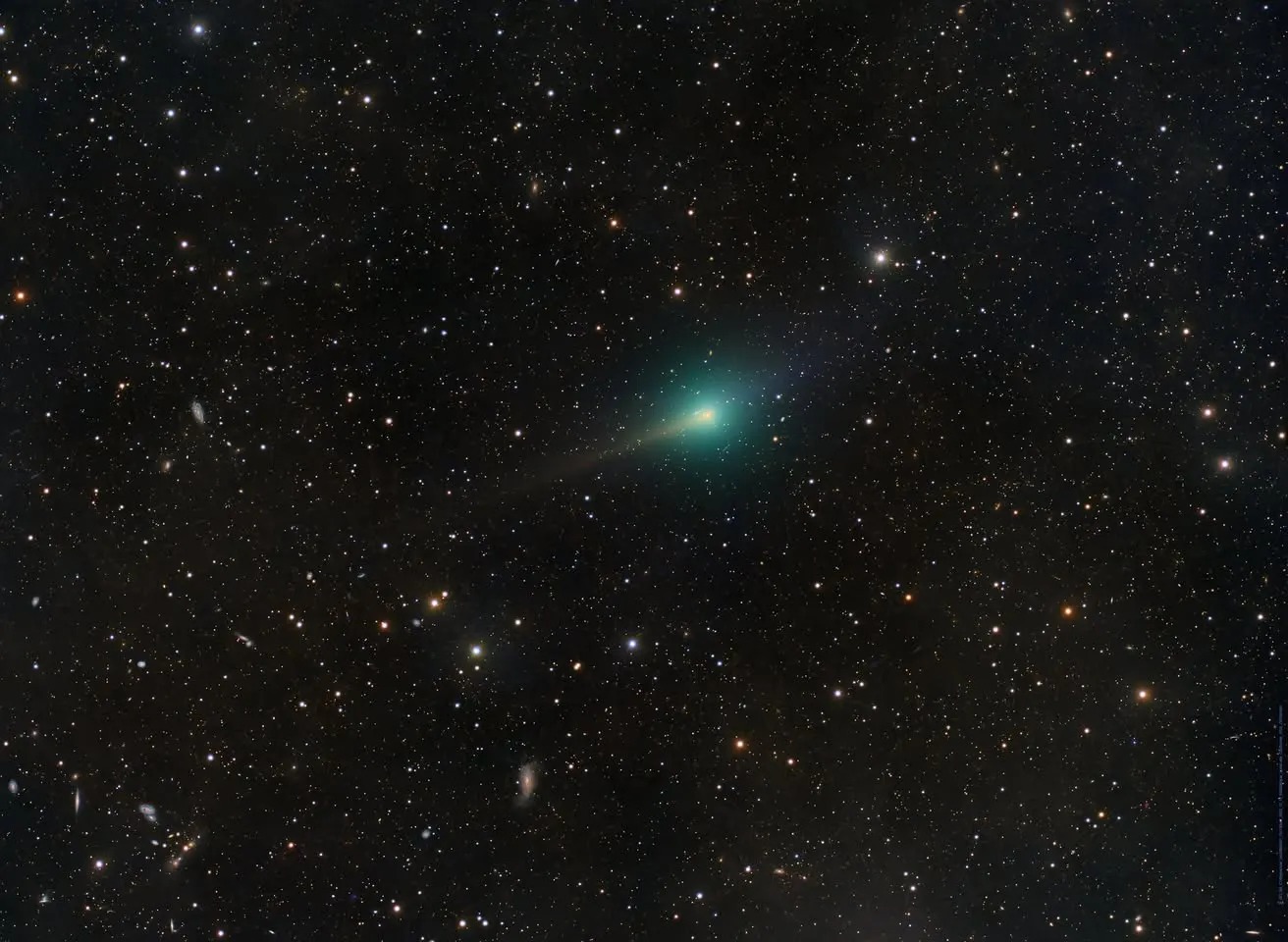
Scientists did not find any alien spacecraft. However, the chemical composition of this celestial body was studied in detail. Astronomers have confirmed that it is very similar to the “comets” that orbit the Sun. At the same time, differences were found between 3I/ATLAS and the two previous visitors from space, indicating that they can form under very different conditions.
2. Dark energy can evolve over time
In March, scientists working with a spectroscopic instrument to search for dark energy published the results of observations of 15 million galaxies that we see in a time range from the present to 11 million years in the past. And the results of these studies show that dark energy not only exists, but also changes over time.
This differs greatly from the standard model of the universe, according to which it remains constant. However, scientists are not yet rushing to talk about a revolution. Ideas about the variability of dark energy over time have been expressed before, and the results of the research do not prove anything conclusively. But now scientists have a new, powerful tool for revising existing theories.
3. The most energetic neutrino in history
In early February, the KM3NeT neutrino detector located in the Mediterranean Sea detected a particle with an energy of 220 petaelectronvolts (PeV). This is tens of thousands of times more than the most powerful accelerator on Earth can provide. Therefore, this particle is considered the most energetic neutrino ever seen by scientists.
There is no doubt that the particle came to us from space. At the same time, its origin remains a mystery, as scientists are still unable to confidently identify the process that could have caused it to appear. Among the possible explanations, they are even considering the explosion of a primordial black hole near the Sun.
4. A satellite has been discovered in Betelgeuse…
Betelgeuse is a giant red star in the Orion constellation, known to mankind since the dawn of history, but in the last decade, it has caused everyone to rack their brains over its behavior. It seemed as if it was about to explode as a supernova.
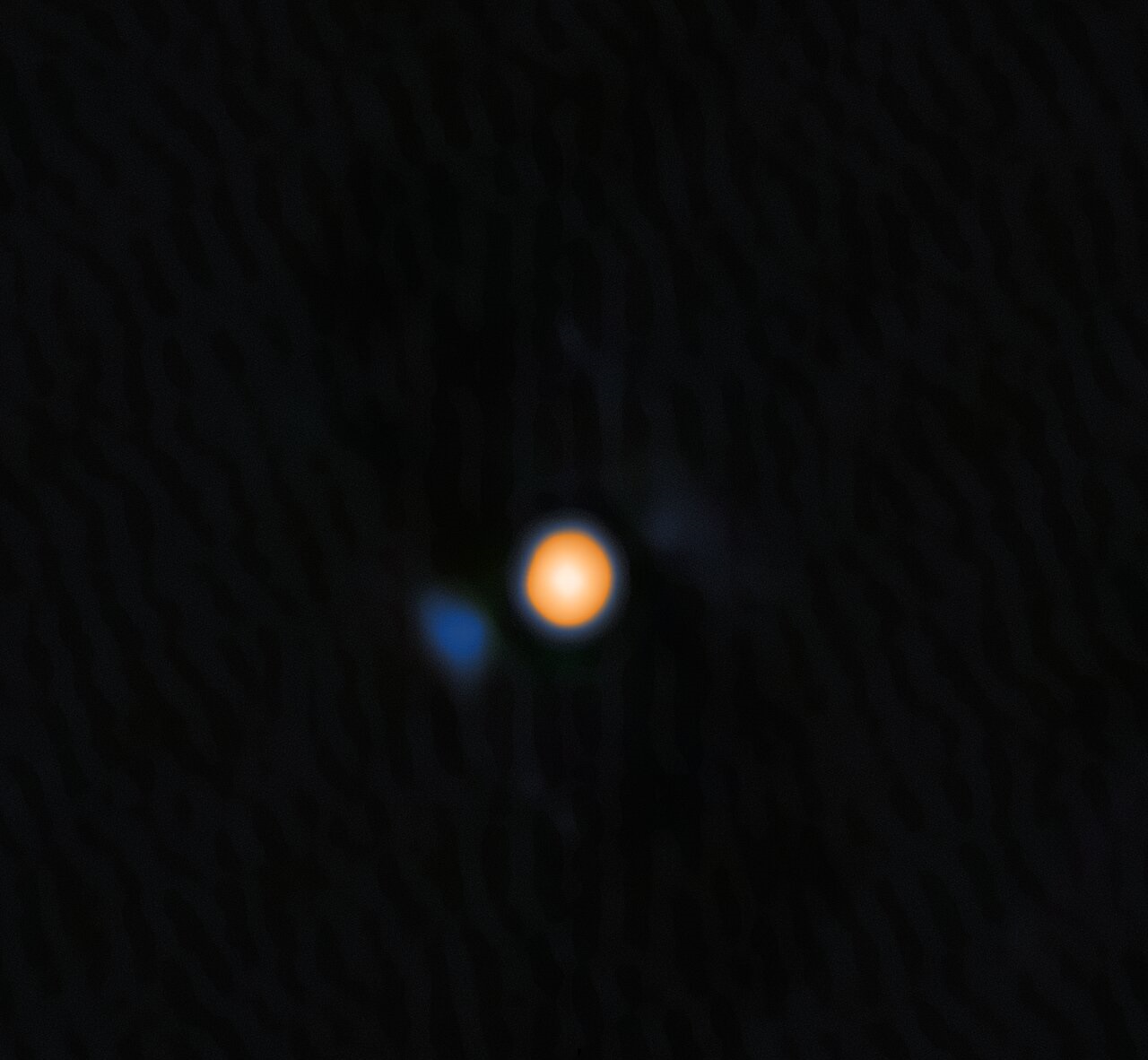
And in July 2025, scientists confirmed the presence of a companion star, whose mass is 1.5 times greater than that of the Sun. It is located so close that in about 10,000 years, the stars may merge into one. The very existence of this companion explains the long-term changes in Betelgeuse’s brightness.
5. …and Saturn has as many as 128
Saturn is a planet known not only for its rings but also for having the largest number of moons in the Solar System. In March 2025, scientists announced the discovery of 128 new bodies orbiting it. So now their total number is 274.
Most of them are very small bodies, with a diameter of less than a kilometer. However, they make you wonder how many more objects are flying around this planet. After all, among all the worlds revolving around the Sun, there is perhaps the most debris of all kinds.
6. Possible traces of life on Mars
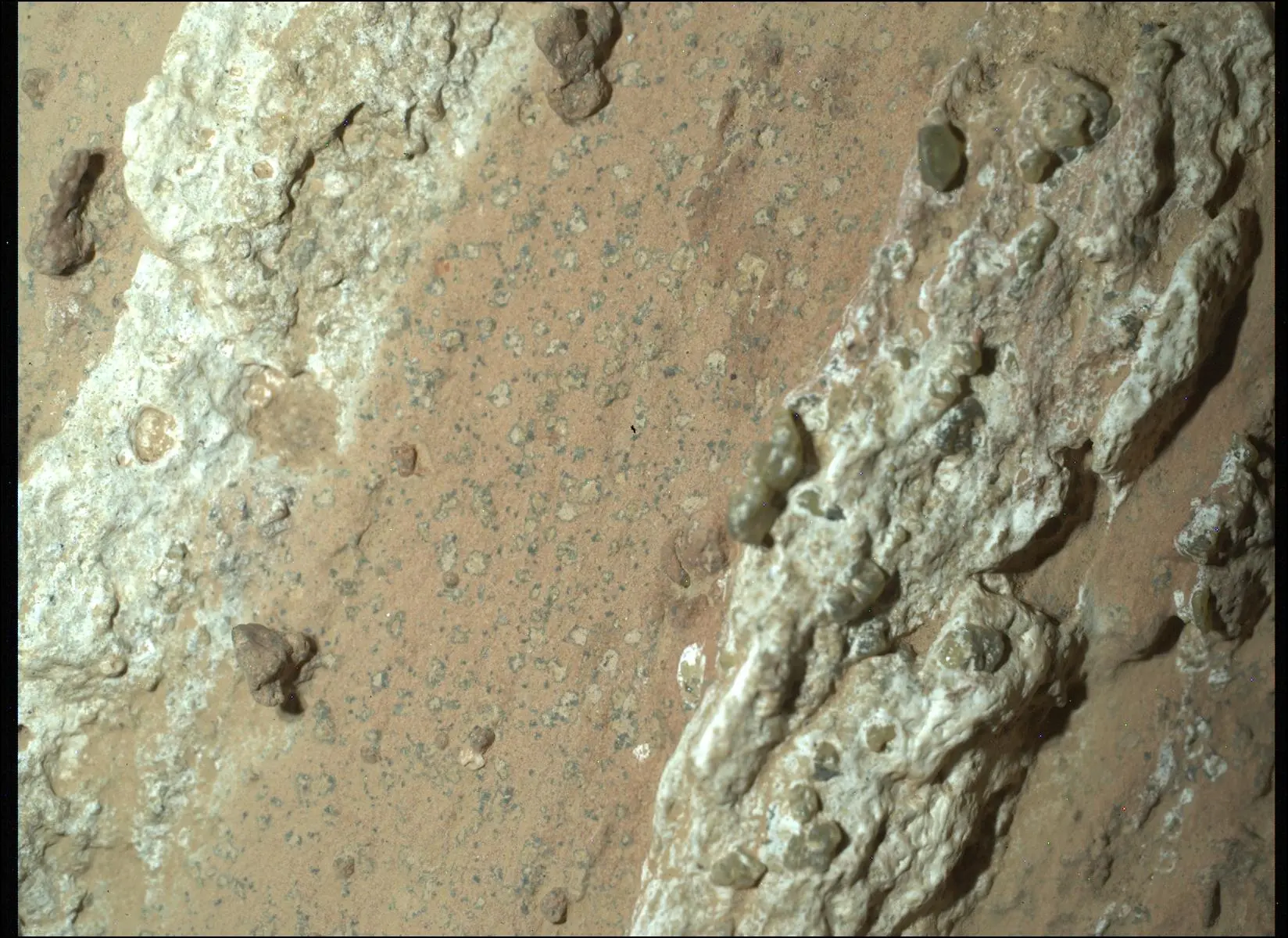
In early September 2025, NASA employees released data showing that in 2024, the Perseverance rover found something that could be traces of life on the Red Planet. At that time, it was working at the bottom of an ancient river near the Bright Angel formation. The sample collected was once a layer of silt.
Source: NASA / JPL-Caltech / MSSS
It is in such places that scientists expect to find traces of life, and this time they saw something resembling leopard spots or ripples on water. Researchers believe that this is very similar to the result of the vital activity of microorganisms that lived here when water still flowed through the valley and fed on the available minerals.
7. Space Quipu
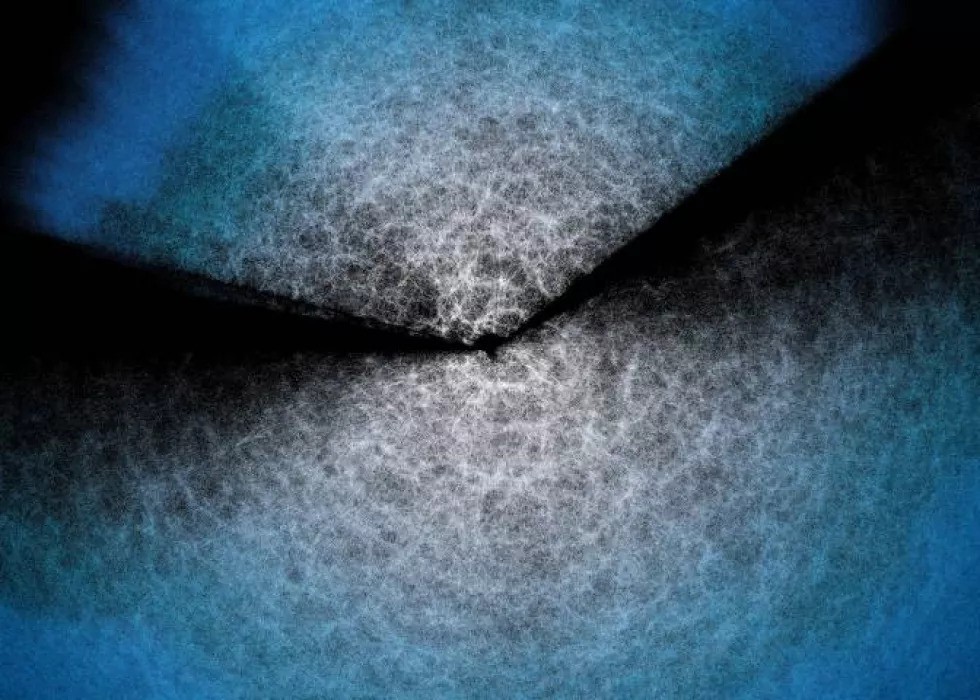
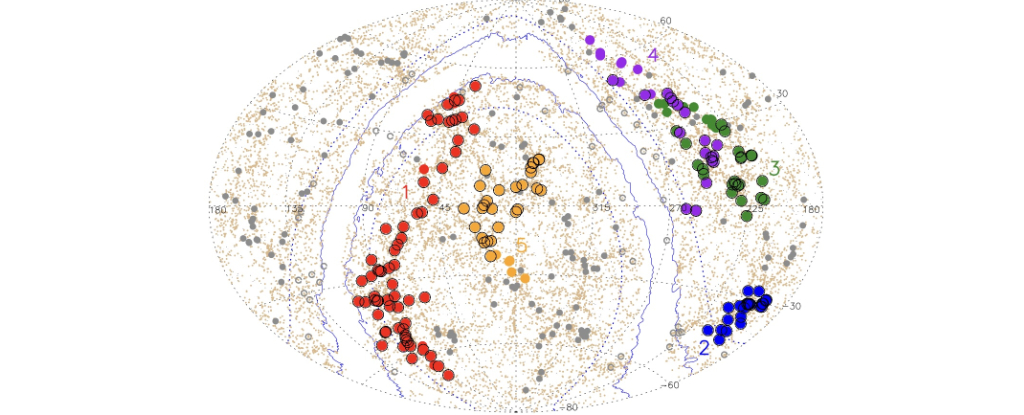
In January 2025, the Internet was abuzz with news of the discovery of yet another largest structures in the universe. In fact, the galaxy cluster, dubbed Quipu, is significantly smaller than objects such as the Hercules-Corona Borealis Great Wall, but its size is still impressive.
With a length of 1.3 billion light-years, it exceeds the Sun in mass by 200 quadrillion times and is the largest neighbor of the Laniakea Supercluster, which includes the Local Group, including the Milky Way galaxy.
8. Waves run across the Milky Way disc
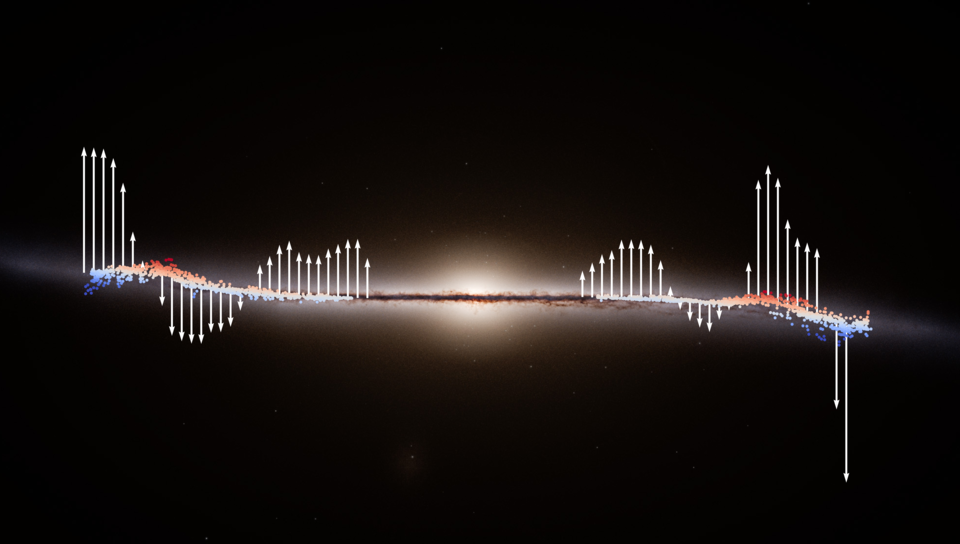
For many years, scientists have suspected that the Milky Way disc is not perfect, but warped at the ends. After observing millions of stars with the Gaia space telescope, they are now certain of this.
However, in 2025, based on the same data set, they discovered that this distortion is the result of waves running across the disk of our galaxy. In some places, stars shift upward relative to their plane, in others – downward.
Scientists suspect that this is due to a collision with another star system that the galaxy experienced in the past. However, there is also a theory that dark matter is to blame.
9. Signs of life on exoplanet K2-18b
Perhaps the most controversial discovery in astronomy this year was made in April by a group of astronomers studying the exoplanet K2-18b. It was known that it contained water, one of the main elements necessary for life to exist. This year, scientists confirmed the existence of two other substances on the planet: dimethyl sulfide and dimethyl disulfide.
Both of them appear on Earth mainly as a result of biological processes. So the news quickly became a sensation about the discovery of signs of life, although it was already clear at that point that K2-18b was too hot for that. However, this discovery is important in that it allowed scientists to take a fresh look at which substances are reliable biomarkers and which are not.
10. Formation of an exomoon
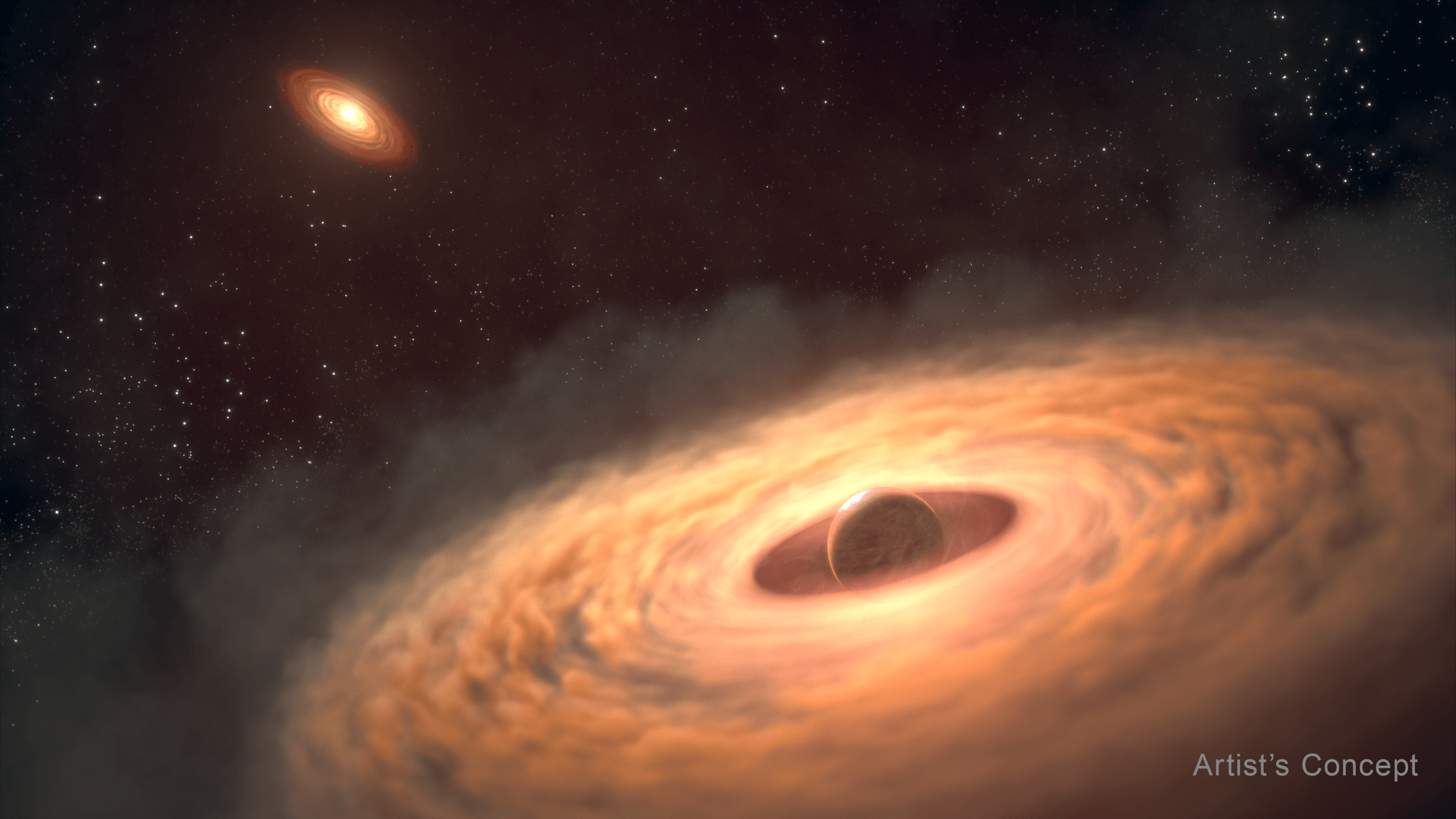
In September, scientists announced that they had discovered a satellite in the process of formation around the exoplanet CT Cha b. Previous discoveries of moons around planets outside the Solar System have been reported, but each time these discoveries have been refuted.
Source: NASA, ESA, CSA, STScI, Gabriele Cugno (University of Zürich, NCCR PlanetS), Sierra Grant (Carnegie Institution for Science), Joseph Olmsted (STScI), Leah Hustak (STScI)
This time, we are talking about a young planet, near which scientists have detected seven different organic substances. It is believed that their molecules are contained in the dust disk surrounding the planet, from which a satellite is gradually forming.

