

The Asteroid Terrestrial-impact Last Alert System, or ATLAS, is an automated sky surveillance system designed to search for dangerous asteroids. However, it also discovers many other astronomical objects. In particular, it was the first to spot the interstellar comet 3I/ATLAS.
Comets and asteroids
Last week, many people may have thought that the interstellar comet 3I/ATLAS broke apart during its perihelion, i.e., the point in its orbit closest to the Sun. In fact, this was the result of two news stories being conflated: reports about this interstellar comet and information about another comet that is indeed showing signs of fragmentation.
It is called C/2025 K1 ATLAS, and its name could easily be confused with that of an interstellar traveler. However, there is no malicious intent behind this. According to the rules, “comets” are named after the discoverer or the observatory where they were first detected. In this case, they were first spotted by the ATLAS automatic system.
In order to explain what it is and why it is so often the first to find comets, we need to start a little further back, namely with the asteroid threat to Earth. The possibility of our planet colliding with a space rock worries both ordinary citizens and scientists. However, unlike the former, the latter realized several decades ago that truly large objects, with diameters measured in kilometers, are tracked closely enough, and they know for sure that none of them pose a threat in the coming millions of years.
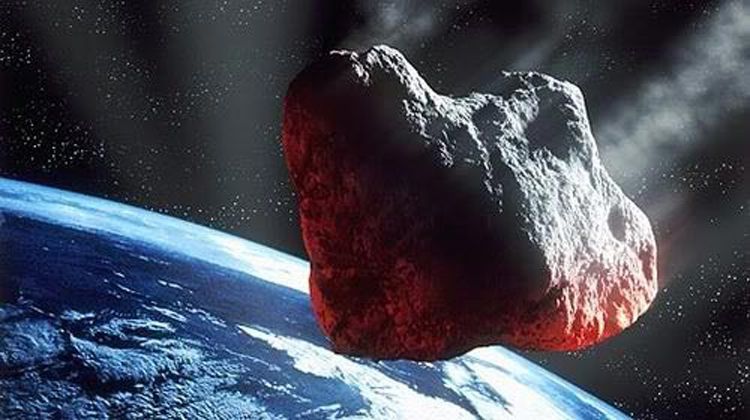
However, the inner part of the Solar System is full of asteroids with diameters of several tens or hundreds of meters, most of which were undiscovered at the time, let alone the construction of accurate models of their orbits. None of them could destroy life on Earth, but they could well destroy a large city.
This problem was of particular concern to the United States government. Therefore, scientists were tasked with identifying all potentially dangerous near-Earth asteroids within 20 years. Although this task has not yet been fully accomplished, astronomers have achieved several notable results, one of which is the Asteroid Terrestrial-impact Last Alert System, or ATLAS.
How the ATLAS system works
The name of the ATLAS system makes it clear that it is primarily designed to detect objects that are already weeks or days away from their closest approach to our planet. Of course, there is no question of deflecting asteroids, but there is still time to evacuate people from the danger zone.
You do not need an extremely powerful telescope for this. It is believed that it is enough for it to be able to see objects of the 19th magnitude, and for this, even a meter-long mirror is not necessary. Another thing is that you need to record the movement of this speck against the background of the stars. And for this, you need to scan the entire sky, preferably several times. And then look for tiny inconsistencies.
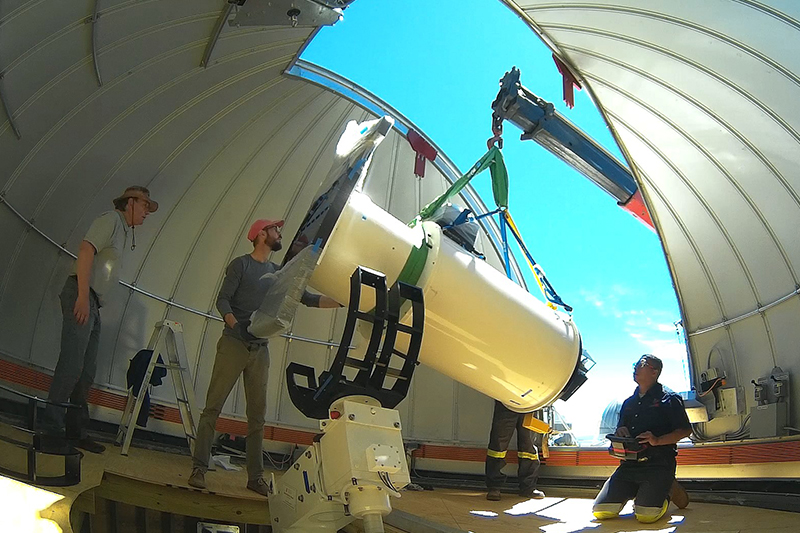
The ATLAS system embodies this concept. It began with a 50-centimeter robotic telescope on Haleakala (Hawaii), which scanned a quarter of the celestial sphere every night, then took a 15-minute break, repeated the scan, and so on, four times.
In 2017, it was joined by its twin on Mauna Loa volcano, located 160 km away. And in 2022, two more similar instruments were added to the system – in Chile and South Africa. Together, they were able to scan the entire sky every night and even compare their images to better determine the distance to an object.
In reality, even in theory, the system does not work so well because the weather makes its own adjustments. But it is still believed that it is capable of warning of the approach of a 45-meter asteroid a week before collision and a 120-meter asteroid three weeks before collision.
Discovered asteroids
In a way, ATLAS works exactly as it should, and it has already discovered an incredible number of near-Earth asteroids. However, this success is not as remarkable as it seems, since some of the most notable ones were spotted only after they had already come close to Earth.
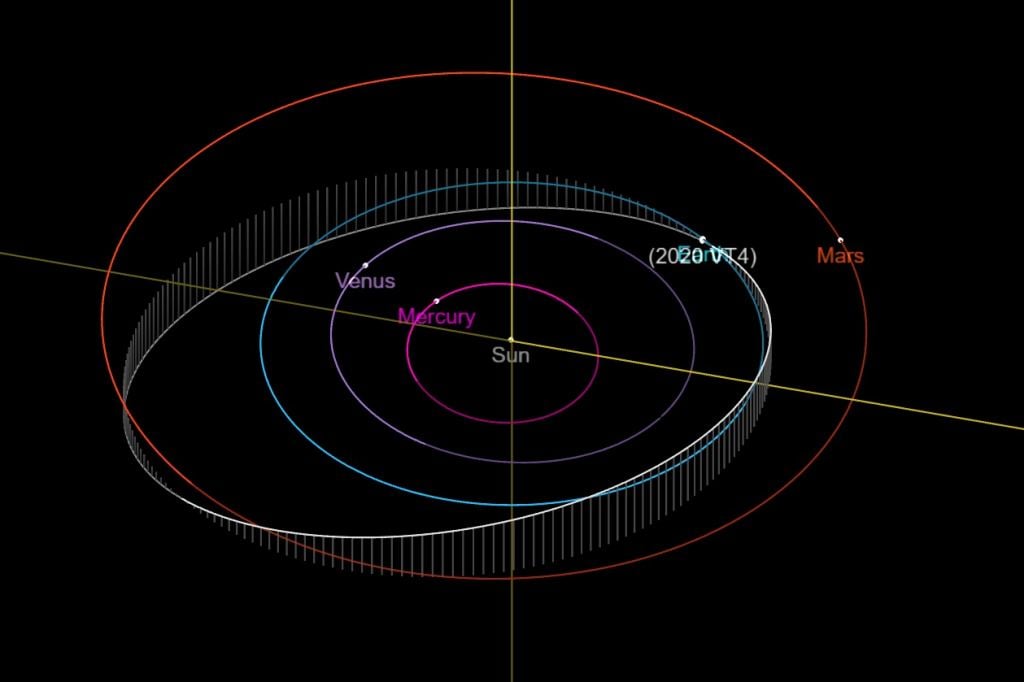
For example, this happened in 2020, when asteroid 2020 VT4 flew past Earth at a distance of 370 km. ATLAS was able to detect it only 15 hours after its closest approach, which was very poor considering the main task of the system, but it was still a success because the rest of the observatories did not notice it, and the data obtained helped to calculate its orbit, since this is not the last time it will approach Earth.
However, 2020 VT4 was only 5-10 m in diameter, while 2018 AH, which flew past Earth in 2018, was about 100 m. It was the largest known asteroid since 1971 to fly between Earth and the Moon. Once again, ATLAS was late, but it was still the first to learn of its existence.
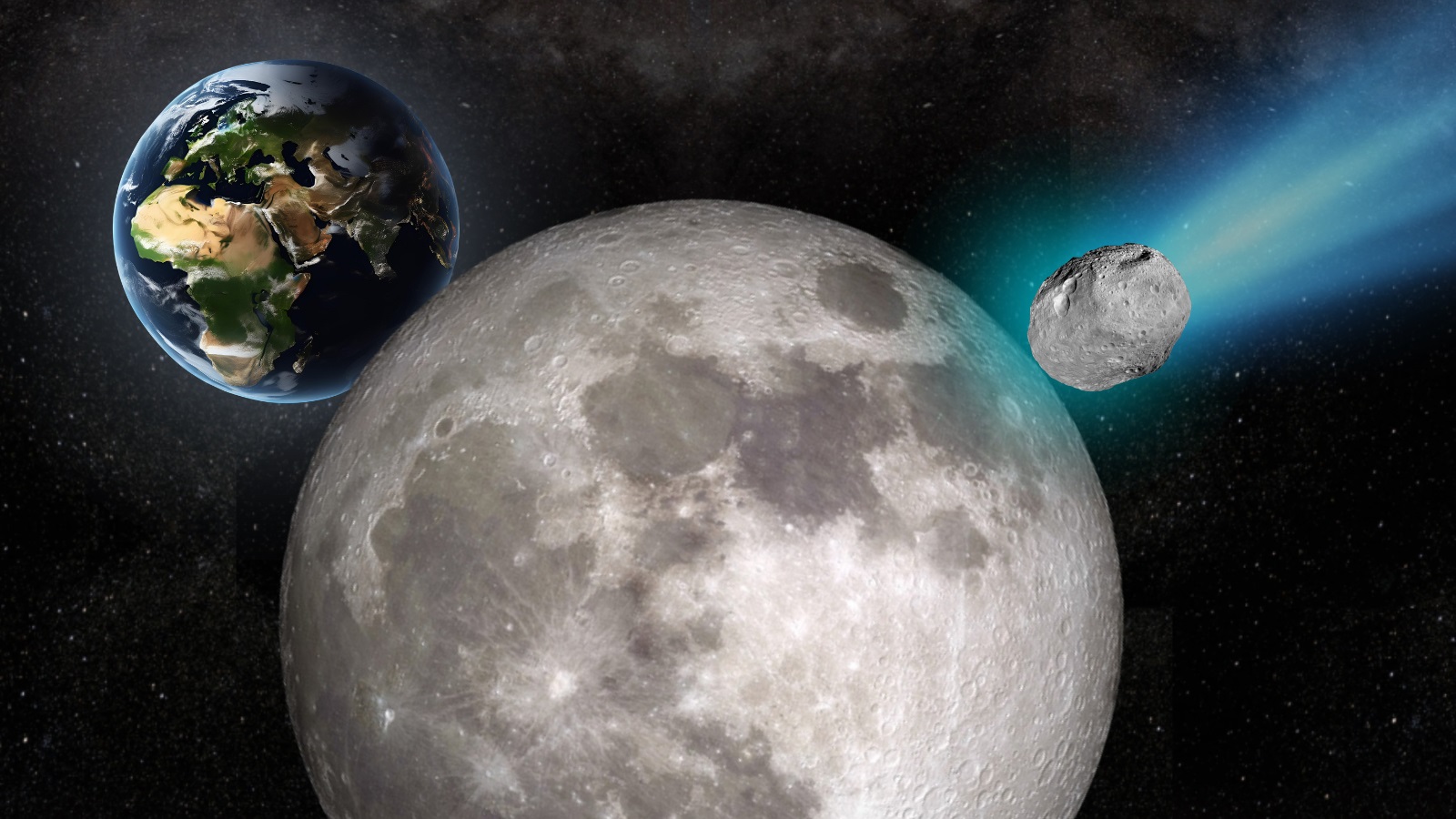
What can we say, if the most famous asteroid today, 2024 YR4, the same one that could collide with the Moon in December 2032, was also discovered using ATLAS? It has a diameter of 53 to 67 meters and, even without directly colliding with Earth, could cause a lot of damage.
ATLAS and “cows”
Although ATLAS cannot boast of flawless performance of its main task, its ability to quickly detect unusual objects in the sky has made it a unique tool in the arsenal of astronomers. It is thanks to it that many other space objects have been discovered: variable stars, trans-Neptunian objects, and supernovae.
For example, on June 16, 2018, one of the telescopes detected an unusual flash, the position of which coincided with the distant galaxy CGCG 137-068 in the constellation Hercules. It was extremely bright and stood out from everything that had been observed before.
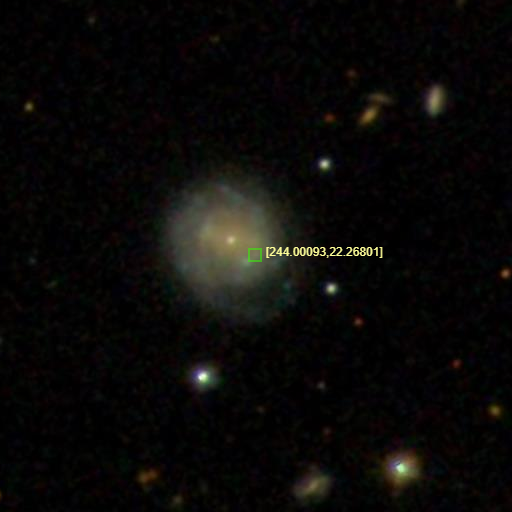
In the end, it was recognized as a supernova and designated AT2018cow. The last three letters were generated by a random number generator and have no meaning. However, they form the English word “cow.” So that’s what this new type of supernova came to be called. What they are is still not very clear, but scientists hope that new observations, including data from ATLAS, will help to figure it out.
Comets
But what ATLAS does really well is search for comets. After all, they are also tiny lights slowly creeping between the stars. Their system has already discovered several dozen, and all of them are named after it. So it is no surprise that in November 2025, we had two such objects at once: one long-period and the other interstellar.
Last year, there were also at least two very bright comets whose names contained references to the robotic system that discovered them. The first was C/2023 A3 (Tsuchinshan – ATLAS), which was discovered shortly before it at the Tsuchinshan Observatory in China.
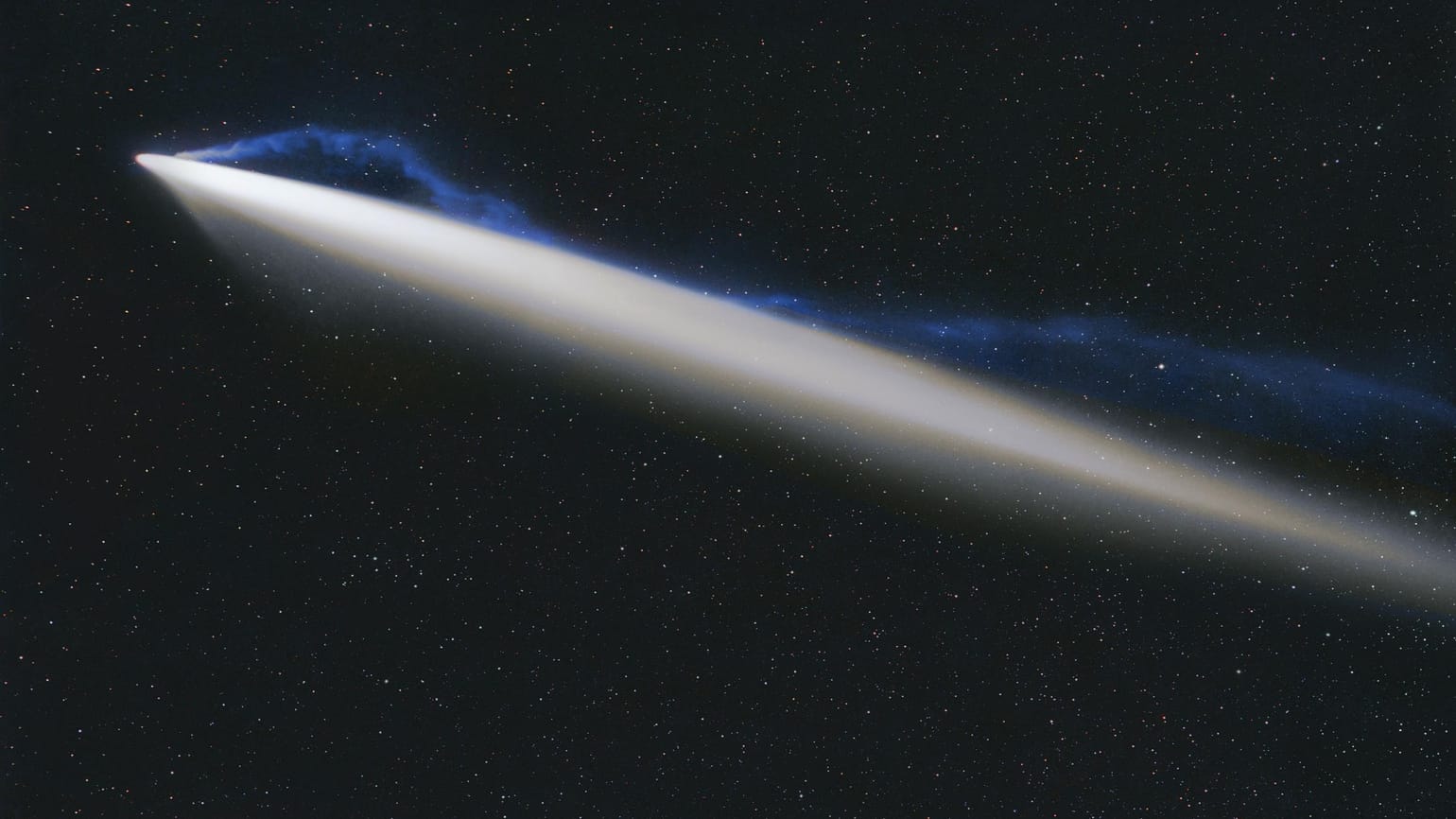
The second notable comet is C/2024 G3 (ATLAS), which partially disintegrated as it approached the Sun, but was so bright that it is sometimes referred to as the great comet of 2024. In general, it can be said that the ATLAS system is just beginning its search for comets, so we will see many more “tailed guests” with this name. And it is quite likely that among them will be those that have flown to us from interstellar space.

