
On September 7, Earth’s inhabitants will witness a rare phenomenon: a total lunar eclipse. We will tell you when it will begin and where you can see it.
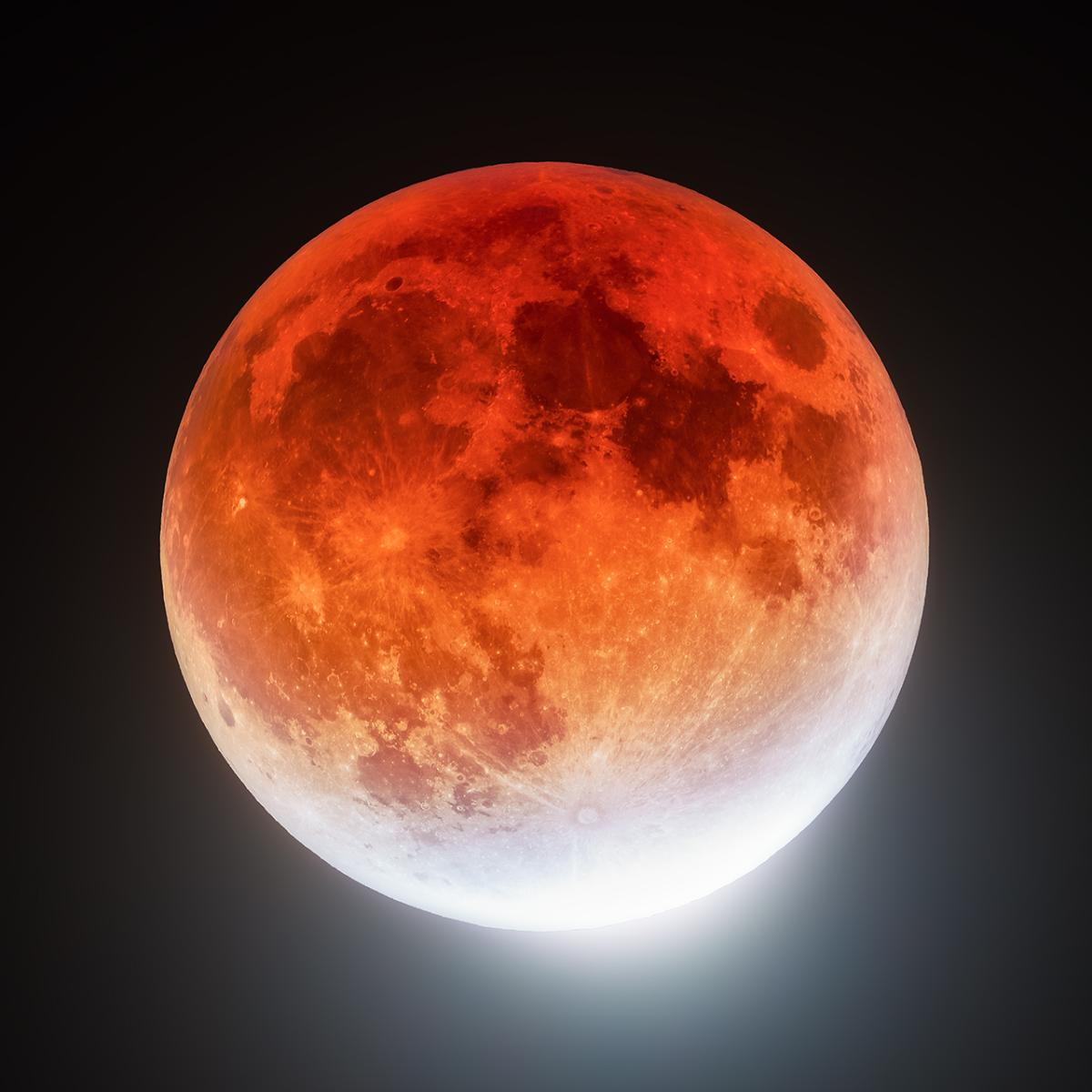
Blood Moon
Lunar eclipses occur when the Moon passes through the shadow of our planet. At this moment, its disk turns a characteristic dark red color.
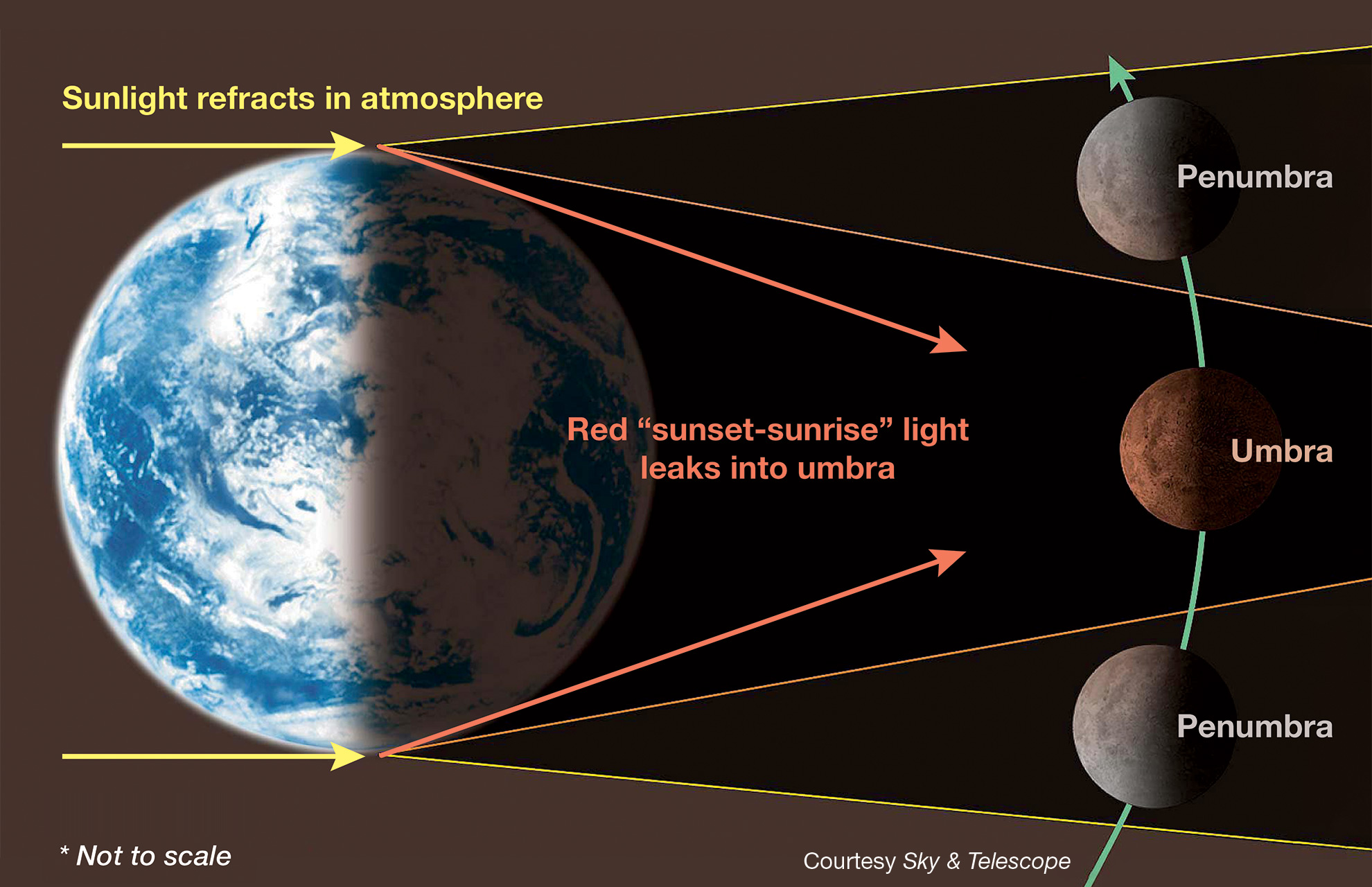
This effect can be explained as follows. Although the Moon is in shadow, its surface still receives sunlight that is refracted by the Earth’s atmosphere. During this process, they are partially scattered. Since the Earth’s atmosphere is most transparent to rays in the red-orange part of the spectrum, it is these rays that reach the Moon’s surface to a greater extent. This is why it takes on this color during an eclipse.
Lunar eclipses can only be observed during full moons, when the Sun, Earth, and Moon are aligned. However, they do not occur during every full moon. This is because the Moon’s orbit is tilted at an angle of 5.14° to the ecliptic. Therefore, in most cases, during a full moon, it is above or below the Earth’s shadow. For example, in 2025, there will be two total lunar eclipses on Earth, and next year there will be one total and one partial eclipse.
Start time of the lunar eclipse
The chronology of the upcoming lunar eclipse is as follows:
- 3:28 p.m. GMT – start of the penumbral eclipse. At this stage, the Moon will enter the Earth’s penumbra, causing a slight darkening of its surface that will be difficult to see with the naked eye.
- 4:27 p.m. GMT – start of the partial eclipse. During this phase, the darkening of the Moon will be clearly visible to the naked eye.
- 5:30 p.m. GMT – start of total eclipse. At this moment, the Moon will be completely hidden in the Earth’s shadow and will turn dark red.
- 6:11 p.m. GMT – maximum phase of the eclipse.
- 6:52 p.m. GMT – end of total lunar eclipse.
- 7:56 p.m. GMT – end of the partial lunar eclipse.
- 8:55 p.m. GMT – end of the penumbral lunar eclipse.
In total, the eclipse will last 5 hours and 26 minutes. The duration of the total phase will be 1 hour and 22 minutes.
At the moment of the eclipse, the Moon will be 373,000 km away from Earth. This cannot be called a Supermoon, but this distance is still less than the average distance between our planet and its satellite. Therefore, the apparent size of the lunar disk will be slightly larger than usual. However, the human eye is unlikely to notice the difference.
Live broadcast of the lunar eclipse
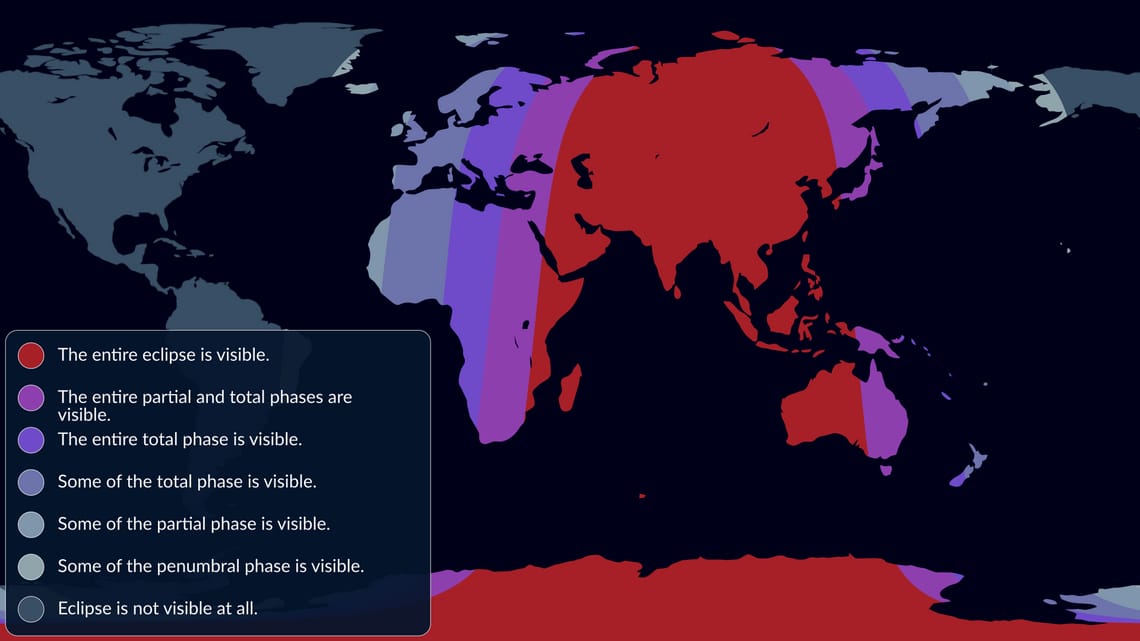
The upcoming lunar eclipse will be fully visible in Central Asia, India, Iran, and China. It will also be visible in Europe (including Ukraine), Africa, and Australia. However, visibility of the initial phases of the eclipse in Europe will be hampered by the fact that the Moon will be low above the horizon in a still bright sky.
Of course, much will also depend on weather conditions. But even if clouds prevent you from seeing the eclipse with your own eyes, you can always watch it online. The eclipse will be broadcast live on YouTube.

