

There are approximately 250 small asteroids orbiting the Earth that are rich in minerals. The extraction of rare earth elements and precious metals from these space rocks promises to become the most profitable business in human history. However, the main obstacle has been the difficulty of mining directly in outer space.
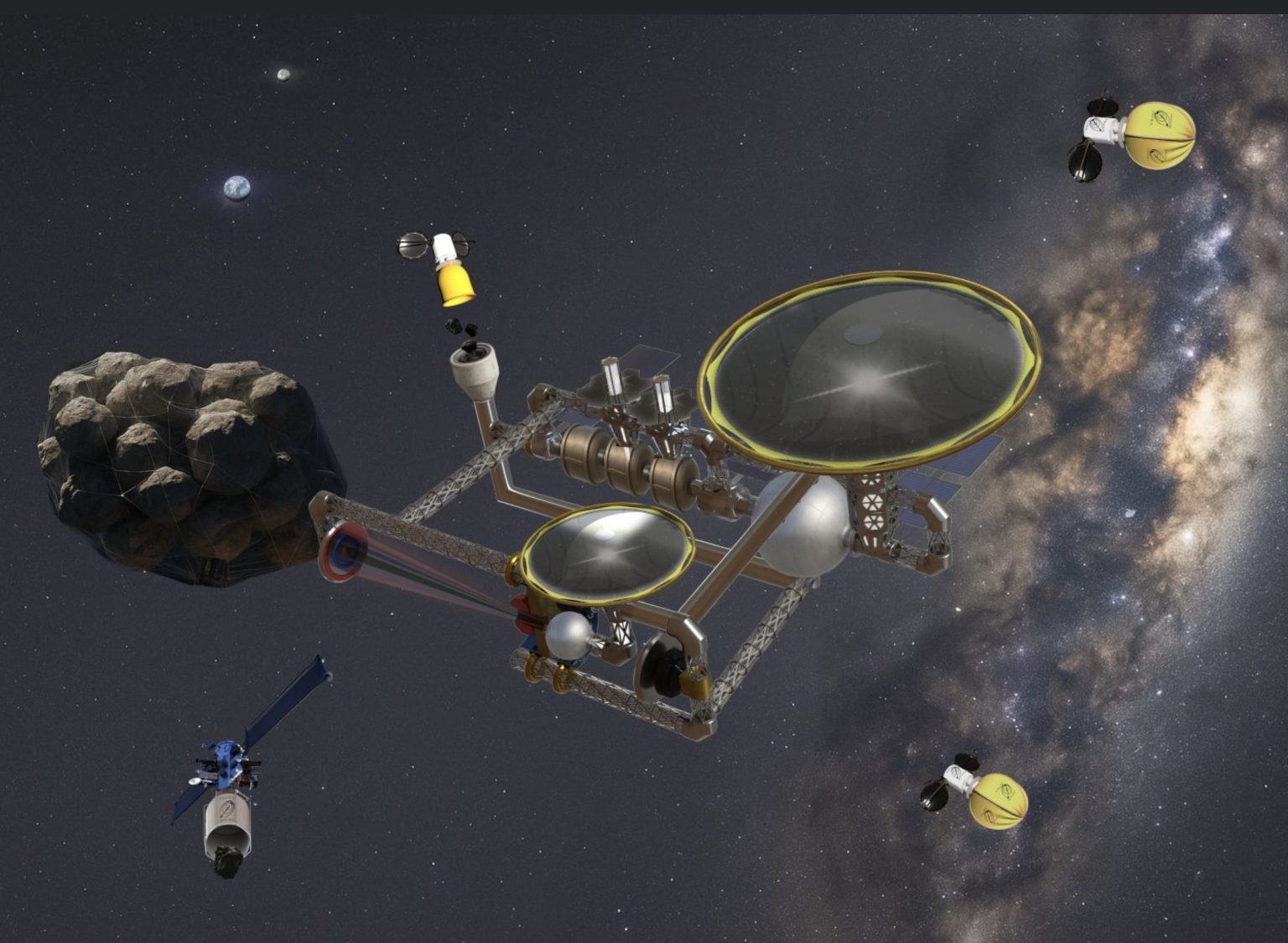
Los Angeles-based TransAstra has proposed a radical solution: instead of building mines deep in space, they plan to “capture” asteroids and pull them closer to Earth.
The New Moon project
This month, TransAstra unveiled details of the New Moon mission. The plan resembles the plot of a science-fiction heist movie: a special spacecraft creeps up on an asteroid, “captures” it in a giant inflatable bag, and tows it into a stable orbit around Earth.
Once it arrives at the collection point, the asteroid becomes available for processing. The company plans to establish a fully-fledged outpost there, where the extracted materials can be used to build space infrastructure—from refueling stations to living modules.
Technology verification
This isn’t just a bold idea on paper—the technology has already passed its initial tests. As part of a $2.5 million contract with NASA, the company developed a prototype of an inflatable trap.
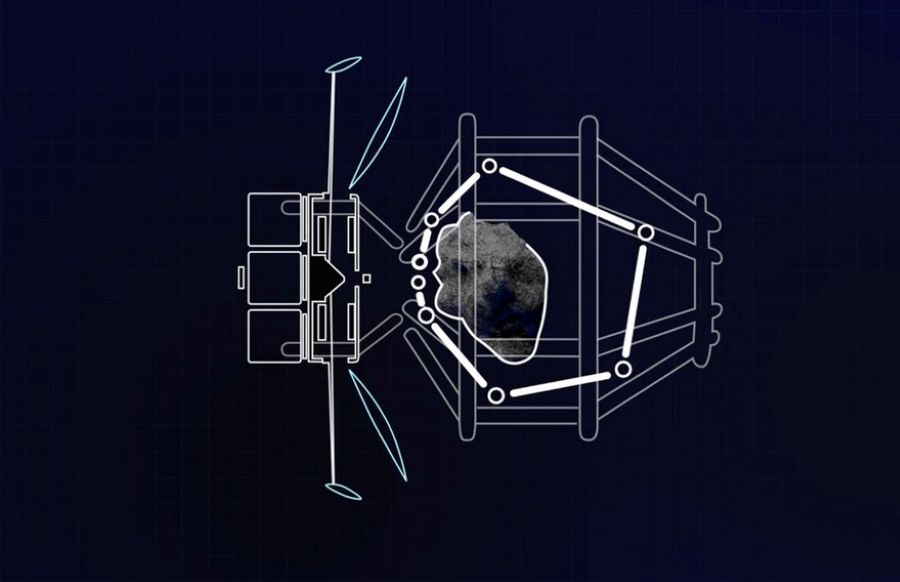
In October 2025, a one-meter version of this bag was successfully tested aboard the International Space Station. Tests have confirmed that the mechanism can be repeatedly deployed and retracted under vacuum and microgravity conditions. Company founder Joel Sercel emphasizes that this technology will be versatile: it is suitable for both capturing asteroids and clearing away dangerous space debris.
Why are asteroids so valuable?
Mining in space is a high-risk endeavor. Previous attempts by other startups, such as AstroForge, have often resulted in a loss of communication with the spacecraft. However, the potential is too great to give up.
Asteroids are rich in:
- Water: It can be broken down into hydrogen and oxygen to produce rocket fuel right in space.
- Precious metals: Platinum, palladium, and other rare earth elements that are critical to modern electronics.
Thanks to the new Vera Rubin Observatory in Chile, scientists expect to discover about 260 more such objects, with diameters of up to 20 meters, in the near future. TransAstra plans to carefully select “targets” from among these celestial bodies, looking for the ones richest in resources.
When will the first catch take place?
The first actual mission to capture an asteroid is scheduled for 2028. If everything goes according to plan, future missions will be able to retrieve the “captured” asteroid in orbit to begin its industrial processing.
Of course, turning asteroids into “space refueling stations” is no easy task, but the ability to use resources without having to extract them on Earth could forever change the game when it comes to space exploration.
We previously discussed the prospects for mining resources on asteroids.
According to Space News

