

An international team of astronomers has discovered two previously unknown exoplanets orbiting a young sun-like star. Their characteristics resemble those of Neptune.
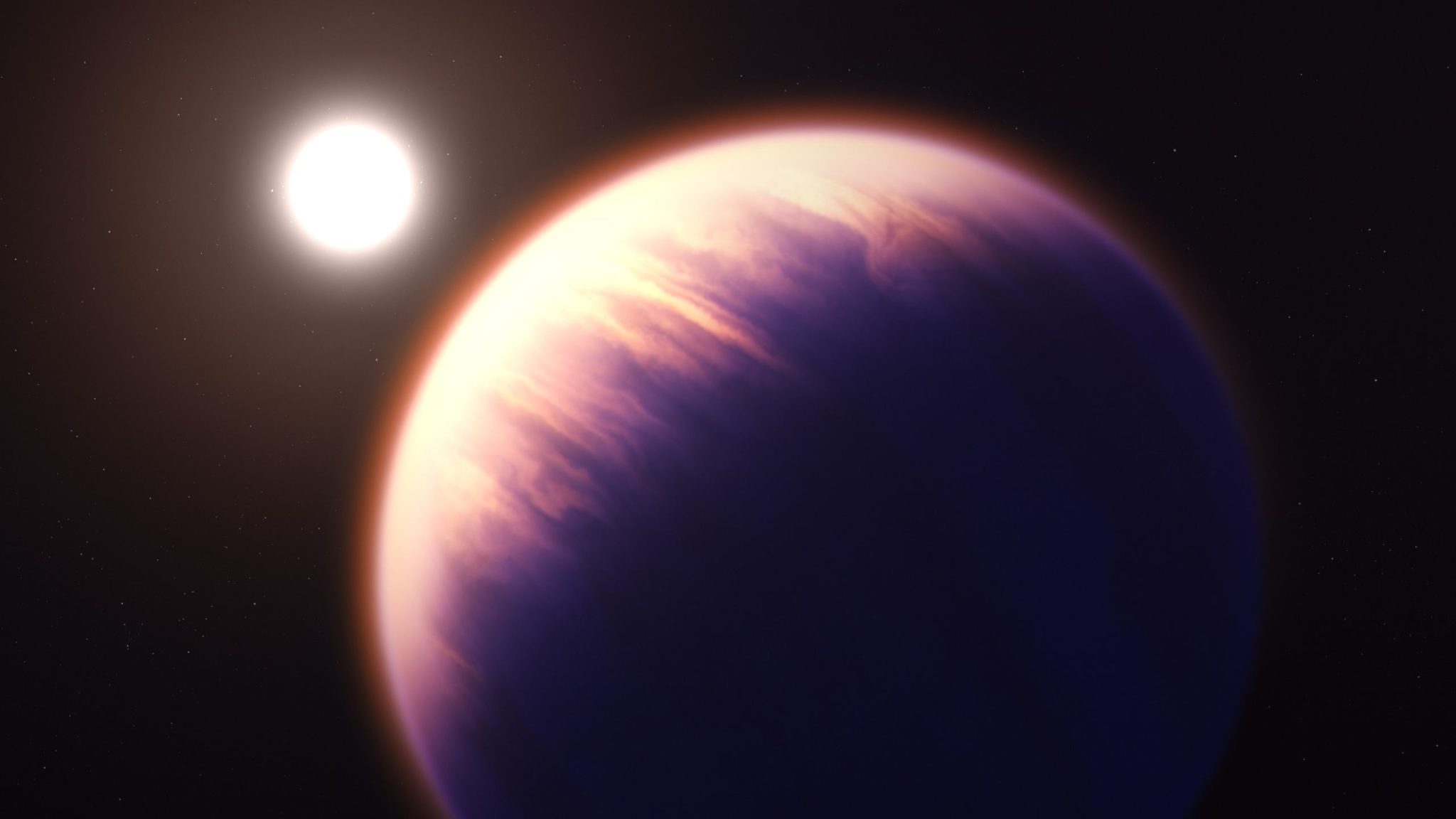
The discovery was made using the TESS telescope. It tracks the brightness of 200,000 of the brightest stars closest to us in order to search for fluctuations caused by transits of their companions. To date, it has identified approximately 7,700 exoplanet candidates. 693 of these have already been confirmed.
Now this list will be expanded with two more worlds orbiting the star TOI-6109. This young sun-like star is located about 484 light-years away in the Alpha Persei cluster. Its age is estimated at 75 million years. TESS managed to detect transit signals in its light curve, which were later confirmed by observations made by ground-based observatories and the CHEOPS satellite.
The planet closest to the star has been designated TOI-6109 b. Its radius of 4.87 exceeds that of Earth, its orbital period is 5.69 days, and its orbit passes at a distance of 0.06 AU (9 million km) from the star.
The second planet, designated TOI-6109 c, is comparable in size to TOI-6109 b, as its radius is 4.83 times that of Earth. The planet’s orbital period is 8.54 days, and its distance from the star is about 0.078 AU (11.8 million km).
This system is interesting because the orbital periods of the exoplanets are close to a 3:2 orbital resonance. This “almost” resonant configuration makes it possible to determine their mass by measuring transit time variations, which is easier than complex measurements of the star’s radial velocity oscillations.
Earlier, we reported on how the James Webb Telescope discovered the birthplace of an exomoon.
According to Phys.org

