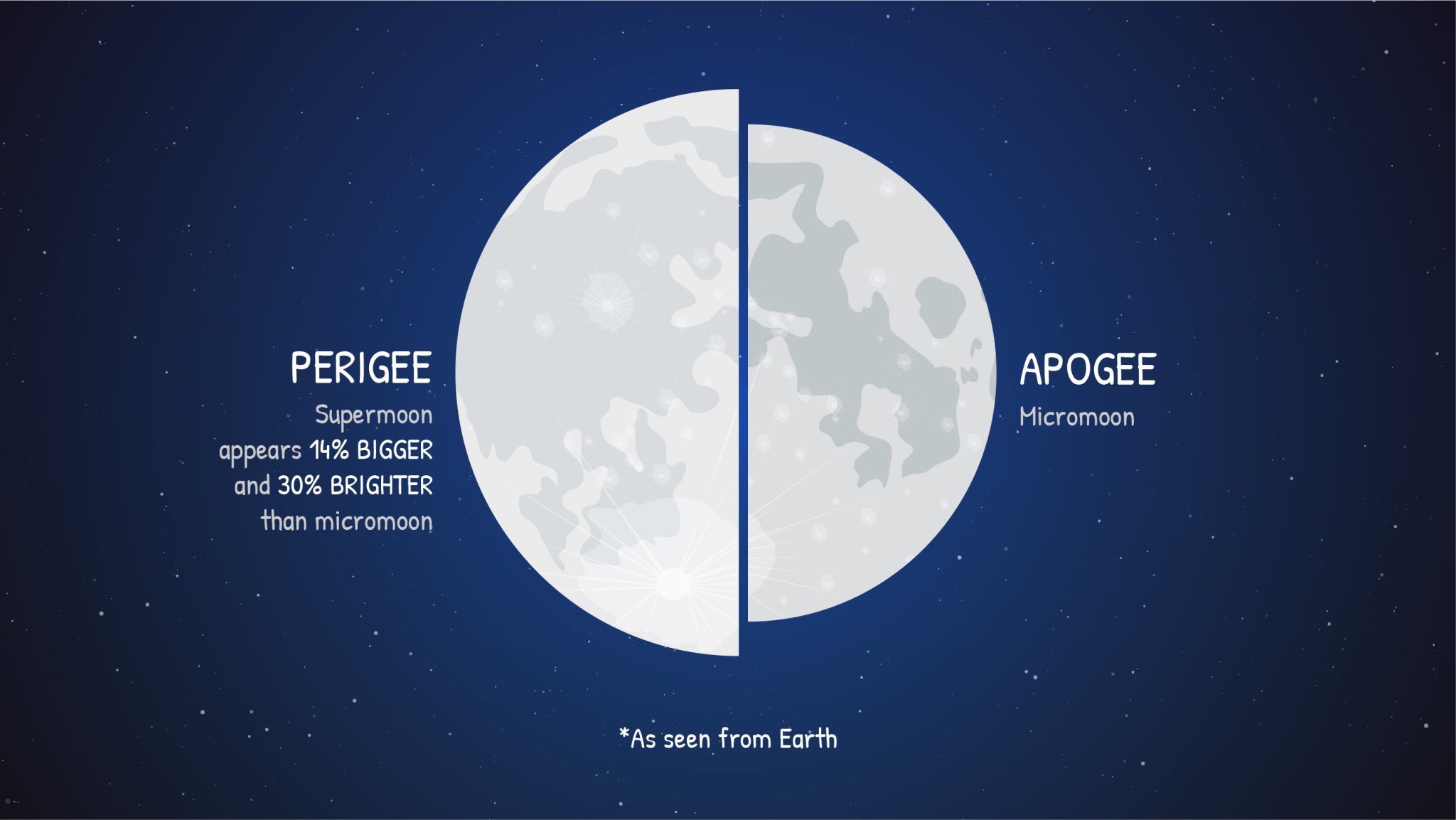
For moon enthusiasts, May will be a very special month this year – it begins and ends with a full moon. And on May 6, we can look forward to the peak of the Eta Aquariids meteor shower – an annual “meteor shower” associated with the famous Halley’s Comet. But the truly amazing celestial spectacle is worth catching shortly after sunset on May 19: a thin crescent moon will be positioned almost exactly between the two brightest planets – Venus and Jupiter.
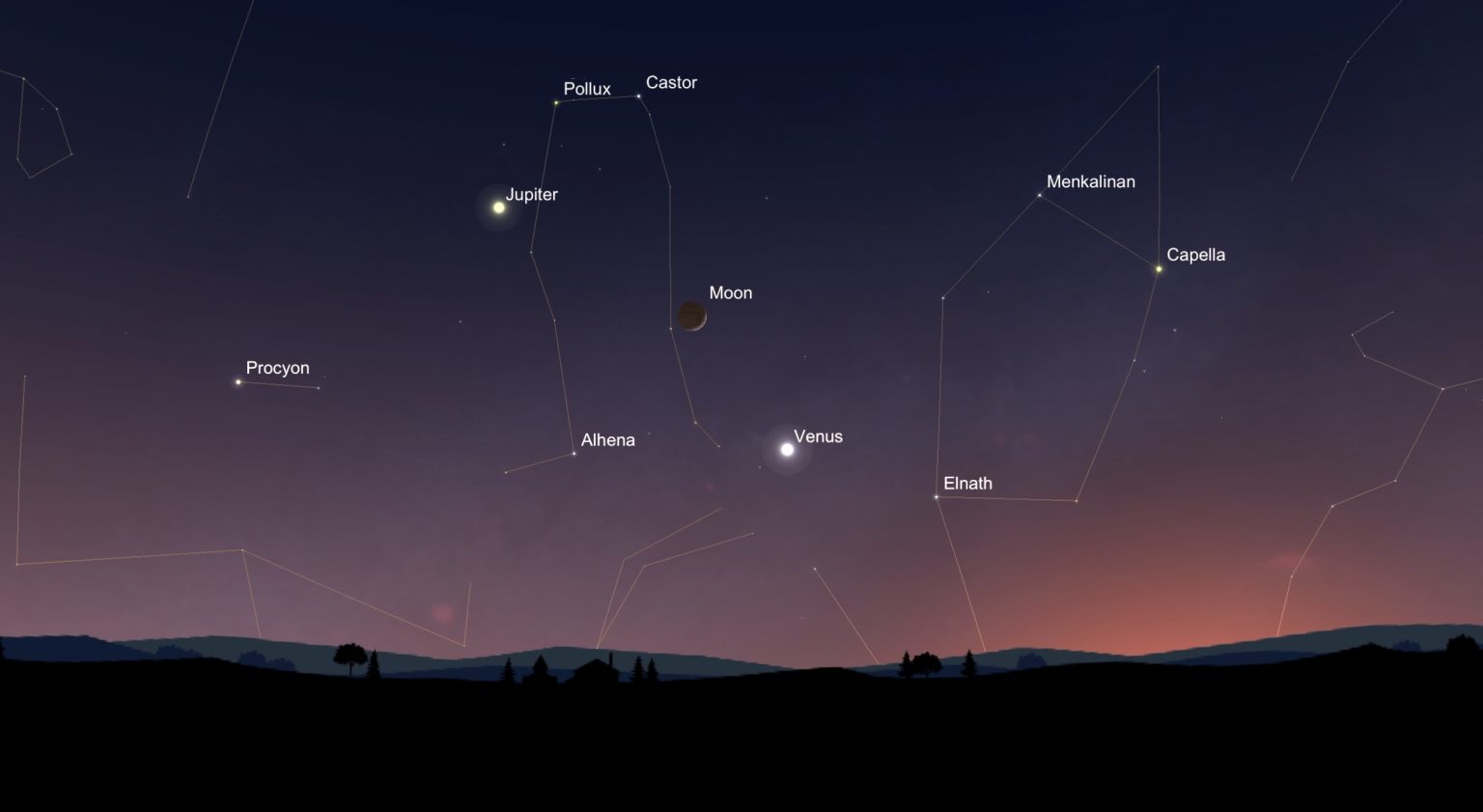
In fact, of all the bright planets visible this month, only these two will be observable, and both will appear in the evening sky. Venus is particularly worth watching from May 22 to 29, when it will reach its highest point above the horizon. During the last ten days of the month, you can also try to spot Saturn low above the eastern horizon before sunrise.
Toward the end of May, Mars begins to appear gradually on the eastern horizon. The most experienced observers will be able to spot it shortly before sunrise. But this is only the beginning of the Red Planet’s observation season, which will last for over a year.
We continue to track the path of Comet C/2026 R3 (PanSTARRS), which passed through perihelion on April 19 and reached its closest approach to Earth on the 26th. Nearly the entire second half of April was extremely unfavorable for observations due to the comet’s proximity to the Sun. But in early May, it will grace the western sky in the Southern Hemisphere. And although C/2026 R3 will be impossible to see in the Northern Hemisphere, we look forward to seeing interesting photos from enthusiasts in South America and Australia.
We would also like to remind you that the observation season for the binary star T Coronae Borealis is currently underway, and astronomers are expecting a bright outburst from it. T CrB is a recurrent nova that flares up from time to time, briefly increasing its brightness by tens of thousands of times. There are currently no more than a dozen such stars known in our Galaxy, and T CrB is the only one whose outburst can be seen with the naked eye. The interval between such events for T CrB is not constant and averages about 80 years. The last time it flared up was in 1946, so the probability of seeing an “extra star” in the constellation Corona Borealis for a few days – almost as bright as Polaris – remains quite high.
General astronomical circumstances
May 1 – a full moon, with the exact time being 8:23 p.m. Kyiv time (5:23 p.m. UTC). This full moon will be the first in a series of “micro-full moons” (a phenomenon in which the Moon is in its full phase near aphelion, that is, the point in its orbit farthest from Earth).
May 6 – peak of the Eta Aquariids meteor shower, ZHR = 50; the radiant is located in the constellation Aquarius.
May 13 – conjunction of the Moon (11%) and Saturn (+0.9m). The best time for observation is just before dawn on May 14, but it is worth noting that both celestial bodies will be very low on the horizon.
May 14 – Mercury at superior conjunction. From Earth, the planet will appear behind the Sun’s disk. The event can be observed through images from coronagraphs, including LASCO C3 and C2 on the SOHO space-based solar telescope, as well as CCOR-1, mounted on the GOES-19 satellite.
May 16 – new moon, exact time 11:01 p.m. Kyiv time (8:01 p.m. UTC).
May 18-19 – conjunction of the Moon (12%) with Venus (-3.9m). The exact moment of conjunction occurs at 4:28 a.m. on May 18, when both celestial bodies will be below the horizon, but observing conditions will be favorable on the evenings of both May 18 and 19. A very beautiful phenomenon, even considering the slightly greater angular distance between the planet and the Moon than at the moment of conjunction.
May 20 – conjunction of the Moon (20%) and Jupiter (-1.9m); at 5:12 p.m., the separation between the two celestial bodies will be 2°35″, and the best view will be almost immediately after the Sun sets.
May 22 – Uranus is in conjunction with the Sun and passes directly behind it as seen from Earth. As with Mercury, this phenomenon can be observed in images from space coronagraphs.
May 22-29 – Venus reaches its highest point in the evening sky. The exact date depends on your location.
May 31 – full moon, occurring at exactly 11:45 a.m. Kyiv time (08:45 UTC). This is the second “micro-full moon” of the season, and also the second full moon of the calendar month. This phenomenon is sometimes referred to as a “blue moon.”
A detailed overview of the most interesting astronomical circumstances
May 6: Peak of the Eta Aquariids meteor shower
The Eta Aquariids meteor shower, with its radiant in the constellation Aquarius, is particularly interesting because it is associated with the famous Halley’s Comet (1P/Halley). When tiny particles of cometary material strike the Earth’s atmosphere at a speed of 55 km/s, they heat up and burn up quickly, and we see bright meteors from the surface.
The Eta Aquariids meteor shower is an annual event that remains active from April 19 to May 28. However, the highest number of meteors can be observed just before dawn on May 6, when the ZHR reaches 50. There are, however, two problems with observing it. First, the radiant rises quite late – around 3 a.m. local time. The second problem is that the peak of the shower coincides with a fairly high phase of the Moon, 84%. And this will definitely reduce the number of meteors that can be seen per hour.
If you do decide to try to view this meteor shower, choose a viewing spot where the Moon remains behind a building or dense tree canopy. The best viewing window is expected to be between 3:30 and 4:30 a.m.
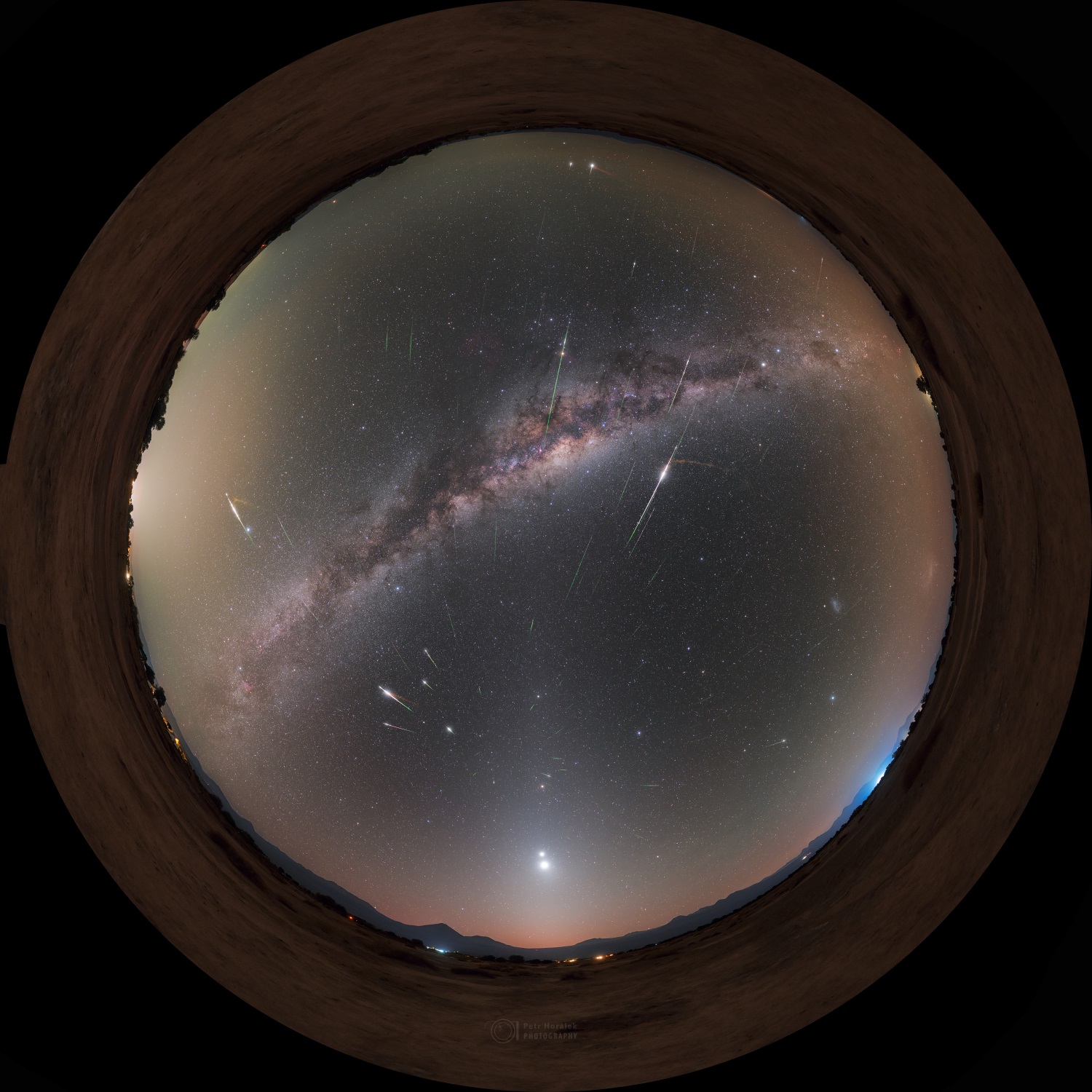
photographed by Petr Horálek in 2022
May 16: A time when vulnerable places reveal themselves in a new light
As is customary, we encourage you to observe deep-sky objects during the new moon: the absence of the Moon in the sky will create ideal conditions for spotting galaxies, star clusters, and various nebulae.
The spring season is appealing because the nights are no longer as cold, but they are still quite long. Plus, in the evening, it is still possible to observe several winter celestial objects, and as morning approaches, the Milky Way comes into view.
If you enjoy globular clusters, take a look at M53, M3, and M5. The massive open cluster in the constellation Coma Berenices makes for an ideal target for binoculars. And with a telescope, you can “take a stroll” through the Virgo Cluster – a vast number of galaxies await you on the border between the constellations Virgo and Coma Berenices.
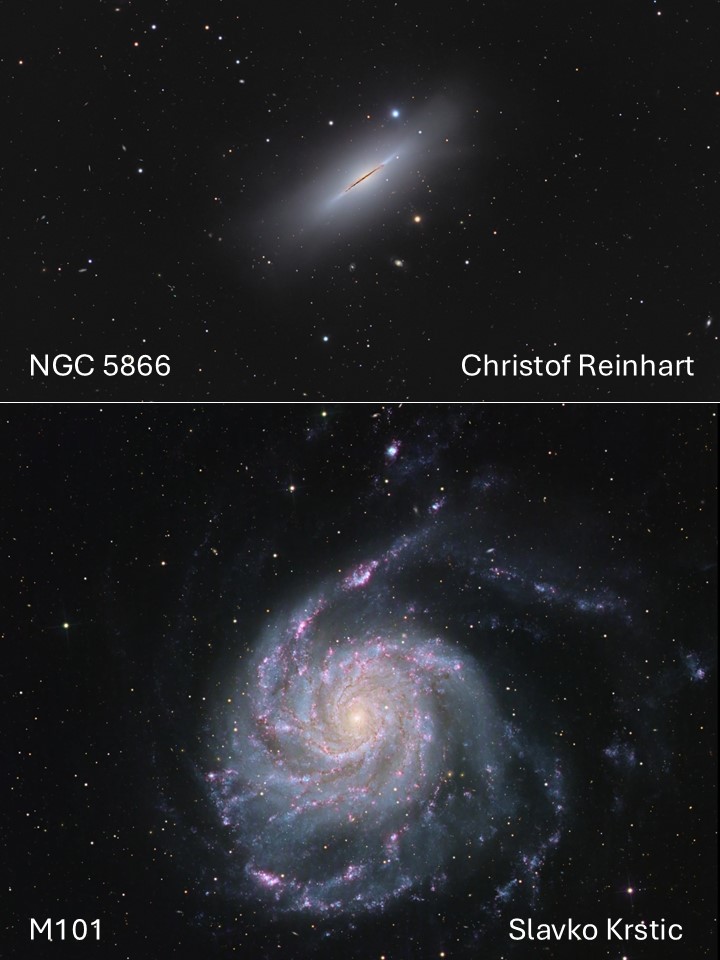
Try to find an interesting galaxy like NGC 5866, which is visible edge-on. It is called the Spindle Galaxy because of the characteristic thin band that forms the disk of this spiral galaxy as seen from our perspective. NGC 5866 is often identified with the galaxy M102 from the Messier objects. And not far from it, there is another very photogenic galaxy – M101, better known as the Pinwheel Galaxy.
May 18-20: Venus, the Moon, and Jupiter
These next few days will treat you to a spectacular evening sky, as the sunset will be graced by three bright objects at once – Venus, the Moon, and Jupiter. Moreover, Venus is currently approaching its highest point in the evening sky. It is simply impossible to miss this beauty – it catches the eye even of those who are far removed from astronomy.
On May 18, the crescent moon will still be thin, illuminated by only 6%, and will be accompanied by Venus. On the 19th, our moon will be positioned almost exactly between the two brightest planets. And on May 20, the moon will have moved toward Jupiter and will hang directly above it.
By the way, on the 20th, the Moon will serve as a guide for those who have been hoping to see Jupiter in the bright daytime sky. Using the crescent Moon as a guide, you can find the largest planet in the Solar System through a telescope. This is an amazing experience, because few people know that even during the day, it is not difficult to see dark, broad bands in the planet’s atmosphere.
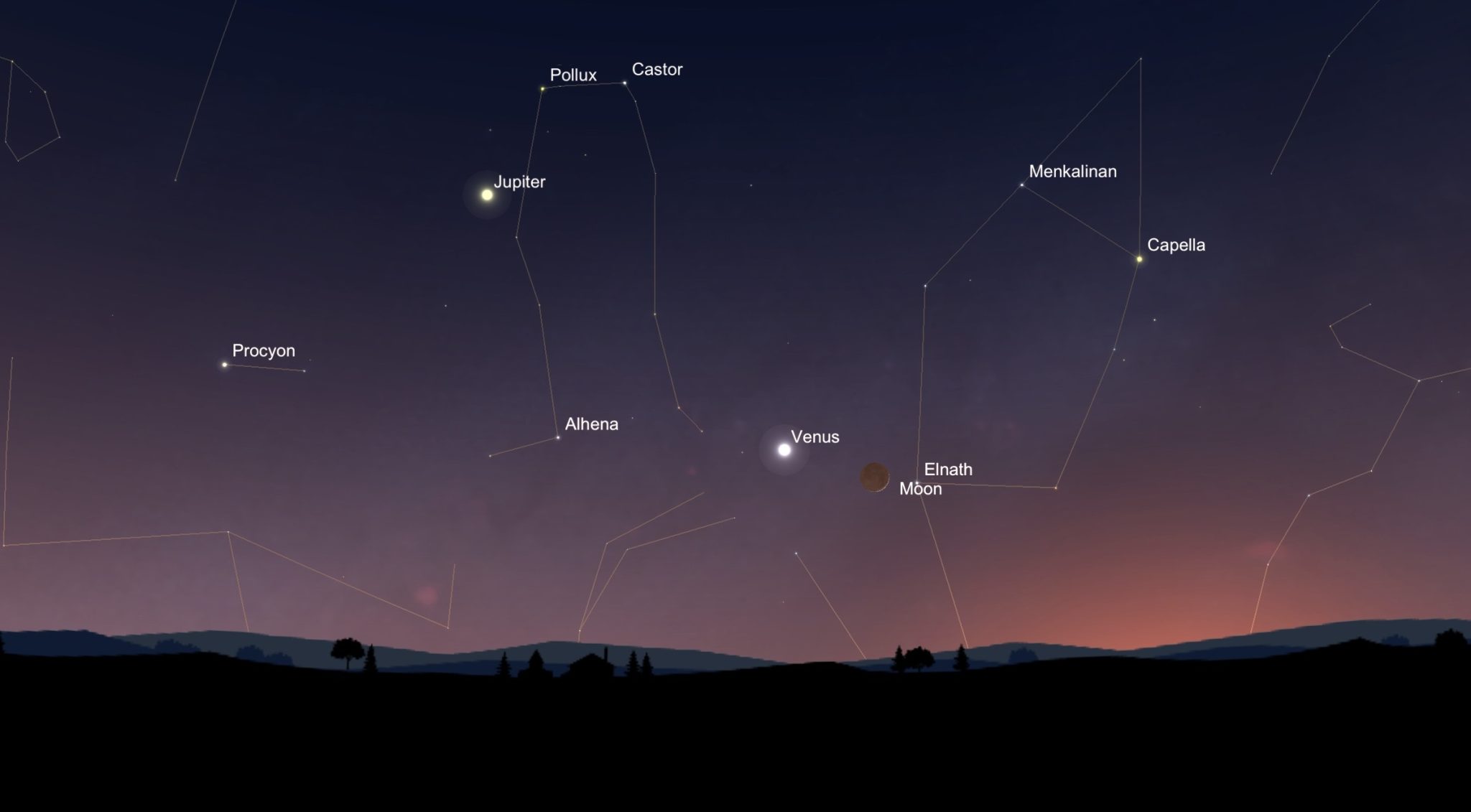
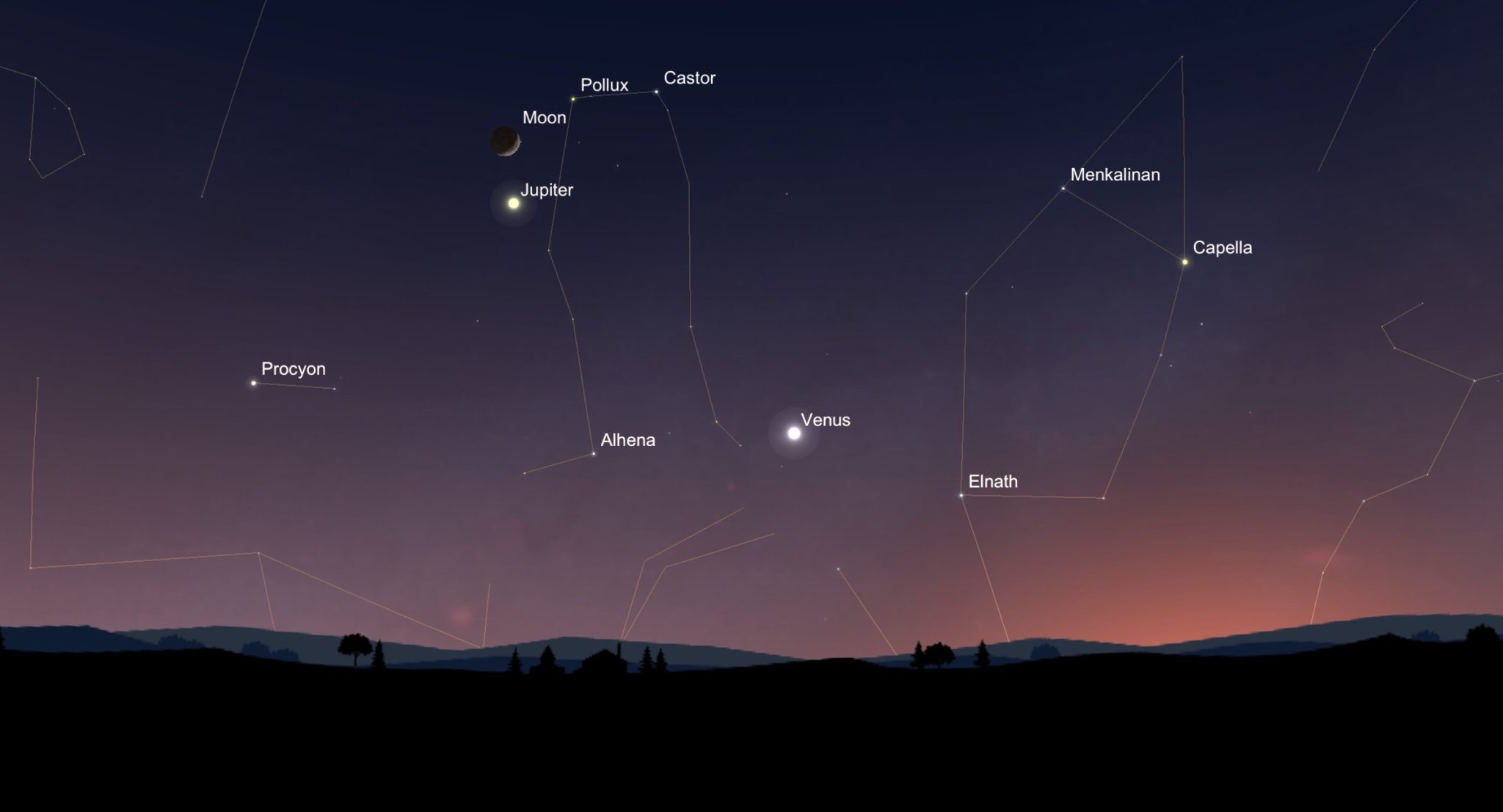
Source: SkySafari virtual planetarium
May 31: “Blue micro-full Moon”
The full moon on May 31 is remarkable in several ways. First of all, it is the second full moon in a calendar month, which happens only once every 2-3 years. In such cases, the full moon is called a “blue moon” (although this term is also traditionally used for the third full moon of an astronomical season that includes four full moons). Usually, we see a 100% illuminated Moon 12 times a year, but sometimes, as in 2026, this happens 13 times. That is, two full moons fall within a single calendar month, and that month is May. The name “blue” can be somewhat misleading, since in reality the Moon will have its usual color.
Second, the full moon on May 31 will occur when the Moon is near the farthest point in its orbit, that is, close to apogee. The exact time of the full moon is 11:45 a.m. Kyiv time (08:45 UTC), while less than a day later, on June 1 at 07:32 a.m. (04:32 UTC), our satellite will be at its farthest distance from Earth. This phenomenon is sometimes called a “micro-full moon.” It will be possible to see that the Moon is not as large or as bright as usual. And you will be absolutely right: its apparent size will be about 7% smaller than average.
Third, this full moon will be the farthest of 2026. While the average distance from Earth to the Moon is 384,472 km, during the full moon on May 31, it will reach 406,135 km.