

Planets in binary star systems spark our imagination. After all, two suns can be seen in their skies. But what do they really look like? How rare are they, and do they really have something special about them?
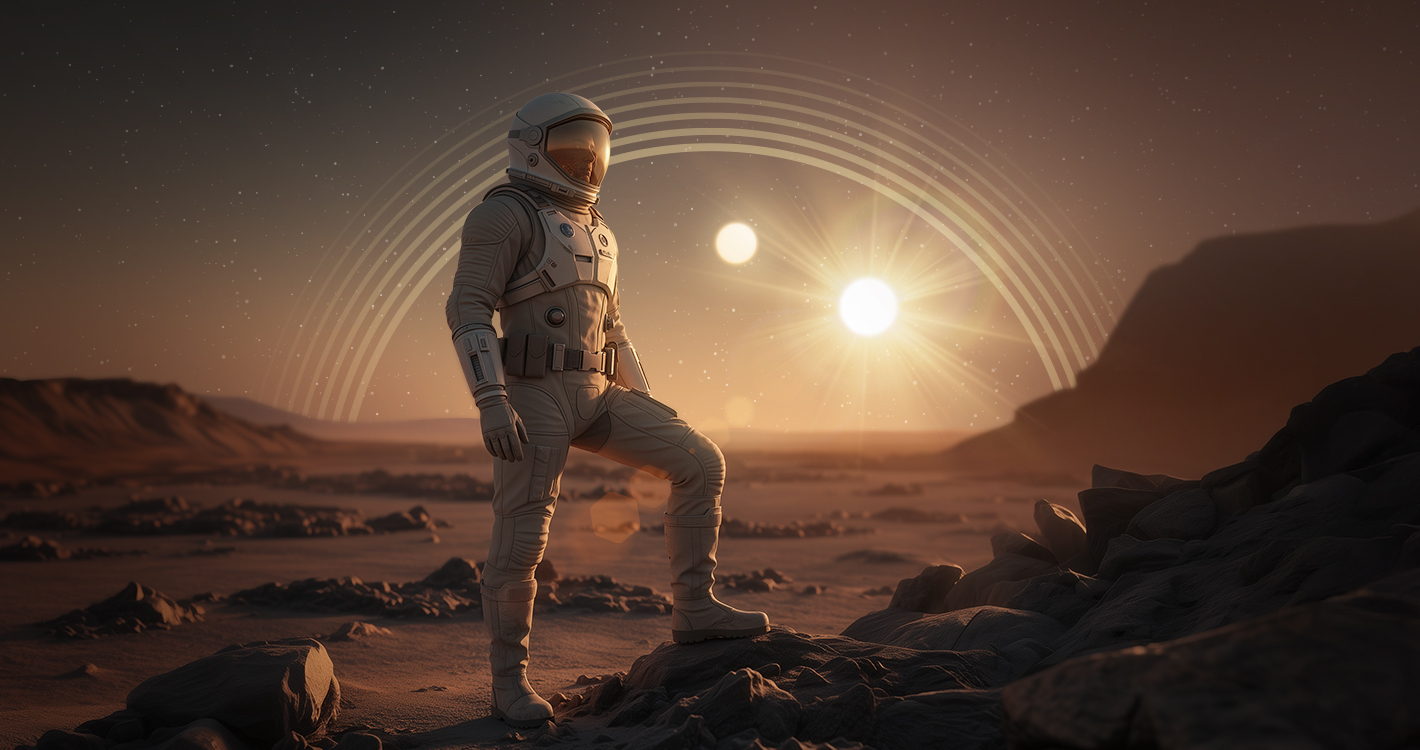
Tatooine
Recently, news spread through the astronomical community about the discovery of a “real Tatooine.” This refers to the exoplanet HD 143811 AB b, located 446 light-years away from Earth, which orbits two stars simultaneously.
This is far from the first such world known to scientists, but among all similar planets, it is located closest to the star and, moreover, it was possible to see it directly, rather than simply calculating it based on the star’s fluctuations or eclipses.
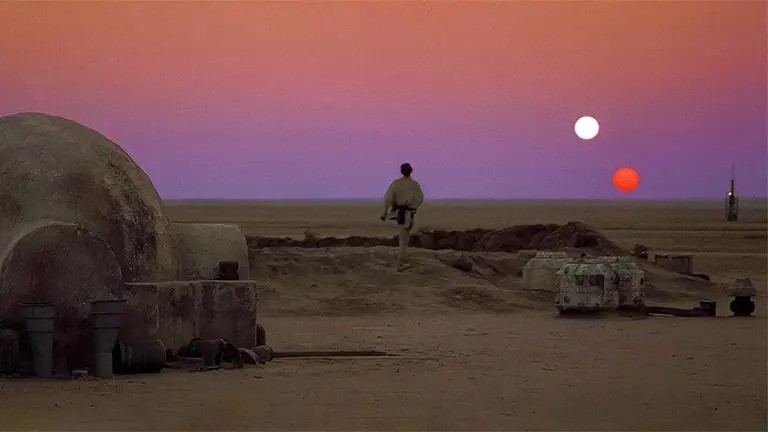
It is quite interesting that it is compared to Tatooine from the Star Wars universe, because in fact, there are plenty of planets located in binary star systems in science fiction. And some of them even have only one sun in the sky. To understand how this is possible, how unusual such worlds really are, and what they might look like, we need to turn to scientific data.
Planets in binary systems
First, we need to clarify the terminology. When we talk about planets in binary systems, we mean the presence of two stars. A pair of planets orbiting the same star in the same orbit and also revolving around each other at a distance of several hundred thousand kilometers can also be called a binary system, but that is not the case here.
In general, double stars are not uncommon in the universe. At least 50% of all stars are part of double, triple, or more complex multiple systems. Some studies give even higher estimates, since this is more common for larger and brighter stars, and at great distances we see mainly them.
At the same time, binary systems can be close, with the stars separated by only a few of their radii, or wide, with the distance between them measured in tens and hundreds of astronomical units. And this fact means a lot for what kind of planets can exist near them.
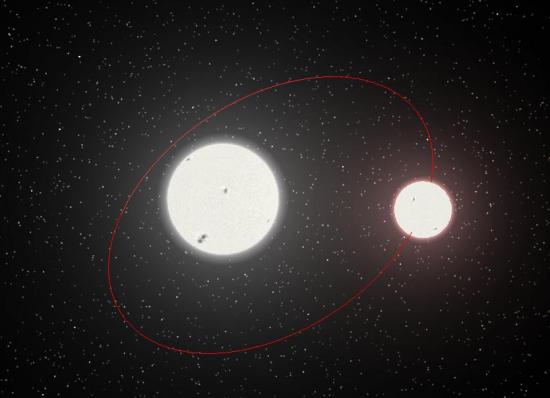
It is clear that the rotation of massive stars greatly narrows the range of orbits in which planets can exist. For example, stars cannot actually rotate in figure-eight orbits around two suns at once, sometimes passing between them at equal distances. Gravitational forces would simply throw such a planet out of the system.
Therefore, scientists identify two possible orbit options: S-planets, which revolve around only one of the stars, and P-planets, which revolve in ellipses around both stars at once. In both cases, there are certain restrictions on the radii of these orbits.
In the case of S-planets, the radius of their orbits must be much smaller than the distance between stars. In the case of P-planets, on the contrary, it must be much larger than the same value. This leads to an interesting consequence: in close systems, there may be almost exclusively P-planets, but if we gradually consider wider and wider systems, the possibility of S-planets begins to appear, although the probability of the existence of worlds orbiting two stars at once does not disappear completely.

Zone of life
Theoretically, both types of planets can exist simultaneously in one system. However, in the solar system, Mercury is a planet, and Neptune is also a planet. But they are not similar to Earth or the fictional Tatooine. Therefore, it is necessary to make a clarification that is usually omitted: we are talking specifically about Earth-like planets.
And here things get a little more complicated, because the first thing that determines a planet’s Earth-likeness, apart from its mass and chemical composition, is the amount of energy it receives from its star. This usually results in so-called “Goldilocks zones,” where it is not too hot and not too cold, and water can remain in a liquid state most of the time, rather than in the form of vapor or ice.
In principle, planets in binary star systems are the same, only more complex. For example, in the case of S-planets, the inner boundary of the habitable zone may be located further than the boundary beyond which stable orbits cannot exist due to the gravitational influence of the companion star.
This situation can arise if the distance between the stars is several astronomical units. That is, Earth-like planets may exist in this case, but most of them will resemble Mercury, Venus, or hot gas giants.
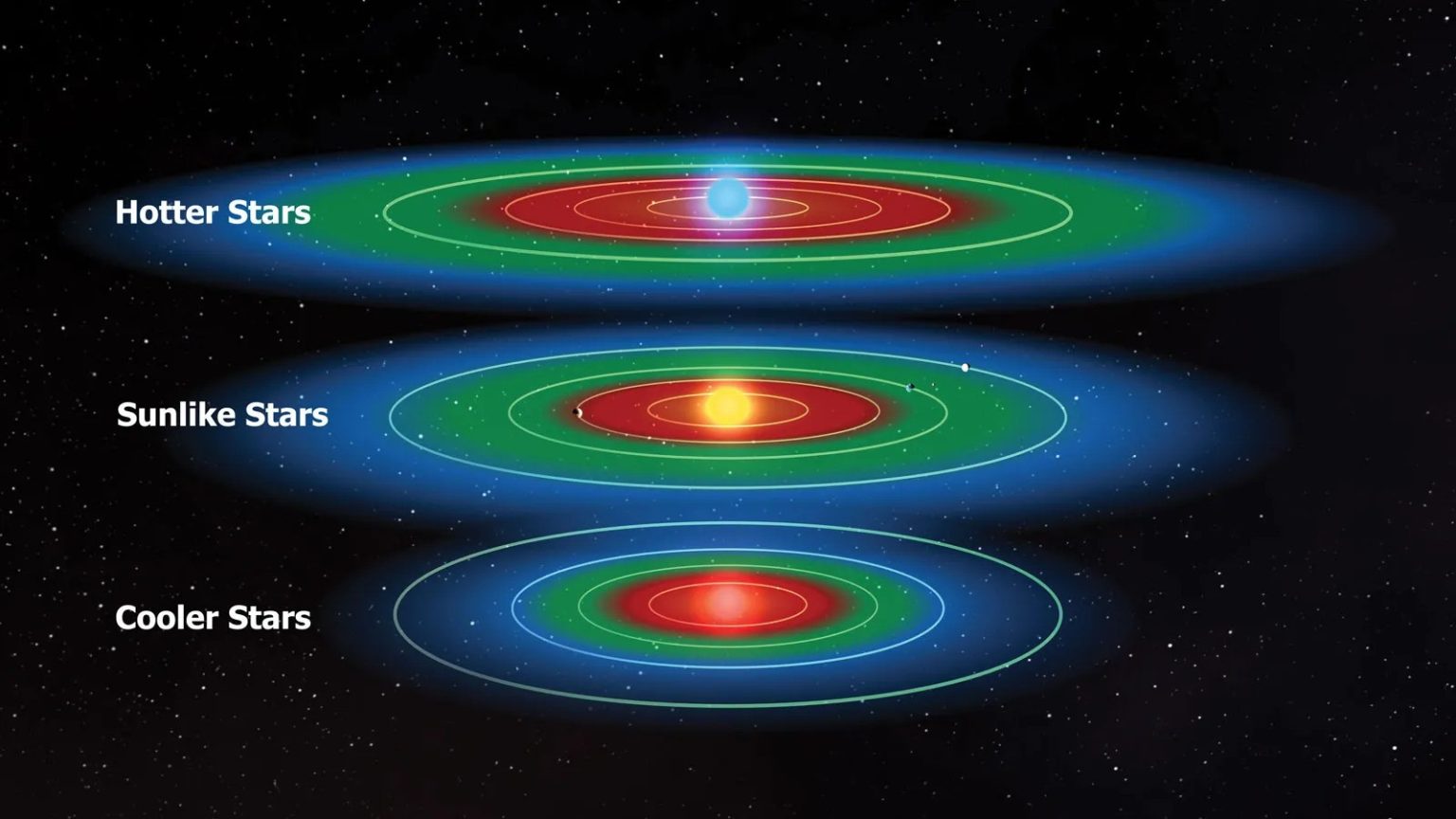
The exact opposite problem can arise with P-planets. As the distance between stars in the system increases, the minimum radius of their stable orbits increases, and there is a risk that the planet simply cannot be in a warm enough zone for liquid water to exist on its surface.
That is why scientists are so interested in HD 143811 AB b. It is a P-planet, whose orbit is located as close as possible to two stars inside. It may be really close to the “Goldilocks zone.” In this case, it is determined by the total luminosity of two stars at once.
P-worlds
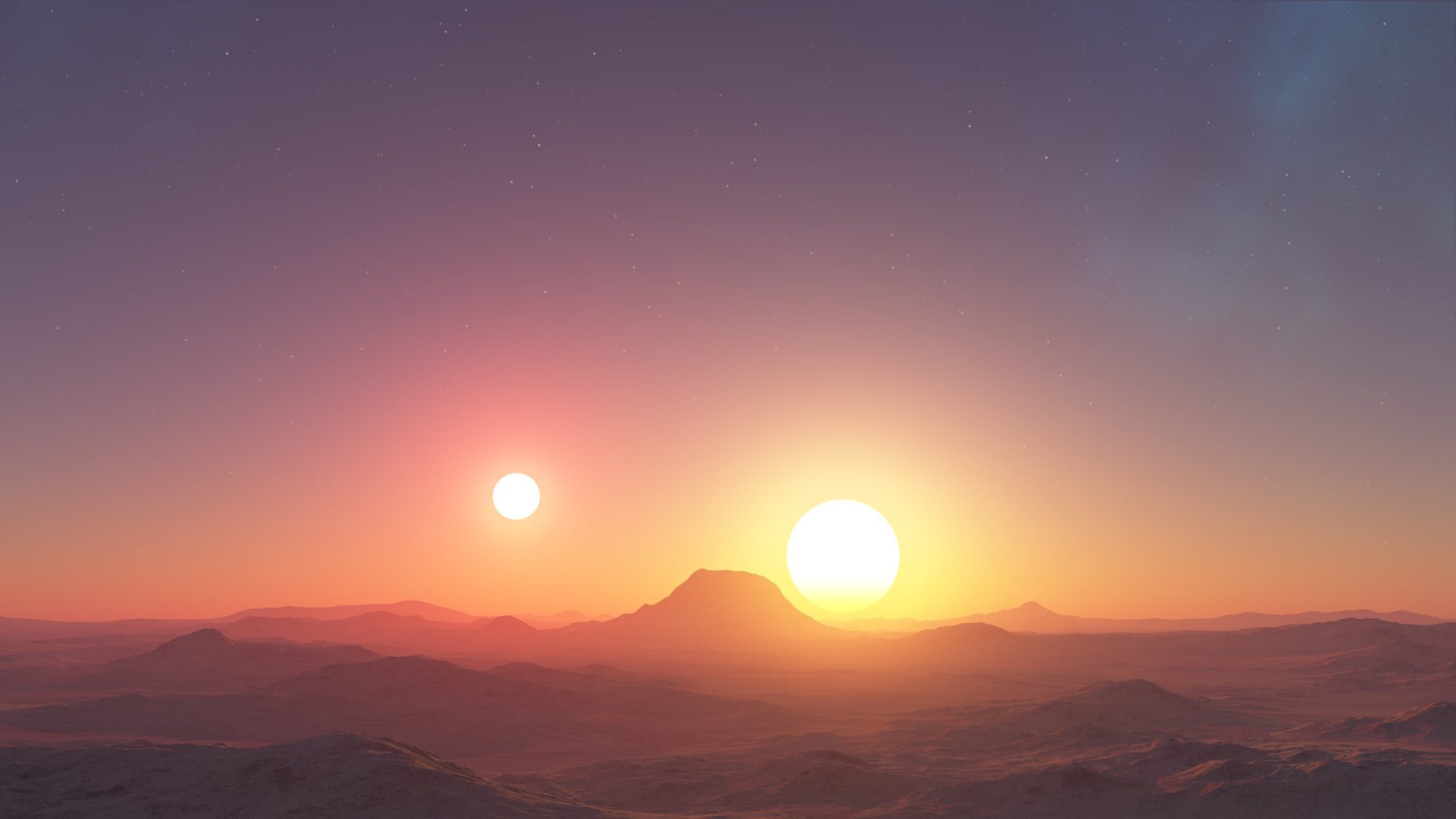
So, are there planets where you can see two suns in the sky at once? Yes, and first and foremost, these are P-worlds that revolve around two stars. The distance between them does not exceed a couple of astronomical units. In this case, the “habitable zone” will be wider than if there were a single star with a luminosity equivalent to that of this pair, but in general, everything will look exactly as it is usually depicted: every morning, two stars will rise one after the other from the horizon, not far from each other in the sky.
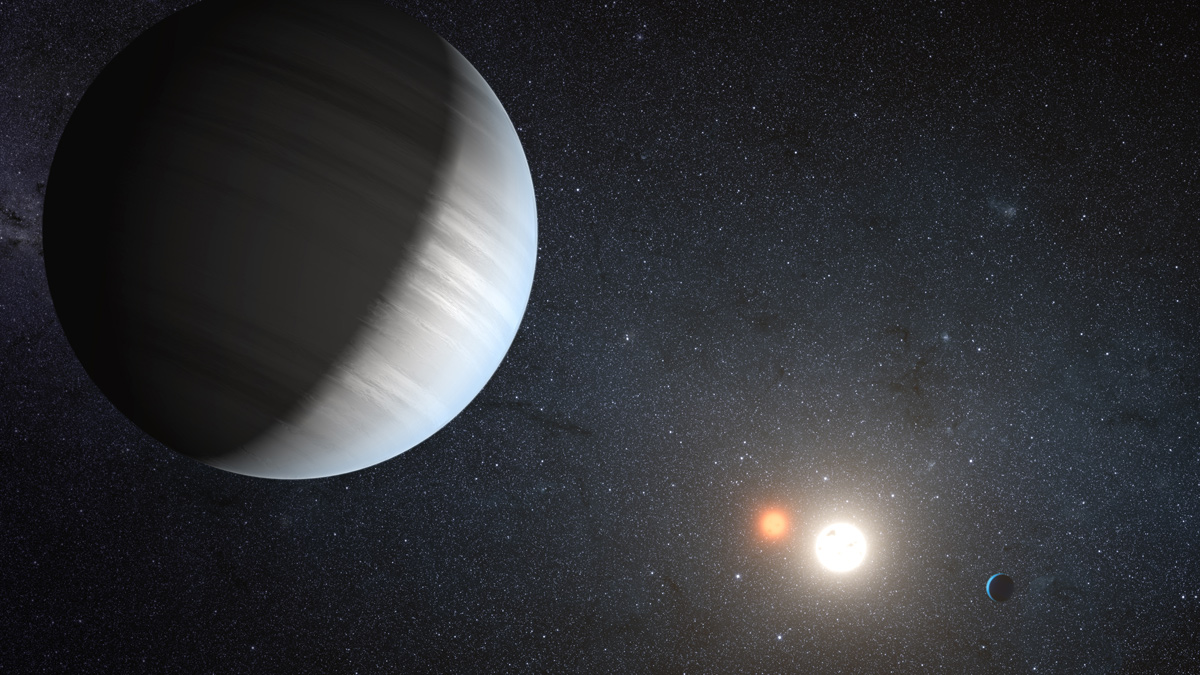
A year on such a planet can last from several tens of days in the case of a system with two red dwarfs to several Earth years. Throughout the year, the two stars will constantly shift relative to each other and sometimes hide behind each other. Accordingly, which of the stars rises first will change throughout the year. At the same time, they will never rise together, except when one star covers the other.
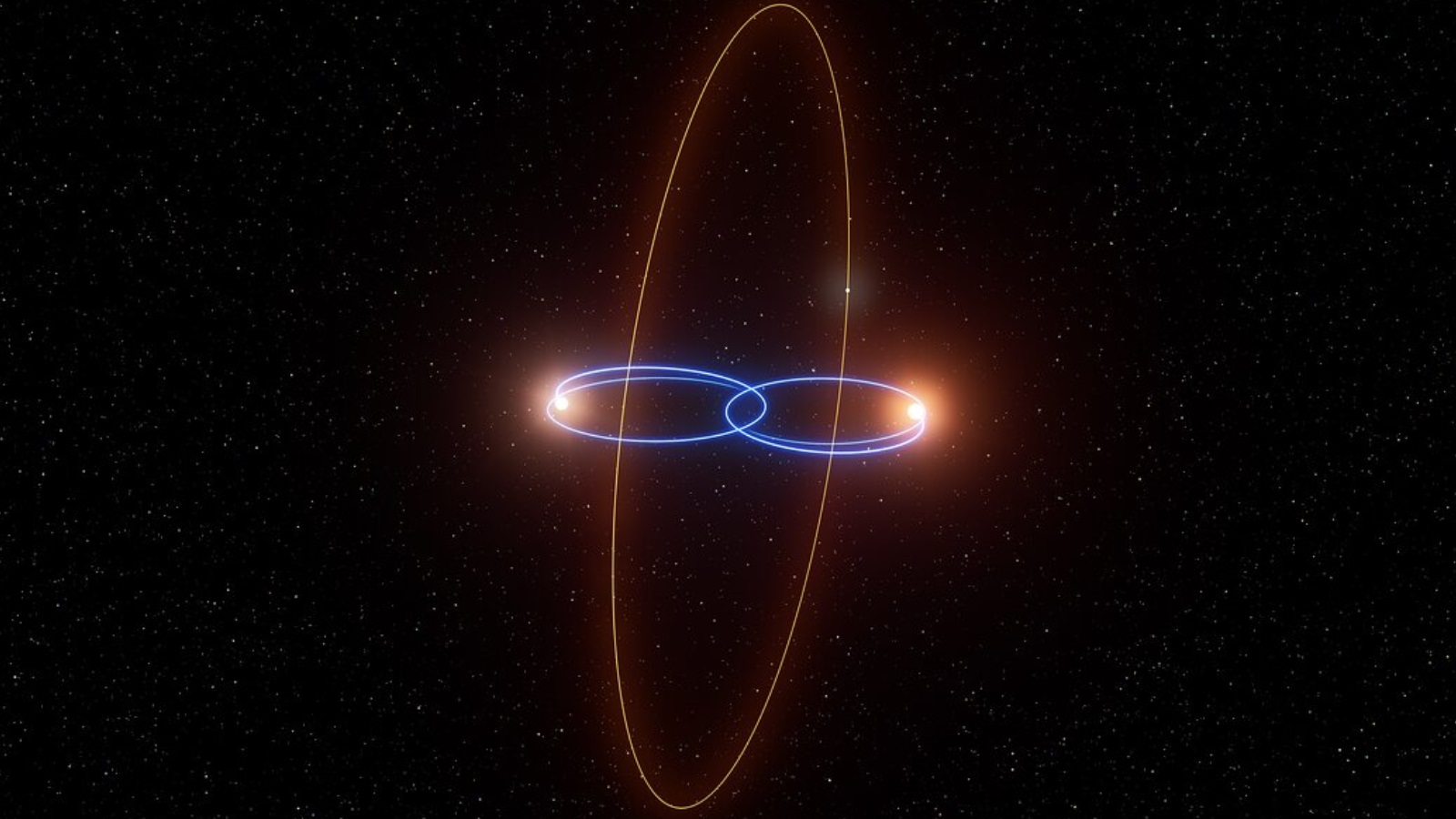
However, this is only true when the planet’s orbit is in the same plane as the orbit of the stars themselves. A planet can be located in an orbit that is perpendicular to the orbit of the stars, or close to such a position. In this case, an interesting picture will be observed: depending on the season, the suns can rise in any order, including simultaneously.
However, they will rarely pass one behind the other. This can only happen in those rare moments when they are on the line of intersection of their plane of rotation with the plane of rotation of the planet. Moreover, the latter must be on the same line at that moment. This means that even theoretically, this can happen no more than twice per local year, and more likely, it will happen once every few local years.
At the same time, on a P-planet, a mechanism for changing seasons could theoretically arise, which is impossible on planets orbiting a single star. On these planets, the change from winter to summer is caused either by the tilt of the axis to the ecliptic (for example, on Earth, with the seasons alternating between the northern and southern hemispheres), or due to the large eccentricity of the planet’s orbit (in the Solar System, this is partially true for Mars, in which case winter or summer occurs simultaneously across the entire planet, with the seasons being of unequal length).
However, on P-planet, the change in illumination can also be caused by the rotation of the stars around each other. However, for this to happen, the distance between them must be large, and their luminosity must differ. In this case, depending on which star is closer to the planet, the amount of energy it receives will change. At the same time, this effect can be combined with the two mechanisms that work for ordinary planets. As a result, the process we know on Earth as the change of seasons can be complex and unpredictable on such a planet.
However, the presence of two suns has little effect on the course of the day on P-planet. If the distance between the stars is insignificant compared to the radius of the planet’s orbit, it is completely imperceptible. But if it is large enough, it can lead to an increase in the light part of the day by several percent compared to if there were only one star.
S-planet
In the case of an S-planet, i.e., one that revolves around only one star, everything depends on the distance between the stars and what they are like. If the companion is far away and does not significantly exceed the brightness of the star around which the planet orbits, then from the point of view of its hypothetical inhabitants, the latter situation will not differ greatly from that which would be the case with a single star.
An extremely bright star will appear in the sky, which will probably be visible even during the day and will behave differently from the stars that Earth astronomers used to call “fixed,” as well as differently from the star around which the other S-planets of this system revolve. Like the former, at certain times of the year it will hide behind the Sun, and at others it will be at its zenith at midnight. However, the timing of these phenomena will change from year to year until a full cycle is completed in a few local decades or centuries. It will not have a significant impact on the planet’s climate.
It is another matter when the star around which the planet revolves is not the largest or brightest in the system. For example, when a planet revolves around a red dwarf, and its companion is a star the size of the Sun, located only a few astronomical units away.
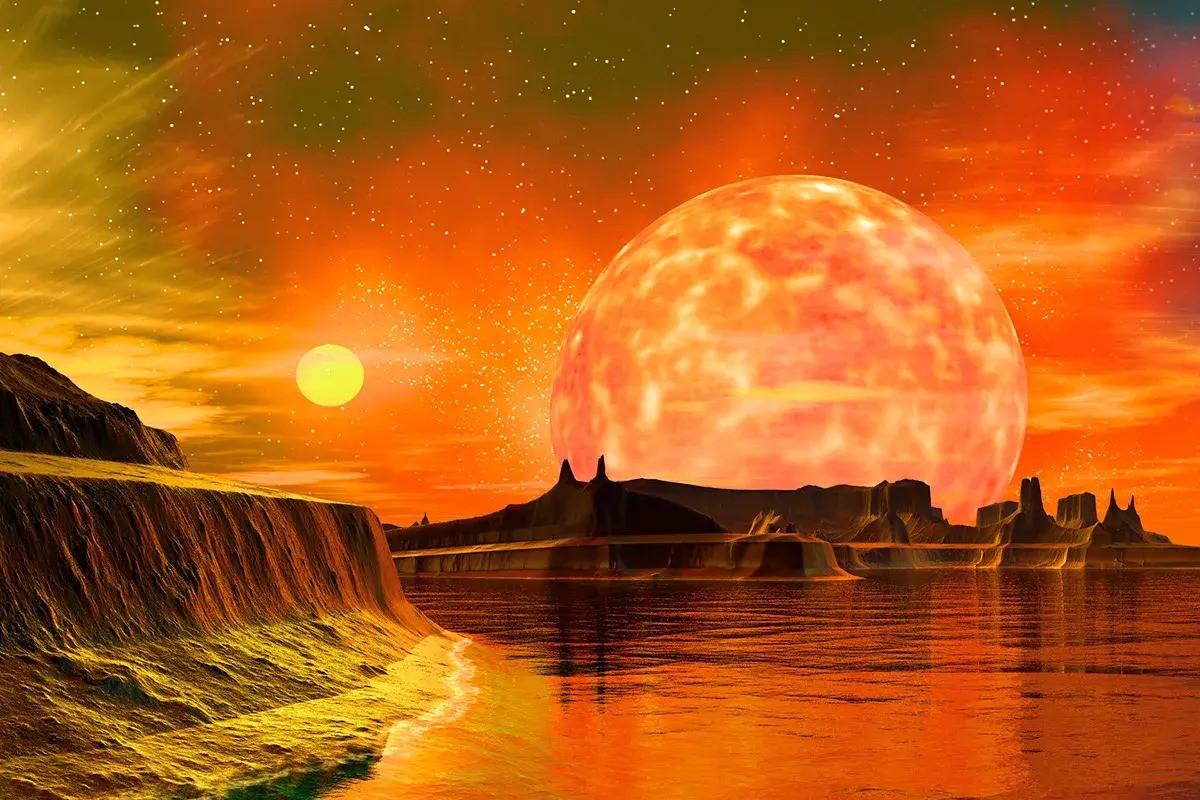
In this case, the “day star” becomes a full-fledged second sun. When they and the planet are on opposite sides of the star around which the planet revolves, the two stars rise together. If the planet is between the stars, then for a while, there is a situation where one of the suns is always in the sky, meaning that night simply does not fall.
It is worth remembering that if the star around which the planet revolves is a red dwarf, then a year on the planet in its “Goldilocks zone” lasts less than an Earth month. Therefore, the situation where one of the suns has just set, and the other is already rising, cannot last longer than a few Earth days.
And if we are talking about red dwarfs, we should also mention the tidal locking effect, i.e., the synchronization of the planet’s rotation period around the star and around its own axis. The result is that the planet always faces the star with the same side. Again, there are various possibilities, which you can read about in this article, but the very fact that such a phenomenon is possible on an S-planet in a wide system does not disappear anywhere.
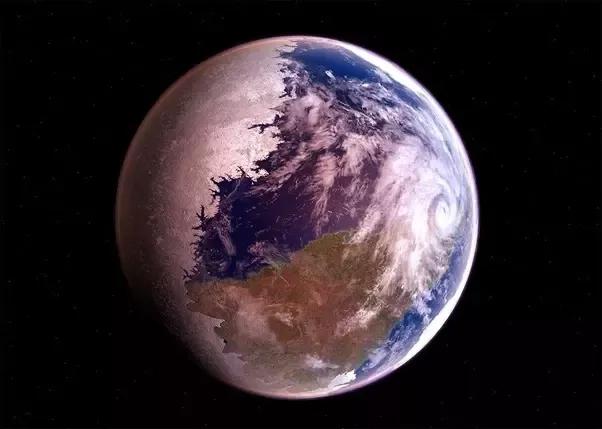
Only the presence of the second dawn changes, which is not affected by the tidal pull and therefore, at certain times of the year, can illuminate the dark hemisphere. That is, a situation is possible where one side of the planet is always illuminated for about ten days, while the other is in darkness, then there is daylight across the entire planet for ten days, and then the cycle repeats.
Eccentric orbits of stars
If all of the above seems complicated, we must reassure you: in reality, it is even more complicated, because we have described the most ideal situation when the orbits of the stars have a small eccentricity, i.e., they are close to circular. In reality, they may resemble an elongated ellipse, which creates additional complexity.
In the case of P-worlds, everything is relatively simple. Another cycle emerges. When stars approach each other at a minimum distance, they are simultaneously located further from the planet, so it receives less energy.
As for S-planets, things can be much more dramatic here. The rotation period of wide binary systems with high eccentricity can be tens or hundreds of years. At the same time, according to the laws of orbital mechanics, celestial bodies move fastest near the point of maximum convergence.
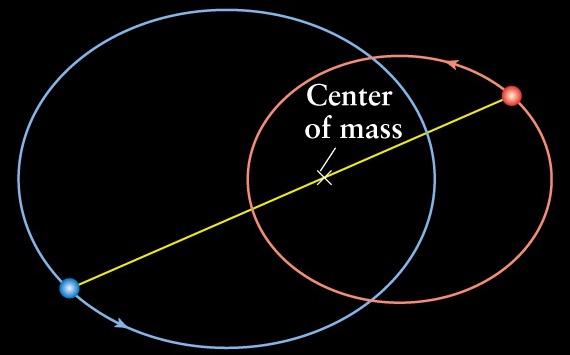
This leads to a situation where the second luminary has virtually no effect on life on the planet most of the time, but at certain periods, it comes so close that it significantly increases the flow of heat to it.
The consequences of this can vary. If the planet is generally cold, this is a positive factor. It is at such times that life can flourish on it. If, on the other hand, it is already hot, the consequences can be catastrophic.
The planet’s climate
But the most interesting question about planets orbiting binary stars is not what happens in their skies. Will they really turn into deserts due to excessive light? Not necessarily, because even this excessive influx is relative, as the planet may simply be far enough away from one or both stars. The only thing that can be noted is that P-worlds tend to have long years with relatively cold winters, hot summers, and a lot of additional temperature fluctuations.
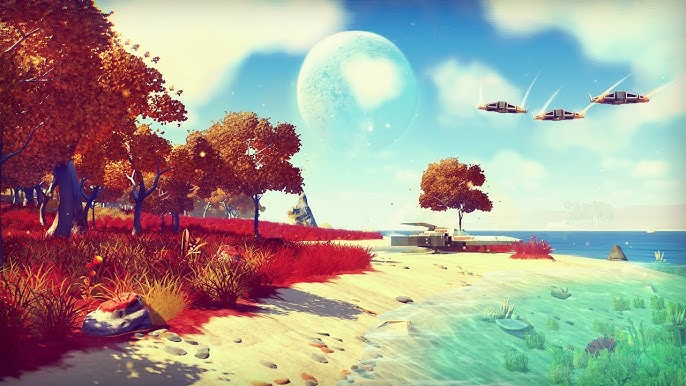
S-worlds in systems with a range of eccentricities in stellar orbits will tend to have short years and a stable climate. Those stars that move in elongated orbits will experience periods of intense warming from time to time.
But in reality, no climate scenario can be ruled out. If only because the physical characteristics of the planet itself have a much stronger influence on it than orbital parameters and the star. Large worlds with powerful atmospheres will, in any situation, have a more even and warmer climate than theory predicts. Small ones, on the contrary, will tend to be deserts, possibly even cold ones.
In general, excess heat does not necessarily mean desert. Tropical forests are a striking example of this. A desert is defined by a lack of precipitation, which is primarily caused by the presence of large areas of dry land, as well as the interaction of cold ocean currents and winds.
Therefore, planets with two suns may well be very common in the universe. However, they may not be at all similar to Tatooine.

