

When it comes to how much more advanced extraterrestrial civilizations may be than us, the Kardashev scale is often mentioned. It suggests the possibility of civilizations that can control the energy of entire galaxies. But does that mean they are truly advanced?

Aliens
The science of extraterrestrial civilizations is still in its infancy. This is not surprising, given that no representative of such civilizations has ever been seen or heard. However, several concepts have already been developed in this field, which are widely used both in research and in popular presentations of the state of affairs in this area.
One of them is the Kardashev scale, which describes how advanced civilizations we may encounter. They are divided into three types based on the total power of all their activities (machines, power plants, etc.). Type I – those that operate with all the energy of their own planet, 1.74·1017 W. Type II – those that operate with energy comparable to a star (3.828·1026 W for the Sun). Type III – those that operate with energies comparable to an entire galaxy, 8·1036 W.
As you can easily see, the difference between types I and II is nine orders of magnitude, or approximately one billion times, and between types II and III it is ten orders of magnitude, or 10 billion times. Earth’s civilization does not even reach the first type, and this always shocks people who see this picture for the first time.

The Kardashev scale is often presented as something that really helps us understand how far ahead of us aliens whose civilizations existed millions or even billions of years ago might be. But is this really the case? Let’s figure it out together.
Signal transmission over distance
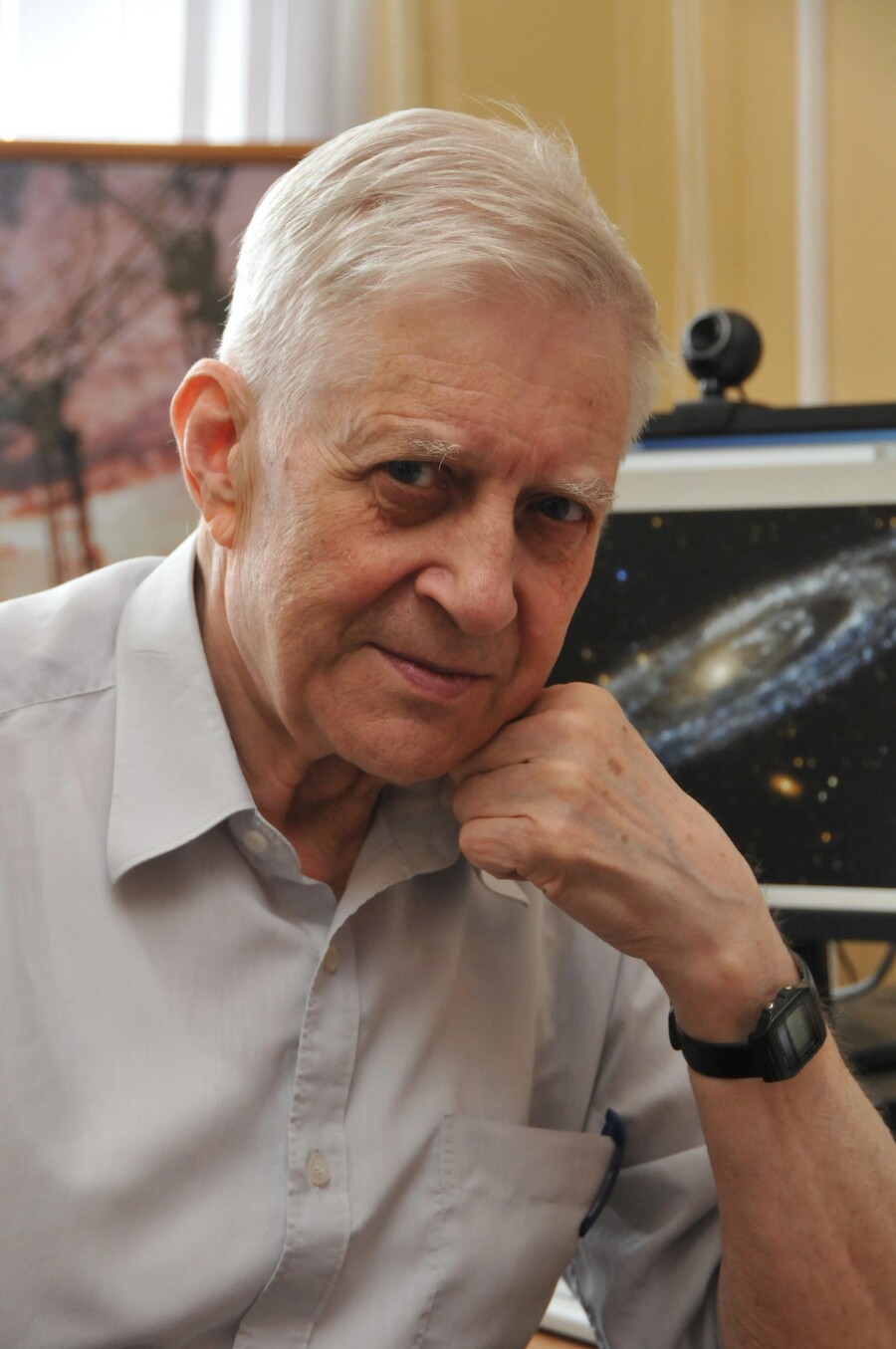
The main thing to know about where the scale of civilization development came from and why it is the way we know it is that Nikolai Kardashev, its author, was an astrophysicist. He was not a historian, a robotics expert, or a biologist, but rather a person who was accustomed to looking at distant lights in the sky and constructing theories about what they were.
The scale itself was presented in the report “Transmission of information by extraterrestrial civilizations,” presented at the 1964 Byurakan Conference, which took place at the observatory of the same name in Armenia. On the one hand, this meant that the concept very quickly became known to all leading world experts in the study of extraterrestrial life. On the other hand, it was a report read by an astrophysicist for astrophysicists.
Kardashev began by asking himself at what distance an extraterrestrial civilization could send a signal to everyone else in such a way that a meaningful response could be heard, and what would be required to do so. To do this, he uses the Shannon-Hartley theorem, which links the speed of information transmission to the signal-to-noise ratio. In simpler terms, it describes how many bits can be transmitted per second so that most of them are not lost on the way to the recipient.
Kardashev showed that the noise level in a signal traveling through millions of light-years of space is related to the temperature of background radiation. And it depends on the frequency at which the transmission is carried out. That is why the lowest noise level and the highest channel capacity are possible in the centimeter and decimeter ranges. That is, approximately where radio, television, and Wi-Fi operate, and slightly into the operating range of microwave ovens. It is no coincidence that the latter have played a cruel joke on alien hunters at least once.
In fact, it was this part of Kardashev’s Burakan report that had the greatest impact on the search for extraterrestrial civilizations, as it determined the frequencies at which it is best to send signals in space, regardless of biological origin and way of thinking. The most popular wavelength turned out to be 21 cm, but scientists have not yet heard anything about it.
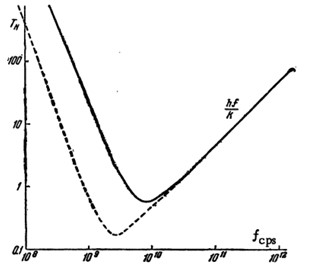
Source: Kardashev, Nikolai S. (1964). “Transmission of information by extraterrestrial civilizations”
The original Kardashev scale
However, Kardashev did not stop there and moved on from the question of frequency to the required transmitter power. He did not delve into the technical details of its design, simply setting its upper limit as all the energy available to civilization – almost the only figure on Earth that can be estimated without speculation, not only in absolute terms, but also in terms of annual growth.
During Kardashev’s time, these figures were 4×10¹² W and 3-4%, respectively. Currently, the total amount of energy used by humans is approximately 24×1013, which is still very little compared to the 1.74·1017 W that our planet receives from the Sun. As for the growth rate of Earth’s civilization, it has changed several times since the Byurakan Conference, but now, with Asia and Africa in a phase of active industrial growth, it is roughly the same as in the 1960s.
Be that as it may, Kardashev resorted to linear extrapolation of the figures available to him in his work and found that with steady growth in energy consumption, in 3,200 years, we will reach a level of energy consumption comparable to that of the Sun, and in 5,800 years, to that of the entire Milky Way. He called these states civilizations of types II and III and continued to consider them, because we were talking about truly cosmic distances.

Kardashev calculated that if a Type II civilization used all its energy to transmit a signal, useful information from it could be received at any point in our galaxy, even with the antennas that were available to humans in the second half of the 20th century.
At the same time, the maximum speed of information transfer, calculated using the Shannon theorem, is so high that aliens could transmit 10,000 medium-sized volumes of their scientific knowledge every 100 seconds. A Type III civilization could do the same for the entire visible part of the universe.
Where to look for aliens
Based on his own calculations, Kardashev even gives recommendations on how other astrophysicists should search for extraterrestrials. In his opinion, attention should be paid to very powerful but point sources of radiation, i.e., those whose area in the sky is tiny, but which emit an extremely large amount of energy.
Of course, the peak of this energy should fall precisely in the centimeter and decimeter ranges, meaning that it should be best visible using radio telescopes. In addition, the radiation must be polarized, meaning that its oscillations will occur in a single plane.

Kardashev himself was convinced that if not Type II, then Type III civilizations must exist in places where we can currently receive their signals. In particular, he considered the recently discovered CTA 102 source, which was extremely powerful and demonstrated variability, as a candidate for their transmitter.
Unfortunately, Kardashev underestimated the diversity of cosmic objects. We now know of many point sources that exhibit the behavior he described and are completely natural. In particular, STA 102 turned out to be an active galactic nucleus – a quasar that absorbs matter and changes brightness due to the unevenness of this process.
Will energy consumption really grow at a constant rate?
The Kardashev scale became popular thanks to American astrophysicist Carl Sagan. We also owe him the fact that it has changed from a purely rank-based scale, i.e., one with three marks, to a discrete scale, i.e., one that can accept fractional values.
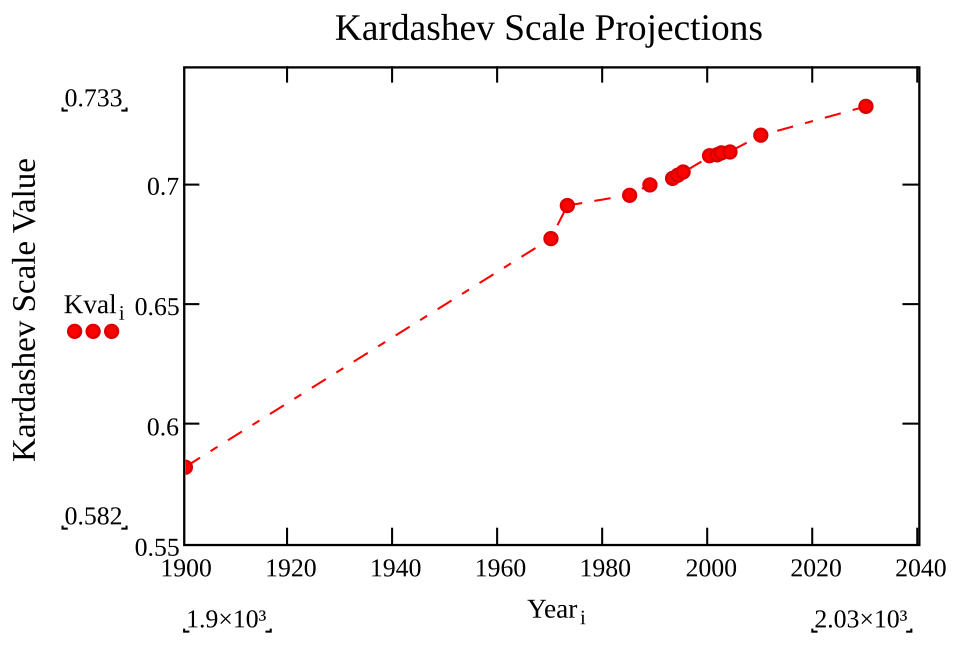
This helped, in particular, to reconcile the numbers named by Kardashev with the amount of energy that the Earth receives from the Sun. It is now believed that humanity has a rating of 0.73 on the energy consumption scale. On the one hand, this makes the situation clearer, but on the other hand, it creates the impression that we are almost three-quarters of the way to reaching “one,” but in reality this is not the case, because the scale is logarithmic, meaning that the further you move, the more watts of power you need to add to the total treasury to add another hundredth. Therefore, in reality, all of human civilization still consumes a fraction of a percent of what the Earth receives from the Sun.

All this raises a much more important question: can our civilization’s energy consumption really reach the levels predicted by Kardashev? Observations of its growth rates over the 60 years since the astrophysicist made his report do not provide a clear answer to this question.
Now scientists, including renowned futurologist Michio Kaku, say that we are still 100-200 years away from Type I civilization, a millennium away from Type II, and hundreds of thousands of years away from Type III. For comparison, it is worth noting that only 10,000 years have passed since the beginning of the Neolithic Revolution, when agriculture began to play a greater role than hunting for people in the Middle East for the first time on Earth. So it turns out that our civilization is at the very beginning of an incredibly long journey.
Does development really mean an increase in power?
In fact, nothing is surprising in the fact that the path to Type III civilization can take hundreds of thousands or even millions of years. Kardashev himself suggested that for some time (thousands of years) the exchange of information would be one-sided, i.e., signals from Type III to Type I would reach their destination, but not vice versa. But eventually, all intelligent beings will get to the point where they can signal across the entire galaxy like a flashlight.
But this view is very one-sided, as Sagan himself pointed out. It is clear that Kardashev was an astrophysicist and, of all the models of extraterrestrial civilization behavior, he chose the one that would be easiest for him and his colleagues to detect. Because if aliens do not use most of their civilization’s power to signal to the entire universe that they are here and they are intelligent, then they remain invisible.
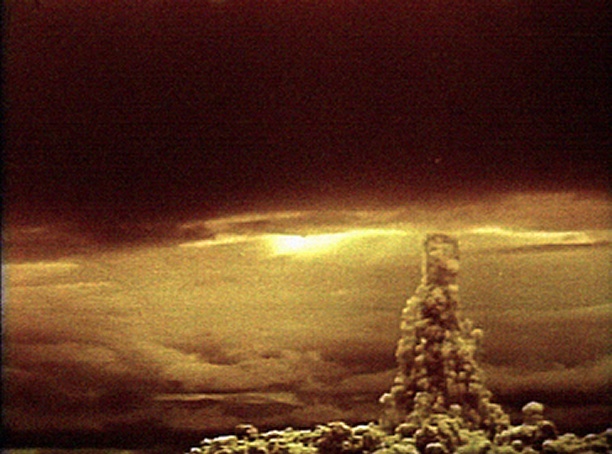
On the other hand, this view of the essence of civilization was very characteristic of the 1950s and 1960s in general. The Cold War was in full swing, and the US and the USSR were spending a lot of resources on demonstrating their power. After all, the Tsar Bomb was tested just three years before the Byurakan Conference.
But as time went on, the situation where an overdeveloped civilization spent most of its enormous power on sharing knowledge with other forms of life that were millions of years behind it seemed increasingly strange. This was because questions arose about the expediency of such activity.
Currently, Liu Cixin’s “dark forest” theory is considered one of the main antitheses to Kardashev’s idea and a possible explanation for the Fermi paradox. Civilizations sit silently because telling everyone around you that you exist and are intelligent means inviting attacks from all sides, because there are no friends in space, only competitors.
In fact, the dark forest theory is no better than Kardashev’s idea of civilizations gushing knowledge throughout the universe, because instead of peaceful megalomaniacal projects, they envisage spending most of a civilization’s power on military projects of no less absurd scale.
In reality, it is much simpler: neither the first nor the second civilizations are really necessary, because most of their members live their own lives and are not interested in other civilizations. Even large-scale projects such as generation ships, space stations for millions of inhabitants, or even terraforming planets require a lot of power, but significantly less than that needed to support Type II and Type III civilization transmitters.
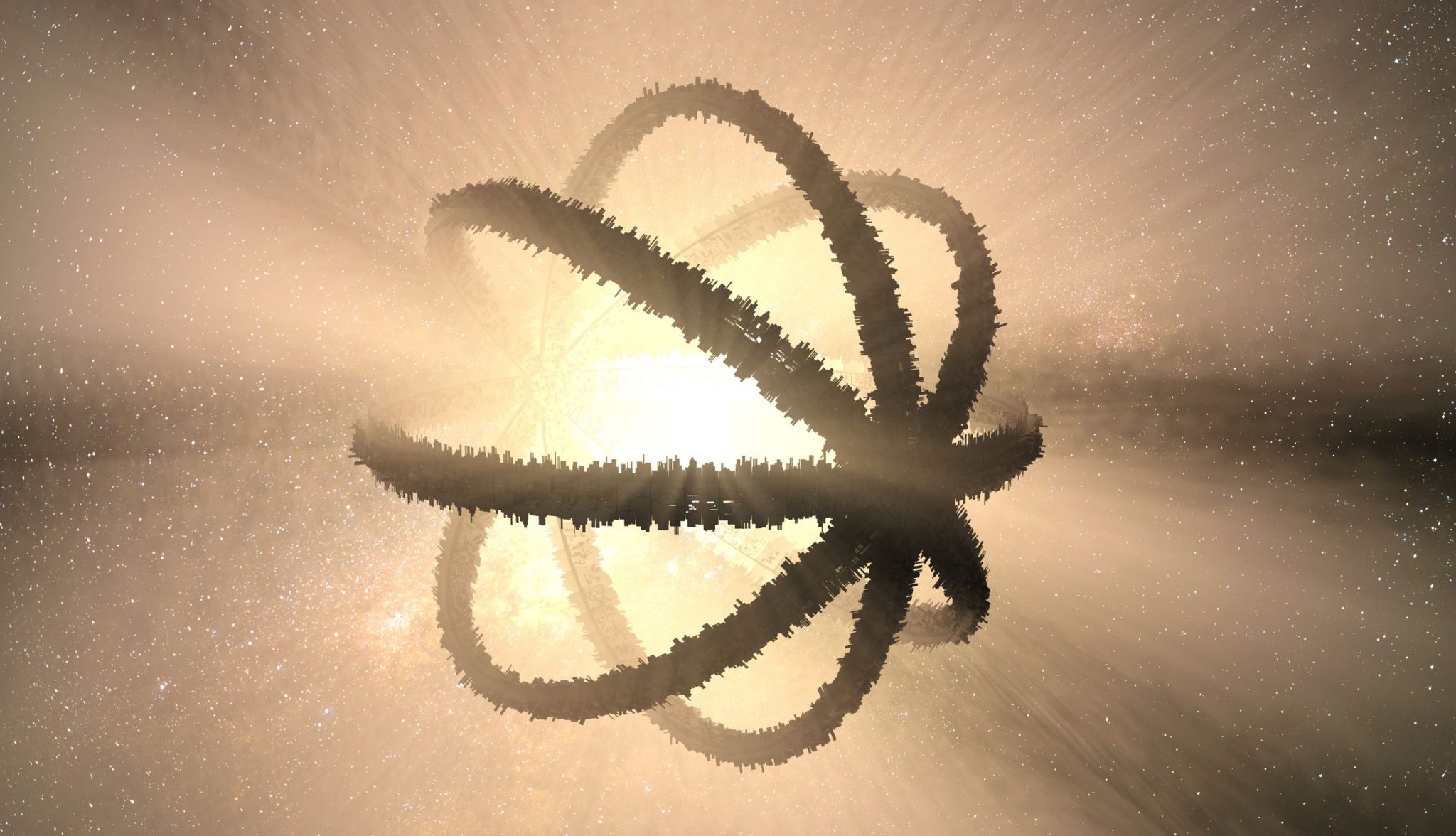
Ultimately, even the very thesis of increasing machine power as the essence of civilization’s development can be questioned. The fact is that 60 years have passed since the Burakan Conference, and the Tsar Bomb remains the most powerful explosion ever created by humans. Moreover, the increase in the power of nuclear reactors essentially stopped several decades ago.
Instead of power, technological development specialists are increasingly talking about efficiency. And in most cases, this means “emitting less energy where it is not needed.” This is particularly evident in the example of information transmission systems. In the 1960s, the main devices used for this purpose were television and radio towers.
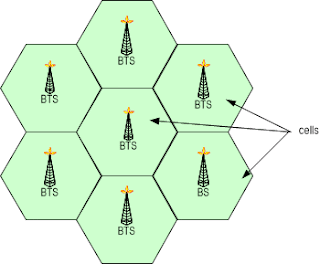
The principle behind their effectiveness was simple: raise the most powerful transmitter as high as possible. However, the advent of communication satellites made transmitters capable of sending signals further than 500 km unnecessary. Then, the emergence of various cable networks and automatic data routing systems revolutionized the field of information transmission. Modern cellular networks are generally based on transmitters with a range of several hundred meters. Why would you need more than that if data packets can simply be passed along like a baton?
Kardashev made his calculations for undirected signal radiation, and his followers have long since calculated that it is extremely ineffective at cosmic distances. Our terrestrial television is difficult to receive even near Alpha Centauri, and beyond that, it is lost in noise. But a directional signal can travel much greater distances with less transmitter power.
Source: pervasivecomputinginfo.blogspot.com
That is why space communications now increasingly rely on messages sent by a narrow beam, ideally a laser beam, and the problem is that it is practically impossible to intercept them accidentally in space. The argument that “aliens must communicate with each other somehow, and we will definitely hear it” falls away by itself.
Every day, on any city bus, dozens of people communicate with someone outside the bus, and other passengers have no idea what they are talking about. They only know that their neighbor, like themselves, is looking at a smartphone screen.
And in other industries, everything is moving in the same direction. A quadcopter has ridiculous power compared to a ballistic missile from the 1960s. At the same time, to the designers of that missile, it would have looked like a true creation of an extraterrestrial civilization. This is because it uses automatic control and feedback systems that were considered impossible just a couple of decades ago, especially on such a small machine.
All our experience over the past decades shows that power is not unnecessary. It is not the main thing. It is much better to improve the efficiency, reliability, and sophistication of our machines. In many ways, the fact that energy consumption continues to grow is explained by the fact that the world’s population continues to grow, and now even in countries that we are accustomed to calling the “third world,” people want to live according to energy consumption standards that even residents of developed countries in the 1960s would have considered luxurious.

Source: phys.org
No one knows how energy consumption will change when people across the planet satisfy their needs for the wonders of consumer electronics and electrical engineering, and when these technologies themselves become even more efficient. It is entirely possible that in the coming centuries we will not even reach Type I on the Kardashev scale.
It is quite possible that the future is not a stairway to heaven powered by clean energy, but a house built, at first glance, in the same way as houses were built centuries ago, but in fact filled with clever technology that surpasses a smartphone in functionality as much as a smartphone surpasses a rotary dial telephone.
Ultimately, Kardashev’s theory does not take into account even a more traditional scenario for the development of civilization: settlement within its own star system and beyond. In that case, intelligent beings could indeed have a total machine power comparable, if not to all solar radiation, then to the fraction that reaches Earth. But it would be scattered across a dozen star systems and mainly concentrated on ships flying between them. And there would be no question of any megastructures.
However, Kardashev himself should not be blamed for anything. He was a man of his time and, from the very beginning, did not claim to be anything more than a describer of the characteristics of civilization, the signals of which he could pick up as an astrophysicist. All other interpretations of his scale are later interpretations, and who is to blame for the fact that people continue to repeat them even though the experience of the development of Earth’s civilization increasingly diverges from his assumptions?

