

Have you ever contemplated the differences between a laser and a conventional flashlight? Addressing this inquiry necessitates a succinct historical overview and a detailed examination of the nature of light. This will be the focus of our discussion now.
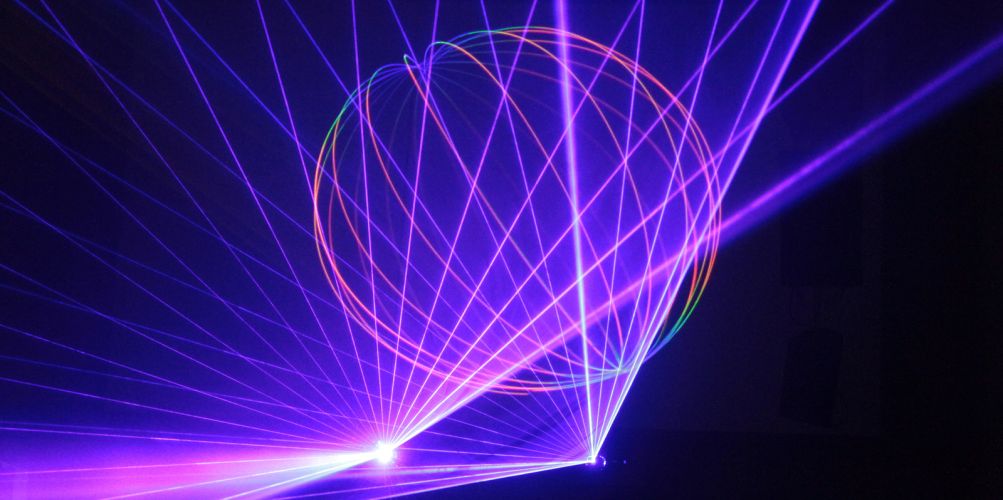
What is light?
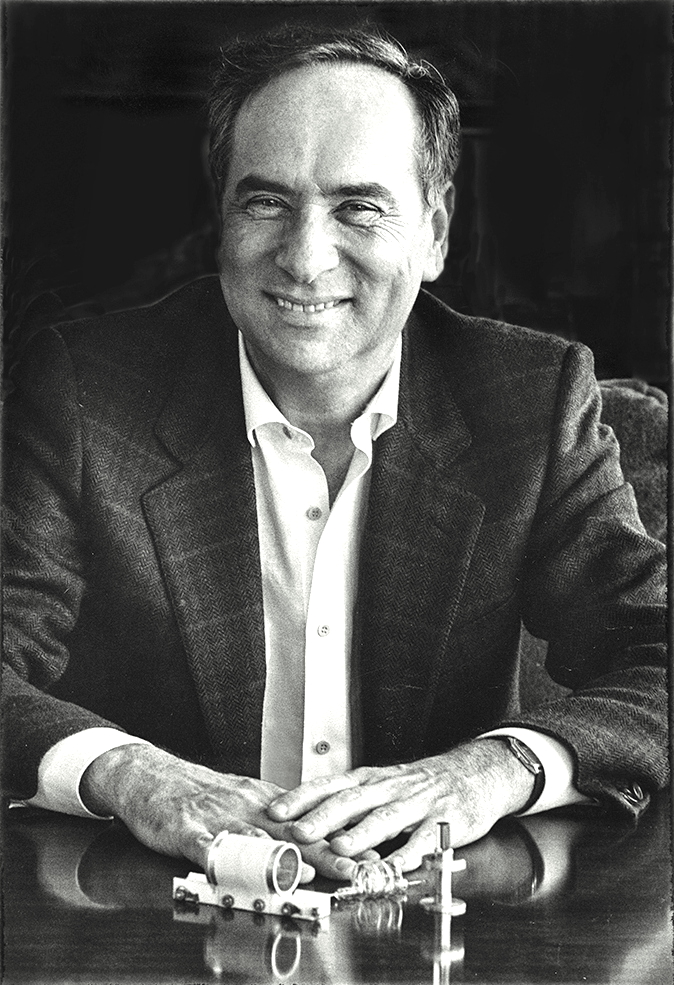
May 16 is observed as the International Day of Light, initiated by the United Nations. This date is not arbitrary; on this day in 1960, Theodore Maiman first demonstrated the operation of a solid-state laser. One might inquire why the date was not chosen to coincide with the invention of the electric light bulb or a flashlight based upon it. The response to this inquiry prompts a counter-question: how does a flashlight fundamentally differ from a laser? Can a laser be considered a type of flashlight? And what precisely is light? Let us commence with this final question.
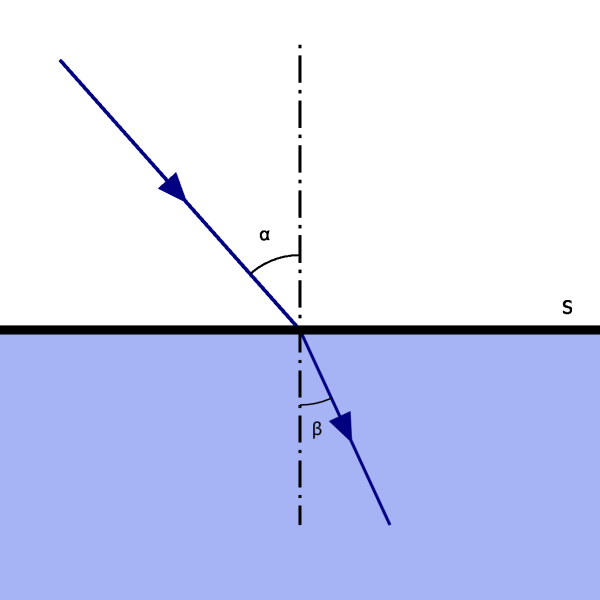
Since antiquity, humans have been captivated by the nature of light. As early as the 5th century BC, the ancient Greek philosopher Empedocles examined concepts related to rays and their origins. Two centuries thereafter, Euclid provided a mathematical description of the laws governing light reflection. Subsequently, Ptolemy investigated the phenomena of light refraction.
However, no one was able to elucidate the composition of the sunlight or the stars observed. It was not until 77 B.C. that the ancient Roman scholar Lucretius proposed that light consists of a stream of particles interacting with the human eye. Nevertheless, other ancient writers were gradual in accepting this theory.
This concept did not become widely popular until the subsequent millennium, and it was Indian and Arab scholars — not European researchers — who were the initial adopters.
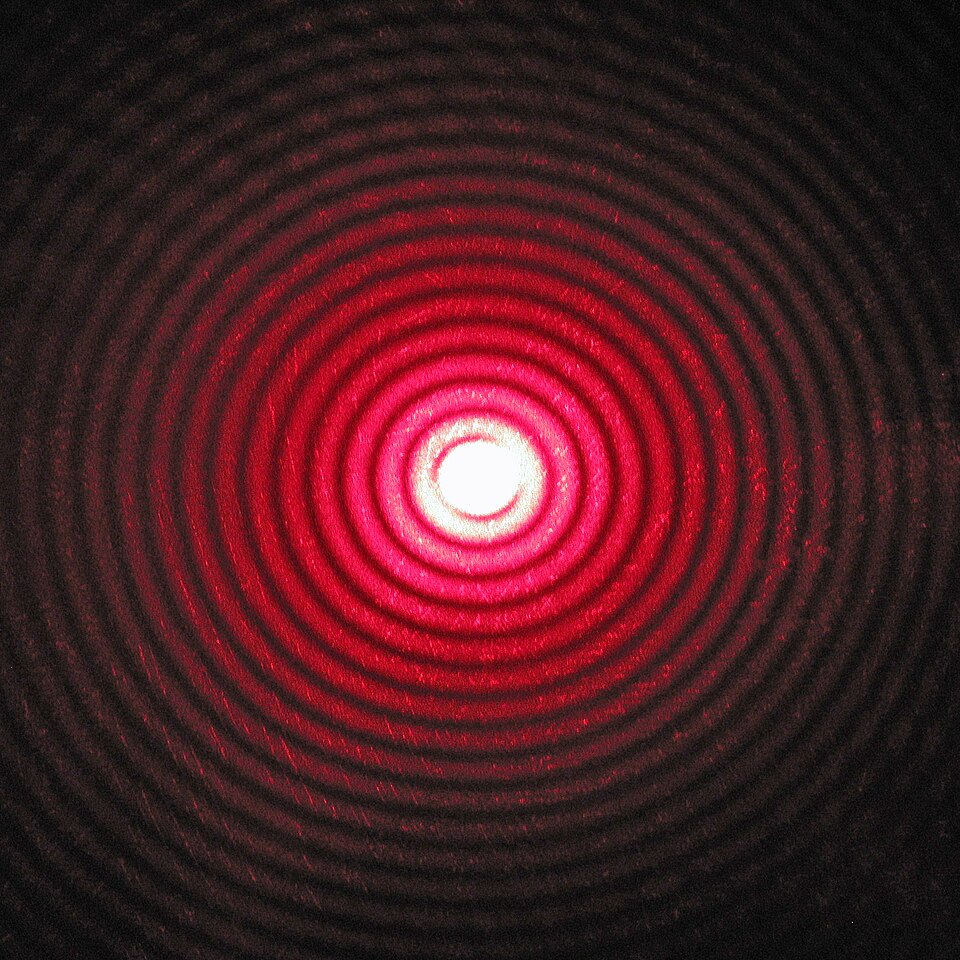
Nevertheless, by the 17th century, the theory that light consisted of a stream of very small particles (corpuscles) had already become predominant in European science. The initial experiments validating this theory had already been performed. However, Francesco Grimaldi subsequently discovered the phenomena of light interference and diffraction, leading to the conclusion that light is a wave — a vibration that propagates through a medium filling all of space, which was then referred to as the ether. Over the following three centuries, numerous experiments were undertaken: some unequivocally confirmed that light is particulate, while others convincingly demonstrated that it is a wave.
Wave-particle duality
The debate regarding the nature of light was among the most comprehensive in global history. It was not resolved until the early twentieth century. Initially, investigations into the internal structure of the atom suggested that electrons sometimes exhibit behavior characteristic of both particles and waves.
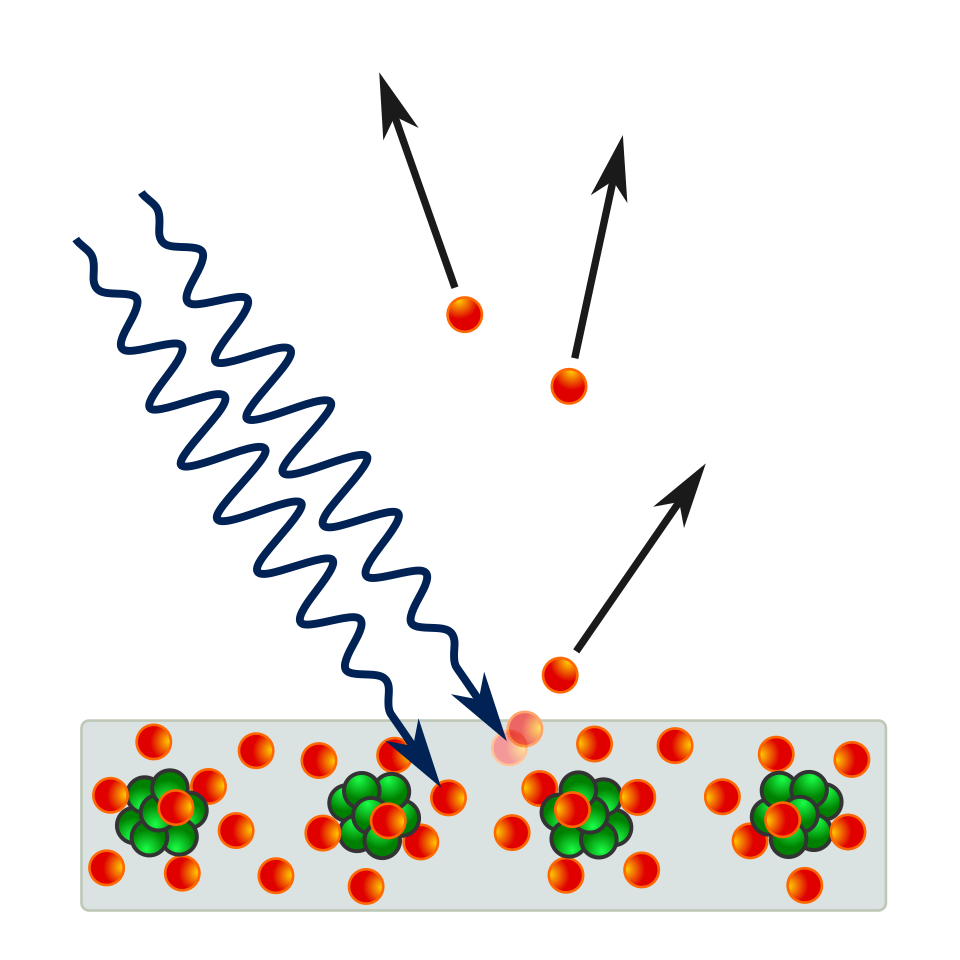
Albert Einstein then utilized these theories to elucidate the photoelectric effect — a phenomenon wherein light incident on specific materials induces an electric current to flow within a closed circuit connected to them. It is this very phenomenon that forms the fundamental basis for the operation of contemporary solar panels and photovoltaic cell-based motion sensors.
Einstein elucidated the photoelectric effect by stating that an electron cannot orbit the nucleus of an atom in arbitrary paths, but only along specific trajectories, with the differences between these paths corresponding to precisely defined quantum of energy. It is these quanta of energy that the electron absorbs upon collision with a photon. If, subsequently, the electron transitions to a sufficiently excited state, it commences movement from one atom to another. This process is the mechanism by which an electric current is generated.
Interestingly, Einstein’s original papers from 1905 to 1917 do not use the modern name for the particle — the photon. That term was proposed by Gilbert Lewis in 1926. Einstein himself referred to it specifically as a “light quantum.”
The recognition of a particle of light as a quantum has definitively resolved the longstanding debate regarding its fundamental nature. Indeed, photons, along with all other elementary particles, demonstrate wave-particle duality. In essence, they can exhibit momentum and a trajectory of motion akin to a ballistic object, while simultaneously possessing frequency and amplitude characteristic of a wave in the ocean.
Concurrently, a photon’s energy is contingent upon its frequency, and not on its amplitude. Moreover, it certainly does not depend on mass, as photons inherently lack mass. It is due to this fact that photons in a vacuum consistently travel at the maximum attainable velocity within our universe: 299,792,458 meters per second. This velocity is commonly referred to as the speed of light.
Visible light
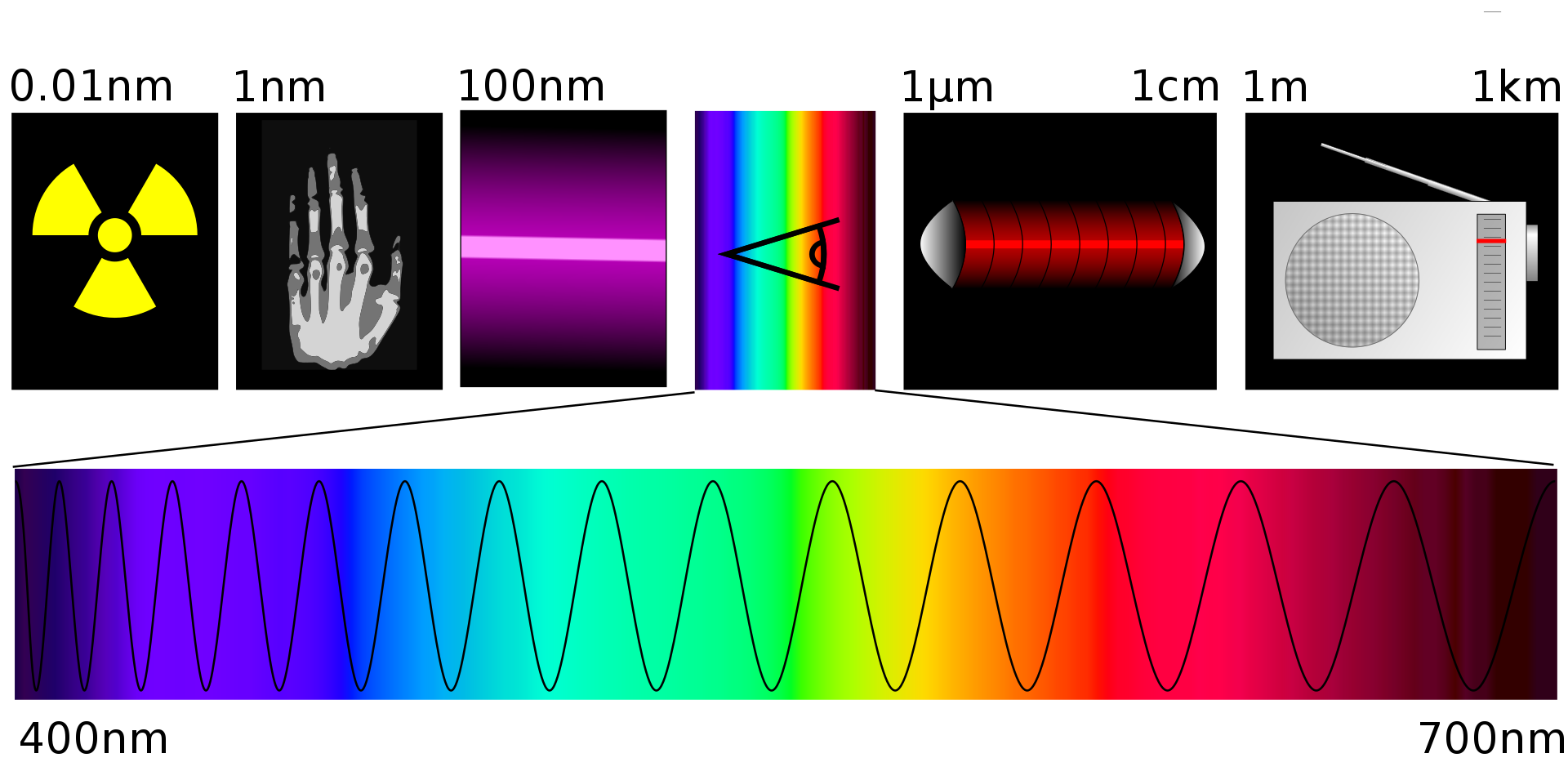
Another notable feature of the photon is that it possesses no intrinsic electric charge. Nevertheless, it functions as a mediator of electromagnetic interaction. In fact, visible light constitutes only a minor segment of the electromagnetic spectrum, which extends from radio waves to gamma rays.
It is unsurprising that photons are represented by the Greek letter γ, which is also used for the most intense form of radiation. This correspondence arises because they are essentially identical particles, distinguished only by their varying energies. Similarly, the same principle applies to infrared and ultraviolet light.
In conclusion, our Sun emits photons across a broad spectrum. The most hazardous portion of this radiation is effectively obstructed by our planet’s magnetic field and ozone layer. Of the remaining radiation, we perceive only photons with wavelengths between 400 and 780 nanometers. Consequently, what we observe as visible light is, in fact, a composite of particles with varying frequencies, given that this attribute is inversely proportional to wavelength.
You may observe this phenomenon firsthand by witnessing light disperse into a spectrum. In the natural environment, this process is quite commonplace, with its most prevalent form being the one produced by numerous water droplets suspended aloft in the sky. This optical phenomenon is commonly known as a rainbow.
Light is also dispersed into a spectrum within various containers filled with water. However, this process is typically executed intentionally through the use of prisms. The fundamental principle involves employing reflection and refraction to cause particles, which were previously traveling in unison, to diverge at different angles. These variations are perceived as distinct colors.
Our chromatic perception functions in a comparable manner with regard to the surrounding objects. When an object absorbs all photons within the visible spectrum except for a narrow band that is reflected, we perceive it as possessing a particular color.
With colored light produced by a transparent medium — such as in stained glass — the principle is similar, but with a slight difference. In that case, the material also absorbs most of the visible spectrum, but the remainder is not only reflected but also transmitted through it.
Lighting sources
Once the nature of light was comprehended, individuals initiated the pursuit of more advanced techniques for its generation. Historically, the prevalent approach entailed the utilization of heated objects or gaseous byproducts resulting from exothermic reactions. Furthermore, heat represents a manifestation of electromagnetic interaction, transmitted via photons.
In the case of an open flame, this is not immediately apparent, as it is necessary to first understand that the combustion reaction initially generates a dense cloud of hot gases (the flame), which emits photons. Concurrently, because the transfer of energy between electrons and atomic nuclei occurs in a chaotic manner, the photons produced possess a range of frequencies and energies.
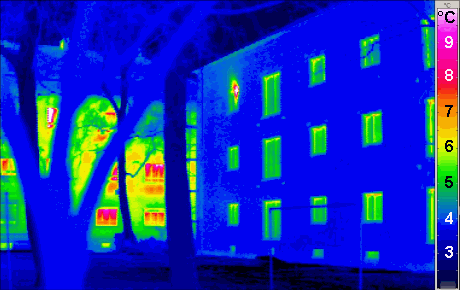
Consequently, any object subjected to sufficient heating emits photons. However, not all photons possess a frequency within the visible light spectrum. An example of this can be observed in infrared thermal imaging cameras. Their remarkable capability to operate effectively in darkness is merely a result of detecting low-frequency photons and transforming the resulting image into a visible format.
Another example is heating metal until it glows. Typically, this produces a red color. The reason is that the hotter a body gets, the higher the frequency of the emitted photons becomes. And the first color in the visible spectrum that they encounter is red. To produce other colors, the material must be heated to a temperature at which most metals melt or react with atmospheric gases.
However, individuals discovered alternative methods to circumvent this limitation even prior to Einstein’s establishment of the quantum nature of light. The solution involves a tungsten filament, which is integrated into an electrical circuit and mounted within a glass vacuum bulb. This device is referred to as an incandescent lamp, and until recently, it represented the most prevalent method for illuminating residential spaces.
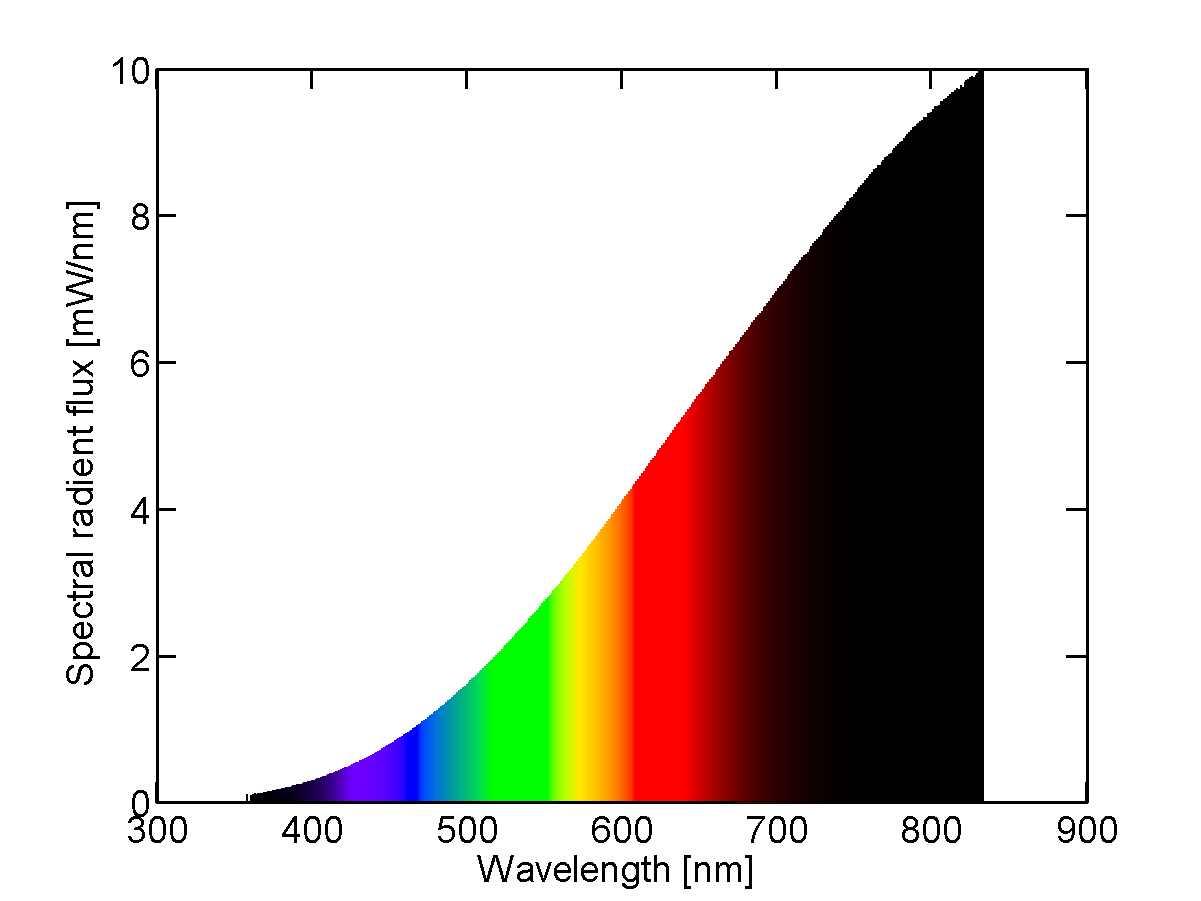
The most intriguing aspect of this method is that, owing to its imperfections, the spectrum of photons generated when an electric current traverses a filament exhibits a slight shift toward the red end of the spectrum in comparison to sunlight. However, this characteristic has become so familiar to us that it is commonly referred to as “warm incandescent light.”
Nevertheless, in contemporary practice, we predominantly employ lighting fixtures that utilize more energy-efficient LED technology. Indeed, an incandescent bulb is so designated because it primarily emits energy in the infrared spectrum, which does not contribute to enhancing indoor illumination.
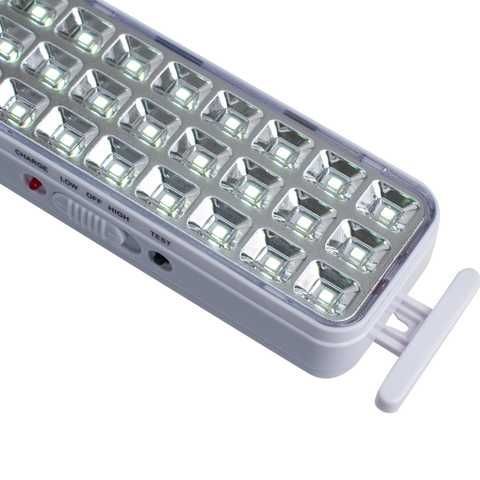
Source: activeshop.com.ua
The underlying principle of the energy efficiency of Light Emitting Diodes (LEDs) resides in the fact that photons are emitted not during the excited state of atoms, but as a consequence of electron transitions between different types of semiconductors. The nature of these transitions is dictated by the composition of the materials involved. The energy of the emitted photons remains constant, resulting in the emission of light of a singular color.
The paradox lies in the fact that it cannot be considered the “white sunlight” it appears to be, such as when a flashlight is turned on. This is because, as previously noted, sunlight itself is a combination of various wavelengths.
In reality, no LED is truly white. It is either a blue LED coated with a yellow phosphor that emits yellow light, together producing the desired color, or it consists of three separate LEDs — red, green, and blue — that collectively generate the same effect.
What is the relevance of the laser in this context?
This raises the question: Is it even feasible to produce a light source capable of generating the purest possible electromagnetic waves across any frequency spectrum? The answer is the laser. More precisely, the answer resides in the principle of stimulated emission of photons, which underpins its operation.
All the light sources described heretofore emit photons passively, as a consequence of other processes. However, Einstein himself proposed as early as 1916 that electrons could be induced to emit photons collectively simply by prompting their transition from one orbital level to another.
For this phenomenon to occur consistently, it is essential that the majority of atoms within a given volume be in an excited state. Additionally, the environment in which the process occurs must be enclosed by a mirrored surface capable of reflecting photons. As a result, the number of photons within the generator will continuously increase, and it is then sufficient to leave a single narrow aperture through which they can pass, thereby producing a beam of intense radiation.
A distinguishing characteristic of such a system is that, akin to LEDs, all emitted photons possess identical frequencies. Nevertheless, a notable distinction exists between them. Spontaneous emission in semiconductors transpires with phase and directional mismatches. Conversely, in a laser beam, all electromagnetic oscillations are flawlessly superimposed. This phenomenon is termed coherence, and it fundamentally differentiates a laser from all other sources of light.
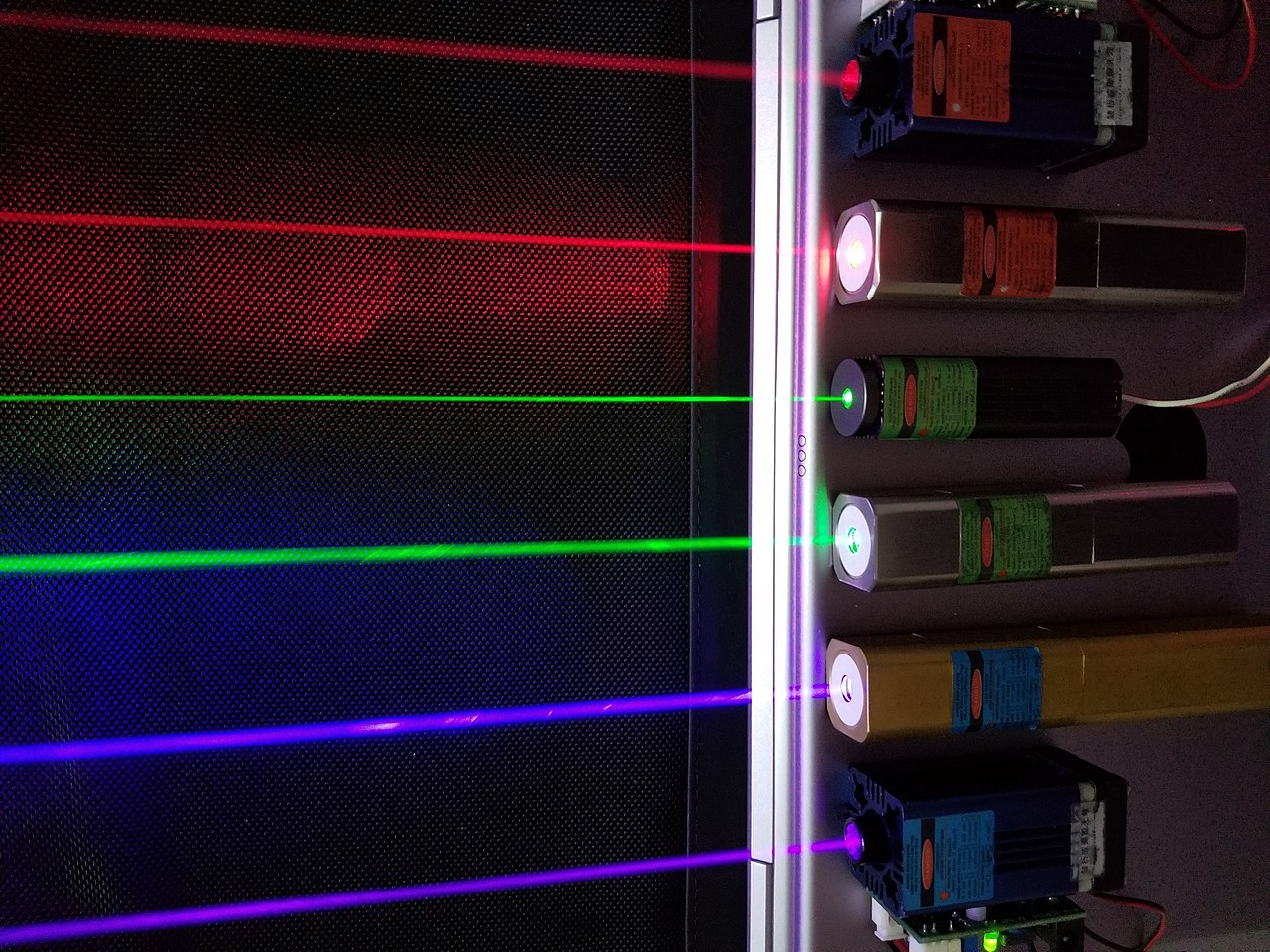
Recall the initial stages of our study on light? It began with rays. However, rays emanating from all light sources gradually diverge in every direction as they propagate, and at a certain distance, they form a large spot. In contrast, with lasers, due to their coherence, this process occurs at a significantly slower rate.
This is precisely why they are utilized as indicators. The concept underlying beam weapons similarly relies on this principle, as well as on the fact that pumping a medium can produce a significantly large number of photons. Furthermore, a high photon density per unit cross-sectional area of the beam corresponds to a substantial amount of energy being transferred to the material.
In essence, the laser is regarded as the most exemplary source of illumination ever developed by mankind. It is therefore not surprising that the United Nations designated the date of its initial demonstration as World Light Day. After all, it was at that juncture that humanity achieved comprehensive mastery over this enigmatic phenomenon, the nature of which had been subject to debate for centuries.

