

Today, we’re used to seeing a clear night sky, where the light from distant stars and galaxies travels freely through space-time over billions of light-years. However, things were not always that way. In the first moments after the Big Bang, our Universe resembled a thick, scorching-hot, and incredibly dense “soup” of charged particles—ionized plasma. Light photons could not travel even the shortest distances, constantly colliding with free electrons. Space was cut off from light, plunged into total darkness.
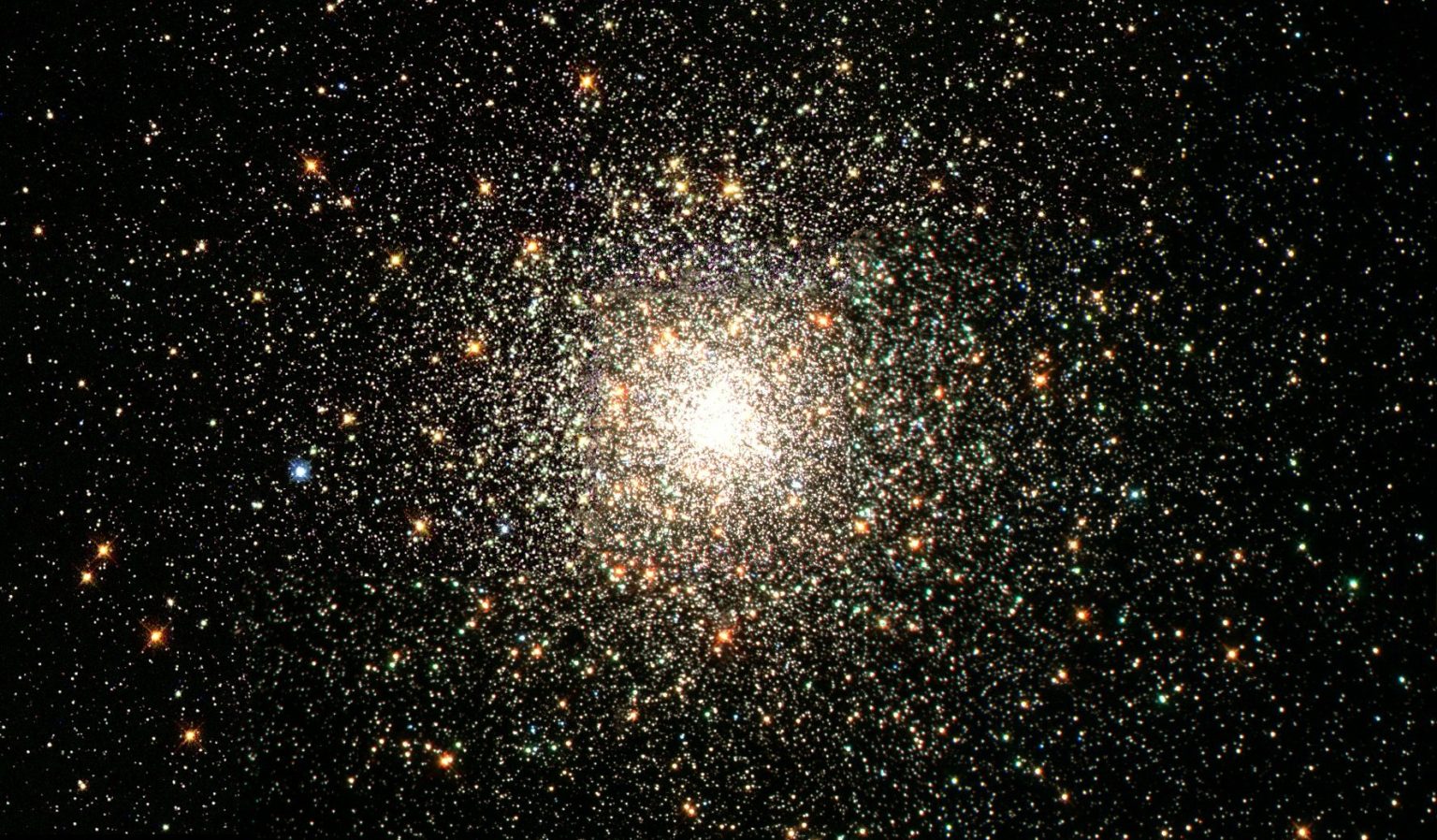
After 300,000 years, the Universe had cooled down enough. This allowed protons and electrons to combine into neutral hydrogen atoms. The temperature dropped, the “fog” cleared, but there was still no light—the sources that could have generated it simply hadn’t formed yet. This was a period that astronomers refer to as the “Dark Ages.” It was only with the appearance of the first stars that the process known as the “Cosmic Dawn” began, forever changing the face of reality.
The search for the Universe’s “switch”
For a long time, scientists have been puzzling over what exactly triggered the dissipation of the hydrogen fog. The process of reionization—when intense radiation once again “split” neutral hydrogen into ions—shaped the Universe as we know it. But who was the main “igniter”?
Until recently, the prevailing hypothesis held that cosmic monsters were responsible for this global process: supermassive black holes, whose accretion produced bright light, or giant galaxies similar to our Milky Way. However, data from the Hubble and James Webb (JWST) space observatories, released in February 2024, changed these ideas. As it turned out, the real heroes of cosmic history were not the giants, but the “little ones”—ultra-faint dwarf galaxies.
Dwarf galaxies
An international team of astrophysicists led by Hakim Atek of the Paris Institute of Astrophysics has conducted a detailed study of the early Universe. The key to solving the mystery was the Abell 2744 galaxy cluster, which scientists used as a giant natural lens. Thanks to the effect of gravitational lensing—in which a massive object warps spacetime and magnifies the light from objects behind it—researchers were able to detect faint dwarf galaxies that existed during the first few hundred million years after the Big Bang.
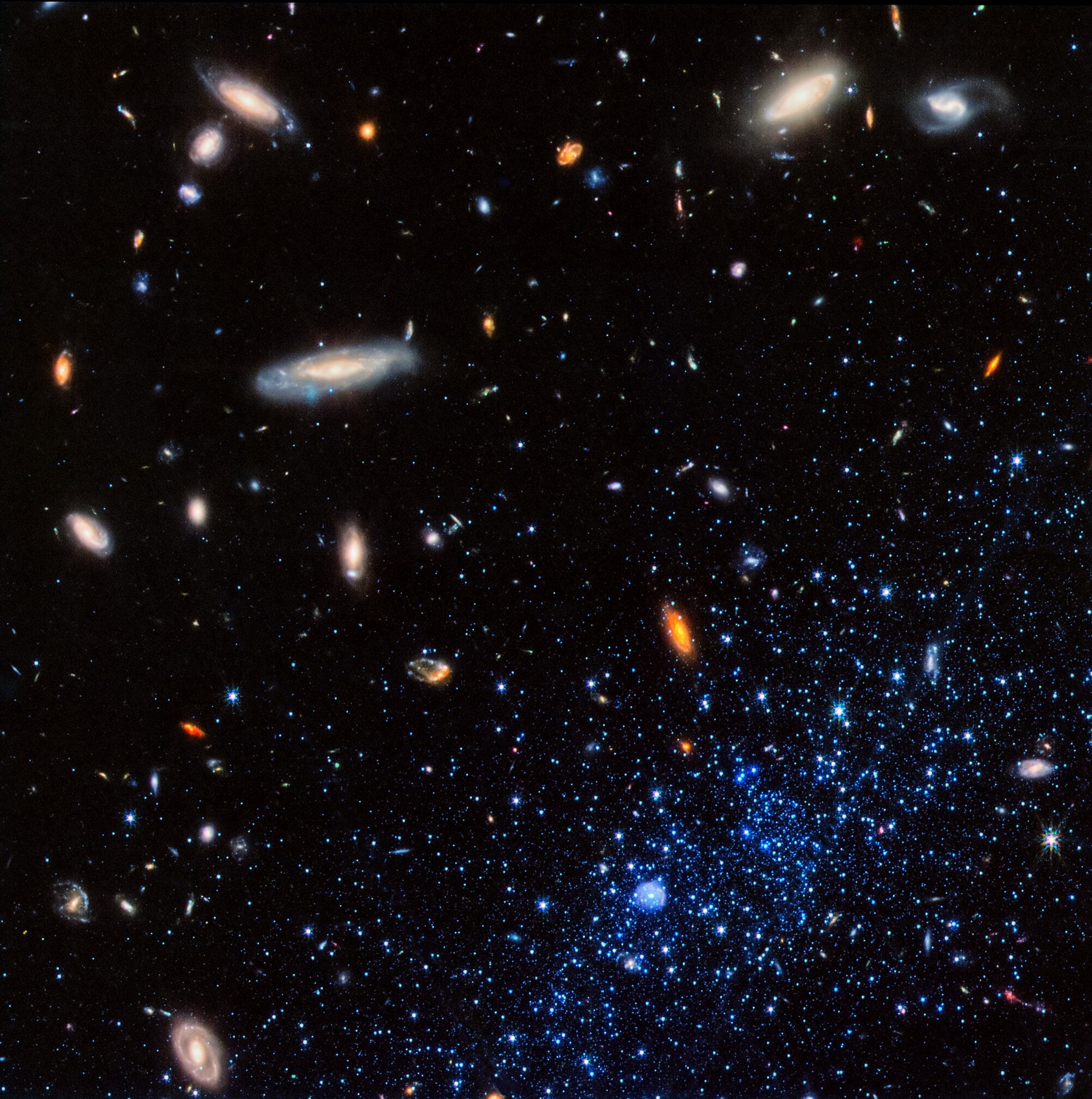
Analysis of the spectra obtained by the JWST revealed stunning results. In the early Universe, dwarf galaxies outnumbered giant galaxies by a ratio of 100 to 1. These tiny systems turned out to be significantly brighter and more active than previously thought, and their ionizing radiation was four times as powerful as that of large galaxies.
“This discovery unveils the crucial role played by ultra-faint galaxies in the early Universe’s evolution,” said astrophysicist Iryna Chemerynska. They were the source of the stream of high-energy photons that transformed neutral hydrogen into transparent plasma.
How the light flared up
The process of reionization was completed approximately 1 billion years after the Big Bang. Due to the activity of billions of small galaxies, the gas in intergalactic space has become ionized and rarefied. Light was finally able to travel freely over vast distances.
The dwarf galaxies looked like billions of tiny lanterns all lit up at once in a misty forest. No single object on its own would have had the power to change the Universe, but their combined mass was so great that they effectively “burned up” the primordial hydrogen cloud. This underscores the importance of studying low-mass objects: sometimes what seems insignificant determines the fate of the entire Universe.
New Horizons
Although the evidence gathered so far is the most convincing to date, scientists are in no hurry to draw a conclusion. Only a small section of the sky has been studied so far through the gravitational lens Abell 2744. To definitively confirm the theory, astronomers need to verify that this region is not an anomaly but rather represents a typical state of the early Universe.
We previously reported on how the James Webb Space Telescope discovered a population of galaxies that shaped the structure of the Universe.
According to sciencealert.com

