

David Kipping, a researcher at Columbia University, recently published a study in which he returned to one of the older solutions to the Fermi paradox, according to which extraterrestrial civilizations either do not exist at all or are extremely rare.
The Fermi paradox and the Hart-Tipler Conjecture
When Enrico Fermi asked back in 1950 why, given the vastness of the universe, we don’t see any other civilizations in it, it sparked a flurry of scientific and less scientific speculation on the subject. Various authors have since come up with a host of explanations for the paradox that bears the great physicist’s name.
One of the key milestones in the development of our modern understanding of the Fermi paradox was the hypothesis published by Michael Hart and Frank Tipler in a series of articles from the mid-1970s to the early 1980s. They argued that the likelihood that extraterrestrial civilizations had enough time to develop advanced technology, spaceflight, and self-replicating machines (von Neumann probes) meant that they would have colonized the galaxy and come to Earth long ago. Since no evidence of this has been found, they argued that such civilizations must not exist.
The Hart-Tipler Conjecture caused quite a stir in its day, as it seemed to suggest that we were alone in the Galaxy. However, in 1983, Carl Sagan and William Newman criticized it, pointing out that it was based on the rather unrealistic assumption that intelligent life was stronger than anything else in its desire to spread among the stars and that its colonies could exist for hundreds of millions of years. Since then, the science of extraterrestrial life has revolved around this pair of thesis and antithesis.
A new perspective
And now an article by David Kipping of Columbia University has been published. He attempts to provide a new mathematical foundation for the Hart-Tipler Conjecture. The model he developed has only three parameters: the spontaneous rate of emergence of intelligent life (λ), the rate of propagation (u), and the starting time of the calculation (t).
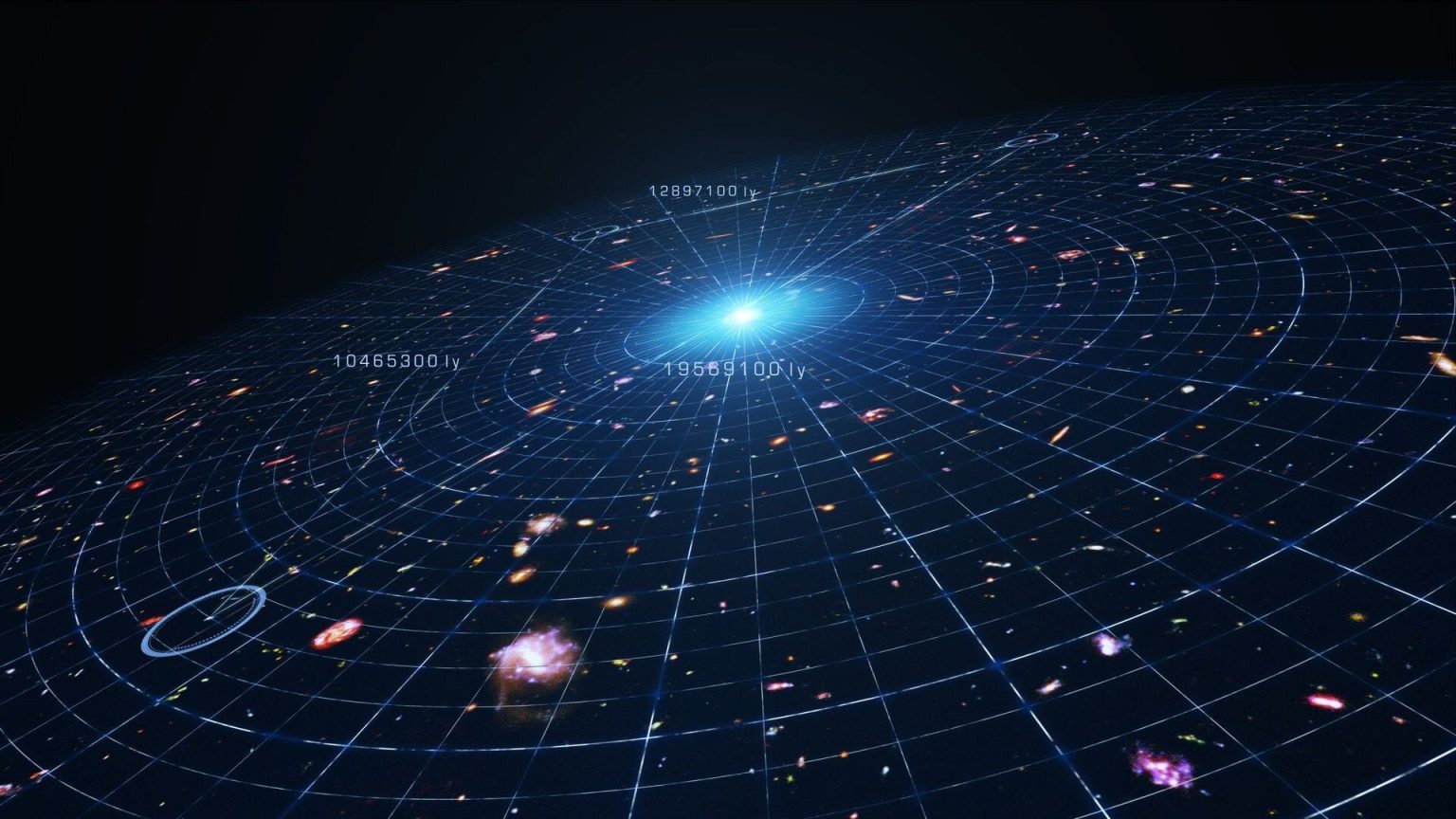
At the same time, he includes something like the Hubble constant in his solution. In other words, he moves from estimating the number of possible civilizations in our own galaxy to determining their number throughout the entire universe, taking its expansion into account. And it is precisely from this perspective that no one has yet considered the problem.
However, as Kipping argues, if we take Hart-Tipler Conjecture seriously—that probes could cross the Milky Way in a short span of cosmic time (ranging from 300,000 to 20 million years)—it naturally follows that they could “infect” other galaxies as well.
And that means we need to impose restrictions not only on our own galaxy, but on others as well. Of course, he once again turns to a worldview in which intelligent species invest resources in building von Neumann probes, which, like an infection, spread intelligent life throughout the galaxy.
However, he now argues that in order for us not to be observing aliens right above our heads at this very moment, the sources of the “infection”—that is, intelligent species—must arise in no more than 1 out of every 100,000 galaxies. And since we don’t see them, that means they don’t exist. Admittedly, this requires imagining some kind of filter that can so effectively prevent the emergence of civilizations incapable of interstellar flight.
According to phys.org

