
Science fiction mentions wormholes — cosmic tunnels used for instantaneous travel across the universe. However, the real story, which began with Albert Einstein and Nathan Rosen in 1935, is much more surprising. They described not a “portal” but a mathematical “bridge” between two regions of space-time. A new interpretation of the Einstein-Rosen bridge reveals the fundamental secrets of time itself.
Mistake of the century
The Einstein-Rosen bridge was created to resolve the conflict between gravity and quantum physics, not for travel. Only decades later, physicists reinterpreted it as a potential “wormhole.” However, calculations showed that such a bridge would be unstable and impassable. Therefore, such a bridge exists only in mathematical structure, not as a real path to other galaxies.
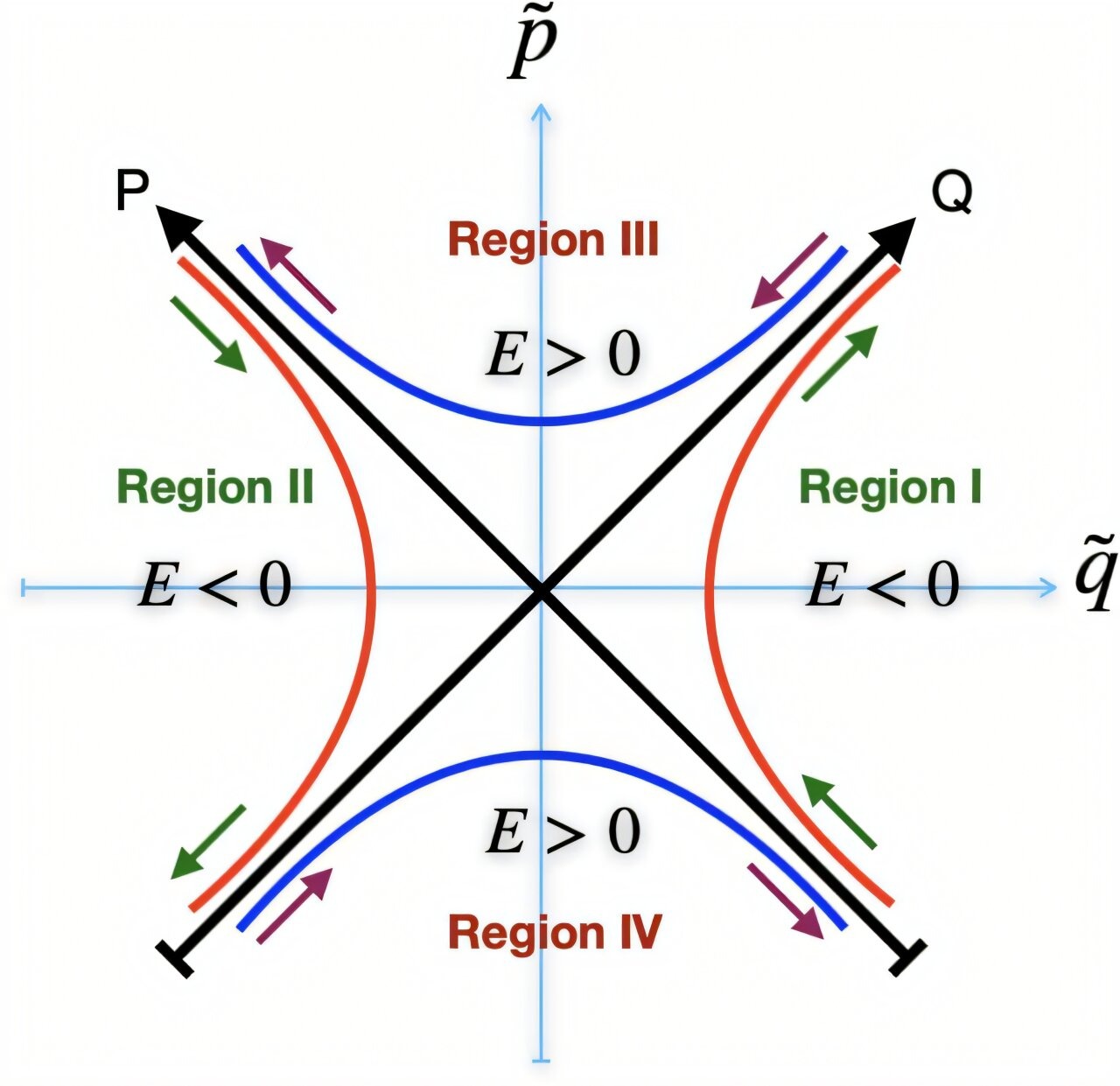
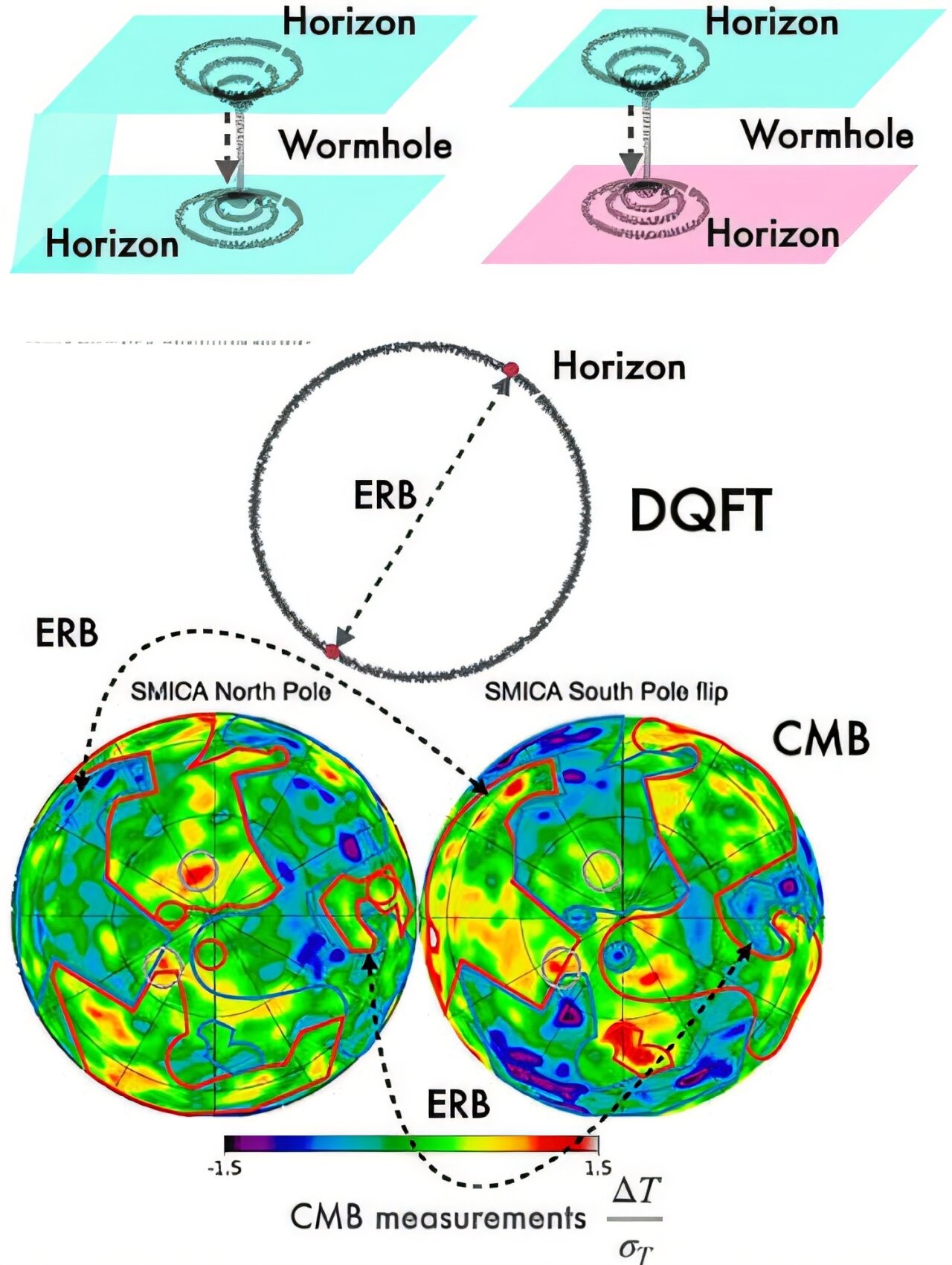
Contemporary research, based on the work of Kumar and Marto, offers a radically new perspective. The laws of physics are often symmetrical: they work the same way for time flowing forward and backward. The Einstein-Rosen bridge can be seen as a connection between two such symmetrical “directions” of time. It is not a tunnel in space, but rather a mirror in time.
Resolving the main paradox
This concept provides an elegant solution to the paradox of information loss in black holes described by Stephen Hawking. If we consider both directions of time, the information that falls behind the event horizon does not disappear. It continues to exist and evolve, but in a mirror-image, reverse time stream. Thus, quantum laws are preserved without the need for exotic physics.
A new philosophy of time
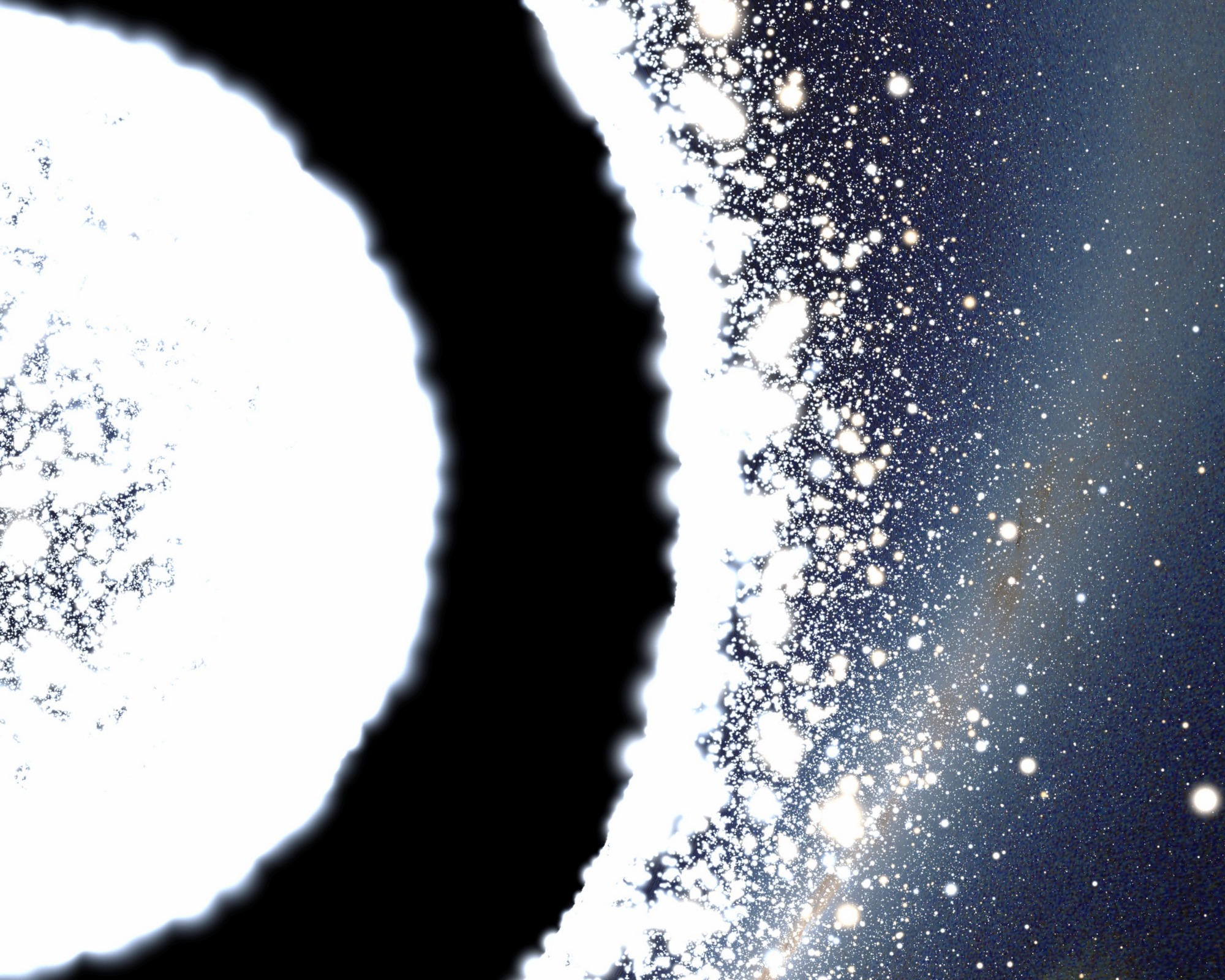
The most impressive conclusion of the new theory is its possible connection to the origin of our Universe. The Big Bang may not have been the beginning, but rather a quantum transition — a “rebound” between phases of contraction and expansion. In such a model, our Universe could have formed inside the black hole of another, “parent” cosmos. Particles from that previous state could have survived the transition and now form invisible “dark matter.”
So, the Einstein-Rosen bridge is not a fast track between stars. It is the key to understanding time at a fundamental level. It suggests that reality requires both directions of time, and our Universe may have a deeper history than we thought. The next revolution in physics may show that time flows both forward and backward, revealing the true nature of cosmic mysteries.
We previously reported on how “quantum caterpillars” can connect black holes to each other.
According to phys.org

