

On the night of February 1-2, an X8.11-class solar flare occurred, causing radio communication disruptions in eastern Australia and New Zealand. We have not seen such a powerful flare since October 2024, when the Sun reached its peak activity.
Abnormally active sunspot group AR 4366
Solar flares are short-lived, powerful bursts of energy associated with the reconnection of magnetic field lines in the solar atmosphere. They occur in relatively compact areas with complex magnetic configurations, usually where sunspots of opposite polarity are located close together. This is why flares are almost always associated with active regions of the Sun.
The formation of the AR 4366 sunspot group developed remarkably quickly — in just three days. A complex variable magnetic configuration and large area are almost always precursors to strong flares. Indeed, since January 31, the active region AR 4366 has begun to produce a series of medium-power M-class flares.
On February 1 at 12:33 UTC, the first powerful flare finally occurred — X1.04 class. However, it was not accompanied by a coronal mass ejection, which means that no geomagnetic storm is expected from this flare. However, AR 4366 did not stop there. Something similar can be seen on Earth, for example, cenotes on the Yucatan Peninsula.
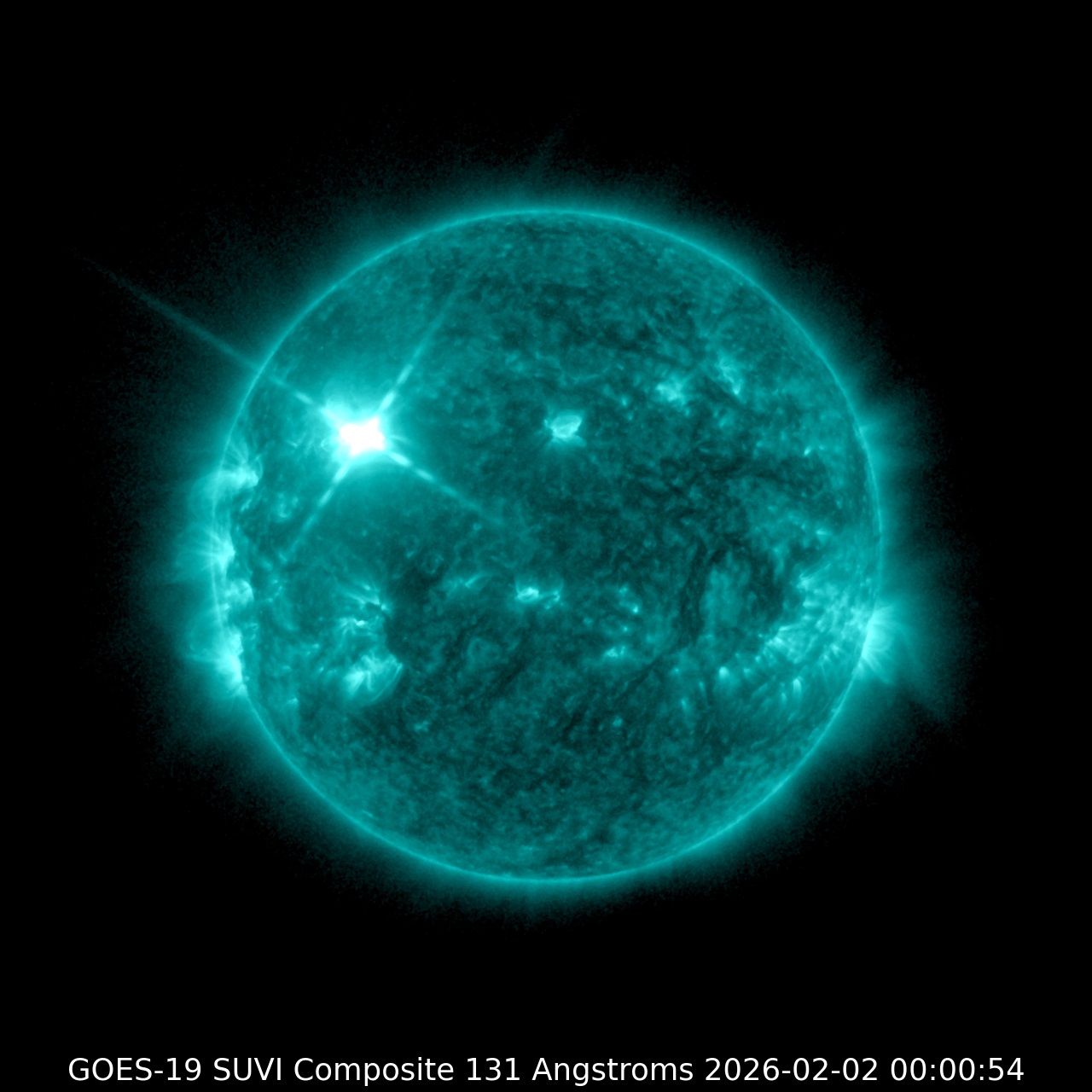
Real fireworks at night and in the morning
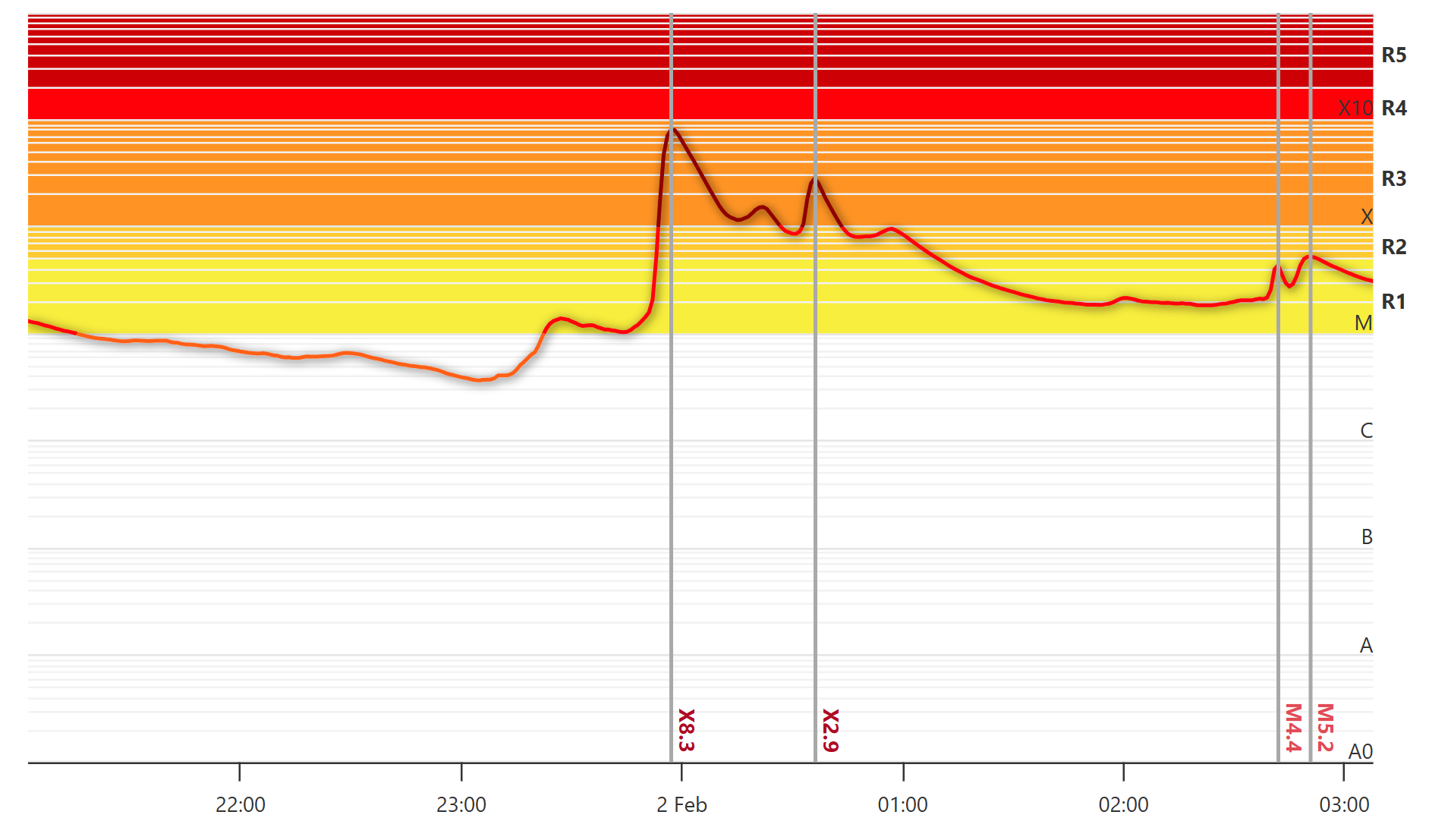
A series of medium-power flares observed during February 1 culminated at 23:57 UTC with an X8.11-class flare. We have not seen such powerful flares since October 2024. Although the overall level of solar activity should now be decreasing, last night’s flare was the third most powerful in the current 25th cycle.
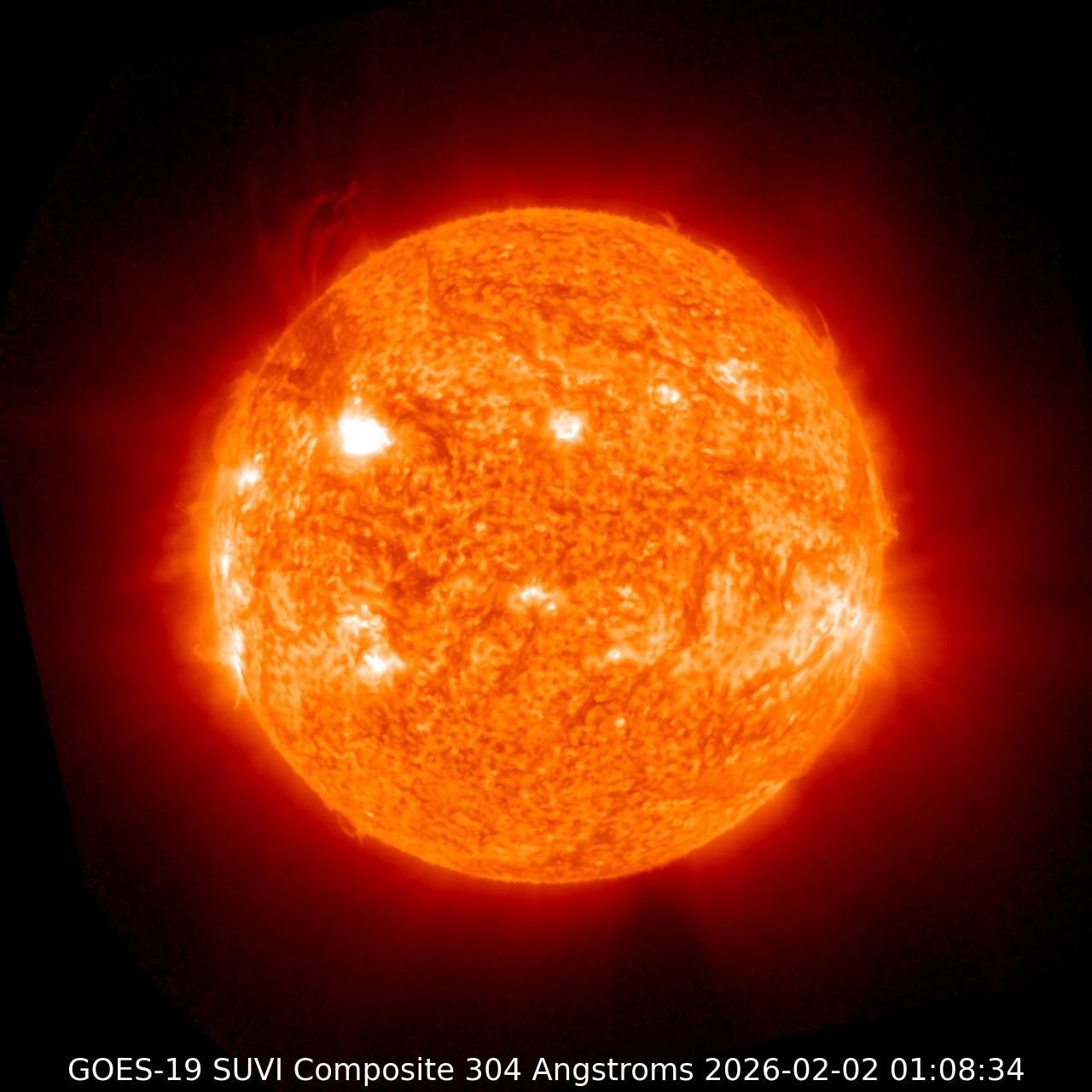
The rapid burst of radiation from this flare was accompanied by the ejection of a long eruptive prominence. However, images from coronagraphs such as CCOR-1 on the GOES-19 satellite and LACSO-C2 on the SOHO space solar observatory show only a very weak coronal mass ejection directed to the northeast.
However, the flare profile turned out to be quite interesting. A short burst at the main maximum was followed by three more increases in radiation levels — to classes X1.54, X2.84, and M9.51.
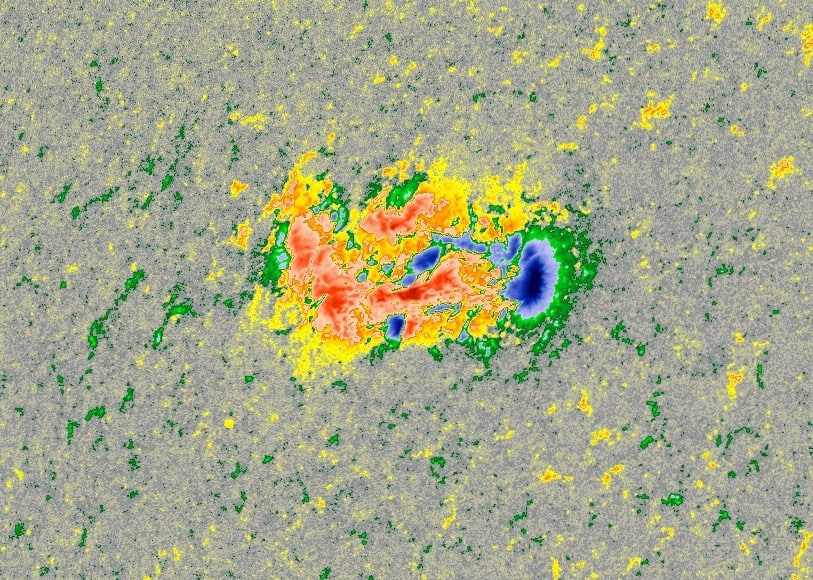
Meanwhile, AR 4366 continues to grow: it now has more than 20 spots, and its magnetic configuration is classified as β-γ-δ (beta-gamma-delta), meaning that different polarities are intertwined, they cannot be clearly separated by a line, and spots of opposite polarity may have a common penumbra. This configuration often generates powerful flares.
Indeed, after the X8.11 flare, at least 5–6 moderate M-class flares were recorded. It appears that one of them was accompanied by a coronal mass ejection, but it was not directed toward us either. And just this morning, February 2, at 08:13 UTC, another powerful flare — class X1.65 — occurred in the same group of sunspots.
Consequences for Earth
X-rays emitted by the Sun during flares are completely absorbed by the Earth’s atmosphere. That is why the energy level of flares, which is determined in the X-ray range, is measured by instruments on board spacecraft.
Even the most powerful flares do not affect the human body on their own. However, the process of absorbing high-energy radiation increases ionization in the upper layers of the atmosphere, particularly in layer D of the ionosphere, leading to radio blackouts, mainly at short wavelengths.
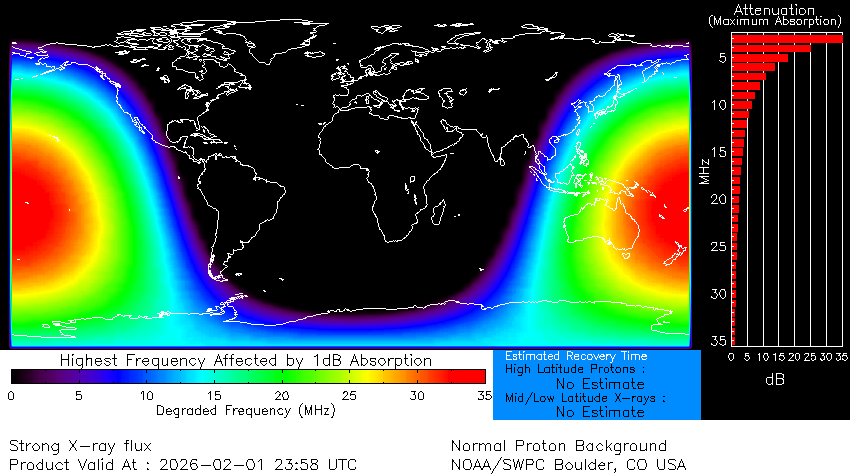
Given that we have not yet seen dense coronal mass ejections, and the ones we have seen are moving in a northeasterly direction from the Sun, it is unlikely that we will see a significant geomagnetic storm. However, AR 4366 remains extremely active and will be in a geoeffective position in just three days. If a powerful eruption occurs at that time, we will have a chance to observe the aurora borealis.
Source: TG channel “Всесвіт у кишені” (The Universe in Your Pocket), administered by the public organization of astronomy popularizers “Шлях до Всесвіту” (The Way to the Universe).

