

Thanks to the Chandra X-ray telescope, astronomers have been able to see for the first time how a young star “inflates” a bubble around itself. In the past, our Sun also went through a similar phase in its development.
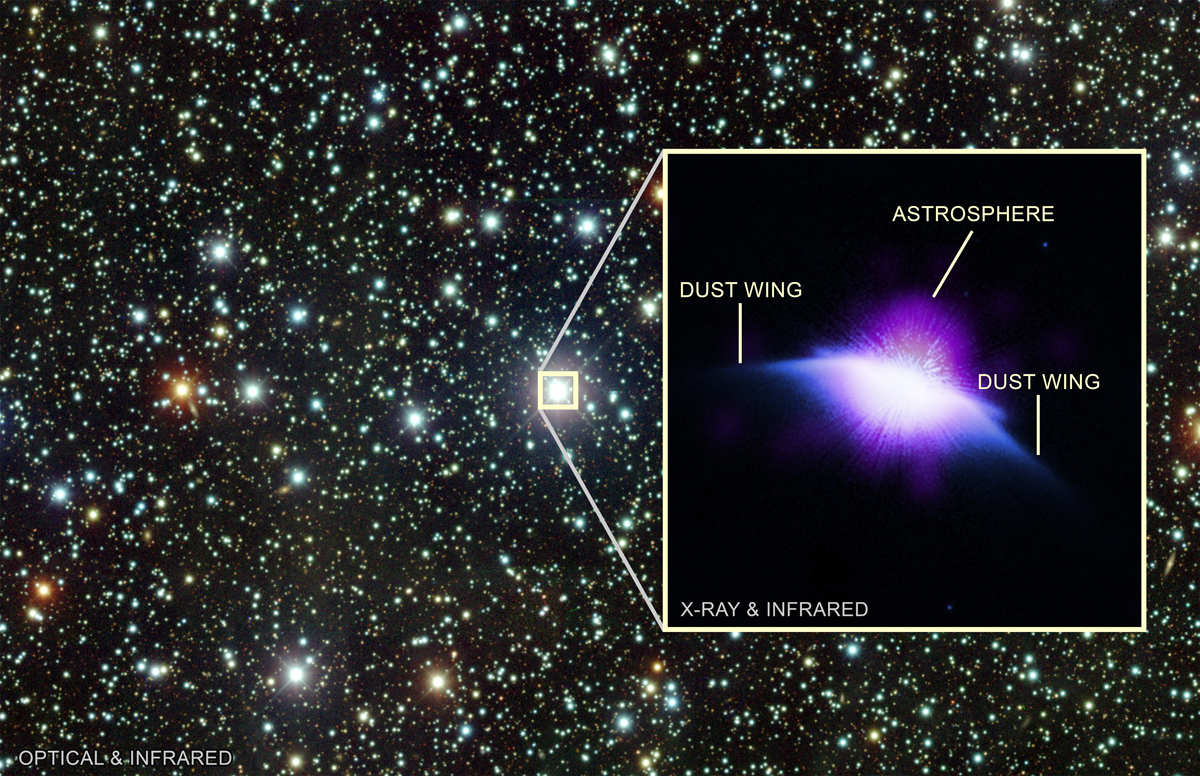
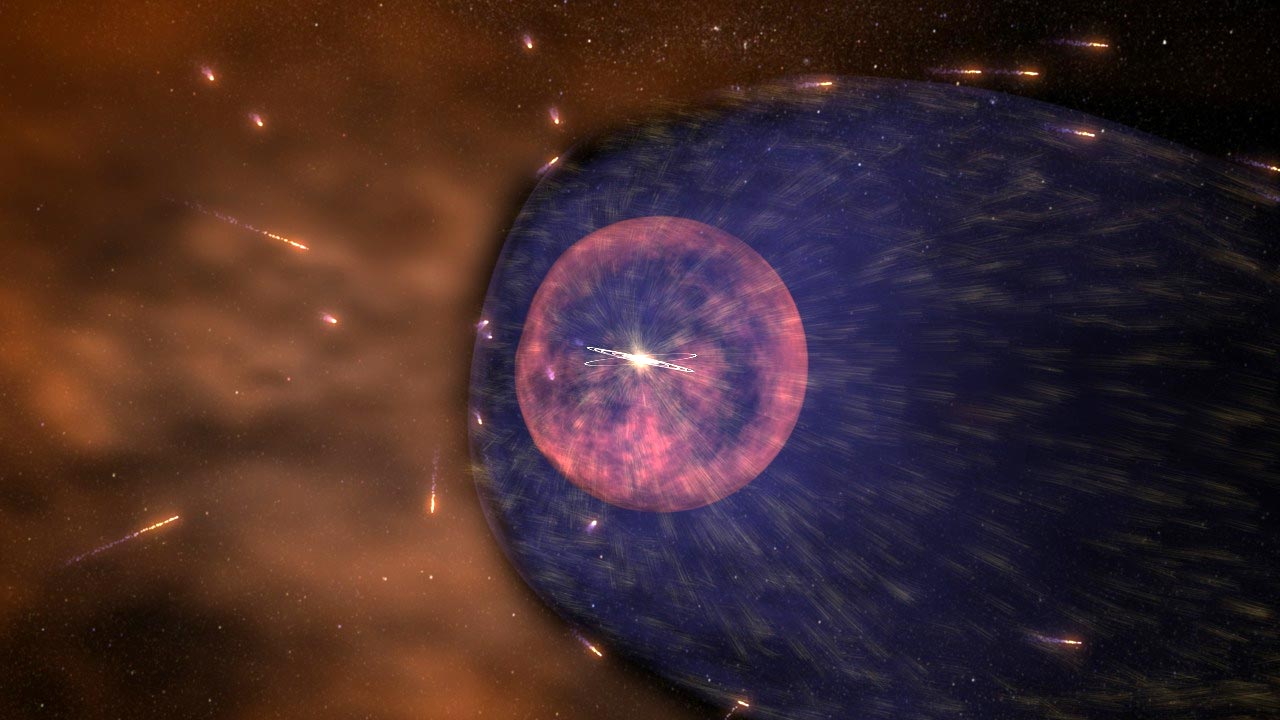
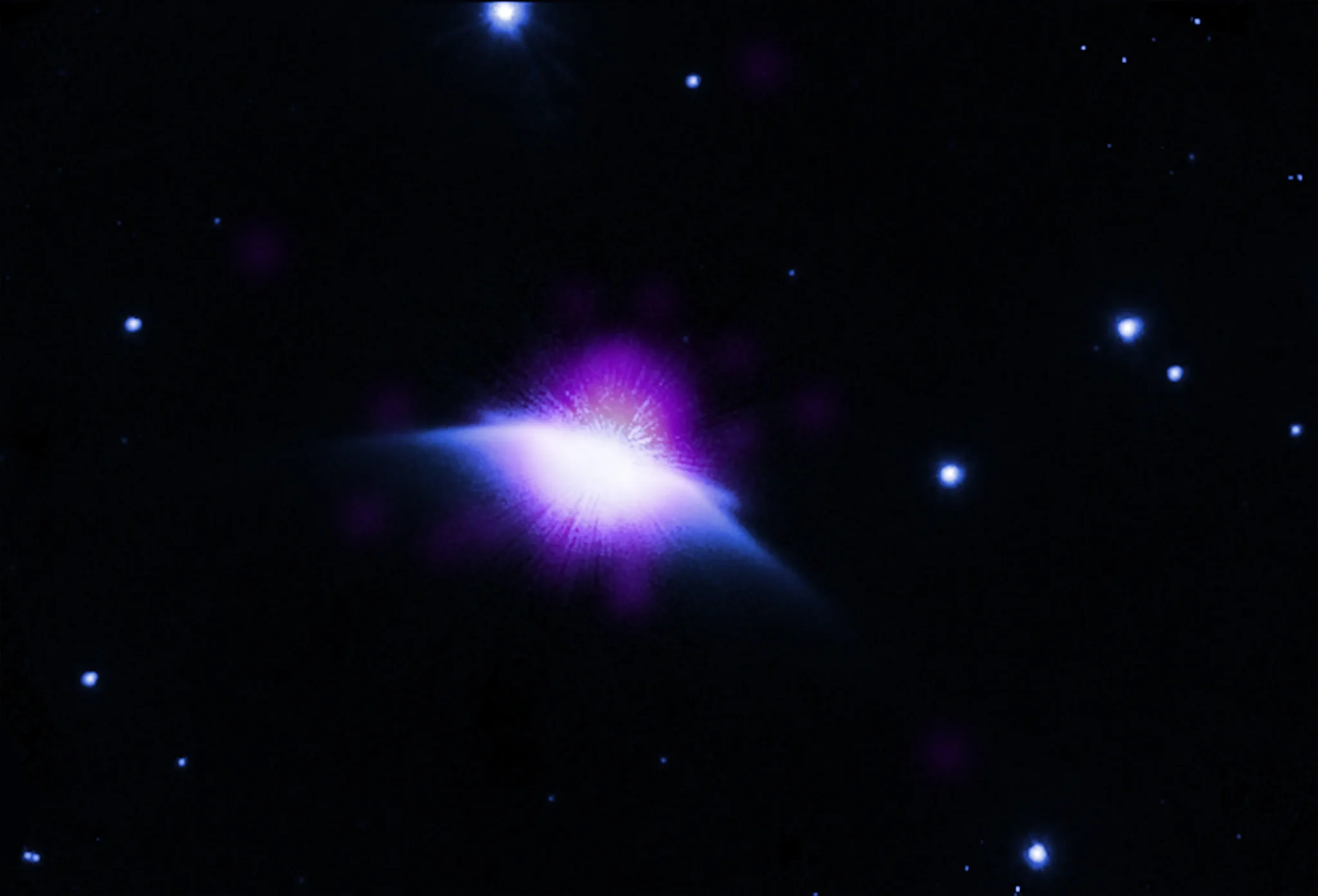
The bubble photographed by Chandra is called an astrosphere. It is formed as a result of the collision of a powerful stellar wind with the cooler dust and gas surrounding the star. There is a similar bubble around the Sun, which scientists call the heliosphere. It extends far beyond the planets of our Solar System and protects Earth from cosmic radiation.
For obvious reasons, scientists cannot see the heliosphere from the outside. But they can study the astrospheres of other stars to better understand how they are structured and evolve. Back in the 1990s, they began attempting to photograph the astrosphere around a star similar to the Sun. This task was accomplished thanks to the Chandra X-ray telescope.
The target of Chandra’s observations was the star HD 61005, located 120 light-years from Earth. It is not visible from Earth with the naked eye, but it is close enough to be seen with binoculars. Astronomers have named HD 61005 the “Moth” because the star is surrounded by a large amount of dust, which, when viewed through infrared telescopes, has a shape similar to the wings of a moth. The wings are formed from material left over after the formation of this system. Observations of these wings using the Hubble telescope have shown that the interstellar matter surrounding HD 61005 is approximately a thousand times denser than that surrounding the Sun.
HD 61005 itself has approximately the same mass and temperature as the Sun, but is much younger. It is about 100 million years old, while the Sun is about 5 billion years old. Because HD 61005 is so young, it is the source of a powerful particle stream that moves about three times faster and is about 25 times denser than the solar wind. When it encounters colder interstellar dust and gas, this leads to the formation of X-rays, which Chandra was able to detect. After analyzing its data, astronomers concluded that the diameter of the astrosphere of HD 61005 is approximately 200 AU.
According to astronomers, Chandra’s data provides us with important information about what the solar wind might have been like in the early stages of the Sun’s evolution. In its youth, it not only went through a similar phase of development, but was also located in a region with much more dust and gas than now.
According to NASA

