

On November 19, NASA held a press conference dedicated to comet 3I/ATLAS. At the conference, images of the interstellar traveler taken by various space missions were published.
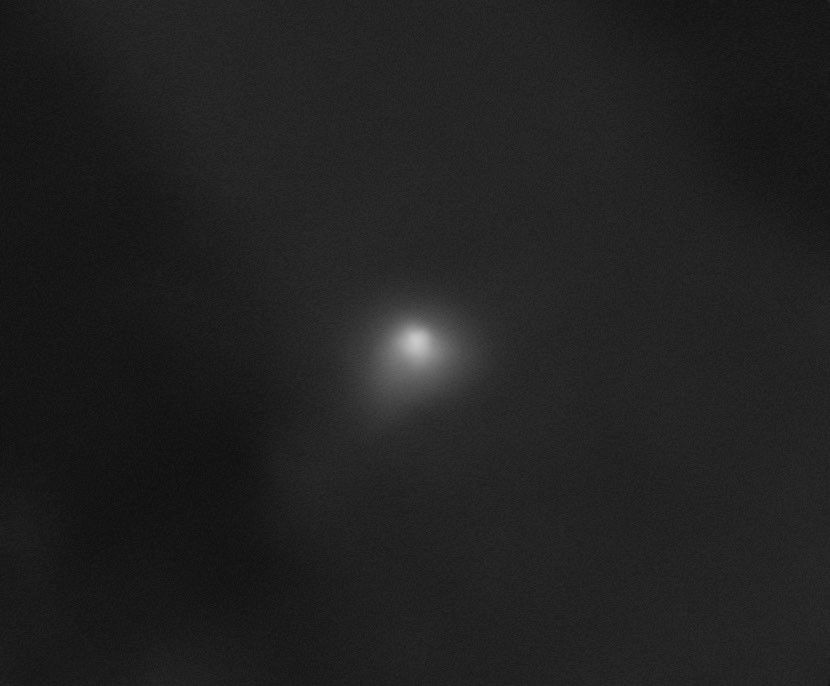
The visit of comet 3I/ATLAS was one of the major space events of 2025. Both ground-based observatories and spacecraft are actively participating in its observation. ESA and China have already published images of the comet taken by their missions. By comparing images obtained from different points, scientists can obtain maximum data about the visitor from another star system.
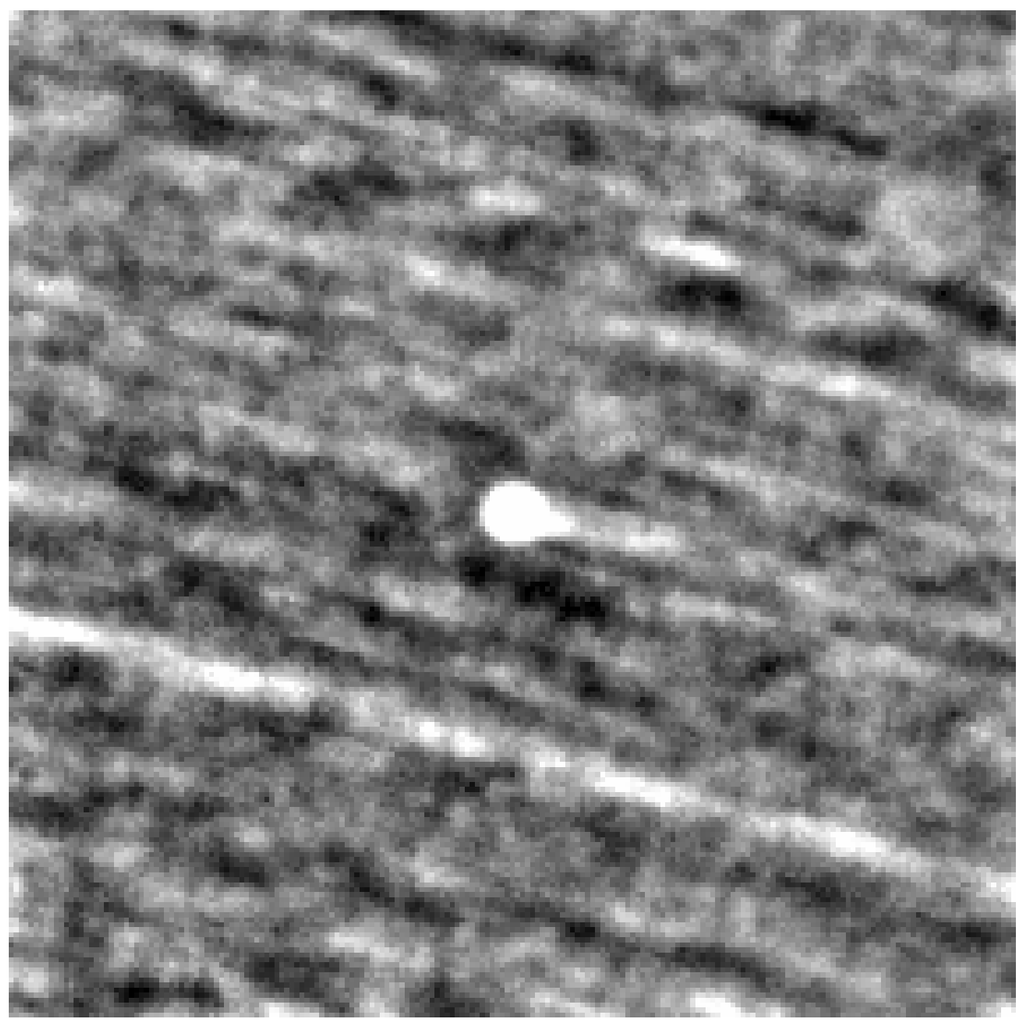
Of all the space agencies, NASA has the largest fleet of telescopes and various interplanetary missions. However, until recently, the organization was unable to publish images of the comet due to the suspension of the US government. The end of the shutdown finally allowed NASA to show what the interstellar visitor looks like.
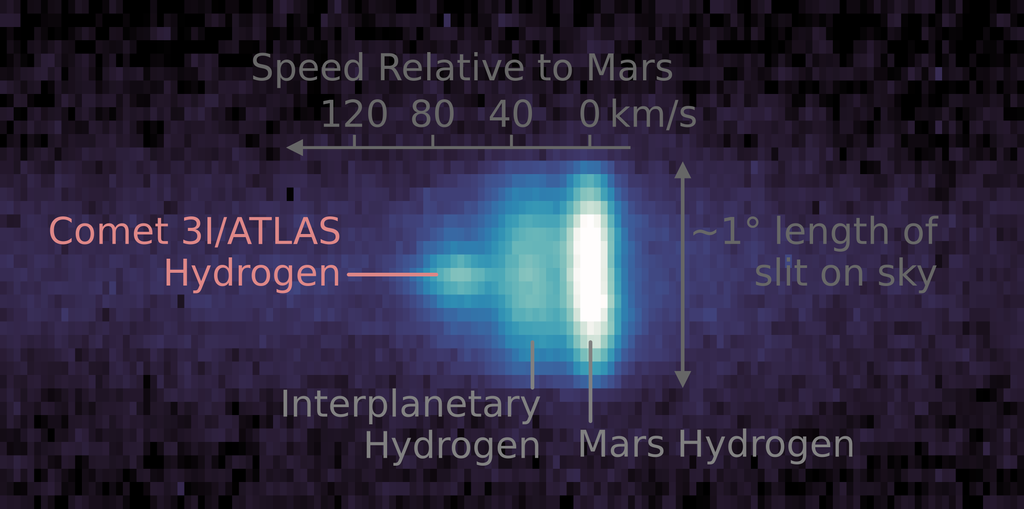
Some of the images were taken by the Mars Reconnaissance Orbiter (MRO) and Mars Atmosphere and Volatile Evolution (MAVEN) spacecraft. In early October, the comet passed within 30 million kilometers of the Red Planet, providing an opportunity to photograph it. The Perseverance rover also participated in the observations.
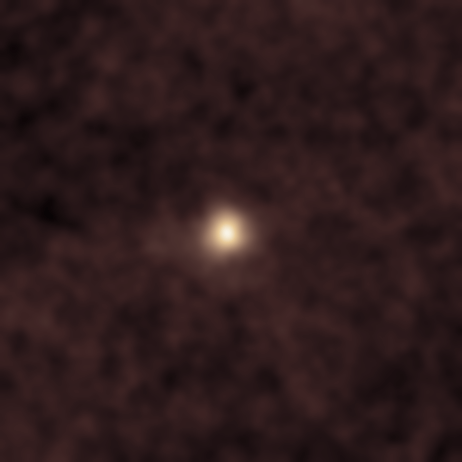
At the end of October, the comet passed the perihelion of its orbit, temporarily disappearing behind the Sun. This made it impossible to track it using ground-based telescopes. However, the STEREO, SOHO, and Punch missions, equipped with coronagraphs, were able to continue their observations, studying how the comet’s behavior and activity changed.
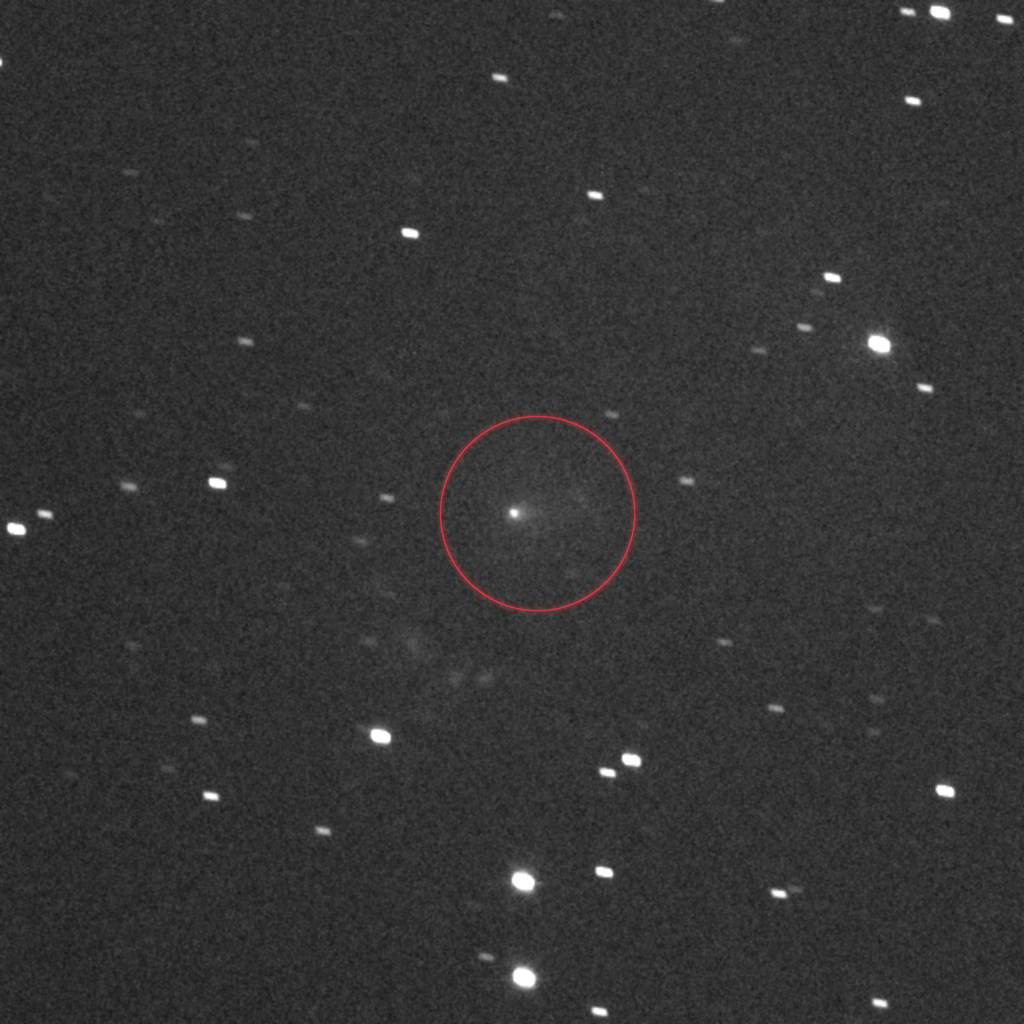
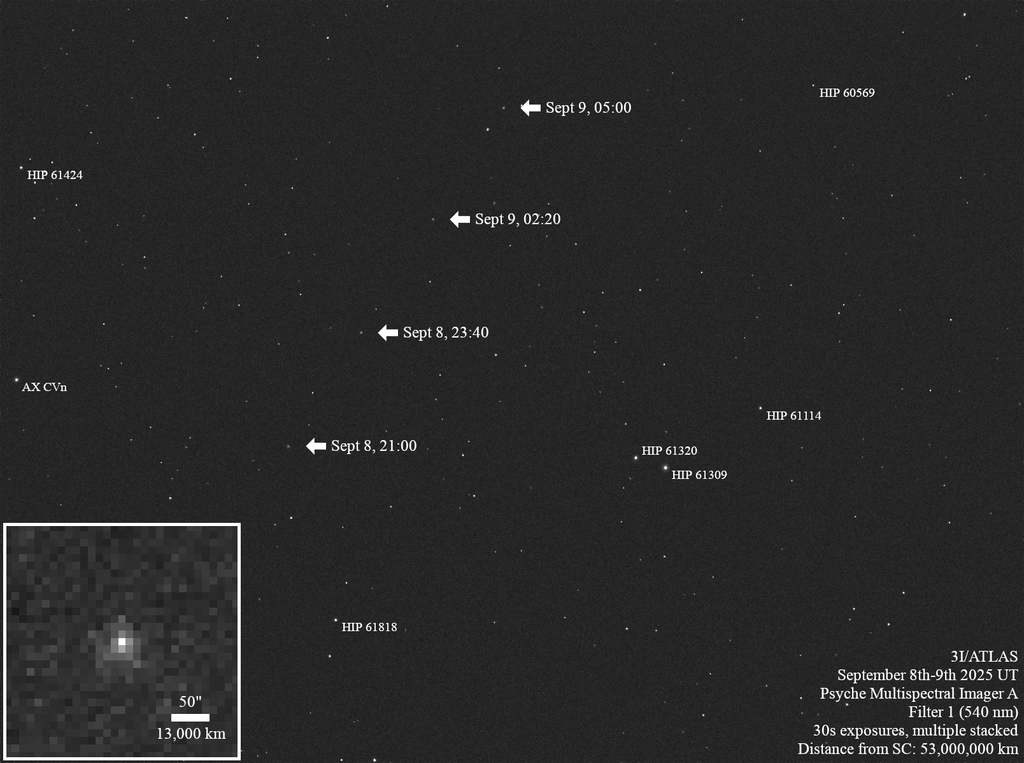
The comet also caught the attention of several NASA interplanetary missions. On September 8–9, it was photographed by the Psyche probe. At that moment, it was 53 million km away from the comet. And on September 16, it was photographed by the Lucy mission. The shooting distance was 386 million km.
In December, comet 3I/ATLAS will approach Earth at a minimum distance of 269 million km. There is no doubt that NASA and other scientific organizations will take advantage of this opportunity to take even more detailed images of the interstellar comet.
According to NASA

