

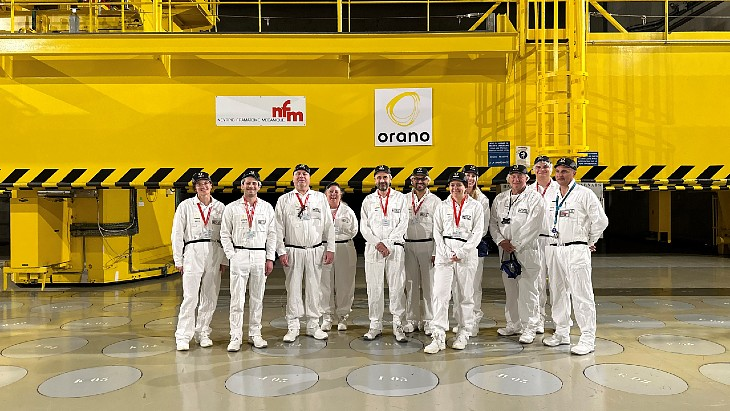
Zeno Power has entered into a strategic agreement with Orano to power space batteries with recycled radioisotopes. The French company will supply americium-241 (Am-241) extracted during the reprocessing of spent nuclear fuel at the La Hague plant, and Zeno will invest millions to secure priority access to the isotope. Am-241 will be used as fuel for radioisotope power systems (RPS) that Zeno is developing for NASA — specifically for lunar rovers, landers, and future infrastructure on the Moon. This solves the problem of plutonium-238 shortage and expands the possibilities for long-term autonomous power supply in space.
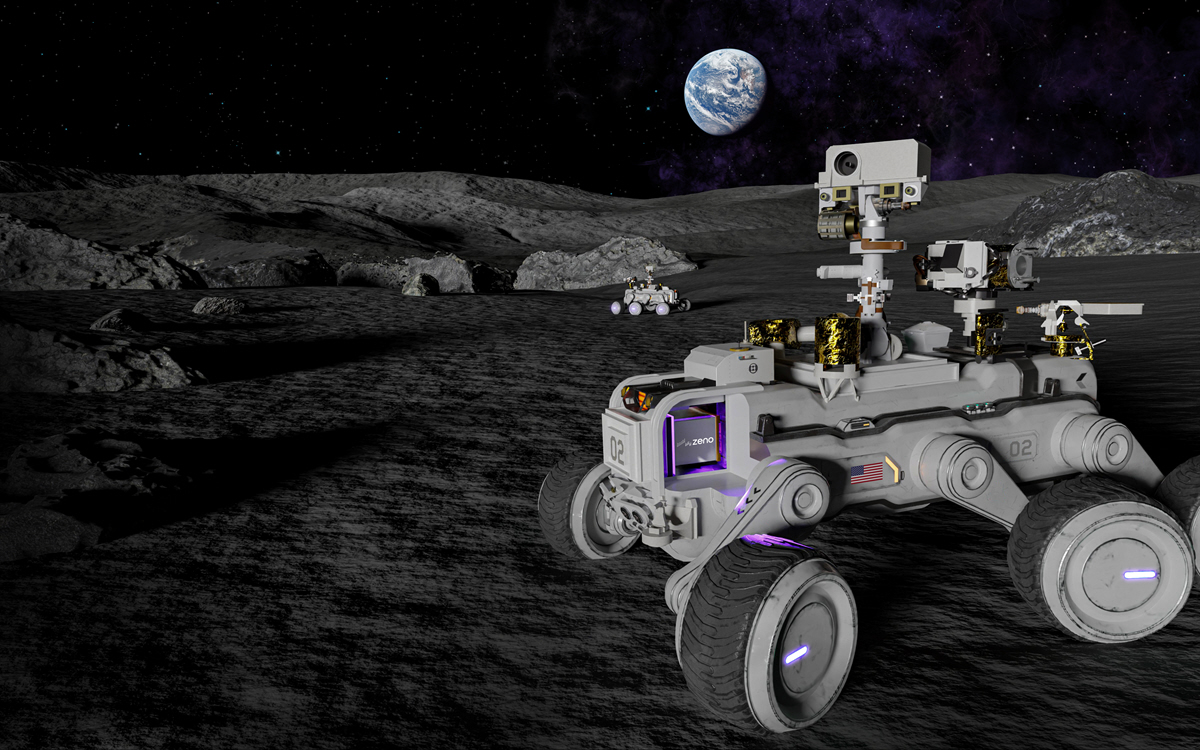
The key advantage of Am-241 is its long half-life — more than 430 years — which means that power systems can operate for decades, including during lunar nights and in permanently shaded regions near the poles. Orano will extract the isotope from spent fuel, transforming something previously considered waste into a strategic resource for space energy.
The companies have been working together since at least 2022; the new agreement establishes a stable supply chain for mass production of batteries. At the same time, Zeno is developing strontium-90 nuclear batteries for marine applications under contracts with the US Department of Defense, building a multi-fuel portfolio of solutions ranging from deep sea to deep space.
How does it work? Inside the nuclear battery is a tiny tablet of americium-241. It slowly disintegrates and continuously releases heat—like a mini-coal that does not go out for decades. This heat is supplied to thermocouples (two different metal plates), and an electric current is generated due to the Seebeck effect. No valves or gears – just stable heat that is converted into electricity with low but reliable efficiency. The secret lies in simplicity and durability: fuel is extracted from recycled nuclear waste, so there is plenty of it; the half-life is long, so the battery works for years without recharging; and the compact shielded housing ensures safety and continuous operation even in the darkness, cold, and dust of the Moon or deep space.
Why is this important? Reliable RPSs based on Am-241 will enable scientific missions to operate where solar panels are ineffective: in the shadows of craters, during the two-week lunar night, and in deep space. This is a stable power supply for cameras, spectrometers, seismometers, repeaters, and navigation beacons, which is critically important for Artemis and future observatories/detectors that require continuous, maintenance-free operation.
Nuclear batteries are peaceful atoms serving science, but there are also dark scenarios in space. What will happen if nuclear technology crosses the line of restraint and becomes a weapon in orbit—with the risk of EMP, cascading debris, and the collapse of navigation and communications? Let’s take a sober look at the situation without panicking: historical prohibitions, realistic scenarios, and consequences for our daily lives – in the article “Oppenheimer’s nightmare: How imminent is the threat of nuclear war in space?”
According to orano, world-nuclear-news, interestingengineering

