

The mystery of the cosmic radio signals, which has puzzled astronomers for over 20 years, has finally been solved. Researchers from Australia have discovered that the source of these abnormally long pulses is not solitary stellar remnants, as previously thought, but rather the magnetic interaction between two very old stars—a white dwarf and a red dwarf.
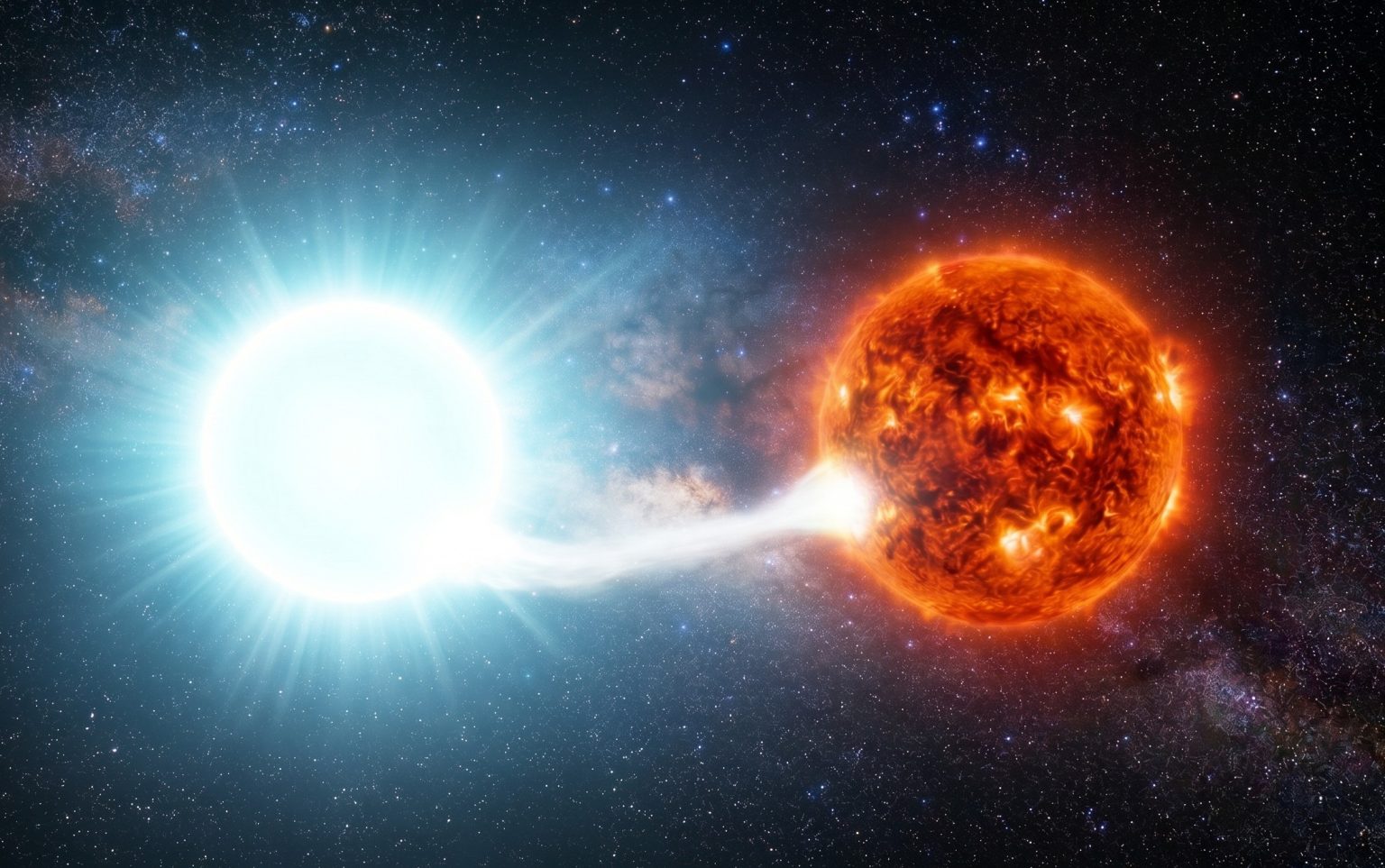
This class of cosmic radio emissions was discovered in 2005. Typically, objects in space generate short radio bursts that last only a few seconds. However, long-duration radio transients—of which about a dozen are currently known—are capable of emitting waves lasting from several minutes to over an hour. Long-period radio transients are sources of radio emission that produce bursts of radio waves lasting from several minutes to more than an hour, repeating at regular intervals.
For a long time, the scientific community believed that these signals originated from magnetars—pulsars with extremely powerful magnetic fields. But a new study conducted by a team at the University of Sydney led by Kovi Rose suggests otherwise. The researchers published their findings in Nature Astronomy.
Discovery by the ASKAP radio telescope
Using the Australian ASKAP radio telescope, scientists have discovered that at least some of these bursts are generated by symbiotic binary systems. In such systems, a compact object—a white dwarf—accretes matter from a nearby companion star. The accumulation of this material often leads to supernova explosions.
“Radio transients with periods lasting years have long stumped astronomers,” Rose notes. “We have now demonstrated that the source of one such phenomenon is a white dwarf that is actively drawing matter from a companion star.”
Anatomy of a star collision
The object that led to the discovery has been named ASKAP J1745-5051. This system consists of a white dwarf the size of Earth and a red dwarf with a mass of only 10% that of the Sun. They complete one full orbit around each other in just 1.4 hours.
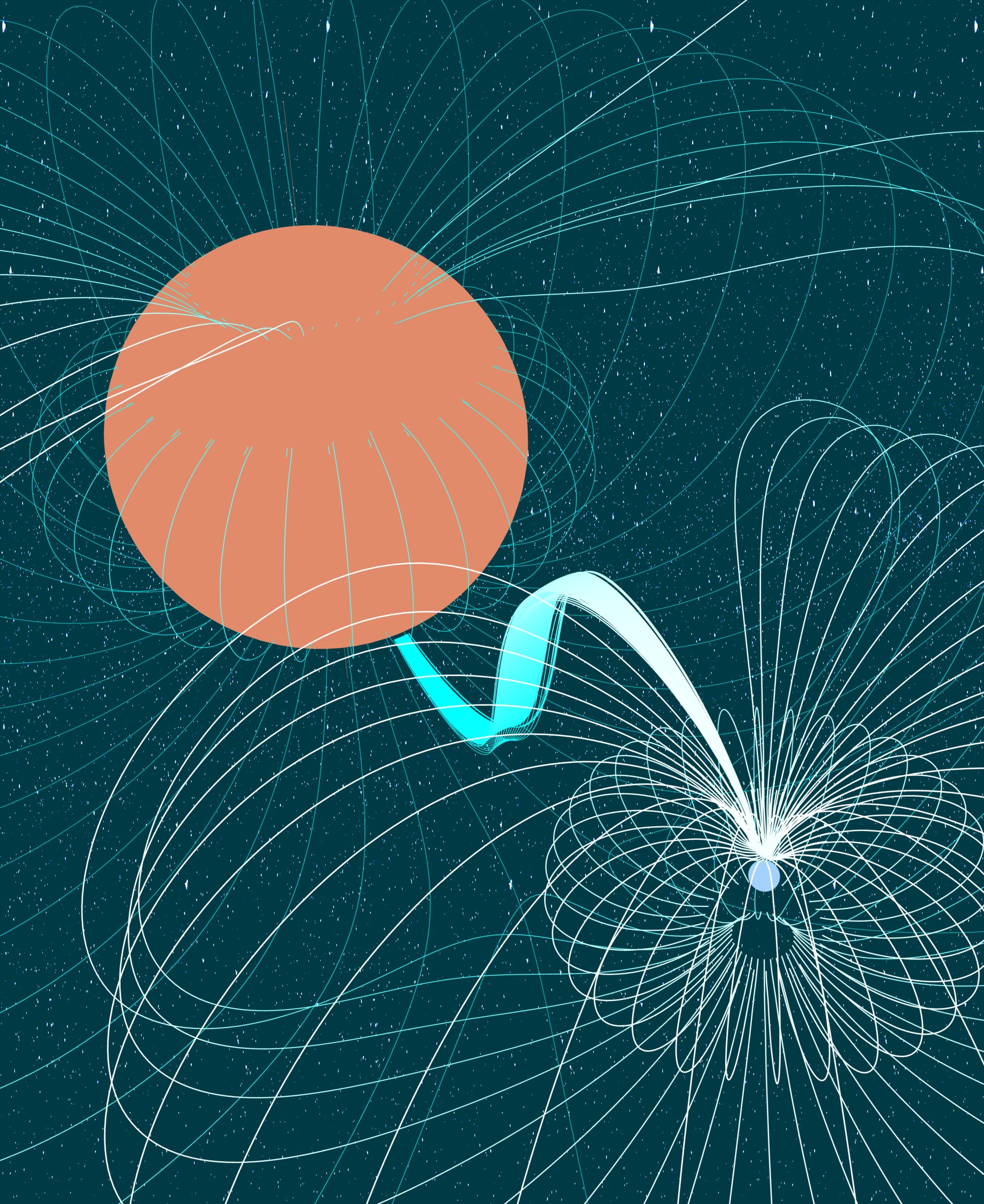
What makes ASKAP J1745-5051 unique is that the system generates not only long radio waves but also X-ray radiation. Interestingly, their peaks do not coincide in time. According to the scientists, this clearly indicates that the signals are generated in different parts of the system.
Stellar “Rosetta Stone”
Does this mean that the mystery of all such signals has been completely solved? Not necessarily. Among the known long-period radio transients, only one other source emits X-rays. Therefore, some of them may have a different nature.
However, as Rose points out, the study’s findings will serve as a “stellar Rosetta Stone.” They provide scientists with the key to deciphering future signals and will help them clearly distinguish between a solitary pulsar and an exotic binary system of two white dwarfs.
We previously discussed how a mysterious signal points to the existence of primordial black holes.
According to Space

