

A massive radio telescope in West Virginia (U.S.) has opened up a whole new window for humanity to observe space. This time, the focus of scientists’ attention was not a distant pulsar or a far-off galaxy, but NASA’s Artemis II crewed spacecraft. During its historic flight around the Moon, at a distance of more than 320,000 km, experts at the National Radio Astronomy Observatory (NRAO) were able to track the spacecraft’s movement through space. This achievement does more than simply demonstrate the scope of modern technology—it proves that radio astronomy is becoming an indispensable tool for ultra-precise space navigation as humanity explores the cosmos.
Giant antenna and millimeter precision
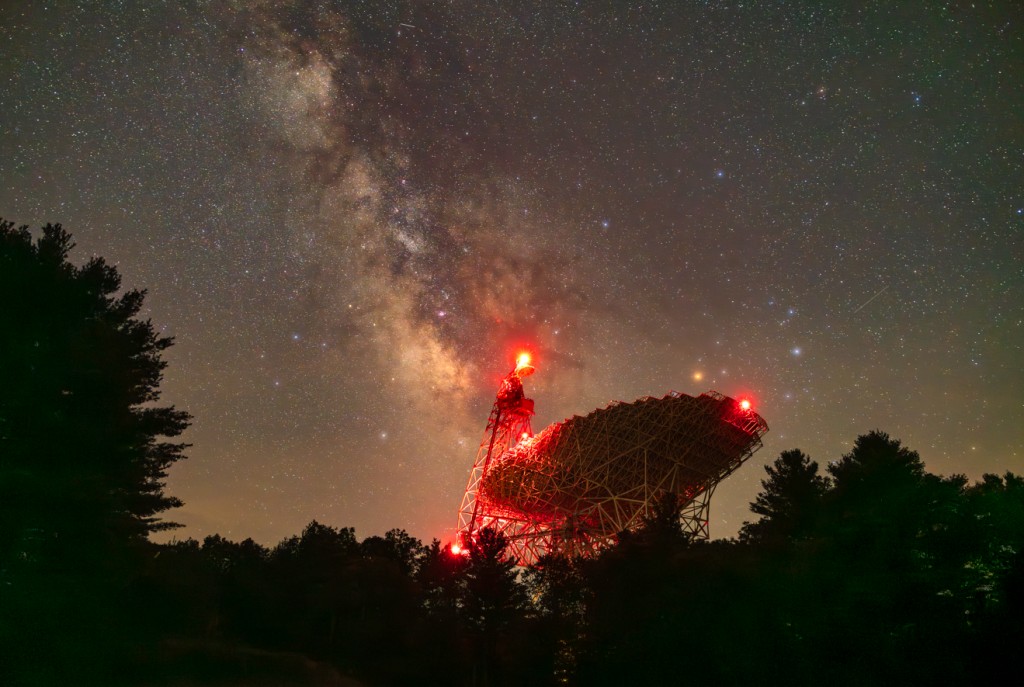
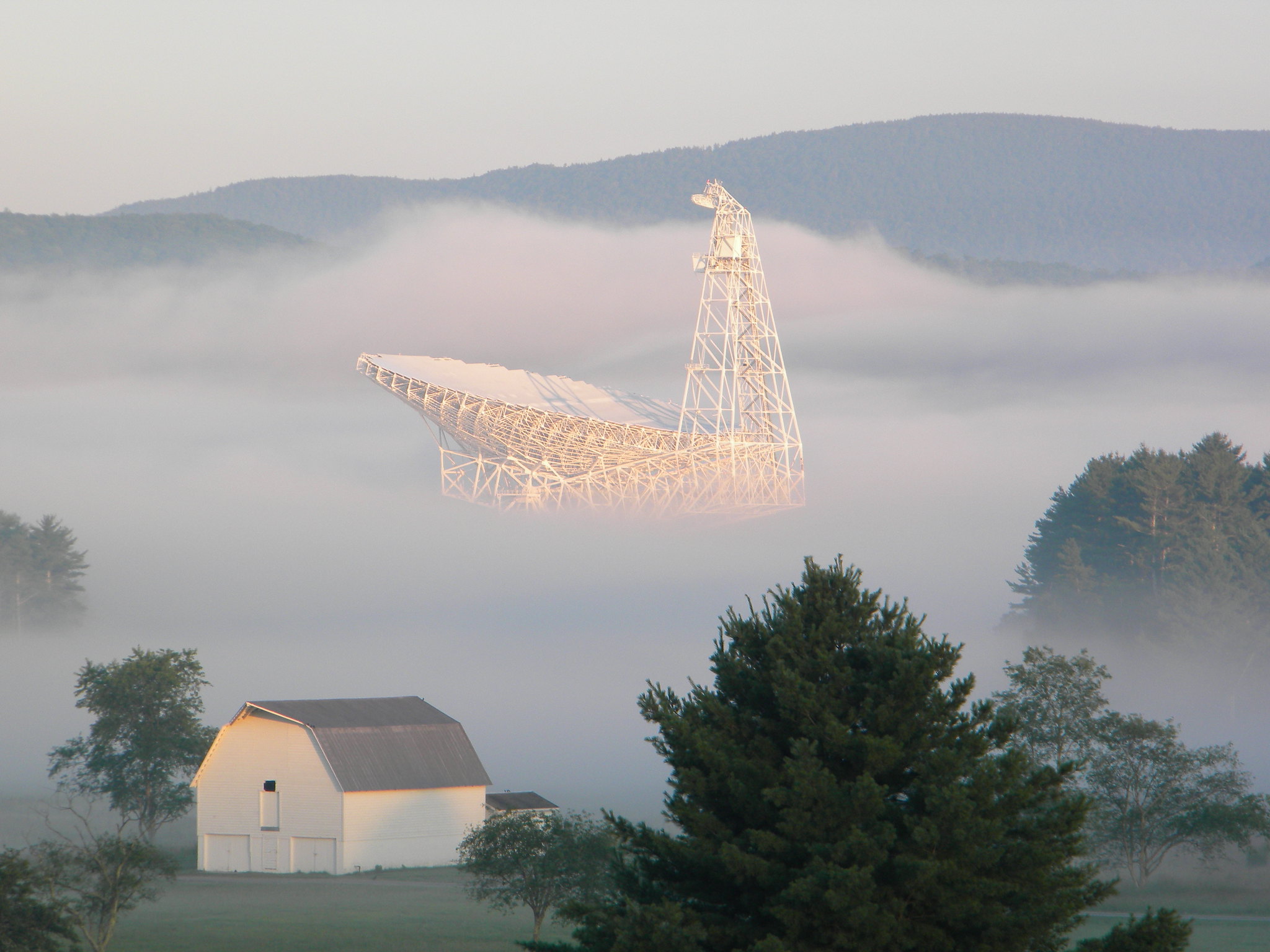
The star of this scientific breakthrough is the Green Bank Telescope (GBT)—the world’s largest fully rotatable radio telescope. Its physical characteristics are truly staggering: the structure stands nearly 148 meters tall, weighs approximately 7,700 tons, and the area of its giant parabolic antenna covers nearly an entire hectare. It is precisely these colossal dimensions that allow the instrument to collect highly detailed radio data from incredible astronomical distances.
For five days, this massive structure continuously accompanied the Orion spacecraft. Observatory Director Anthony Remijan offered a striking comparison to illustrate the level of detail achieved. According to him, thanks to the capabilities of GBT, the team was able to track the spacecraft’s speed with a deviation of just 0.2 mm/s from the parameters previously calculated by NASA engineers. As Remijan noted in his statement, this is equivalent to having a speedometer in a car capable of displaying speed to the nearest ten-thousandth of a second.
Unlike traditional optical telescopes, which are limited by weather conditions and sunlight, radio observations provide a continuous stream of real-time data on the spacecraft’s position, velocity, and trajectory. Such precise measurements are critical for timely course corrections and the safe planning of complex deep-space missions.
Four human lives on a pixel grid
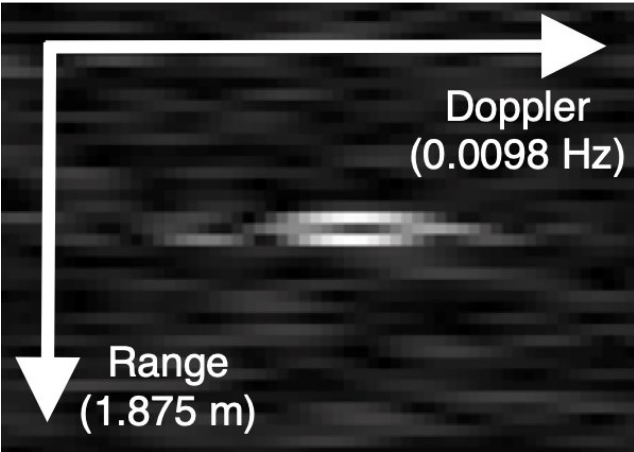
To the untrained eye, the visual results of these highly complex observations may seem rather modest. The image looks like a black-and-white grid, with just a single small bright spot standing out against the backdrop of the absolute darkness of space. The vertical axis of this graph represents the distance to the Orion spacecraft, which the mission crew symbolically named Integrity. The distance values increase from top to bottom, and each individual pixel contains encoded information about the exact location and direction of travel. The five-day journey has literally transformed into a mathematically perfect visual pattern.
However, there is something far more significant behind this satellite telemetry. Will Armentrout, a researcher at the NSF GBO Observatory, emphasized during a presentation of the results to his colleagues: “There are four people in these pixels.” This brief phrase sharply shifted the focus from dry statistics to the human dimension of the mission. It serves as a reminder that what lies in the sights of that giant antenna is not merely a combination of metal and electronics, but living pioneers embarking on an epoch-making journey beyond the boundaries of the familiar world.
More than just observation
Collaboration between radio astronomers and space agencies is expanding the horizons of science. The GBT telescope has already become an indispensable asset for NASA and various commercial aerospace initiatives. Linnea Avallone, director of research facilities at the National Science Foundation (NSF), emphasized the importance of this synergy, noting that providing interagency support to colleagues at NASA helps unlock the full potential of ground-based facilities and captures the nation’s attention.
A prime example is 2022, when this radio telescope played an active role in supporting the DART mission. At that time, humanity was testing its ability to deliberately alter the trajectory of the asteroid Dimorphos. Thanks to the GBT’s radar capabilities, scientists could track the moment of the kinetic impact and its aftermath in detail, definitively proving that radio observatories are an integral part of the global planetary defense system.
New era of space navigation
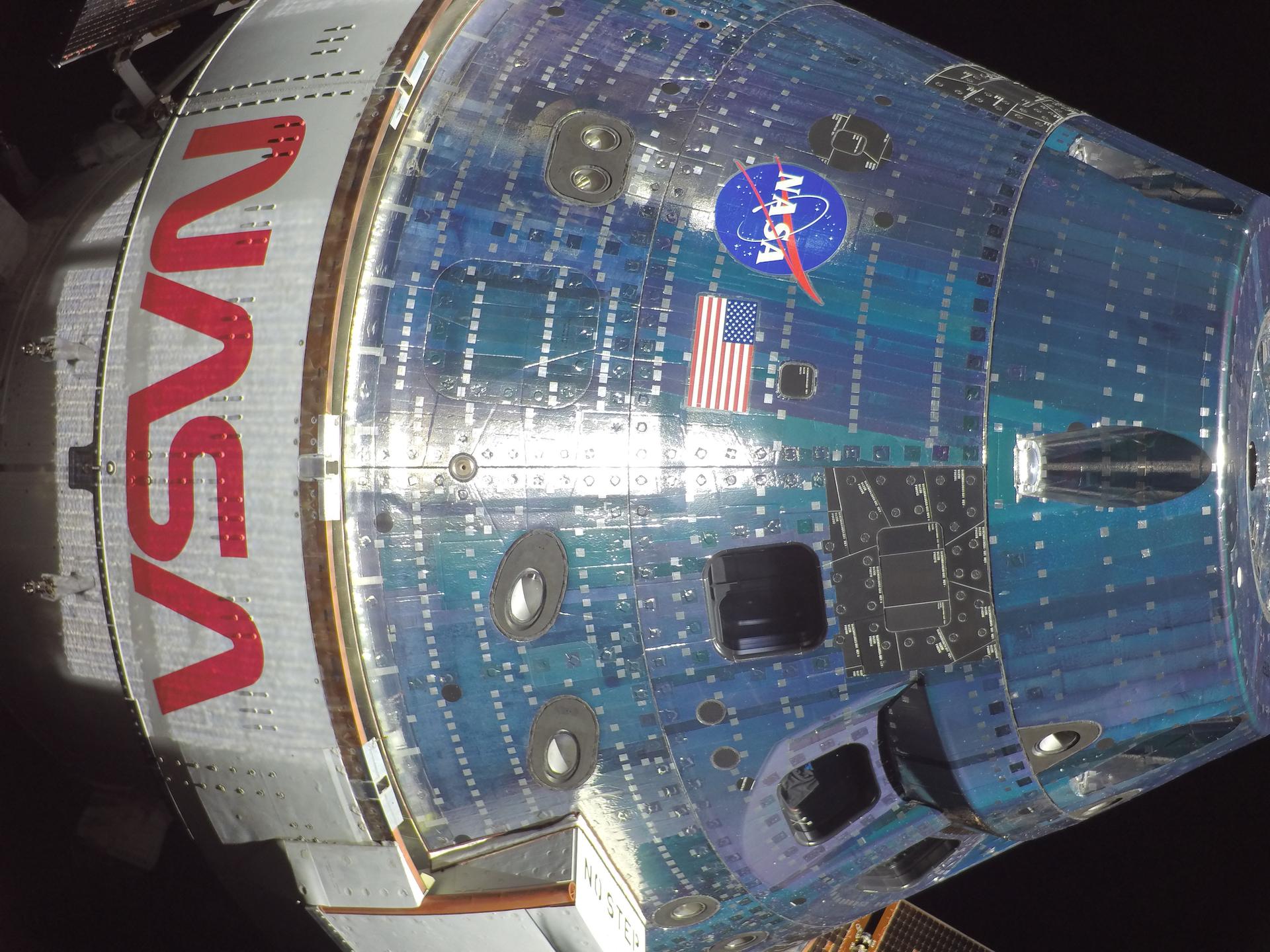
The Artemis II mission symbolizes not only humanity’s long-awaited return to the Moon for the first time in half a century, but also a transition to an entirely new standard of precision space tracking. By transforming the tiniest microscopic deviations into vital data, GBT-class instruments provide space agencies and their partners with a level of situational awareness that was once only a dream.
We previously reported on how images from the Artemis II mission revealed a major orbital crisis.
According to nrao.edu

