

We often hear dry statistics about the number of objects hurtling around our planet, but we rarely get the chance to see this orbital traffic with our own eyes. A few years ago, NASA had already published computer visualizations of space debris. However, during the recent Artemis II mission, a startling discovery was made regarding just how crowded low Earth orbit has become.
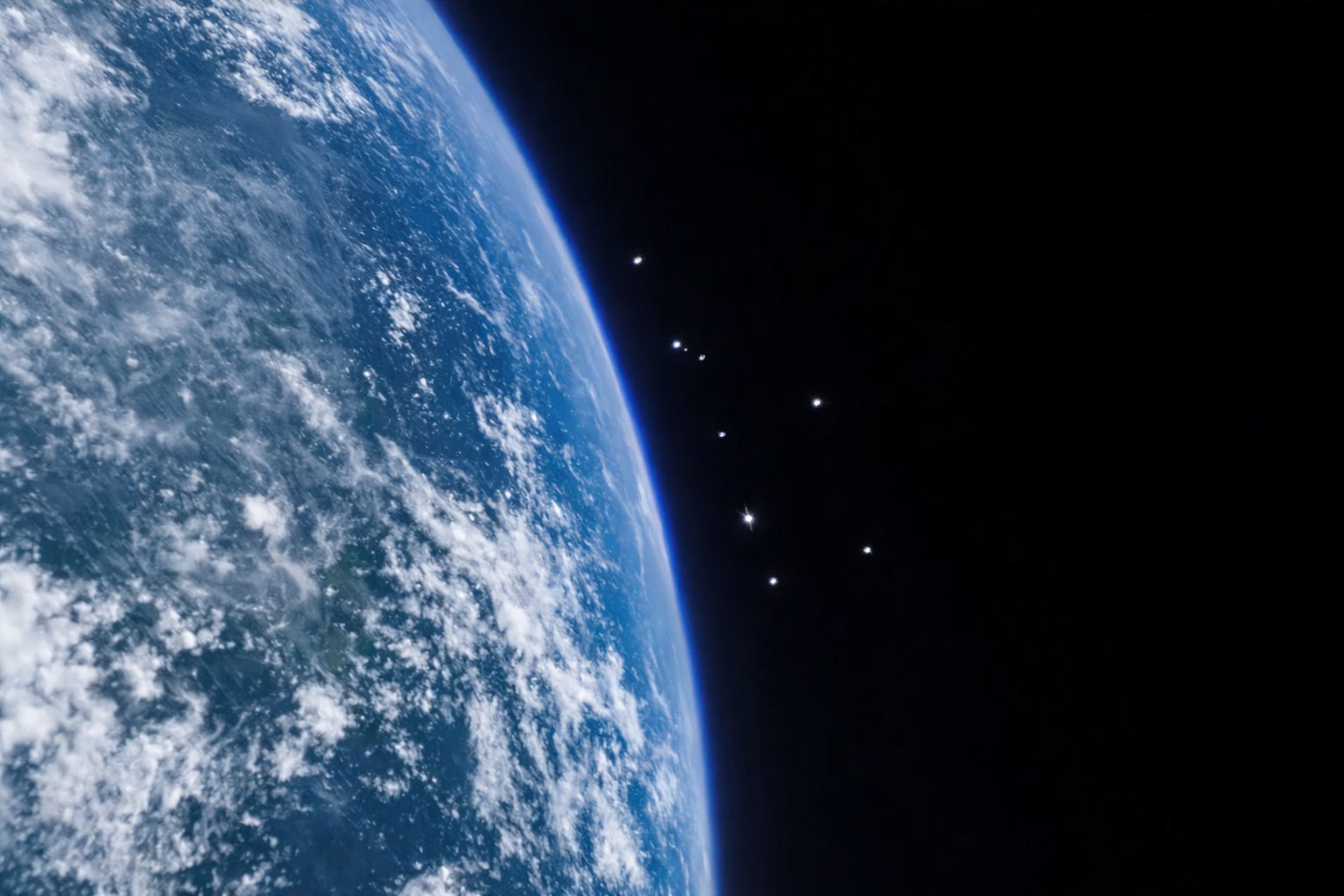
In addition to a series of impressive photographs of the lunar surface, the astronauts aboard the Orion spacecraft captured numerous images of Earth from a great distance. In these images, keen observers noticed a dense cluster of small glowing dots near our planet. At first glance, when looking at a single still image, it is extremely easy to mistake them for distant stars. But the community of enthusiasts quickly realized that some of these “stars” are actually a whole armada of artificial satellites in low Earth orbit.
Fortunately, enough frames were captured in rapid succession to be compiled into a video. One of the most striking examples of this type of animation was posted by researcher Sean Doran on Bluesky. The edited footage clearly shows a multitude of tiny man-made objects orbiting the Earth, flashing intermittently as their metal surfaces and solar panels reflect the sun’s light.
Orbital traffic jam in numbers
Although it is difficult to identify each individual device from the video, these few seconds of time-lapse footage provide a vivid illustration of just how densely humanity has encircled the planet with metal. The exact figures vary depending on the source and calculation method, but they are all impressive.
At the time of publication, the authoritative catalog of space objects, CelesTrak, contained data on 15,731 active satellites. Sharing orbit with them are 2,915 non-operational spacecraft, 2,269 spent launch vehicle stages, at least 12,518 large pieces of debris, and about 50 unidentified objects. In total, this amounts to more than 33,480 pieces of space debris and spacecraft. The Kayhan SATCAT databases list approximately 36,899 objects, while estimates from the U.S. Space Force put the number even higher—at more than 50,600 tracked fragments.
The lion’s share of this entire fleet is concentrated in low Earth orbit—at an altitude of less than 2,000 km above the Earth’s surface. And this number is growing exponentially. According to data from the Space Force, the number of active objects in low Earth orbit has nearly tripled since the start of the decade: from 6,068 in 2020 to more than 16,000 today.
Mechanics of a high-speed collision
By any measure, near-Earth space has become a dumping ground that grows by the day. This creates enormous logistical and safety challenges. Every time a new rocket is launched, ballistics experts must calculate millisecond-long “windows” to ensure there is no risk of collision with debris.
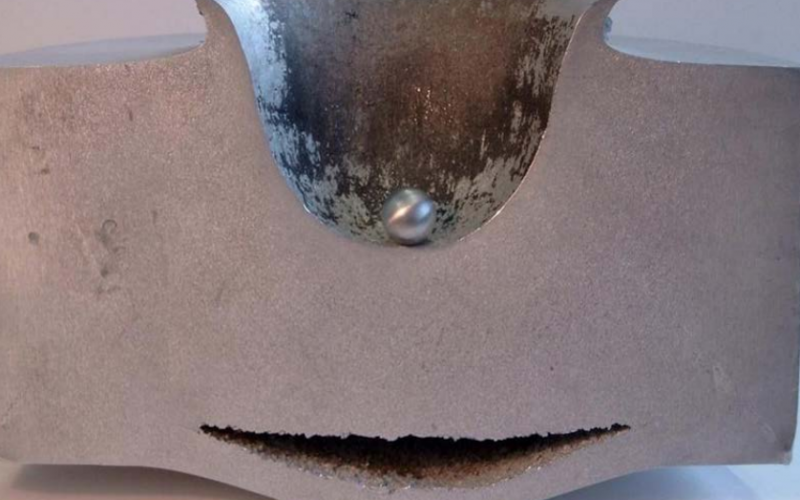
The fact is that at the altitude of low Earth orbit, objects travel at the first cosmic velocity—about 7.8 km/s (28,000 km/h). Under such conditions, even a speck of paint or a tiny screw can turn into a deadly projectile capable of piercing right through the spacecraft’s hull.
Experts from the Aerospace.org portal offer a frankly terrifying description of the physics behind such events: “Hypervelocity collisions at orbital speeds are radically different from the accidents we are accustomed to on Earth.” “The objects are moving so fast that they literally pass through each other faster than shock waves can propagate through the material. The result is more like an instantaneous explosion of both objects, as if they had passed through each other’s matter and exploded on the other side.”
Kinetic bombs hanging over our heads
The study includes an illustrative table of impact kinetic energy. A fragment the size of a poppy seed carries energy equivalent to that of a bowling ball dropped from a great height. But when it comes to collisions between objects the size of a football field—such as space stations or booster stages—the energy released can reach 10¹³ kg in TNT equivalent. This is a colossal “bomb,” whose power is comparable to a hundred of the most powerful thermonuclear charges in human history.
The conclusion is clear. Those bright dots against the black vacuum captured by the Artemis II mission create an incredibly beautiful view of our planet. But if you understand the physics behind these processes, the view becomes truly eerie.
We previously reported on how Ukrainians were informed about the dangers of space debris.
According to gizmodo.com

