

For the first time, an international group of researchers has precisely determined the moment of planet formation around a star outside the Solar System. They were assisted in this by the ALMA radio telescope array and the James Webb Space Telescope (JWST).
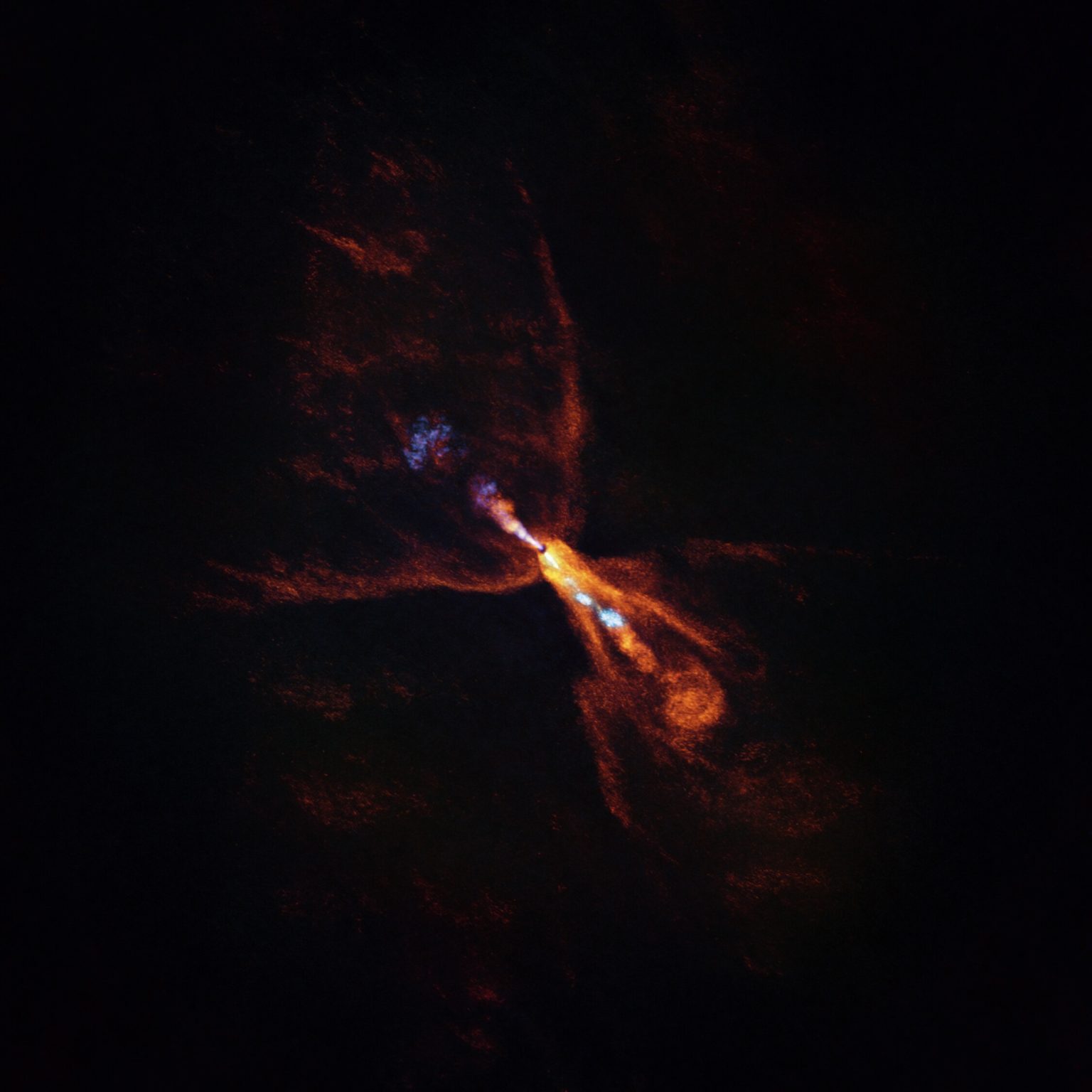
In our Solar System, the earliest solid material that condensed near the Earth’s current location around the Sun is found in ancient meteorites. Astronomers determine the age of these primitive rocks to establish the beginning of planetary formation. Such meteorites contain crystalline minerals that include silicon monoxide (SiO). They could condense at the extremely high temperatures present in young protoplanetary disks. Over time, these solid substances bonded together, giving rise to planetary embryos (planetesimals). The first planetesimals were about a kilometer in size. Over time, they grew and became planets such as Earth or Jupiter’s core.
To date, astronomers have managed to find quite a few gas and dust disks around young stars. In some of them, massive newborn planets similar to Jupiter have been identified. However, until recently, they had been unable to pinpoint an earlier moment in the formation of planetesimals.
Everything changed thanks to research involving ALMA and JWST. Their target was HOPS-315, a protostar located 1,300 light-years from Earth and analogous to the nascent Sun.
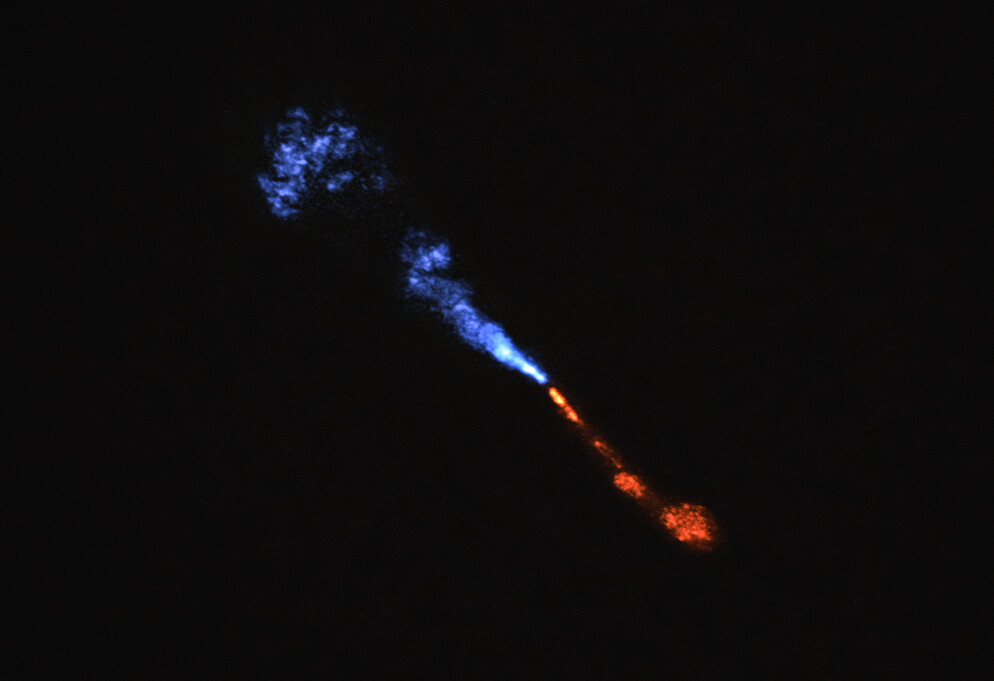
During their observations, astronomers detected chemical signals emanating from a small region of the disk around the star, equivalent to the orbit of the asteroid belt around the Sun. Their analysis shows that SiO is present there in a gaseous state, as well as in the composition of crystalline minerals, which suggests that it is only beginning to solidify. Such a process has never been observed in a protoplanetary disk before. Scientists figuratively compare the discovery to a photograph of the infant Solar System. If we were to travel back in time 4.5 billion years, we would see a similar picture.
Astronomers intend to continue observing HOPS-315 to better understand the birth of our Solar System and the early stages of planet formation. The study also highlights the importance of using different telescopes together to study protoplanetary disks.
Earlier, we reported on a doomed exoplanet that would be destroyed by its star in the near future.
According to ESO

