

The interstellar comet 3I/ATLAS surprised astronomers with a sharp increase in brightness. It also changed color. The exact reason for this sudden activity remains a mystery.
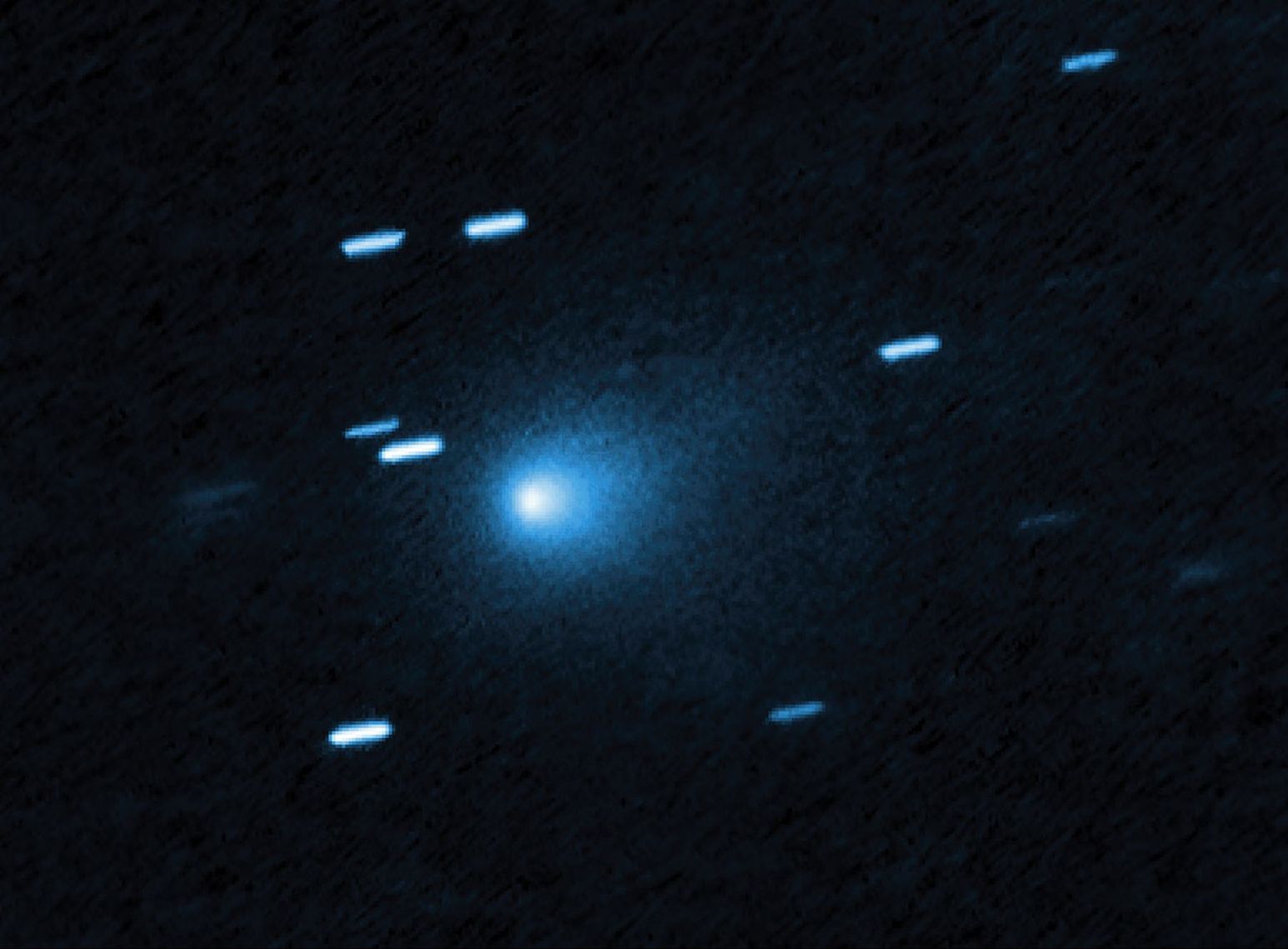
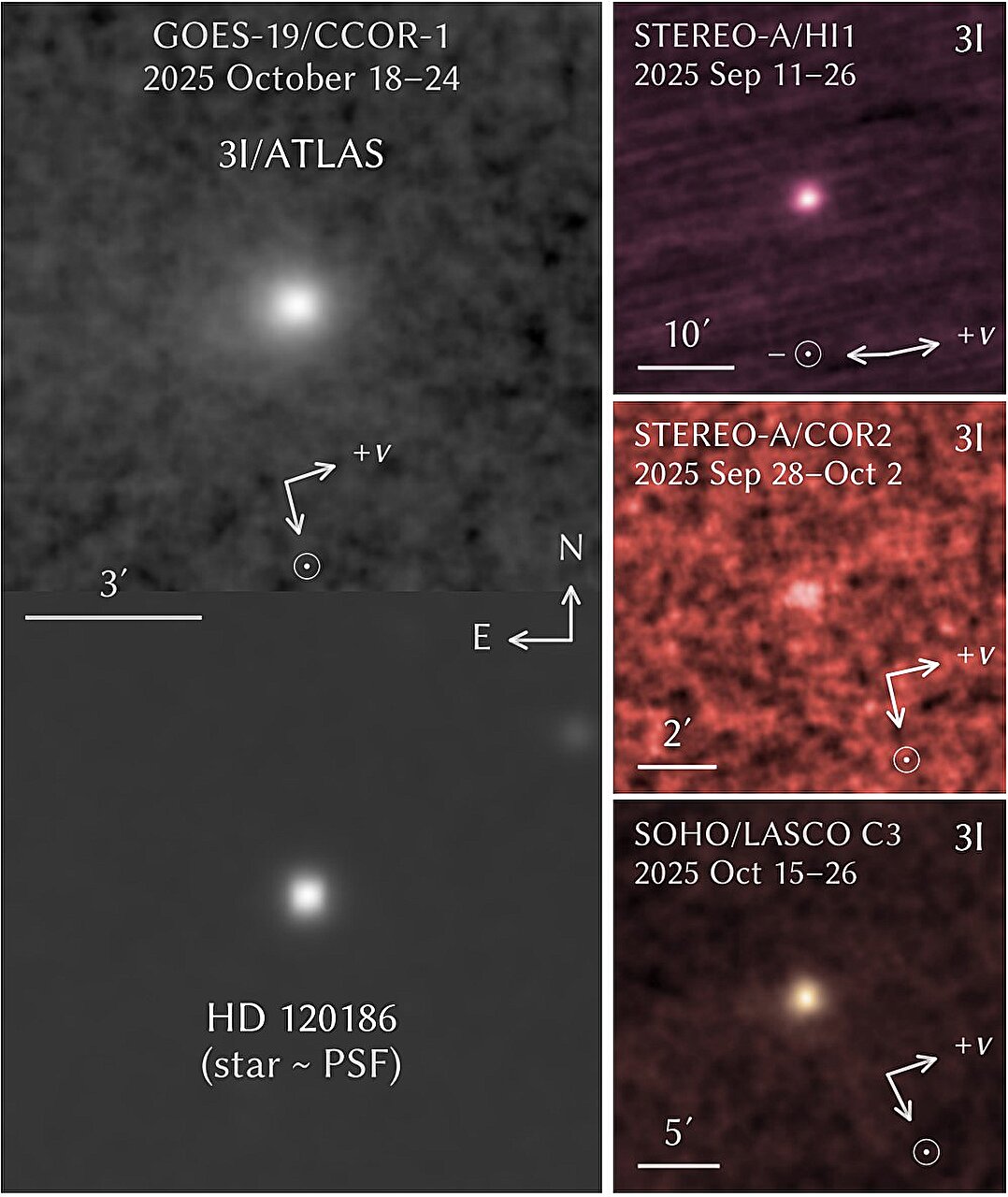
On October 29, comet 3I/ATLAS passed the perihelion of its orbit, approaching the Sun at a distance of 203 million km. Although the interstellar visitor has temporarily disappeared from Earth-based observatories, astronomers can still observe it using spacecraft equipped with coronagraphs. These include the SOHO and STEREO-A missions observing the Sun, as well as the GOES-19 satellite.
At the end of October, an article by astronomers Qicheng Zhang and Karl Battams was published on the arXiv preprint server. They analyzed images taken by spacecraft and concluded that in September–October 2025, the comet showed an abnormal surge in brightness. The rate of increase in brightness of 3I/ATLAS doubled compared to the beginning of this year. Another unexpected discovery was that the comet had turned blue. This surprised scientists because previous observations had shown that the dust of 3I/ATLAS was red in color.
Although the reasons for the comet’s extreme behavior remain a mystery, scientists have proposed several possible explanations. First, the increase in brightness may be caused by a massive release of gas from the comet, which managed to block the reflection of its dust. This is confirmed by the fact that the comet’s color has changed. The blue color is characteristic of molecules such as C2 and NH2, which glow intensely when heated by the Sun.
Another reason may be the unique composition of 3I/ATLAS. Researchers have found that its chemical composition differs from that of comets in our Solar System. For example, it contains more carbon dioxide, more volatile ices (which may explain the gas emissions), and unusual metals.
Answers to what caused the unexpected activity of 3I/ATLAS may appear in November, when it reappears in the Earth’s sky. Given the sharp increase in its brightness, it is possible that the comet will be visible not only to the most powerful observatories, but also to “average” telescopes.

