

Defense company Anduril Industries and startup Impulse Space have announced a joint, self-funded demonstration mission for a maneuverable satellite for rendezvous and proximity operations (RPO) in geostationary orbit. Its goal is to validate freedom of maneuver* as a key capability for future missions and demonstrate the potential of commercial high-thrust solutions for the US Space Force. The launch is scheduled for late 2026 using a Falcon 9 rocket as part of the first Impulse Helios mission.
The ability of a spacecraft to quickly and safely change its orbit and flight tactics for a specific task, rather than being tied to a single trajectory, is what we call freedom to maneuver. In practice, this is achieved through a combination of a large Δv reserve (fuel/effective power plant), sufficient thrust for maneuvers, precise navigation, and autonomous approach control.
The platform will be provided by Impulse’s Mira tug in combination with the Helios kick stage on the Deneb engine, which allows spacecraft to be transferred from LEO to GSO in less than a day, which is significantly faster than standard solutions. The weight of the device without payload is approximately 300 kg. This speed and Δv reserve will enable accurate RPOs to be performed on the GSO, where a significant portion of the most critical military and communications satellites are concentrated.
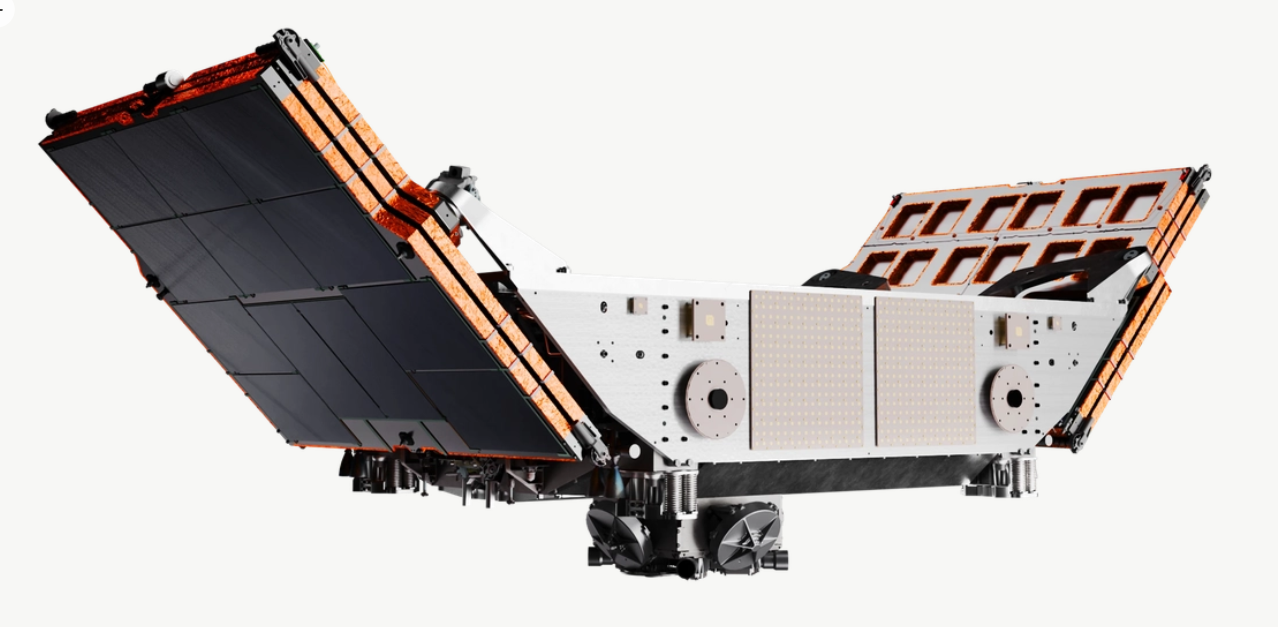
Anduril integrates a payload consisting of a long-wave infrared (LWIR) imager, a mission data processor based on Lattice software, and a range of third-party sensors. LWIR provides the ability to detect very faint targets and operate during eclipses, which is critical for safe and accurate approach. RPO is considered a basic capability for raising awareness of the space environment and deterring threats in orbit.

Why is this important? Maneuverable vehicles with precise RPO pave the way for servicing scientific satellites, inspecting anomalies, quickly placing instruments into optimal orbits, and even more actively reducing debris. This reduces inefficient time between launch and commissioning of observatories, improves calibration and joint observation campaigns, and increases the reliability of long-term space experiments.
How did ancient scientists know the size of the Earth without satellites, GPS, and lasers? Spoiler: just sunlight, distances between cities, and elegant geometry. Learn how Eratosthenes and his successors turned observations of the midday Sun into a remarkably accurate result — an experiment that can be replicated even today. Want to see how it worked step by step and why their approach continues to inspire? Click here to read “How ancient scientists discovered the Earth’s size”!
According to anduril, interestingengineering

