

The European spacecraft Hera, located in the asteroid belt, managed to obtain images of several of its objects. These observations served as both a successful test of the instruments and a demonstration of capabilities that could be useful for protecting our planet.
The Hera spacecraft was launched to study the double asteroid Didymos. In 2022, NASA’s DART probe deliberately crashed into its companion, Dimorphos. The aim of the experiment was to study the possibility of deflecting dangerous celestial bodies away from Earth.
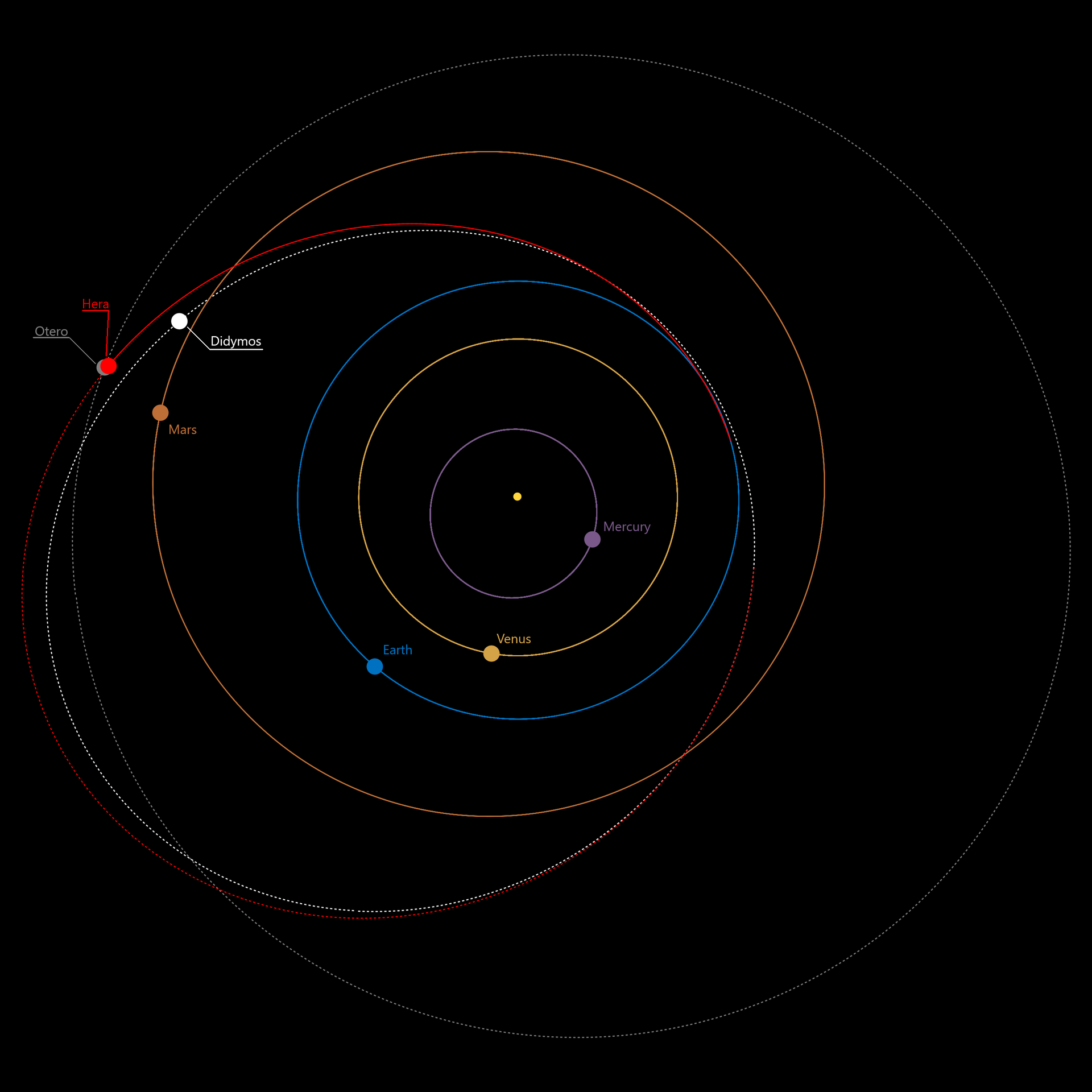
This spring, Hera flew past Mars and used its gravity to accelerate and change its trajectory. Shortly thereafter, the spacecraft entered the Main Asteroid Belt. Hera’s flight path does not suggest that it will encounter any asteroids along the way. Nevertheless, the mission specialists decided to take advantage of this opportunity to test the instrument. They chose the asteroid Otero, located 3 million km from Hera.
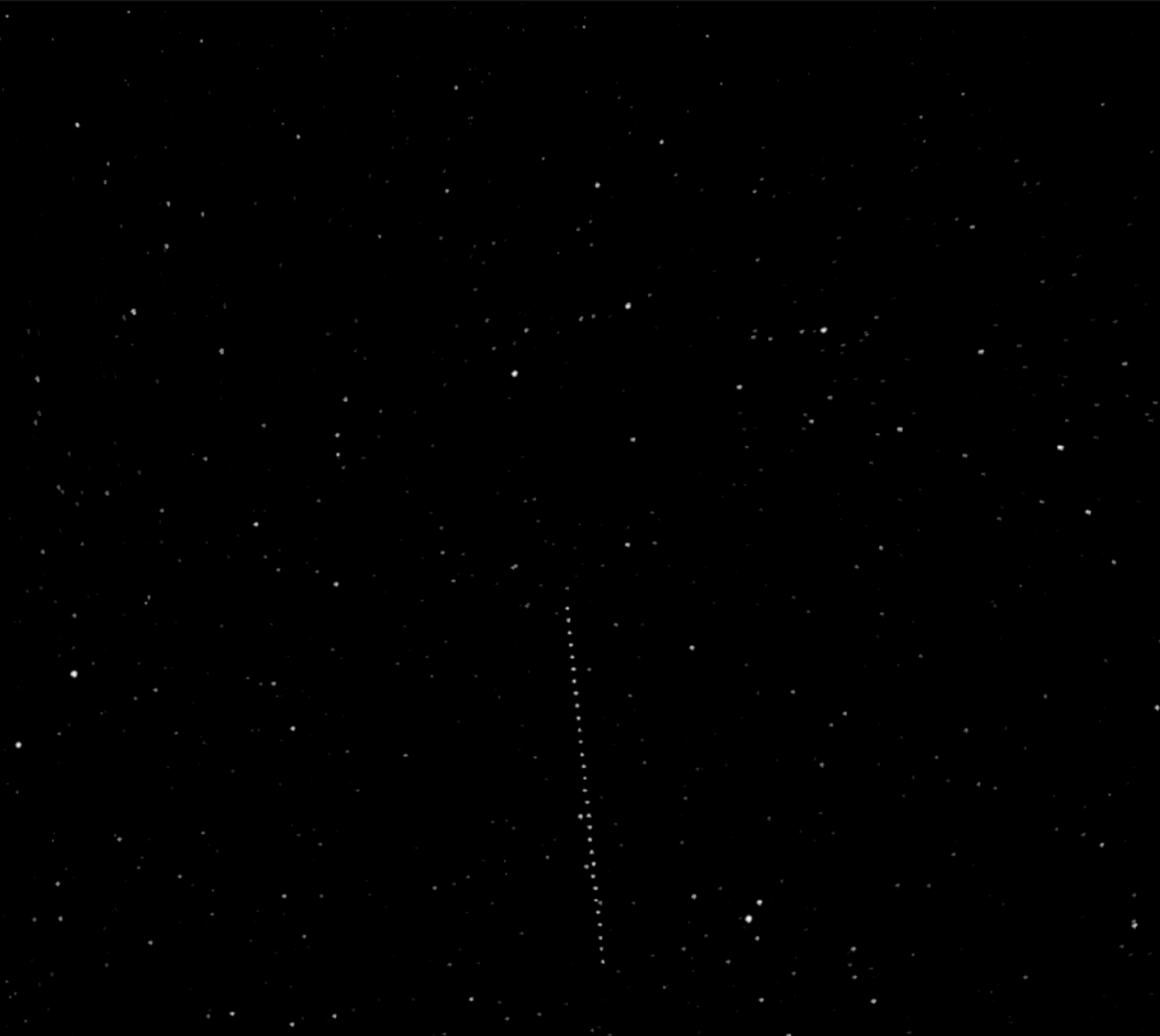
On May 11, 2025, Hera took pictures of Otero with its AFC camera. This navigation and science instrument will be used to guide the spacecraft as it gets closer to Didymos. According to experts, Otero’s imaging was conducted under conditions similar to the ones that would occur next year – when Hera reaches its destination and needs to keep the asteroid in the center of the camera’s field of view.
Hera accomplished the task. The device successfully tracked Otero for three hours, taking one photo every six minutes. On July 19, Hera conducted a new photo shoot. This time, the camera was aimed at the asteroid Kellyday. Despite being approximately 40 times dimmer than Otero, the device managed to get an image of it.

Although science was not the primary goal of these observations, they demonstrate how a spacecraft in space can quickly perform accurate observations of a new object. This ability can be very useful for protecting our planet.
One example is asteroid 2024 YR4. Earlier this year, astronomers around the world pointed their telescopes at it because they were worried it might hit Earth in 2032. If a spacecraft similar to Hera were in the right place, it could conduct impromptu observations of the asteroid. Additional information about its size and orbit would help astronomers better assess the danger it poses to Earth.
Similarly, a spacecraft located at a suitable point could be used to observe interstellar objects passing through the Solar System, such as the recently discovered comet 3I/ATLAS. At the end of this year, it will fly past Mars, and right now the scientific community is assessing whether any of the spacecraft orbiting the Red Planet will be able to observe it.
According to ESA

