

Scientists working with the Inouye solar telescope report that it has captured an image of a record-small plasma loop on the surface of the Sun. Such structures are tied to magnetic field lines and may be companions to flares.
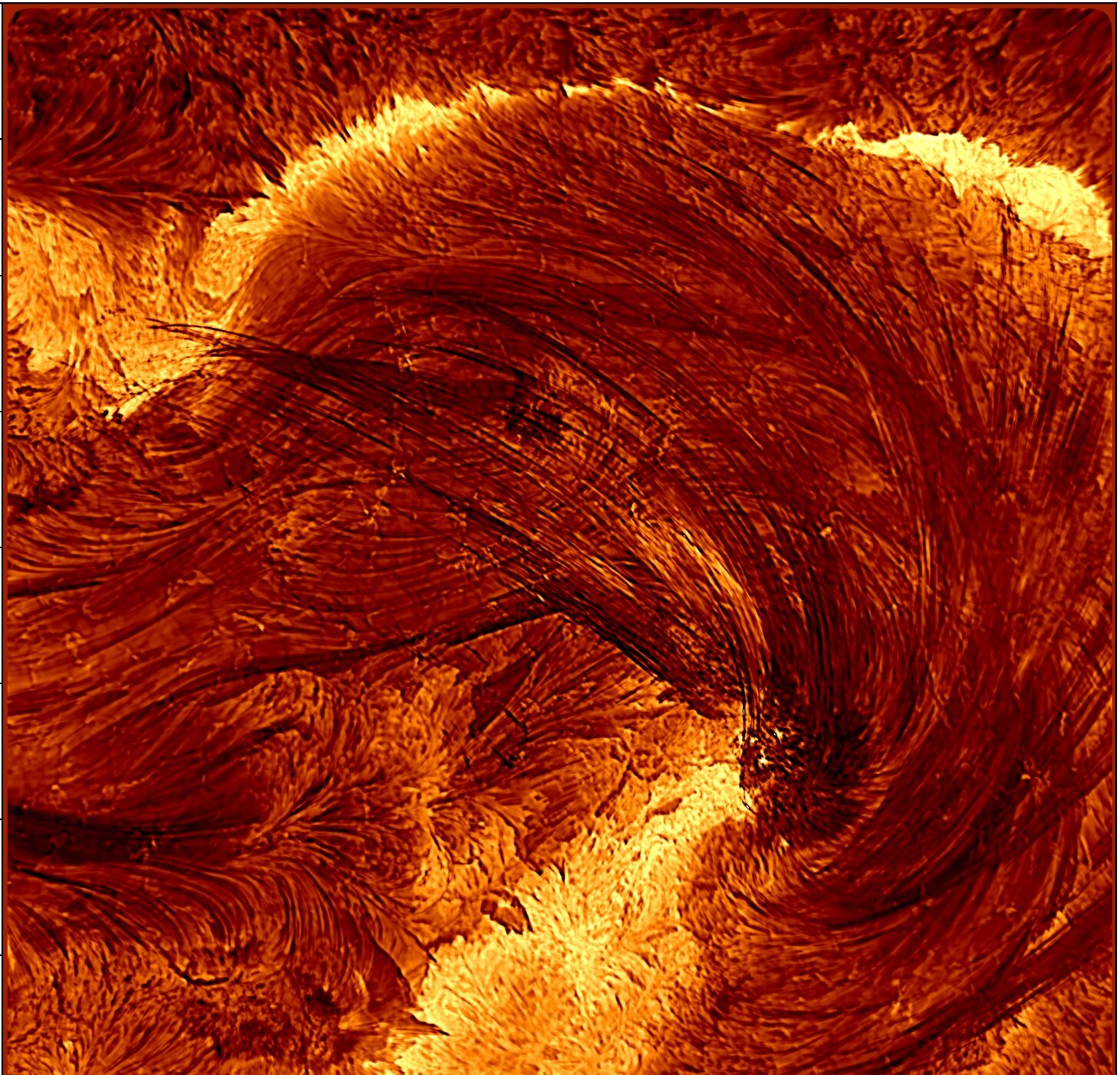
Record-small loop
Scientists have published an image of the Sun’s surface taken by the Inouye telescope at a wavelength of 656.28 nm. The most important detail depicted on it is a plasma loop of record size: 48.2 km long and 21 km wide.
Such sizes are impressive on Earth, but the most interesting thing about it is that it is not record-breakingly large, but rather record-breakingly small. Such structures typically extend for hundreds or thousands of kilometers and sometimes reach such sizes that they could fit the Earth inside them. They are formed along the magnetic field lines.
However, the fact that scientists have not observed many plasma arcs tens of kilometers long to date does not mean that they do not exist. Our observation equipment is simply not yet sophisticated enough to see them on the surface of the star.
Plasma and solar flares
A particularly important aspect of the new image is that the record-small plasma arc was photographed above an area where a powerful flare occurred at approximately the same time. These giant explosions occur when magnetic field lines become so distorted that they eventually break and reconnect.
When this happens, a lot of charged particles fly into space, sometimes along with pieces of plasma arcs. If they encounter Earth on their way, we get a magnetic storm. With problems with communications and electricity.
That is why huge amounts of money are allocated to space weather research. However, the physical processes preceding flares remain poorly understood. The problem of modeling plasma behavior in a magnetic field falls back on the question of what exactly to model.
Scientists suggest that the surface landscape of our star near the spots is not actually flat, but consists of a huge number of small arches that we simply cannot see. But it is possible that everything may change soon.
According to phys.org

