

On December 19, interstellar comet 3I/ATLAS approached Earth at its closest possible distance. The distance of approach was 269 million km.
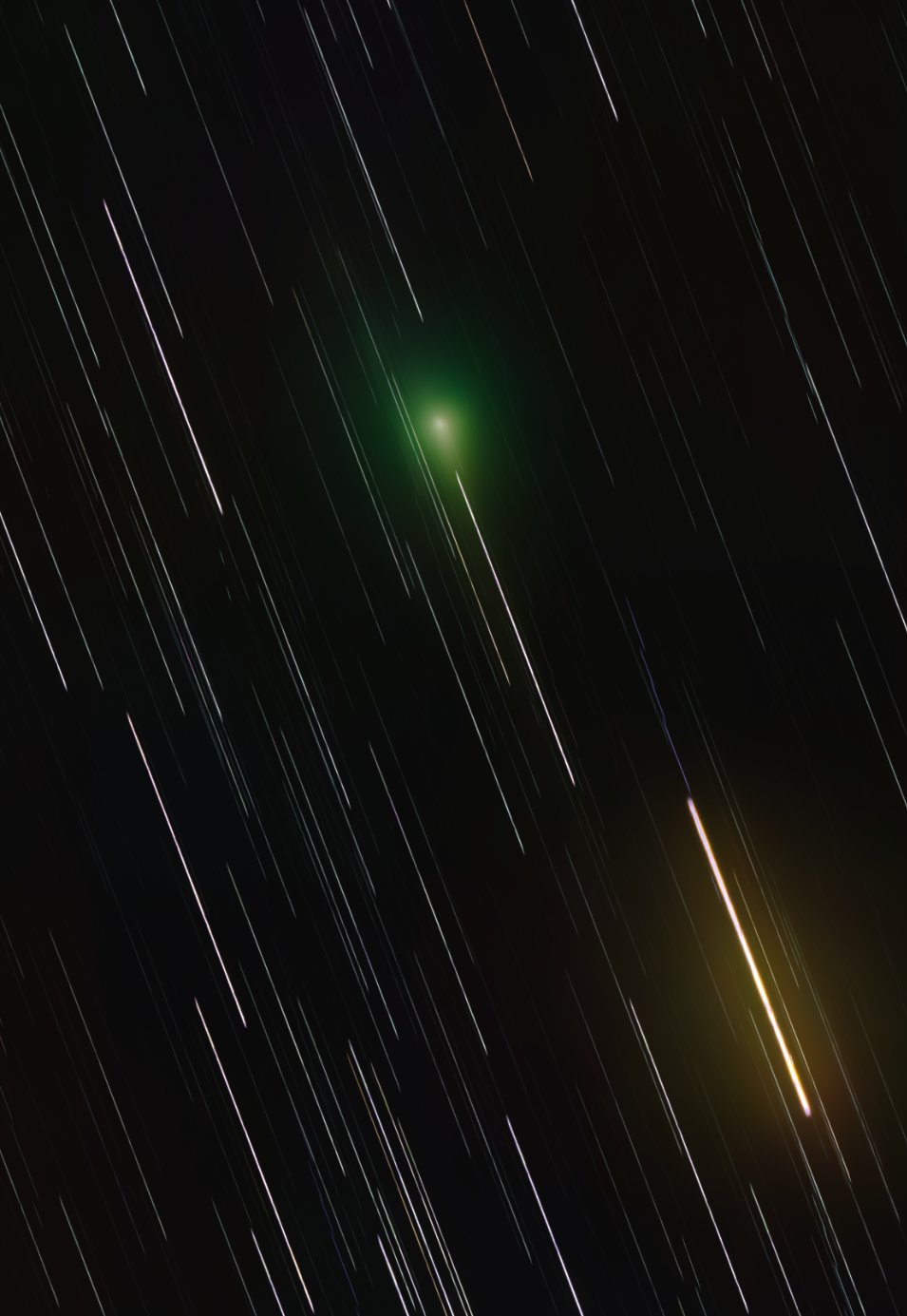
The interstellar comet 3I/ATLAS became one of the main sensations of 2025. Its visit was monitored by many astronomers around the world and studied by all major observatories, from Gemini to the Hubble Space Telescope.
One of the features of the 3I/ATLAS trajectory is that its orbit is close to the plane of the ecliptic, in which the orbits of the planets of the Solar System lie. In October, the comet flew past Mars at a distance of 30 million km. Spacecraft in its orbit took advantage of this opportunity and photographed the interstellar visitor.
At the end of October, 3I/ATLAS passed its perihelion, shining green, and then began to leave the Solar System. At the same time, due to the peculiarities of its orbital configuration, the distance between it and Earth gradually decreased. On December 19, it reached its closest possible distance of 269 million km. By Solar System standards, this is a lot — it is more than the distance between the Sun and Mars. So there is no need to talk about the comet posing any danger to Earth.
On its journey through the Solar System, comet 3I/ATLAS will also approach Jupiter. On March 16, 2026, it will be 53 million km away from the gas giant. The Juno spacecraft (if it is still operational at that time) could theoretically take part in its observations. In the future, 3I/ATLAS will not approach any other planets. The comet will return to interstellar space and continue its endless journey through the Milky Way.

